Nevăda, part II

We left Nevada Route 722 and took the Elkhorn Road (022) up and over a spur of the Shoshone Range and down into the Reese River Valley. Turning south we quickly came to a road sign listing San Juan and Washington Creeks (016) and we took that for about six miles to a primitive camp site in section 29 at the foot of the Toiyabe Range. It was a dusty and forbidding place, deep in a canyon, so mornings were cold until the sun could pop out from behind the high ridges. Afternoons were unusually hot but with the shadows forming early and the sun disappearing as well the evening temperatures dropped precipitously. All of us were constantly adding and shedding layers. The campsite was flat and luckily large enough for our party of eight. It had one table and an outhouse which proved to be handy as the thin, rocky soil wasn’t conducive to digging a latrine. We spent our days exploring the creeks and hiking up into the higher reaches. Several parties of deer hunters passed by each day, we encountered a couple on horseback in the high country and others passed the campsite in pickups and on ATVs, none looked successful. We saw little sign of their prey, I imagine the drought forced the poor creatures into even higher and more inaccessible spots. Signs of cattle were everywhere though we only bumped into a few cows on the trails. Their droppings were all over, some dry and flaky like cardboard after a few years in the arid climate. Others were fresh. A little bit of livestock goes a long way. The acreage they have to roam to get enough grass must be enormous.

The relatively sparse vegetation and numerous outcrops of jagged, weathered rock on the hillsides gave the place the feel of a ghost town. In those old mining camps nothing is rebuilt and everything eventually decays but slowly due to the lack of moisture. You don’t get a sense in these mountains that geologic activity is happening. It just seems like the landscape is there and that it will eventually erode and fade away. Nothing could be further from the truth. The Basin and Range is quite active and even youthful by geologic standards. There’s just something about the emptiness and lack of obvious activity that makes you think the place is static. Everything of course is dynamic, moving through time and space continuously and subject to the vagaries of entropy. The Basin and Range is no exception and when you add in the roiling and furious energies from the mantle, far beneath the crustal layer, and think in terms of eons and not mere human decades you suddenly see a chaotic, vibrant, and even violent terrain. In geology, “terrain” is the visible countryside with all its features. To include what’s underneath, what creates and shapes the terrain, you use the word “terrane.” The terrane becomes manifest in the terrain if you see with the eyes of a geologist.

Imagine a half-inflated balloon. Now smear chunky peanut butter on it, a nice uniform layer. Inflate the balloon fully. The crust of peanut butter, forced outward and upward by the exapnsion, cracks and splits and separates. The ranges are the strips of peanut butter, the gaps between them the basins. The outward spreading of the crust due to the mysterious tectonic forces in the mantle below created the basin-and-range topography. The mountains eroded to fill the basins but the orogenic processes continued (and continue to this day) and more material was uplifted to be eroded again. At the bases of the mountains you see evidence of erosion in the broad alluvial fans and outwashes. It’s hard to think in terms of mountain-building as these things happen on a time scale too big for our feeble mammalian brains which can handle perhaps a few human generations in either direction, but you have to do it to see the big picture. What you can actually see in country are faults where the big blocks of crust were thrust upward so they could later tilt and topple. And you can also see actual real-time evidence of magmatic heat in the form of thermal waters and hot springs. These pieces of the puzzle tell us that Nevada is a hot place, busy with subterranean rumblings and ready to rumble and shake and upthrust massive hunks of earth just like in earlier epochs.

We spent four nights at the campsite along the creek. Then half the party headed home and four of us spent an extra night retracing our route back to Nevada 722 and into an adjacent, parallel valley to the west, that of Smith Creek. Seven or eight miles north along the road beside Campbell Creek takes you to a hot springs area. Along the edge of the dry lake bed were several hot springs, one had been piped into a large circular cattle trough. Coming out of the pipe the water was too hot to touch, but the filled metal tank cooled to around 90 or 95 degrees Fahrenheit, good enough for a relaxing soak, but not quite hot enough for the therapeutic effects. We camped in the open country in the sparse desert grass that had magnificent vistas of the many ranges near us. One nice thing about the desert regions are the lack of annoying insects. Very few flies and no mosquitoes to pester us while hanging out. The cool fall weather played a part, too. A coyote wandered around while we stayed, mostly keeping his distance and acting like he couldn’t see us. He looked well-fed and had a rich, tawny coat and sported a thick, bushy tail. Ranchers aren’t keen on these characters but we thought he was beautiful. Flocks of horned larks buzzed about regularly and killdeer greeted us in the morning with their distinctive whistling calls. I saw a prairie falcon circle our camp in low ovals, spooking the little guys for a bit, but he cruised off in search of better hunting after few minutes.

hot springs

After five days of camping we decided to hit the road and parted from our friends while a dust storm gathered over the playa. We cruised back north on 722 to Austin for lunch, and then hopped on Nevada 305 for the long drive along the Reese River to Battle Mountain, and thence on I-80 to Winnemucca. I’ll cover that part of the trip in my next post.
Nevăda, part I

There’s a link on the Nevada Department of Transportation’s website you can click to request a state road map. Now I love paper maps, the digital versions just cannot compare, so naturally I ordered one before our trip to the Silver State. The map makes a point to include the breve accent mark over the first “a” in the name, namely “Nevăda.” That’s because Nevadans rhyme the second syllable with “bad”. It may originally be a Spanish word but it’s spoken with an American flavor. Much like Californians say “san-azzay” for San Jose and not “sahn-hoesay.” The word means “snowy” and thus we can see why the mountains that mark the western terminus of the Great Basin are called the Sierra Nevada. I’ve been through Nevada in the winter, and they get some snow, but it’s not the most appropriate descriptor. The state averages less than a foot of the stuff annually, and only eight inches or so of rainfall. Most of that falls on the high mountains, of which there are many. Had I been a Spanish explorer I would have called the place “desierto” or “malpaís” or something to indicate the unrelenting aridity and rugged topography. Maybe the conquistadors were stuck in a blizzard one winter and could think of nothing else.

Nevada lies wholly within the physiographic region known as the Basin and Range Province. Dozens of mountain ranges, mostly running in a north-south direction, cover the entire state. All are about a mile higher than the surrounding lands which are mostly broad, flat valleys, many of them dry lake beds. The plains, or basins, are from 4000 to 5000 feet above sea level. They tend to be no more than a few dozen miles wide but three of four times longer. Imagine a giant hand making scratches in the desert sand, pushing up long, thin peaks between the fingers and gouging troughs between them and you get some idea of the landscape. A drive eastward on I-80 from California does not give you the full picture as it follows, for the most part, the Humboldt River. However looking left and right from the car you can see numerous examples of the ranges and their corresponding basins. You do climb up out of Winnemucca and drop down only to climb again before Carlin and Elko, and then again after Wells before dropping and crossing the border into Utah. But to really experience the unique terrain you have to leave I-80 and take US-50 which bisects the state from the southern tip of Lake Tahoe in the west to Great Basin National Park on the eastern edge.

On our recent adventure we left I-80 at Fernley to pick up US-50 and we stopped in Fallon for gas. This is a good thing to do in Nevada. Always stop for gas and keep your water and other supplies well-stocked. People are generally friendly, and will help a driver in distress, but distances are vast and outposts of civilization few and far between. We headed east towards Austin but ventured off the highway near Eastgate to pick up Nevada Route 722. This well-maintained gravel road climbed the Desatoya Range at Carroll Summit, dropped into the basin, and then climbed the Shoshone Range at Railroad Pass before dropping into the Reese River Valley. The Reese is a big stream by Nevada standards and the Valley supports a surprising amount of cattle ranching. It runs north and empties into the Humboldt near Battle Mountain. The Humboldt, like all Great Basin watercourses, disappears into the sere landscape further west. Hydrologists call this an endorheic watershed, meaning one that has no outflow to external bodies like the Pacific Ocean.

Our destination was the Toiyabe Range on the eastern edge of the Valley. The mountains had an abrupt fault scarp on the west face, reminiscent of the west side of the Wasatch Range near Salt Lake City—which marks the eastern terminus of the Great Basin. The Toiyabes are mostly a pinyon-juniper woodland, with single-leaf pinyon pines (P. monophylla), Utah juniper (J. osteosperma), and mountain-mahogany (Cercocarpus ledifolia) the dominant evergreen species. The open areas are mostly waist-high sagebrush and their rich aroma fills the air. But we were there for the fall colors and the deciduous tree that produces those displays is the widespread Quaking Aspen (Populus tremuloides). In this country the aspens are found in riparian zones which as you can imagine are narrow bands in ravines, canyons, arroyos, gullies, and draws that contain the sparse watercourses. Willows and cottonwoods share the space, too, but they don’t have the same visual appeal. With its flat petioles the leaves of the aspen wiggle oddly in the slightest breeze and when an entire grove gets to trembling at once it’s quite a sight. With the onset of autumn the greens turn to yellows and deep, almost-red oranges and the displays are spectacular especially in the sea of olives, celadons, duns, greys, ochres, and earth-tones that most of the countryside sports.

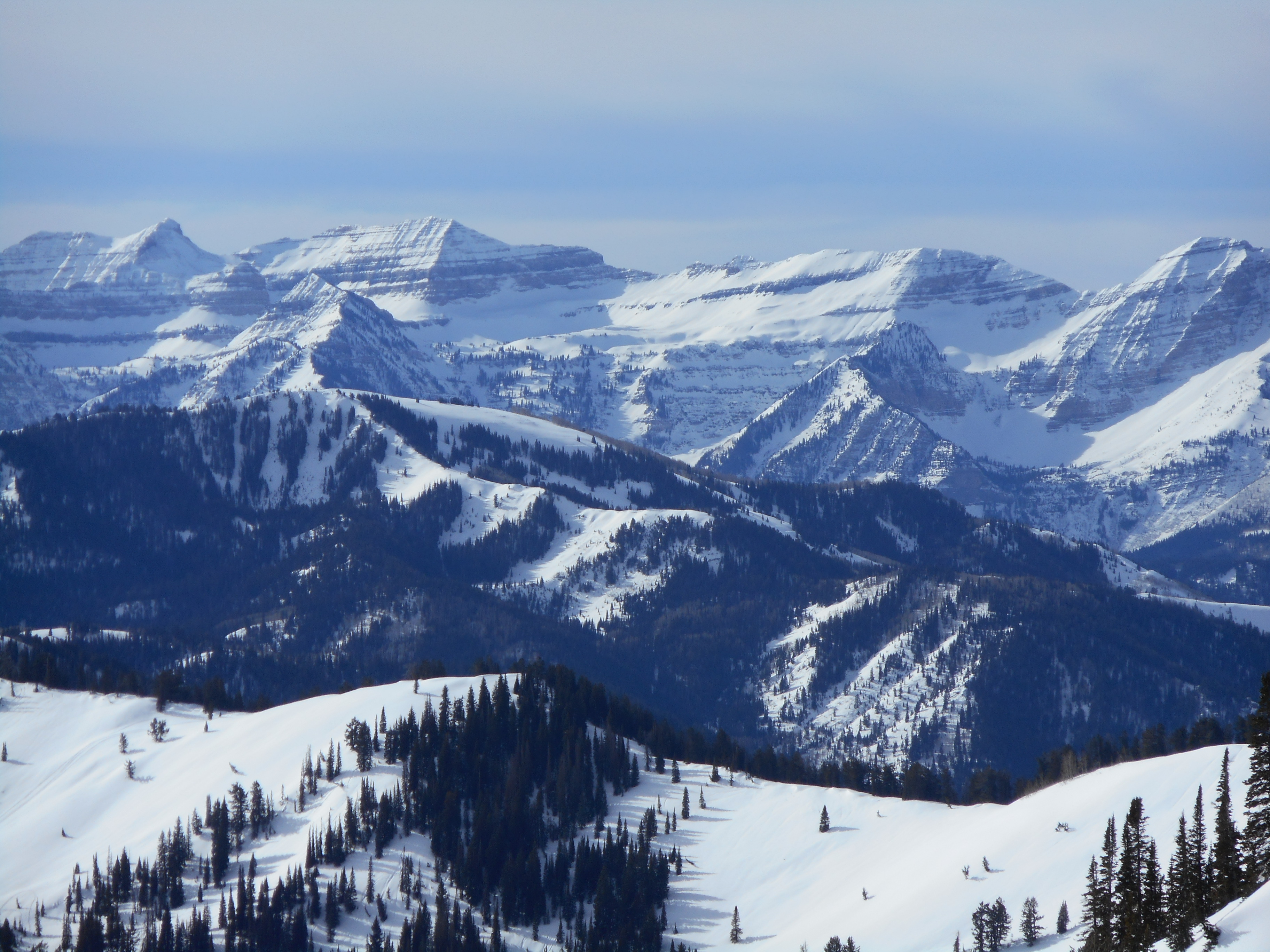
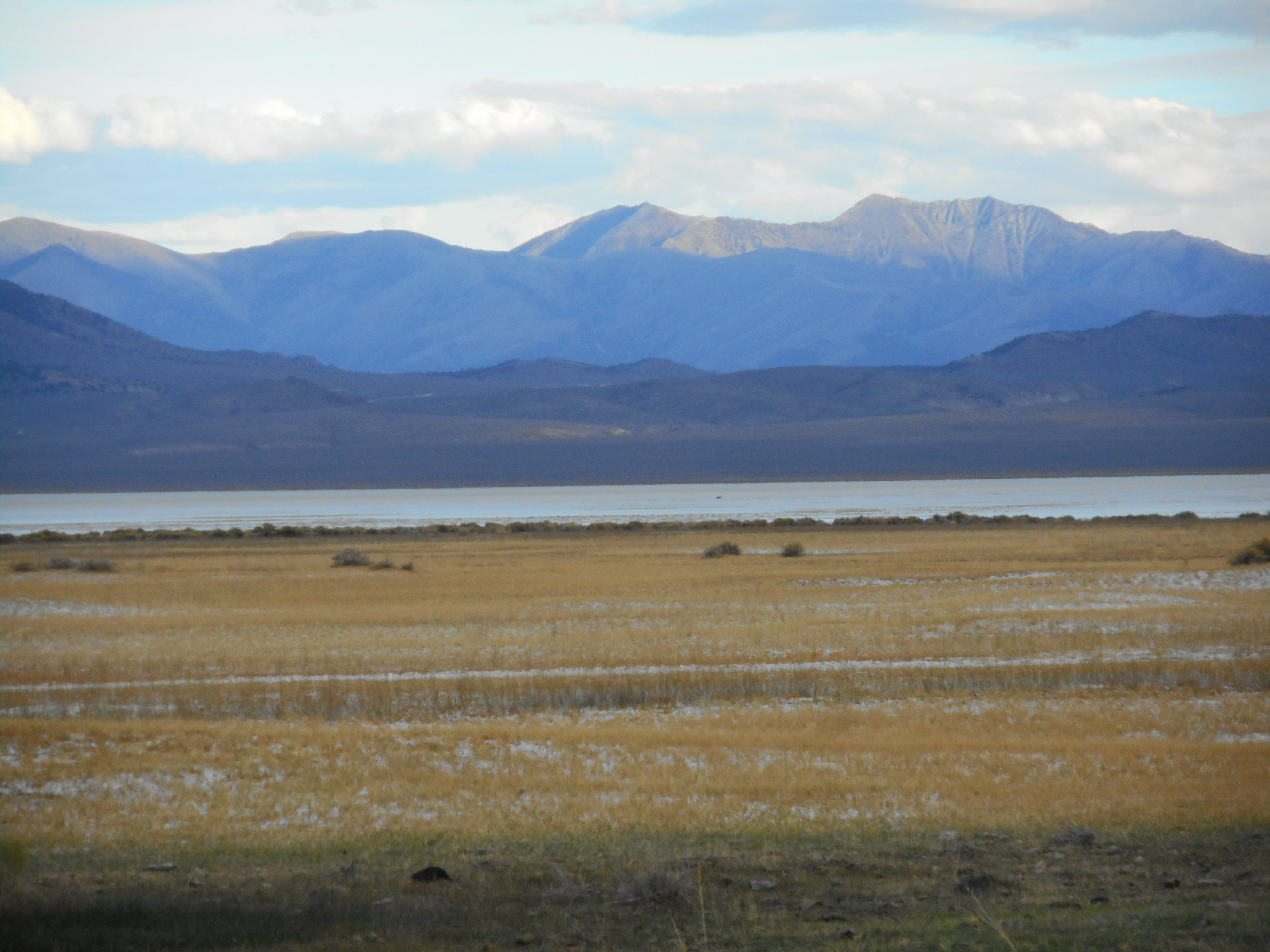
East-coasters may not think much of fall colors in the West as they are spoiled by breathtaking swaths of maples, hickories, beeches, birches, ashes, and whatnot. Our region is not famed for autumnal richness, but that’s what makes these patches in the arid highlands so appealing—their scarcity. On our hikes up San Juan and Cottonwood Creeks we thought of the aspen groves as plentiful and enjoyed a marvelous palette. Alas, I was too busy staying hydrated in the surprising heat to bother with photographs. You’ll just have to go yourself and see. I do have a photo of the Toiyabes from the Smith Creek Valley just to the west:

Toiyabe Range

That’s enough for today. I’ll cook up part II soon and continue our story.

Summer of Darkness, part two

Since my previous post about TCM’s Summer of Darkness film festival we managed to squeeze in a few more films noir. We had to watch The Killers again—that one is a classic of the genre. Who can argue with Burt Lancaster and Ava Gardner? William Conrad and Charles McGraw, who play the hit men of the title, give particularly menacing performances. After that it was Border Incident, 99 River Street, The Lady in the Lake, Out of the Past (my all-time fave!), Act of Violence, The Lady from Shanghai, They Live By Night, Shadow on the Wall, Marlowe, On Dangerous Ground, Cause for Alarm, No Questions Asked, Macao, Split Second, The Narrow Margin, His Kind of Woman, Angel Face, Brute Force, and Desperate.

Highlights? The Orson Welles-helmed The Lady from Shanghai is a bizarre, rambling epic with the maestro himself starring as an Irishman, complete with a begosh-and-begorrah accent. It showcases his wife at the time, the amazing and under-appreciated Rita Hayworth. Dazzling camera work is featured throughout and culminates in the unforgettable final scene in the funhouse hall of mirrors in San Francisco’s Playland-on-the-Beach. There’s a panoply of creepy minor characters and the goofy plot almost feels like an in-joke. Welles was a legendary show-off and rarely shot a sequence where he couldn’t wow you with his technical brilliance. This was a hard one to take your eyes off of!

The aforementioned Charles McGraw (who was also in Border Incident, Brute Force, and His Kind of Woman) brought his gravelly voice and seething machismo to the sensational The Narrow Margin which also starred the spectacular Marie Windsor. Most of the studio system starlets were dwarfed by the stacked and statuesque Windsor who could dish it out with the best of them. It’s a shame she never became a big star—her physicality would play well in today’s films but was a little too much for the cramped confines of the B-movie sets. The Narrow Margin is superbly paced and packs a lot into its 87 minutes. Imagine a modern movie under an hour-and-a-half in length!

Brute Force, another Burt Lancaster vehicle, is notable for its excellent villian, Captain Munsey, played by Hume Cronyn in a brilliant bit of against-type casting. The shootout/jailbreak climax is as dark and depressing as anything in noir. Other than Robert Mitchum no actor exemplifies “loser” or “chump” in the noir canon better than Lancaster. Being handsome, manly, and athletic does not insulate you from the ass-kicking ways of fate. With his perfect teeth, broad shoulders, and rolling dancer’s gait, he was that guy we were always shocked to see fall. (My favorite Burt role is as Yvonne de Carlo’s doomed lover in the terrific Criss Cross.) Mitchum, of course, was the quintessential noir leading man (with apologies to Humphrey Bogart). The hang-dog look, the mumbling, the I-don’t-give-a-shit vibe, and the languid, sleep-walking style all combined to make Mitchum movies (Macao, His Kind of Woman, Angel Face) unforgettable. Bogie was the ultimate tough guy and could only be taken down by a hail of bullets. Mitchum would lead himself into his own destruction, which is what noir is all about. He had a believable, everyman persona and we were never surprised when he came to his sad and lonely end.

Director Anthony Mann (Desperate and Border Incident) cut his teeth in the noir realm and later worked with actor James Stewart to make several excellent Westerns (The Far Country, Bend of the River, Winchester ’73) that are notable for their dark themes and sinister performances from their leading man. Stewart was a beloved actor and these roles not only enlarged his screen range but set the style for the grittier, harder-edged Westerns of later years.

Another treat was watching James Garner’s take on Raymond Chandler’s P.I. in Marlowe. It’s an overlooked and perhaps underrated film and is notable for an appearance by Bruce Lee. Garner, like Stewart, was not known for noir, being too likable and good-looking to really pull it off. Garner found his perfect niche not long after Marlowe with his TV show The Rockford Files, where he is regularly beat-up, ripped off, harassed by cops, and taken for a ride by mobsters. Despite the double-crosses, betrayals, and murders it’s too lighthearted to be called noir. Nonetheless Garner is one of the few actors who could make the lone private detective appealing as a person and not simply a vehicle to tell a story. And it would take a very brave director to send him down into the cesspool and kill him off! You need Mitchum or Lancaster for that.

As much as I love the movies of the film noir era I hesitate to say that they are “better” than today’s cinematic efforts. What they are is something distinctive and a product of a particular time. I am very attracted to the themes and to the style of storytelling. My mother, to whom I owe my love of this genre, always says “they don’t make ’em like they used to.” And that is certainly true. I would not, however, want anyone to attempt to re-create these movies, any more than I would want to hear someone trying to sing or play like Louis Armstrong. (I want artists and performers to be themselves and not some ersatz version of someone else.) I’m glad today’s movies are different than those made in Hollywood “back in the day.” I’m especially glad there is still an interest in these older works as evidenced by the popularity of noir festivals like Summer of Darkness.

Summer of Darkness

TCM is running a film noir festival called Summer of Darkness every Friday in June and July. So far I’ve had the chance to see Gilda, The Killers, Born to Kill, Murder My Sweet, Mildred Pierce, The Gangster, Gun Crazy, and Tomorrow is Another Day. The movies run from 9:00 a.m. until midnight. From 5:00 p.m. on the inimitable Eddie Muller acts as a host and introduces each film and provides a little commentary at the end. I don’t do Netflix and I don’t DVR so if I want to watch I have to “pencil in” the showtimes and park myself in front of the TV. I don’t mind—I almost never go to the movies anymore so I think of these showings as my own personal movie theater schedule. The upside is that I can have a fat glass of bourbon in my hand the entire time!

I’ve been thinking a lot about why I like these films so much. I admit I really dig the suits. The men are always dressed to the nines, from shined brogues to creased fedoras, and part of me wishes I could go around like that. Those cats had some style! And speaking of style, I think it is the highly expressionistic look and feel of these movies that appeal to me. Also I appreciate the boundaries the film makers worked within. It’s rare that they exceed 90 minutes, for example, so the storytelling had to be brisk. Many were on strict budgets and schedules and so sets, lighting, locations and whatnot were limited and the directors, cinematographers, screenwriters, and designers had to work with a restricted palette of possibilities. The producers and studio heads had a huge impact on the final product, so much so that it’s hard to make a case for auteur theory. There was also the Hays Code (which was in effect until 1968, believe it or not) which forced the movie makers to subvert much of their content and to disguise controversial topics. All of these films are loaded with cinematic “sub-text” as taboo subjects and themes had to be inserted with clever workarounds and loaded dialogue rife with double meanings.

The back lots of the studios—B-movie territory—gave writers and directors a chance to play with darker stories and disreputable characters that would not have made the cut in the blockbusters and big productions. Doing things “on the cheap” meant a reliance on lighting and photography to create atmosphere and convey mood giving film noir, literally, its dark quality. Many of today’s crime dramas emphasize naturalism, which is perfectly fine, but it’s not the stylized melodrama of the “old classics.” I like the vivid contrasts of the black-and-white milieu and the over-the-top acting with its breakneck dialog. I mentioned my fondness for the way the men dressed but I would be remiss not to include the ladies. Today’s actresses are just as beautiful and talented as the glamour girls of that time, but the difference was just that—glamour. The studios played up the magical enchantment and allure of the untouchable screen goddesses. Think about the first time you see Rita Hayworth in Gilda, where she’s kneeling on the bed in her negligee and tosses her luscious locks back before looking into the camera. That’s the film noir femme ideal right there!

So far my favorite movie is Gun Crazy. There’s a frenetic edge to the thing that keeps your nerves jangling and the extraordinary performance of Peggy Cummins digs deep into your psyche. Dalton Trumbo, blacklisted at the time, was the uncredited screenwriter.

Friday evenings are usually my go out on the town and socialize time, but I may have to neglect camaraderie and pub crawling the next few weeks in favor of the small screen and the Summer of Darkness.

The Buying of Lot 9

It came in the mail on Saturday:

Real property in the City of Yreka . . . Lot 9, according to the plat of “Souza Subdivision, Block 57” . . . all that portion beginning at a point on the Easterly line of said Lot 9 . . .

That is from Exhibit “A” attached to the Grant Deed that has been issued to us and recorded in the County of Siskiyou on the 29th of April. Officially we now own the house and property next door. No more dealing with banks! We gave them money and they went away. The deed has some great language on it, not just the surveyor’s argot (” . . . then South 17° 44′ East, 18.0 feet; thence South 72° 16′ West . . . “), but the legalese:

THE UNDERSIGNED GRANTOR(S) DECLARE(S) . . . FOR A VALUABLE CONSIDERATION, receipt of which is hereby acknowledged . . . hereby GRANT(s) to . . .

I’m assuming the “valuable consideration” is the heap o’cash we wired to them. The title insurance documents came on the same day as well. Those documents have errors in them, which I suppose I’ll have to deal with, but the deed looks correct and properly notarized. These things are rather underwhelming—just some typed pages, signatures, and stamps. I was hoping for parchment and lots of flourishes and maybe some crimped, embossed, or gilded portions. Alas, just routine bureaucratic stuff. I went back and looked at the deed to my current home and it is a little flashier but still pretty damn dull. I want a scroll with a wax seal in a calfskin pouch. Is that so much to ask?

I kept a log of the big events related to the sale, a chronology in case things got bizarre and we needed an attorney. We’ve coveted the property next door for years for a variety of reasons, mostly having to do with privacy and security. We had a chance to buy it twenty years ago but could not afford it and we have regretted that missed opportunity many times. The last set of tenants were petty criminals and drug dealers and the noise, traffic, and general disregard for civilized living they brought to the neighborhood was intolerable and caused us much grief. The best thing they did, in the end, was trash the place and then abandon it. It was empty in January of last year and has been empty since. A month after that I spoke to the landlady and she told me they no longer owned the house, that it belonged to the bank. I immediately engaged a realtor and was determined not to miss this second chance. In January of this year foreclosure notices were posted on the property and a month after that a trustee sale took place on the courthouse steps. We could have bought the note right there and then but my agent advised me to wait, saying it would be better if the bank cleared up all the title issues and put it on the market as they would likely sell it for the same price as it was being auctioned for. There were no takers that day and ultimately the place was listed the following month.

We were told the bank would consider one offer at a time and our agent made sure our offer was first. Naturally that wasn’t enough—another offer came in that same day and the bank decided to take a look at both. Their solution was not to negotiate but to demand “last and final” offers from both potential buyers. After some anguish and a heart-to-heart with our agent we jacked up our offer by forty percent and waived all requirements, taking the property “as-is” as well as covering all the closing fees. It turned out to be just enough better than the other offer and we signed a purchase agreement a week later (on St. Patrick’s Day!). It got a little goofy after that as we did not get the copies of the agreement or the receipt for our earnest money for about a month. It seems there was a breakdown in communication and one party thought another party had taken care of it. Meanwhile we were on tenterhooks, but it all worked out. At one point the City had a complaint come across their desk about the state of the front yard and a letter to that effect landed in my mailbox. Not knowing the status of things I finally contacted the bank’s agent and she not only told me we were “in escrow” but got me the missing paperwork. That was a relief! In the meantime people kept coming by to check the place out as it was still listed “for sale.” One guy even tried to open a window and crawl in and seemed miffed when I caught him and told him to call the real estate company if he wanted to look inside. The name and phone number were prominently displayed on the sign but most of the people I talked to who were looking at the property had not bothered to call first. Go figure.

A little over a week after that we were signing the final documents. Two days later we got the keys and two days after that the deed came in the mail. Naturally everyone we know is interested. We’ve gotten lots of advice and suggestions about what to do and who to call and how to go about things. We even have people ready to move in! We’ve been rehearsing lines to use so we can deal with the flood of inquiries. Interestingly enough we had to state in our purchase agreement that we intended to occupy the home. The property was covered by the FreddieMac First Look Initiative which gives an exclusive buying window to owner-occupiers and excludes investors. The idea is to stabilize neighborhoods by discouraging absentee landlords and house-flippers. We also had to agree not to sell for a year after taking ownership. But that’s not what we want anyway. We intend to fix the place up to live in it as an extension of our current home. Some people, I like to say, want to live in a two thousand square foot house. I want to live in a twelve hundred and an eight hundred square foot house put together! Seriously, buying the little house next door more than anything protects our current investment in our home of twenty-six years. The increased space is one thing, but the privacy and separation from our neighbors is even more important. Lots of my friends live in the country and have tons of empty space between themselves and their fellow citizens. I like to think this gives us a little taste of that. I like living in town and being able to walk everywhere, but it is a trade-off. Now I can look out my office window as I type this and see nothing but my property! It’s a great feeling to be your own neighbor.

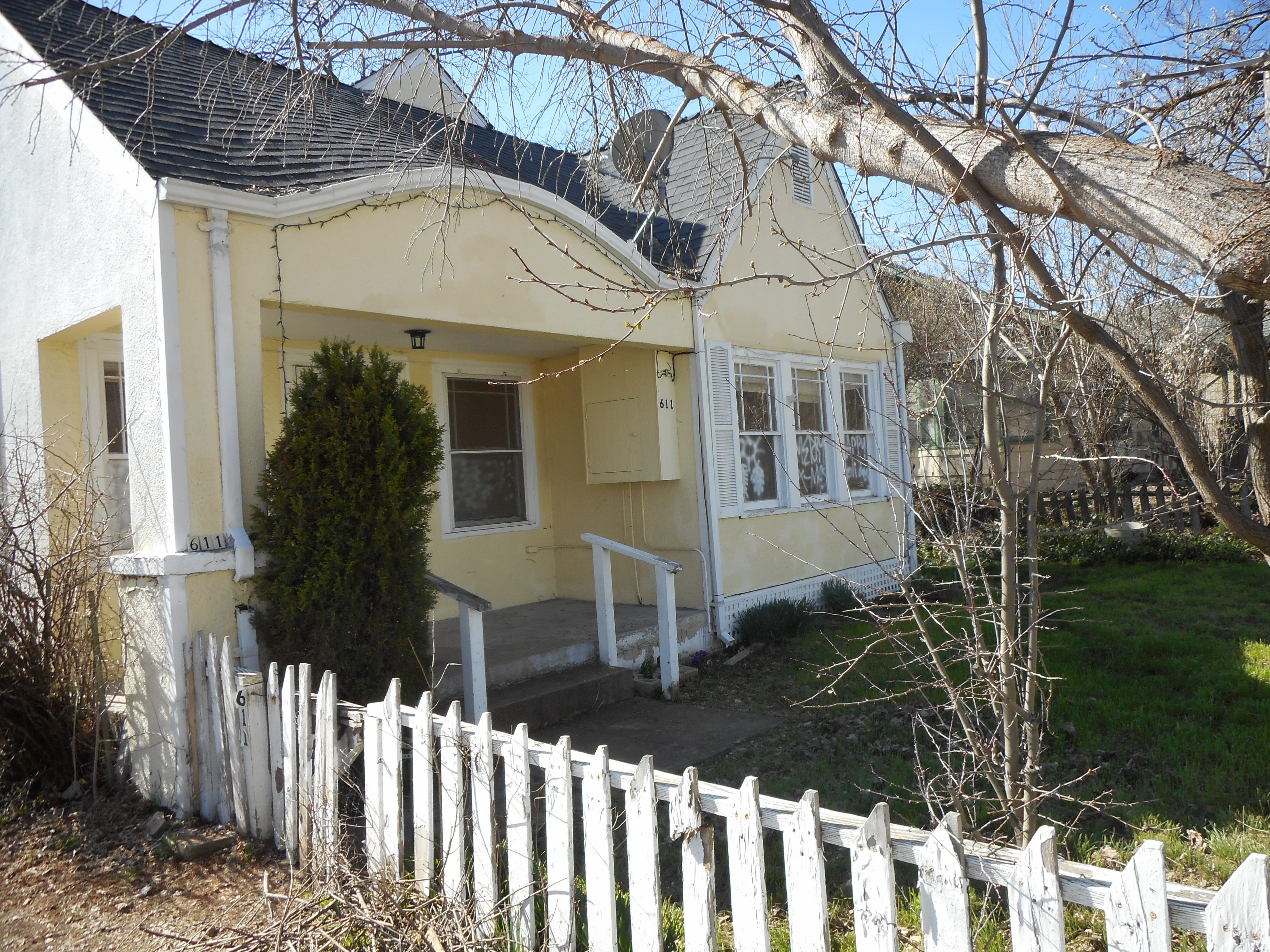
Eventually we will get the house fixed up and habitable. It is a real mess right now and needs a great deal of work. Time, money, and sweat are what’s needed, and it looks like we’ll have all three once the dust settles. I’m excited by the idea of having house guests who can stay in their own place and come and go as they please. I’m looking forward to converting the laundry room into a brewery. My wife has furniture and family materials from her parents home that will soon have a permanent place, not just a storage shed. The new place has a garage, something we’ve never had, which will be great for our lovingly restored twenty-seven year-old Toyota pickup. Nothing like starting up a vehicle on a winter morning and NOT having to scrape the windshield. We’ve even talked about making the new place our final spot when we get old and feeble and need a smaller living space (if the gods are willing and let us live that long). In short, there are many possibilities and we are in no hurry. Here’s a shot of the place from a few months ago:

house

We’ve cleaned up some of the mess, but you can see it has potential. It’s cute and has a little style. The roof is in good shape. Later this week we’ll get in the attic and the crawl space underneath and check out the bones. Whatever it is, whatever the condition, whatever the problems, we will deal with them. We’ve no timetable and no agenda. We are just happy that the waiting is over and we no longer have to worry about what’s next.

One Man’s Troubles

The Ghosts of Belfast is the American title of Northern Irish writer Stuart Neville‘s debut novel, The Twelve, which was first published in the UK in 2009. I picked up a copy when I attended NoirCon last fall. I got to meet Mr. Neville briefly and he signed my copy and posed for a picture. You can see my write-up of that here.

Northern Ireland is a peculiar place. Whether it is a province or a country is a matter of perspective. It lacks a national flag, for example. Its citizens are British, yet can claim an Irish passport. It is about the size of Connecticut and home to 1.8 million people, a third of whom live in the greater metropolitan area of its capital and largest city, Belfast. It has long been part of the British Empire and British citizens—primarily Scots—were transplanted to the Ulster province centuries ago in order to secure the land from its original Irish inhabitants. This of course sowed the seeds of future conflicts, the most recent being the decades-long reign of violence and terror known as The Troubles. The loyalists to the British crown, i.e. unionists, were pitted against Irish nationalists, i.e. republicans, in a split along both ethnic and religious lines. All conflicts have casualties and one of the biggest is Northern Irish identity. Some see themselves as British and subjects of the Queen. Others see themselves as displaced Irish, culturally if not actually part of the Republic of Ireland to the south. The Good Friday Agreement of 1998 put an end to most of the fighting and began the process of establishing a new government with hopes of ending the sectarian divide.

Like all places attempting unity after a long struggle, blanket pardons and amnesties were offered to many former combatants. Jails were emptied and past sins legally forgiven. Men who were once criminals and terrorists walk the streets. The Ghosts of Belfast begins with one such character, Gerry Fegan. Released from the infamous Maze prison as a result of the peace treaty, Fegan’s former republican bosses keep him on the payroll as a reward for his past devotion to the cause. They now serve in Stormont, the Northern Irish assembly, and know that the Gerry Fegans of the world are anachronisms. The fragile politics of the new order means the old warriors have to be shown the door. Fegan is well aware of his obsolescence and has no intention of returning to the fold or serving the cause ever again. In fact he is so wracked with guilt that he buries himself in the bottle and makes himself generally useless. His former colleagues no longer respect him but still fear him as his reputation as a stone-cold killer was well-earned. A chance encounter with the mother of one of his victims sends Fegan off on a dark and twisted path of vengeance and, he hopes, redemption.

The first thing we learn about Fegan is that he is never alone. The ghosts of his victims—twelve in number—haunt both his dreams and his waking hours. He realizes he will never be at peace until he exorcises those demons and the only solution he comes up with is to kill those who ordered him to kill in the first place. The Ghosts of Belfast, then, is a serial killer novel. Generally I hate serial killer stories but this one is different. For one thing all of Fegan’s intended victims are not innocents. They are hard men like himself. In their own eyes they were soldiers, fighting the good fight. They don’t have the empathy for their victims that is Fegan’s burden. It’s that empathy that makes Fegan sympathetic. He is genuinely remorseful about his part in the past violence. Second, The Ghosts of Belfast is really about victims, not killers. The ghosts are there to remind us that The Troubles bloodied swaths of the population. The dead left behind loved ones, families, and friends. They are gone forever but the echoes of their passing haunt the living every day.

Neville paints a rich picture of the machinations required to keep a fledgling state from collapsing. As Gerry Fegan drops more bodies the book reads like a spy thriller as the panic creeps further up the food chain. What we find out is that peace is hard. The deals that have to be made to keep the settlement from falling apart open old wounds. The conflict at least made friend and foe easier to identify. Fegan’s twisted quest for atonement lays bare all the bullshit that the politicos use to patch things together. In the end Stormont survives the crisis but the old men who once held sway over the population with their guns and bombs have to face new realities and learn to serve the needs of an emerging generation.

The Ghosts of Belfast is a gripping read. Fast-paced and suspenseful, its three hundred-plus pages fly by. It helps a bit to know a little of the history but it’s not necessary as the tension and atmosphere of the story are sufficient to keep you hooked. Gerry Fegan is a cast-off, a man without a place, but his struggle to save his soul is universal. The world is big, bad, and crazy and all of us stumble around in the darkness trying to make sense of it. Like Fegan, we seek to be whole, much as the reconciliation process in Northern Ireland seeks to bring unity to a divided people.

The Bret Pack

Bret Easton Ellis was just twenty-one when his debut novel Less Than Zero was published in 1985. I picked it up for a buck at a library book sale in 1998 and got my first taste of his particular brand of noir. Just last week I picked up another effort from Mr. Ellis—Imperial Bedrooms—for two bucks at a thrift shop. Imperial Bedrooms was published in 2010 and is the sequel to Less Than Zero. Both book titles are references to the music of Elvis Costello. Ellis was tagged early on as a founding member of the so-called literary “Brat Pack” which included Tama Janowitz and Jay McInerney. It seems we can’t just read books—they have to be properly packaged and marketed or we won’t know what to think about them.

In Less Than Zero the protagonist and narrator Clay is back in LA after a semester of college back east. He wants to be a writer but no one takes him seriously. His classmates and childhood friends, like him, are from very wealthy families. None have to work and they spend their time partying. Most have ambitions to be in the movie business or the music industry. Clay drinks a lot and snorts coke and smokes weed but none of the drugs seem to affect him. He sees a shrink that his family pays for but the doctor is too self-absorbed to help him. His best friend Julian gets in trouble with a drug dealer named Rip and Clay tries to help but is unable to and instead leaves LA and goes back to school. Imperial Bedrooms takes place decades later. Clay, middle-aged, is a successful screenwriter living in New York. He comes back to LA to help cast a movie and reconnects with his old crowd. Julian is now a recovering addict but Rip, more evil than ever, is still around and Clay once again gets caught up in their struggle. This time the consequences are far greater.

Less Than Zero has a peculiar diary-like style. The prose is lean and generally brisk but emotionally flat. Clay, it seems, has a hard time feeling anything. And when he does, it comes in violent waves of self-pity that seem to confuse him even more. The stream-of-consciousness technique is used a lot and has a disturbing toneless quality to it. Clay is not simply detached from things—there’s a deep emptiness at his core. Much was made of the nihilism that pervades the book on its release. Somehow it was assumed that Less Than Zero was autobiographical, and Ellis was painted as a callous, spoiled rich kid who slapped together his journal entries into a gossipy Hollywood tell-all. I found the book to be, instead, carefully constructed and a sensitive and insightful portrayal of a man trapped in his own alienation and amorality. It’s a coming-of-age story for existentialists. Instead of growing and learning from the crises he faces Clay simply retreats further into his angst and loneliness.

Imperial Bedrooms is even darker as Clay discovers that despite his feelings of helplessness he is entirely capable of creating any life he wants. The realization of that power, instead of liberating him, sends him down a darker path of self-loathing and betrayal. In the first book Clay is mostly passive and watches things happen. In the second he is active, but the activity is entirely self-centered and he mostly feeds his appetites for drugs, sex, and violence. The two stories are cleverly connected by the opening of Imperial Bedrooms where an unnamed “author” has written a book about Clay and his friends and they go to see the movie. The characters in the first book get to react to their own story as it is quickly summarized by the author and the film. Invisibly the story-teller, who is at first not-Clay, re-emerges as Clay, and then the new story unfolds. It’s a bit of slick misdirection that both links the two novels and allows the second to stand on its own.

It’s a bleak, insular, and repellent world that Ellis has created, but like a highway wreck we still crane our necks and stare at the carnage. Like Albert Camus in The Stranger and Jim Thompson in The Killer Inside Me, Ellis is interested in what makes us do bad things. And more to the point, why we persist in having a moral code in the face of the universe’s indifference. Ellis has received his share of criticism for seeming to glorify debauchery and violence, but I think that misses the mark. I think he looks at the world and sees the depravity and wonders how we can stand by without reacting to it. By making that the central focus of his art it forces us to see it better and thus respond to it. He strikes me as a writer deeply concerned with human values and, in particular, how we let them slip away so easily as we chase more temporal pleasures.

I can’t say that Less Than Zero and Imperial Bedrooms are fun books. Despite their brevity and the crisp, spare style they are not light reading. But they are both well-crafted and cut like a scalpel. You don’t feel the blade going in but the blood comes gushing out anyway. Ellis has kind of hypnotic power and you find yourself entranced by a bunch of people you hope you never have the misfortune to meet. I know I’m going to try a few more of his books.


Noir-omancer

Neuromancer by William Gibson is one of my favorite novels. It was published in 1984 but I didn’t get around to reading it until 1990. By then its companion novels in the “Sprawl Trilogy” (Count Zero and Mona Lisa Overdrive) were out and those I gobbled up straight away. While the book is best known for popularizing the term “cyberspace” and for its playful and inventive speculations on computer technology and artificial intelligence, it also, like the brilliant 1982 film “Blade Runner”, works as neo-noir. For one thing the plot is an elaborate crime caper not so different from a Donald E. Westlake heist story or a John le Carré espionage tale. For another, the protagonist Case is a dissolute drug addict with a criminal past. Molly, his eventual partner in the escapade, is a freelancer doing muscle work for a variety of shady underworld types. Both characters are fatalistic and world-weary, willing to take on a dangerous task for the chance of a big payoff. Noir, ultimately, is about outlook and atmosphere and is concerned more with motive and character than action or plot elements. Case and Molly are a classic noir duo—loners thrown together through no choice of their own, sexually but not romantically involved, secretive to the point of paranoia, and willing to sell out their employers if something better comes along. The dystopian near-future so beautifully rendered by Gibson’s dazzling prose (“Blade Runner” achieves the same thing visually) infuses the whole story with an atavistic longing for better times.

Re-reading the novel these last few weeks, twenty-five years later, I’m struck by its vividness, clarity, and penetrating insight into corporate branding, advertising, media saturation, and propaganda. Gibson’s vision of a vast world-wide interconnected computer network which he called “the matrix” and his description of cyberspace as a “consensual hallucination” are still surprisingly fresh despite the intervening decades. Much of the tools of Case’s trade—keyboards, data disks, electrodes, adapter plugs, etc.—are anachronisms but they don’t spoil the effect. The language is amazingly supple, particularly the imagined street slang (reminiscent of Anthony Burgess’s “Nadsat” in A Clockwork Orange) and the fanciful hacker or “data cowboy” argot. His vision of weakened governments kow-towing to an international corporate elite, shared by many post-modern writers, only gets closer to reality with each passing year.

Literature may be from a particular time and place, but if it’s good, it will still work years later. No one goes whale-hunting in sailboats any more, but Moby-Dick‘s foray into madness remains relevant. Armies don’t fight with swords, shields, and spears these days but the Iliad‘s probing of the nature of heroism still resonates. Gibson’s debut novel was the standard-bearer of the short-lived “cyberpunk” movement, but his themes of alienation and the loss of individual freedoms will never go out of style.

High Country Tour

The forecast said eight inches could come in a day or two and that was enough to get us out the door. We are snow-starved here in the State of Jefferson and my ski buddy and I could not take another day of hoping for a big storm. “If it snows, we goes” is our motto and it was time to put up or shut up. Between pal Miller and myself, that’s a tall order. We left Yreka Monday, a week ago today, about eleven in the morning and got to Elko in Nevada over eight hours later. It never fails to amaze me how vast the arid West is. We took CA 89 through the Cascade volcanic plains with their rich timberlands and US 395 to Reno in the dry country on the east slope of the Sierras. Then it was the seemingly endless trek across the basin-and-range topography that defines the Silver State. From Elko to Salt Lake City the next day was a more leisurely three-plus hour jaunt and we found cheap lodging in Midvale. Our motel was minutes away from Big and Little Cottonwood Canyons which are home to Brighton, Solitude, Alta, and Snowbird ski resorts. That night we ate and drank at the excellent Bohemian Brewery walking both ways in the surprisingly balmy weather. SLC had record highs the days we were there. Utah has goofy alcohol laws and you can only get “3.2 beer” on tap. For some reason Utah measures alcohol by weight, not volume, and thus you have 4% abv. In the end that was OK as I like quaffing multiple pints.

Alta was our primary destination and our over-anxiousness had us there an hour before opening the next morning. About six inches had fallen and we were ready for some fun. Explosions from the dynamiting of cornices and other avalanche hazards is pretty common at ski areas but the thundering booms coming down from above unnerved me anyway. The lifts loaded about 9:15 and we were off. I noticed the altitude right away as the top is over 10,000 feet. I had a hard time catching my breath and I also got a little vertigo from the steep pitches the lifts raced up. I’m just a small-town boy these days—I haven’t been to a big-time resort in decades. The size and scale at Alta were dazzling and I got a bit overwhelmed. It was tough going as the runs are challenging and my partner on the slopes is aggressive and adventurous. I only fell twice and one was in a narrow off-piste chute that I should have avoided. Falling was the safe thing to do! The other was just a little slip on some hardpack. In neither case was I hurt and my skis stayed on both times. It was warmer than I expected and I was over-dressed and sweated quite a bit. I was soon dehydrated from the exertion and took a long break but managed to get it back together and catch a few more runs. The snow was a little wet and heavy much like we are used to in California and Oregon but there were plenty of fun patches and the ever-elusive “freshies.” Much of my first day in the Cottonwoods is a blur, though. I worked hard and got worn out but it was all good as I was ready as ever the next morning.

We decided on Brighton as the climbing temperatures and lack of new snow in the forecasts meant we should avoid the steep stuff. I can only do the advanced/expert runs when there is a soft layer on top. Rather, they are easier then and thus I have more fun. On groomed slopes I stick to mostly intermediate and look for spots in the trees where there’s exploring to do. I don’t like the tight places and look for openings. I struggled with vertigo again and even a bit of acrophobia on the fast chairs and once again amazingly steep climbs but taught myself to overcome it by slow breathing and looking straight ahead. Eventually I could ride up and down without gripping the bar in fear! By the end of the trip it was a piece of cake and I had fully adapted. The third day we took a break and drove over to Park City for some sightseeing. The Wasatch Brewery was an obvious goal and we checked out the fancy and expensive galleries and shops. The snow cover is far lower than normal and locals told us over and over what a lousy ski season it was. We of course had nothing back home so it was great to be able to ski at all. It was obvious all over the mountains that the coverage was poor and the depths nowhere near where they should be. The Wasatch Range is amazing, especially from the west side as the relief is spectacular. From the flats of SLC it looks like the mountains jump straight up. Unfortunately the dun-colored hillsides are ugly and the city itself suffers, as do the other towns, looking drab and forlorn in the wide-open shrubby landscape. I’m biased, I know, but the barren highlands of California have prettier shades and more greens!

We skied Brighton again on the fourth day and found lots of fun spots in among the aspen groves. The groomed runs were smooth and fast and I got in lots of relaxed turns. Both days there were sunny and visibility was great. That first day at Alta was overcast and we struggled with the flat light which made it hard to read the slope and pick out a line. I worked on trying to ski the lines the mountain gave me rather than making my own way down. My goal was to use the terrain to control my speed and not just my turns. That worked well on the gentler slopes but was harder on the steeper stuff. Nonetheless I had a lot of fun and got to play around with different things. My new skis are more maneuverable and forgiving than my old ones but tend to chatter and run off-line on the straightaways so I had to stay upright and balanced all the time which is good practice for powder days. Another storm was brewing for Monday but it looked to be less of an event than the one that brought us out so we decided to pack it in and head home. Heavy rain pelted us on the second day as we returned to California and high winds earlier had littered 89 with shattered trees. Fortunately the crews had been out working hard and the road was clear but it was a long haul in the at times blinding downpour. My buddy did all the driving which made it easy on me but it is still hard to sit in a metal box for hours at a stretch. The journey was not completely satisfying as we got no taste of the famous Utah powder but it certainly was enjoyable to get in some real skiing. I expect we’ll give it another shot next month as the locals told us that March often has big storms. We scouted more lodging options and feel confident we can find a comfortable spot whenever we go. Of course while we were gone our local park got nearly two feet and re-opened! I hope to take a trip there as well real soon. Perhaps the snow gods are finally answering our prayers.

Here’s photo of part of the Wasatch from the top of Preston Peak at Brighton:

the view from the top

Not bad, eh?

Steelies!

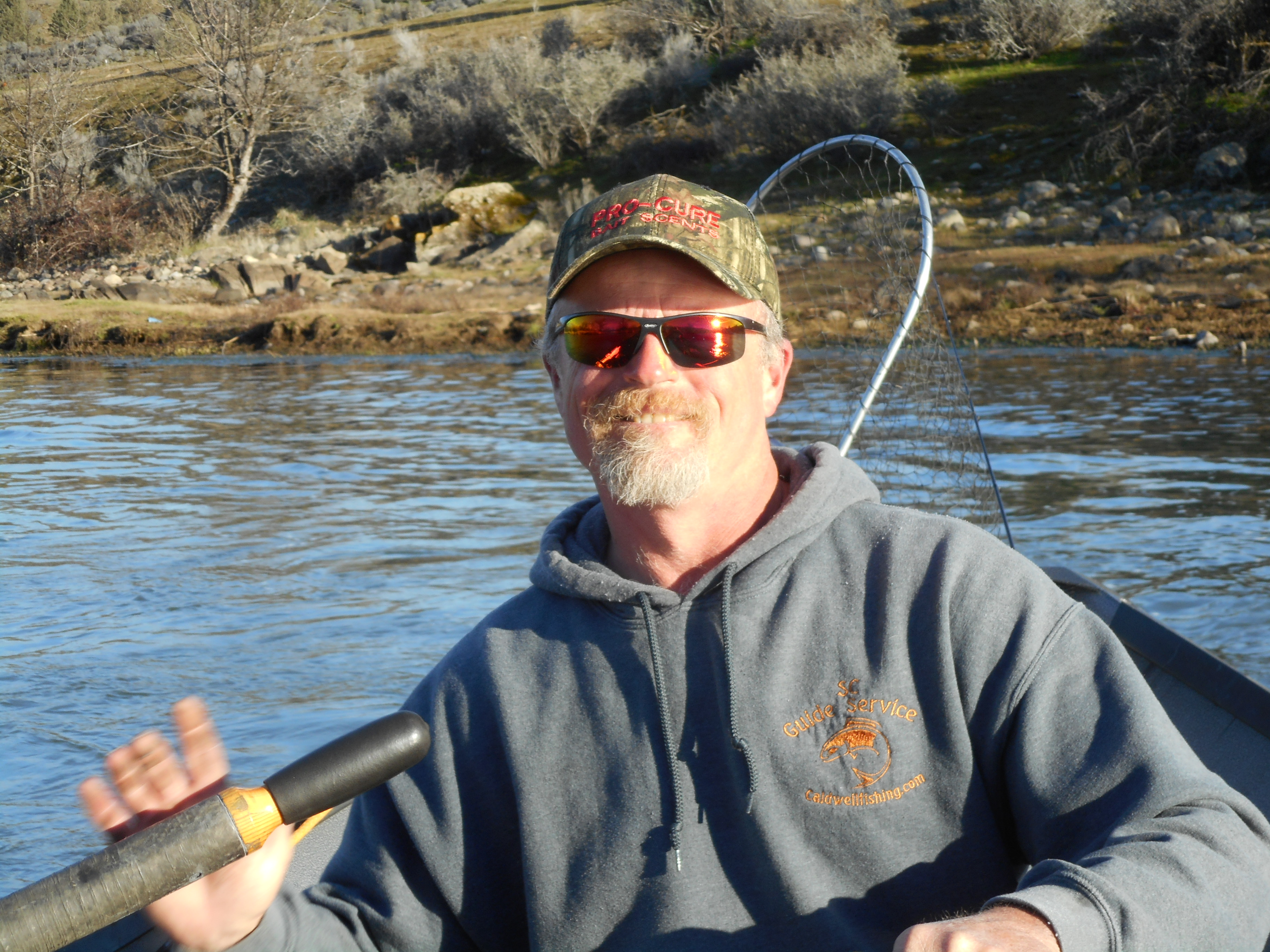
I’m the world’s worst fisherman. I catch my hook on logs or haul in weeds. The lures get stuck in bushes and the bait gets eaten without me knowing. My line always seems to get tangled and the reel makes funny noises half the time I’m working it. If I had to fish to eat I’d starve. Good thing there’s SC Guide Service. My pal Scott Caldwell, owner/operator of said service, promised me a fishing trip as a retirement present. I finally took him up on it and we fished the Upper Klamath yesterday for steelhead. Scott is one of those hook, line, and sinker wizards. He gets the fish to bite and then talks the damn thing into the boat. Here’s the inimitable Mr. C at the helm of his drift boat:

scott

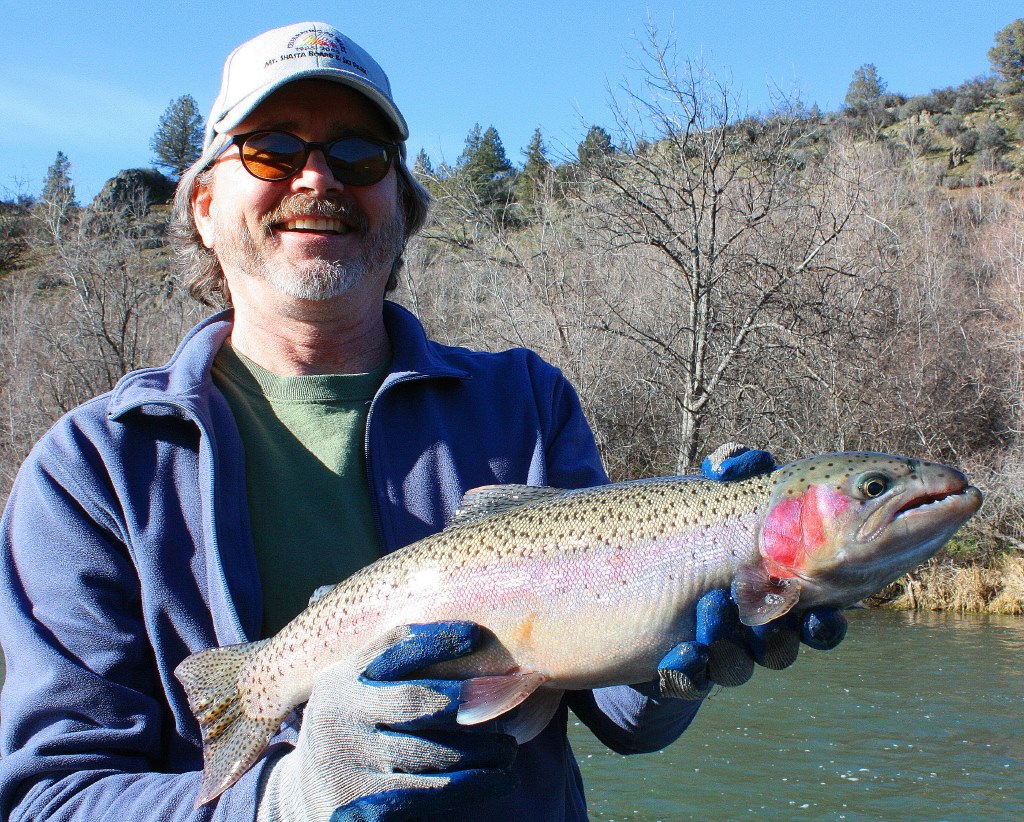
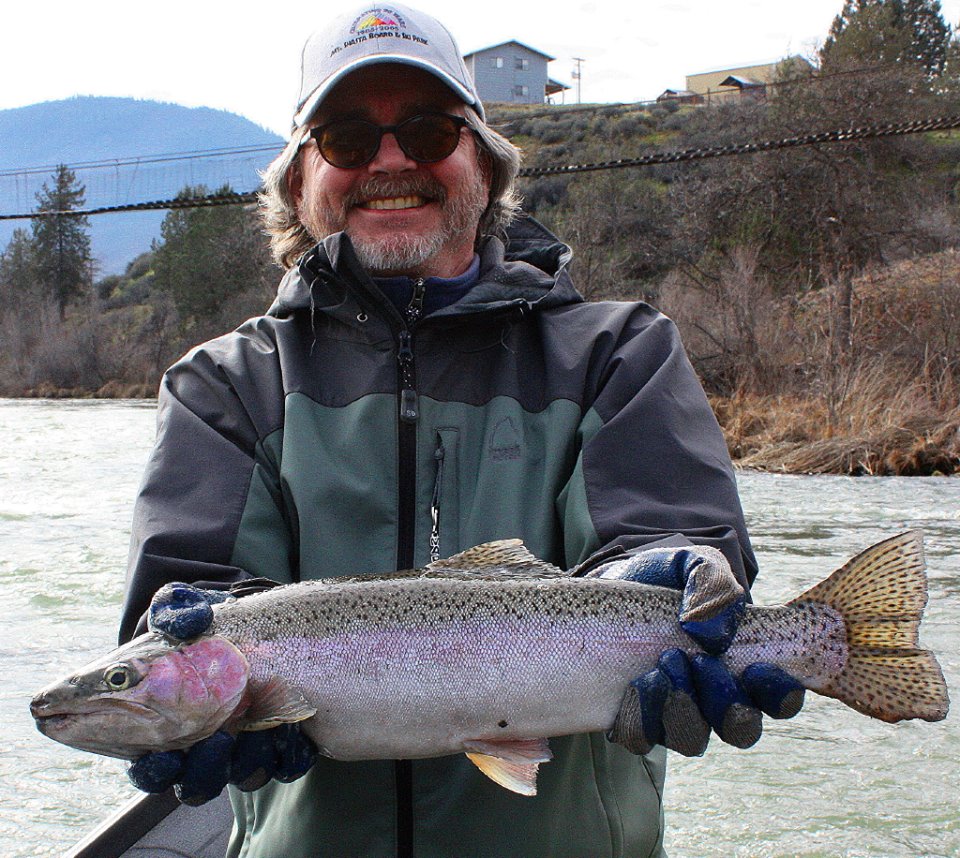
It was a beautiful if somewhat unseasonable day. Too warm for January, that’s for sure. Regardless, I nailed a couple of really nice ones. Scott had me working one bank where there was a little eddy and I kept missing the spot with my casts, just coming up short of where I wanted to be. I finally launched a good one that arced around the spot and just downstream of it and all of a sudden I got that great WHAM! that steelies are famous for. Even I couldn’t miss that. When the fish jumped out of the water right after I hooked him I almost fell out of the boat I was so excited. He kept squirming around after we landed him while Scott was trying to take a picture but somehow we managed. Later, further downstream, I got number two who was hiding behind a big rock. He fought hard and Scott had to move the boat to get a good angle and finally he appeared in the riffle, flashing his colors while he struggled. He was a really hard one to get a handle on but we pulled it off. They sure are beautiful fish! You can only keep the hatchery-raised ones (the adipose fin is clipped so you know) and these were wild so we released them. I’ll have to catch some local lake trout if I want to make a meal!

Thanks again, Scott, for a great day on the river.

fishy 1

That’s numero uno.

fishy 2

And that’s numero dos.