Cedars of Yreka

A few days ago we were sitting at the patio table and watching the trees in the backyard swaying gently in the breeze. We noticed puffs of what looked like yellow smoke coming off the Deodar cedar.

It was pollen, of course.

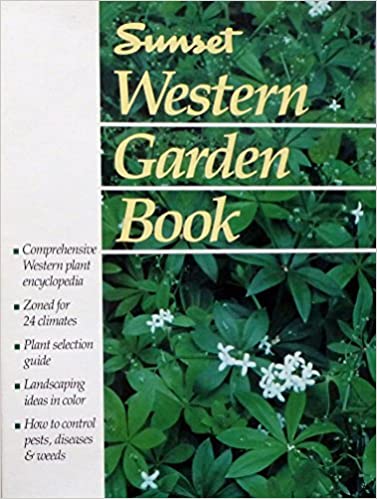
Here’s what the estimable Sunset Western Garden Book had to say under the entry for Cedrus (true cedars including C. deodara):

Male catkins produce prodigious amounts of pollen that may cover you with yellow dust on windy day

3rd printing May 1989, p. 272

I’ve had to hose off the table twice more since then!

According to botanists there are only four true cedars. One is this species, C. deodara, also known as the Himalayan cedar (its native range). The famous Cedars of Lebanon (C. libani), mentioned in the Bible, are also in the genus Cedrus. The other two are also Mediterranean, the Atlas cedar (C. atlantica) and the Cyprus cedar (C. brevifolia). True cedars are members of the pine family (Pinaceae).

European naturalists encountering new plants in the Americas named them with systems imported from overseas. There are no true cedars in the Western Hemisphere but there are cedar-like trees that were tagged with the name. Ubiquitous in California forests is the incense-cedar or Calocedrus decurrens, a member of the cypress family (Cupressaceae). We have one in our yard. Heading north into Oregon, Washington, British Columbia, and Alaska you find the widespread Western red cedar (Thuja plicata), also in the cypress family. If, like us, you have an arborvitae among your plantings, that’s a relative—Thuja occidentalis.

Back here at home we moved the patio table from outside to under the overhang to keep it free of pollen. Tree pollens are particularly fine and dry compared to flower pollens and are thus easily spread far and wide. Although Deodar cedar pollen is not classified as an allergen, I’m convinced that my runny nose, itchy eyes, and hacking cough last week had something to do with all that yellow stuff floating around my back yard.

Lately the days have been beautiful and smoke-free, so I’m not complaining!

Cold, Rain, and Snow

It’s not bad to be wrong. Sometimes being wrong is the only way to find out how to be right.

Or at least get closer.

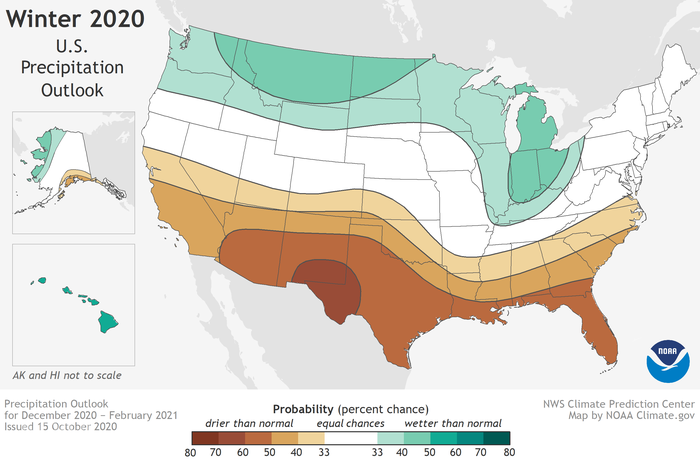
The forecasts for the upcoming winter here in the West are not encouraging:

There is literally a “sliver of hope” in the map above for us here: the tan-colored triangle in northwest California along the Oregon border just might include Yreka!

This is a little less depressing. We may get our usual precipitation, which of course isn’t much, but it doesn’t look like a banner year.

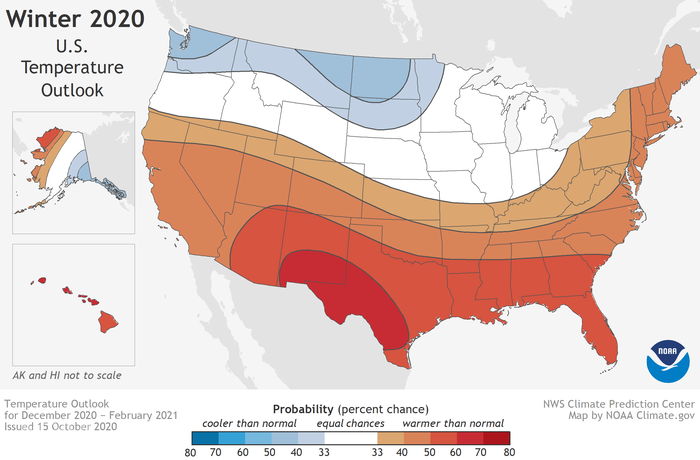
Here’s the one that spooks me a bit:

I don’t want “warmer than normal” I want “cooler than normal”!

Despite our best effort, weather and climate forecasting is still pretty tough. The models are saying the chances are good we will have a warmer, drier winter.

Meteorologists and other scientists have to remind themselves that all models are wrong. They are just models after all, no matter how sophisticated, and a model is not reality.

Models get corrected and updated frequently precisely because they are wrong, and like I said earlier sometimes that’s the only way to get closer to being right.

So I sure hope the models are wrong for this winter. Bring on the cold, rain, and snow!

Rain

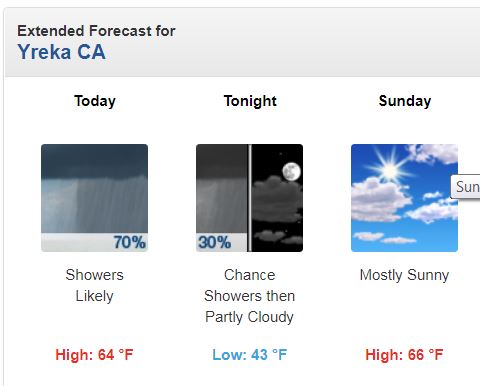
A little, anyway. Not hardly enough, of course.

It’s knocked down the smoke some, perhaps the wind can take care of the rest.

Summer in the Golden State is losing its luster. It was never my favorite time of year, despite being a schoolteacher and a baseball fan! I like the rainy time which is from November to April in most of the state.

There are mountains between me and the Pacific. The Shasta Valley and environs are in the rain shadow of the Klamaths. Suffice to say it is dry here, like much of California.

Like most California cities, Yreka is an oasis sustained by plumbing. We have a water source, Fall Creek, that is a few dozen miles from here so we need a pipeline. Our green lawns and healthy gardens are an illusion. Left to itself, the land here would support juniper, ceanothus, and star-thistle!

Fires have ravaged the West this year. You’ll hear lots of reasons for it, and they are all true. Years of aggressive fire suppression have built up impossible fuel loads in the forests. Logging cutbacks have multiplied that effect. Arguments over policy and bureaucratic inertia have stymied progress. Population growth has put more people on the wild land interface. Climate change has increased the frequency and severity of weather and fire events.

Whenever you are presented with a complex problem, be suspicious when presented with a simple solution. A complex problem is one that can be approached from a variety of perspectives which yield a variety of potential solution paths. At the very least, a complex problem requires a multiplicity of solutions.

Most of the time we solve complex problems by just pushing ahead and seeing what happens, then adjusting on the fly. The problem now is that things are moving too fast. When we just push ahead without forethought, without at least an attempt at planning and problem-solving, we fall back on old habits, old biases, and outmoded ways of doing things.

Engineers often write impossible-to-solve equations for phenomena they study. So they have to make good approximations instead, and that helps guide their work. We need to do the same thing as a society. We don’t know the best way, but we can make models from what we do know, and use those to generate ideas.

And we need the poets on these things, too. They don’t work with differential equations, but they solve equally thorny problems like how to express truth and beauty in the fewest words possible. So they know how to imagine, and see beyond the limits of the language. We will need that to fuel innovation.

The future of life here in the Golden State will likely require an entirely new aesthetic. The California Dream is transforming before our eyes. Let’s get creative and build anew, and stop worrying about what went on before. The most important question is “what shall we do next?”

In the meantime we could use some more goddamn rain!