Hot

Yup. It’s hot.

It’s going to stay hot—unseasonably hot, that is—until and perhaps past The Fourth.

We are used to hot summers here in Siskiyou County, not as hot as Redding or Sacramento and other spots in the Great Central Valley, but hot enough. This week of 100+ temperatures is notable for its high lows. Often in the summer here on the western edge of the Shasta Valley we can see 45-degree swings from day to night. It will be 95ºF in the afternoon and 50ºF in the early morning. When the temperature gets to three digits you can still get nice, cool mid-fifties temperatures to soothe your soul.

Not so this heat wave. It’s not dropping below 65ºF and in fact was almost 70ºF on our back patio this morning. If you don’t have A/C you need that big cooling drop so you can open up the house and get the hot, stifling overnight air out and the refreshing dawn air in. We are lucky and have excellent cooling, but we remember those days when we didn’t. If, god forbid, there was a power outage then we’d have to go back to our old rituals. Unfortunately the cooling would not be sufficient. I hope all my friends out there in hot places are doing OK!

Just a side note: the metric system blew it on temperature scale. You know it is hot when you go from 99 to 100 in Fahrenheit. In Celsius you go from 37 to 38! Boring. No one cares if you have a 99-degree fever but they get concerned if you hit 100. Fahrenheit has a nice, intuitive feel. Going from two digits to three just seems better. The same can be said for 100-mph. You know you’re rocking when you blast out of the nineties. It’s just not as exciting if it’s in kph, going from 160 to 161.

So, is climate change to blame? Is this heat wave evidence for global warming?

It’s easy to say “yes” but not all questions are meant to be answered in simple, binary fashion.

When scientists study things like gases they use statistical mechanics. This discipline (invented by an American, Josiah Willard Gibbs) views a gas as a gigantic ensemble of countless billions upon billions of molecules. Individual molecules are not important. The vast majority of molecules in the gas may be rising due to added heat for example, but any one particular molecule might be taking its own path. The mathematics of statistical mechanics smears out all those variations and makes probabilistic descriptions of the behavior of the whole mass. It’s the only way to accurately account for things.

Temperature, for example, is an average. If you knew the kinetic energy of every molecule of water in your teapot, you’d find that some were greater than others. Some molecules would be rushing about in a great frenzy, others languidly meandering. But by averaging that energy over the entire collection of molecules you can get a useful number—the temperature—that tells us something about the state of the system.

Just like our one lone molecule that is plunging downward when most of its buddies are racing upward from the added heat, any one particular weather event can be “disconnected” from the global climate. That is, even if humans had never added an ounce of carbon to the atmosphere, we could still get extreme weather events.

This is an extreme weather event. Climate science says we should see an increase in the frequency of extreme weather events.

If I reach into a box of hot air molecules, there’s a good chance the one I grab and measure will have a high kinetic energy. In fact, most of the ones I check with my instruments will confirm my observation. The gas is heating up and the molecules are getting energized and the whole mass is rising and pushing on the roof of the box. But I can still imagine the possibility that I will reach in a find a “cool” molecule that is not playing well with others! The odds of that occurrence are lower, much lower, but they are not zero. (Never mind that I can’t reach in and touch molecules, it’s just what Einstein would call gedanken, or thought-experiment.)

So is our Pacific Northwest Extreme Heat Wave the result of anthropogenic (human-made) carbon in the atmosphere? Is Global Warming the cause? Is it evidence of Climate Change?

Probably.

I told you that statistical mechanics was “probabilistic.” So are climate models. They are models after all, and we know that the map is not the territory. The climate is one thing, the models are another. The models are what we use to describe the global system, and if they are robust and have a good correspondence with the empirical evidence, we use them to make forecasts.

It turns out that the models are good. The great Swedish chemist, Svante Arrhenius, described the greenhouse effect in 1896 and postulated that the burning of fossil fuels by humans could raise global temperatures. That famous reactionary, Edward Teller, he of H-bomb fame (infamy?), spoke in 1959 about the possibility of melting the icecaps due to global warming. (Naturally he promoted nuclear energy as the alternative to fossil fuels.) The most famous climatologist, Charles Keeling, he of the Keeling Curve, was given the President’s National Medal of Science by none other than George W. Bush! Here’s what the award says:

“For his pioneering and fundamental research on atmospheric and oceanic carbon dioxide, the basis for understanding global carbon cycle and global warming.”

https://www.nsf.gov/od/nms/recip_details.jsp?recip_id=191

We all know what a snowflake liberal “Dubya” was!

So, yes.

Global warming and climate change are real phenomena. The models are good. They are giving us solid information to make decisions with. The political choices facing our society are one thing. The facts are quite another.

It’s no comfort. Whether this heat wave is a sure sign of climate change or not doesn’t make us any less hot.

But if we are looking for a “new normal” we’ve found it. We know there will be an increasing number of extreme weather events. That’s a fact. The next extreme event might not be a direct result of global warming, but you can bet there will be another, and it will be sooner than it ought to be.

Maybe that will get us to agree on some possible solutions.
Thirteen billion, anyone?

A 58-year old billionaire by the name of Gautam Adani reportedly lost $13B last week. His fortune plunged from $78B to a mere $65B.

That’s a lot of money. The annual budget for the State of California runs on the order of $200B. California is the most populous state, with nearly 40,000,000 people, and the third-largest in area, about 169,000 square miles. Imagine having enough money to cover one-third of the state budget.

Imagine being able to weather a loss of THIRTEEN BILLION DOLLARS.

More than half of the world’s working population makes less than $10,000 per year. About one-third make over $10,000/yr but less than $100,000/yr. (Personal note: I’m in that group.) About 12% make over $100,000/yr but less than $1,000,000/yr. Two percent are millionaires.

They have a term for rich people: ultra-high net worth individuals. These people are worth $30,000,000 or more. They comprise zero-point-zero-zero-two percent (0.002%) of the world. (Figures from Global Inequality .org) A billionaire like Gautam Adani, even at his low point of only $65B is worth as much as two thousand thirty-million types.

Friedrich Engels is not a popular fellow these days, with his and his buddy Karl Marx’ critique of capitalism having been crushed by history. But Engels said something interesting about free market ideologies, claiming that they would lead to a world made up of “millionaires and paupers.” That was in 1844!

The commies proved they didn’t know shit about running a country. Or taking care of their people. But they could at least see that capitalism was not sustainable. We can see it, too. We know that the wealth gap is tearing our society apart. We can watch Jeff Bezos launch himself into space in his very own rocket while his workers struggle to make ends meet.

What would I do with $13B? I suppose I’d be like Bezos’ ex-wife, the novelist McKenzie Scott, and give a lot of it away. She’s donated over $2B to charities and is still one of the wealthiest people in the world. I don’t want a helicopter or a solid gold tub or any of that. I’d probably settle for some really expensive bourbon. And get all my clothes made for me. I’d be Mr. Bespoke. I suppose I could buy Idaho or something. Seems like $13B would go a long way in Idaho.

The USA is the world’s wealthiest nation, but it also has the most—by far—of the world’s millionaires and billionaires. We have a top-heavy income structure. The top one percent of the people own over forty percent of the nation’s wealth. In fact, Americans are not as well-off as they like to think. Median income means that half the people make more, and half the people make less. Our median income is about $66,000. That’s lower than Switzerland, Australia, Belgium, New Zealand, Japan, Canada, Ireland, France, and the United Kingdom. (All of those countries have some form of socialized medical care and relatively generous old age pensions, I should note.)

With increasing automation and our corporations chasing lower labor costs with maniacal devotion I should expect we will see a steady loss of jobs. Oh, there will be plenty of work to do, but the wages will be too low. There will be fewer opportunities even for people with education and skills. Energy costs will ultimately put the brakes on a lot of development, thus increasing unemployment and enlarging the wealth gap. Like I said, Jeff Bezos has his very own rocket. Poor folks will have to be content with underfunded public transportation.

Anyway, I don’t have the answers. But I think we need to put our heads together about it. Scientists like to chase down The Mysteries of the Universe and I have no problem with that. But I don’t think those problems are actually solvable. I like to think social and economic problems are more solvable. That is, there may not be a particular solution or a clear fix, but I’ll bet there are a hell of a lot of ways things could be improved!

The Ministry for the Future

I don’t read book reviews any more. I don’t typically write them much, either.

One thing I’ve decided is that I won’t write negative reviews. They are too easy. And they serve no purpose, other than to make the critic feel good about him- or herself.

A good piece of criticism should open your eyes. The critic’s job is not to say “this is good” or “this is bad” but to say “hey, take a look!” Only a tiny amount of the art created in this world gets an opportunity to be reviewed. Most writers, for example, labor in obscurity and are lucky if they get any decent remuneration* for their efforts. Most of the books sold in the world are written by a very small minority of the world’s writers. We need more writers and a greater variety of books, not more works by the same writers, even if those writers are good at what they do.

Kim Stanley Robinson is an accomplished (and even famous) writer of science fiction. Right there, in that sentence, I perpetuate the problem with book reviews. Why should Mr. Robinson be pigeon-holed as a science fiction writer? Can’t we just call him a novelist? Genres—like romance, Western, fantasy, etc.—are just marketing categories. The folks who sell the stuff have to have ways of separating the customers from their money and labels make that easier.

But they are unfair to the creator of the work. Octavia Butler once said “I write about exceptional people. It just happens to be called science fiction.” Kurt Vonnegut started his career as a science fiction writer and worked like crazy to shake off that label because he felt it limited his audience. He was right. He became a famous literary lion, but he still wrote science fiction even if he didn’t want it to be called that.

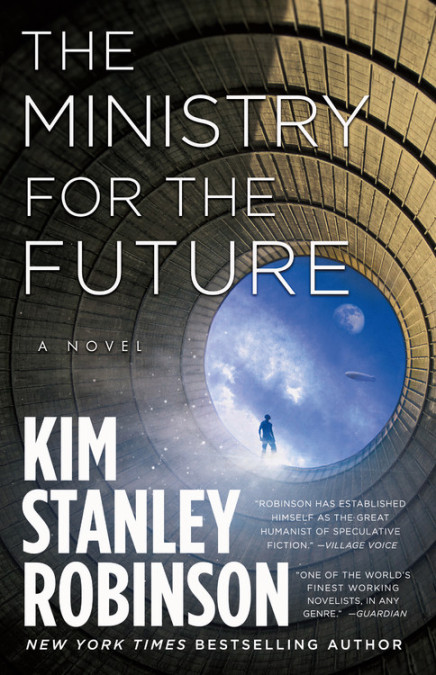
The Ministry for the Future is about our world right now. It is set in the very near future on this Earth and is populated by characters that act and talk like real people.

These people face an extraordinary existential threat, that of climate change and global warming. Isn’t it funny that we call the book science fiction? There’s no fiction in that premise! Humanity is, right now, facing a global crisis that threatens our existence. That’s news, man. That’s not make-believe!

What Robinson does beautifully in The Ministry for the Future is create a fictional response to this crisis. His characters take action. And the story plays out within these actions and their consequences. The book manages to be hopeful and inspiring while at the same time acknowledging, even embracing, the daunting nature of the challenge facing civilization. Humans are flawed creatures and societies perpetuate inequality and injustice, something the novel does not shy away from. It is neither a utopian nor a dystopian book, but rather one that looks directly and honestly into the heart of things and tries to map a way out for all of us.

I want to say “hey, take a look” at The Ministry for the Future! It is a thoroughly provocative read as well as a marvelously entertaining one. It takes a lot of skill, as a writer, to get the reader engaged in the story and the characters and yet at the same time challenge the reader with difficult and uncomfortable notions.

I read fiction, mostly. Every once in a while a non-fiction book comes along that I have to read (like Vaclav Smil’s Energy and Civilization: A History), but mostly I like novels. I find that fiction writers have more freedom to express themselves and thus, oddly, get closer to the truth! If you want to understand 19th-century England, for example, you’d get a better sense of the times by reading Charles Dickens than from most historical tomes. That’s because Dickens wrote about people and what the world did to them. He wasn’t objective. He didn’t have a thesis to defend. He wrote to entertain but because of his sensitivity and humanity the great issues of the day, particularly poverty and social justice, came alive in his stories.

Kim Stanley Robinson’s The Ministry for the Future accomplishes something similar. It works as an adventure story, even a suspense thriller, but it is also has an urgency and immediacy that makes it something larger and better than just another science fiction novel.

I think you should take a look.

*remuneration means “payment” and should not be confused with the similar renumeration which means “recounting” (the second word is frequently and incorrectly used in place of the first word)

Do Cowboys Dream of Electric Trucks?

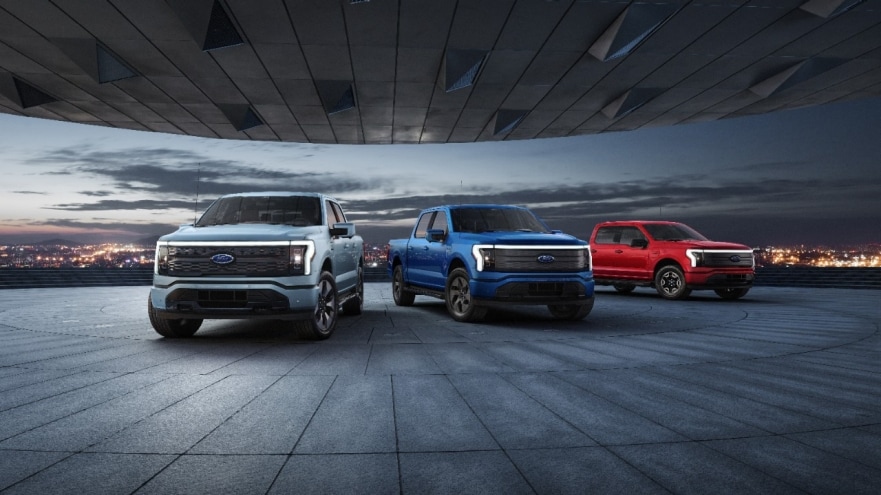
The most popular vehicle in the United States of America is the Ford pickup, specifically the F-series. Ford Motor Company is adding an all-electric version of the F-150 to their fleet, called Lightning. You can go to the Ford website and place an order for the 2021 model.

Electric vehicles (“EVs” to the cool kids) are big business. All the major automakers in the world are committed to electrifying their offerings, with some going so far as to renounce internal combustion engines entirely. Not to mention the host of startups and newer outfits (like Tesla) emerging as players in the global marketplace.

I live in a place where the diesel-powered pickup is more than just a vehicle. It’s a way of life. It’s a cultural and political statement. Ranchers and farmers do a lot of hauling and towing and other jobs requiring a powerful, multipurpose machine that is only partly a means of conveyance. Builders, for the most part, drive fancy pickups with utility racks. They can hardly go to work without them. Recreation-minded folks like to haul boats and trailers. They like to go off-roading. They like their rigs big and powerful.

But lots of folks around here do none of those things and yet still drive large pickup trucks. They go back and forth to Wal-Mart and Starbucks with them. They go shopping in Medford. They never leave the pavement and in fact hardly get their trucks dirty. But they’d react in horror if you suggested they’d be better off driving a Honda Civic!

There are a million EVs on the road in this country. By 2030 there will be at least 15 million and maybe even as many as 20 million. That’s still a small portion of the 250 million total vehicles that will be out there, but the adoption rate will likely keep growing.

EVs were weird cars for weirdos when I was a kid. Now we have Tesla and EVs have become the hip, stylish alternative even if they haven’t quite cracked the middle-class market. They remind me of the Macintosh computer which made Dells and HPs and other Windows machines look positively stodgy. Like the Mac, Teslas are still a bit spendy for most folks.

Enter Ford Motor Company. Ford is a behemoth. Ford accounts for 5-6% of all the vehicles in the world. It’s bigger than Detroit’s other behemoth, GM. Only Toyota and VW sell more cars and trucks than Ford.

Ford isn’t getting rid of its diesel and gas-powered pickups. The Lightning is an addition to their lineup, not a replacement for existing models, at least not yet. But Ford is betting big on the EV momentum. They’ve promoted the Lightning as a work truck, making it competitive with existing fuel-burners in payload, towing, engine power and torque. It will be a four-door five-seater with full-time 4WD and all the other bells and whistles expected in 21st century vehicles. Obviously the big drawback with EVs is range, but Ford is betting that most people will realize that 90% or more of their truck use will be close to home. Moreover, charging networks are popping up all over, and with phone apps directing you to the nearest one, long-haul trips will become more practical. Not to mention home-charging will be an option as well.

The cool thing about an electric truck is that it is a mobile power plant. The batteries store a lot of electricity. You can go out in the woods or to a remote job site and have AC power plugs aplenty. In fact, the Lightning can power your home for short periods in the event of a power outage! Ford says its truck can offload up to 9.6 kilowatts. Sure beats firing up that loud, smelly generator.

The EV has gone mainstream. It’s no longer for hippies, enviros, liberals, and snowflakes. Ford is about as All-American as you can get. The F-150 is thoroughly manly, and no one will question your patriotism if you drive one.

As Ford’s CEO Jim Farley put it recently:

“There are lots of flavors of soda, but there’s only one Coke, and there’ll be lots of electric pickup trucks, but only one F-150.”

https://www.theverge.com/2021/5/19/22442777/ford-f-150-lightning-electric-truck-specs-price

So, do cowboys dream of electric trucks?