Out of the Past

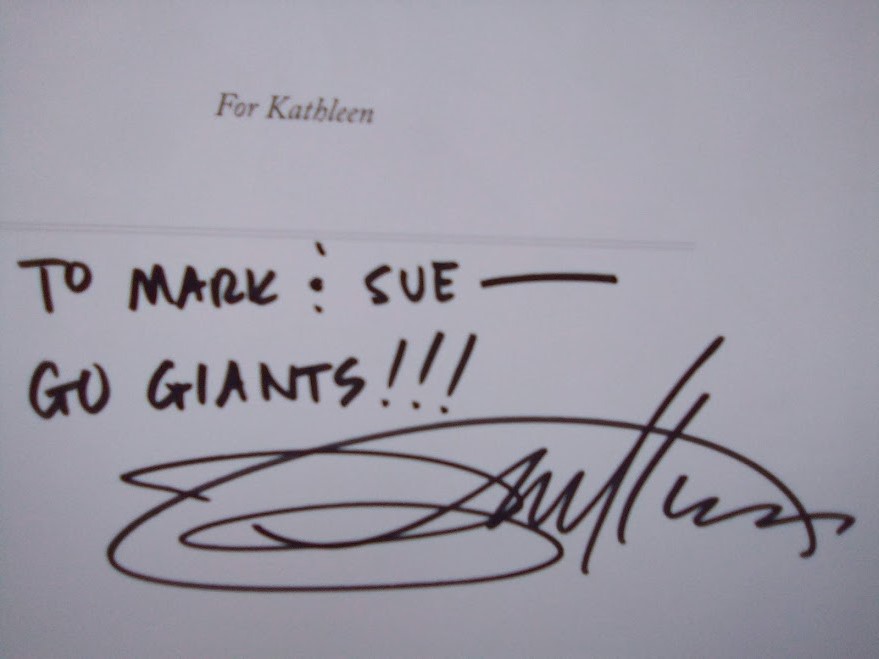
Writer, film scholar, and TCM host Eddie Muller has a new book out. It’s really an old book but in a new edition. It’s beautiful. Get yours now from Larry Edmunds Bookshop!

I have the 1998 paperback edition which I devoured years ago. I have consulted it dozens of times since then. It’s my go-to reference for all things film noir.

Dark City is the hidden history of modern America. Everything in it is true, even if we don’t want to hear it. Sometimes you watch movies from the bygone Hollywood eras and they seem hopelessly dated. Post-WWII American television is particularly un-watchable for that very reason. But so many of the “crime pictures” from the 1940s and 1950s still resonate. Lumped by French critics into a bin called film noir these stories tackled anger, alienation, desperation, passion, jealousy, greed, corruption and almost every other venal and mortal sin you can conjure up.

What makes them so appealing? Their refreshing honesty about human nature, certainly. Mostly melodramas, they are enlivened by a brisk pace, terse writing, and a distinct visual style. Fedoras and spats never looked so good! The women aren’t just victims or femmes fatale. They get much better roles than in the more tepid mainstream fare at the time. They get to run, hide, shoot, give orders, take a punch, and run a racket, just like the men, all the while looking glamorous. In today’s media-saturated world, modern actresses can never be as glamorous as the stars from that time. If you want a picture of Angelina Jolie or Scarlett Johansson in a ratty t-shirt and no makeup you can find it. It doesn’t take away their beauty—it just shatters the illusion.

We met Eddie Muller at NoirCon in Philadelphia in 2014. That was just after the Giants won the World Series. He’s a San Francisco native and a huge baseball fan so we had plenty to talk about besides movies!

Get a copy of Dark City and re-learn your American history, and have a rollicking fun time while doing it.

Billionaire Boys

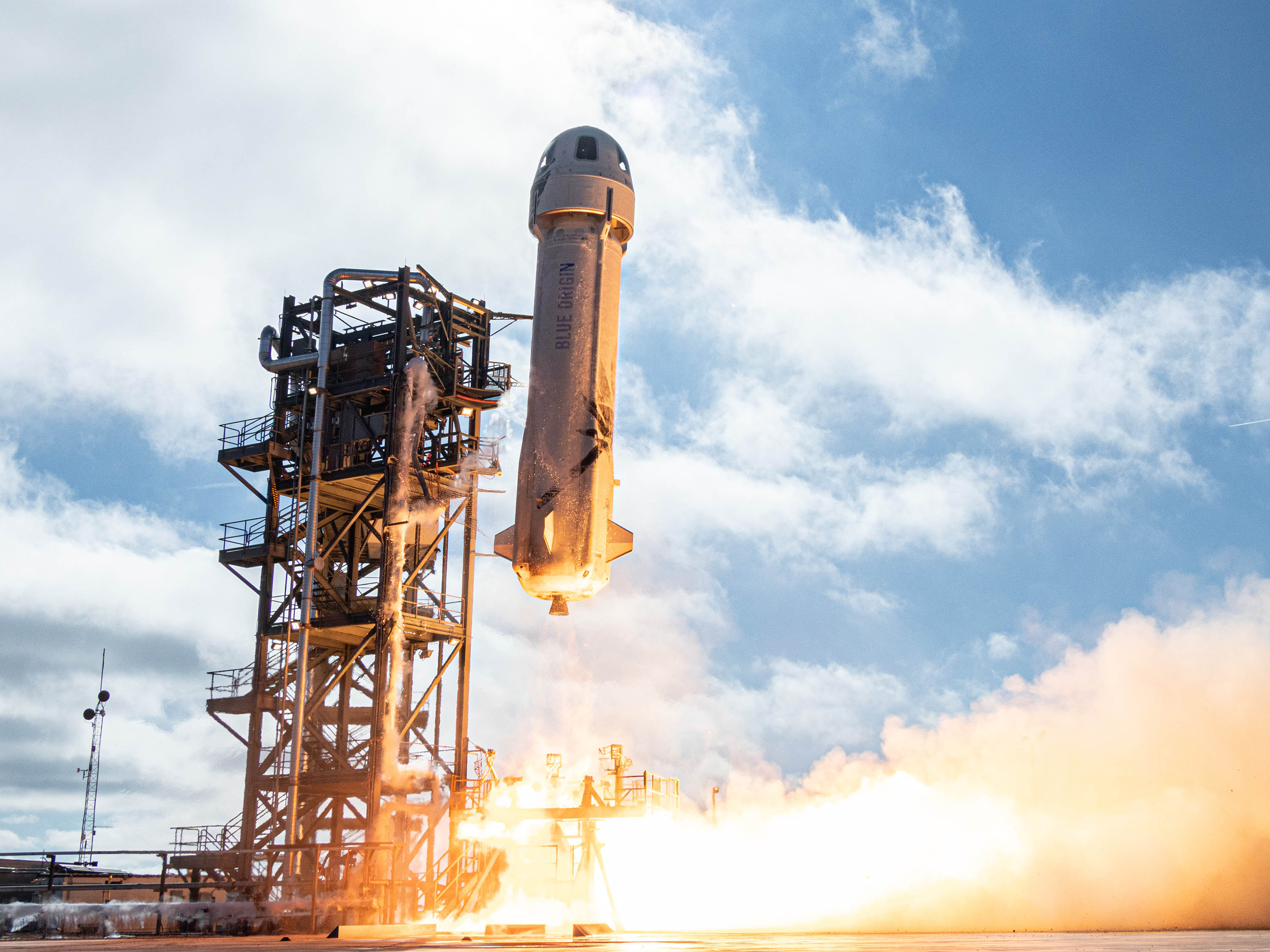
Jeff Bezos finally launched his giant penis-ship and got to take a ride into space. Richard Branson beat him to it by a week, but the one-upmanship is in full force. Branson’s craft peaked out at about 50 miles (80 km) above the earth’s surface (mean sea level). In the US of A that’s the dividing line between space and not-space. If you go above 50 miles, you’re an astronaut. In the rest of the world they use the so-called Kármán Line which is about 62 miles up (100 km). Bezos made sure his capsule crossed the 100-km boundary. Twenty kilometers isn’t much, about twelve miles as you can see, but it is a bone of contention. You have to figure these guys need something to argue about. When you have enough money to build your own rocketships there can’t be many things left you haven’t done or paid someone to do for you.

https://www.space.com/blue-origin-jeff-bezos-launch-webcast

I suspect Elon will get in on the act soon and ride a rocket-powered Tesla Model S into space and do a couple of laps around the earth for good measure.

I was seduced by space flight when I was a boy. I was nine-and-a-half when Neil and Buzz walked on the moon and have been a science nerd ever since. I think space exploration is important. I want NASA to operate rovers on Mars and send satellites to Saturn and beyond. There’s so much to learn about our distant neighboring worlds, and so much they can teach us about our own origins.

Sending people into space is an entirely different thing. Unmanned spaceflight is all about the science. Crewed spaceflight is all about the crew—how to keep them alive and functioning at a high level. It’s an enormous barrier to actual exploration. There’s no way human crews could possibly do anything close to what the rovers can do on Mars. It takes too much energy, equipment, and time just to keep the people alive, especially if you expect to get them back home in one piece.

Space exploration is best left to robots. The distances are too great and the environment too unforgiving. Remember that it took the LARGEST ROCKET EVER BUILT to send three guys to the moon for a few days. The moon is only 250 thousand miles away. Mars, at its closest, is 40 million miles away. Next time Elon spouts off about his plans for Mars, just think about those figures and you’ll realize he’s full of shit.

Space travel is what humans are going to do. Some humans, anyway. We aren’t heading out to colonize new worlds on spacefaring arks anytime soon, if ever, so we’ll have to be content with space vacations. They are a bit on the expensive side. The Russians have launched a few space tourists up to the International Space Station. I’ll bet the view is great! Bezos and Branson opted for sub-orbital flights, which are much easier. The ISS is about 250 miles up and it takes quite a bit more thrust to push a rocket into orbit than to just blast it up and let if fall back down.

I’ve no idea whether space travel will actually become affordable. It doesn’t seem likely. But it is going to be a thing. There are a lot of people in the world who have a hell of a lot of disposable money laying around and they are desperate for exciting new adventures. You can’t get a much more exciting new vacation destination than space!

Humans have been launching things into space for decades. The technology is not new. The math is all worked out. These Billionaire Boys—Musk, Branson, Bezos, and their ilk—have the benefit of that vast storehouse of knowledge and experience. They aren’t pioneers. They are building better rockets. They are new and improved rockets, but they are still rockets. They still have to overcome the same physical barriers to get into space. They still have to light off a giant fucking firecracker and blast themselves off the earth. The Vikings made it to North America in a sailboat. Sail power brought people to the Americas for the next 800 years before steam took over. And even with that improvement, a steam-powered boat still had to ride the waves. It took another 100 years before air travel made the journey fundamentally different than it was before.

There is no fundamental breakthrough on the horizon. Humans are still prisoners of their biology and geology. We aren’t going to “beam” anywhere. We’ll have to settle for remote sensing, and even that is subject to the law of physics, namely the speed of light. A radio wave is a light wave and that speed limit means a minimum delay of five minutes when communicating with Mars, for example, and that’s one-way. Space travel is not going to change in our lifetime. There just might be a little more of it.

If these fellows want to spend their billions on their space toys they could at least try to be “green” about it, and I don’t mean “greenbacks.” If they want to be pioneers they can build their rockets with carbon-neutral and net-zero technologies, and power them with green fuels. If you think cars and air conditioners have a big carbon footprint, you’re right. Now think about the carbon footprint of a space vacation industry. Maybe they are already doing such things, and if so, good on them. I know Elon talks a good game, he’s certainly a great salesman, but I don’t know what kind of green commitment his companies actually make. Same for Bezos and Branson. I don’t think Amazon trucks burn natural gas or run on Tesla’s batteries. I don’t think Virgin jets burn bio-diesel.

Maybe they should start there.

Print vs. Digital

Remember magazines? Not that they’ve disappeared of course, there are still plenty of them at the checkout counter in the supermarket. Just that, overall, there are a lot fewer print options to consume these days. Newspapers have been in a steady decline for most of my life. The Siskiyou Daily News, for example, is only a daily in its on-line version. In print it is a weekly. That’s probably a good thing as there isn’t much worth reading in there, but it is indicative of the trend.

It is too expensive to print and mail actual paper copies of things. You don’t get owners manuals or instruction guides anymore, those are all on-line. We all know what .pdf documents are and we all have Adobe Acrobat Reader installed on our computers.

I have no problem with digital documents or e-books or e-zines or e-news or whatever. I use the internet a lot and I spend much of that time looking for interesting stuff to read. I like to read. I’m a voracious consumer of words.

Mostly I read fiction. I prefer actual, physical books to e-readers. It’s a personal preference, not a moral judgment. Things like Kindle are pretty cool. You can store a lot of books on one of those things and a whole library is suddenly portable. But I am more comfortable with paper so I still buy books made from paper. I’ve got shelves and shelves of books. I’m running out of room as I have literally hundreds of books. I keep telling myself I’m going to buy fewer books and then I buy some more. Since the brick-and-mortar bookstore is increasingly an anachronism, I buy books on-line. Usually I only buy them from independent booksellers (like my favorite bookshop, Ziesings) and try to avoid giving Amazon any more money than I already do.

I used to read an excellent monthly magazine called Earth that was put out by the American Geosciences Institute but they stopped publishing it a few years back. The State of California used to publish a superb monthly called California Geology but they stopped that twenty years ago. The University of California still prints and distributes (for free) a quarterly called California Agriculture which I like, but it used to be a monthly. I suspect it will disappear like all the rest and go entirely digital. The College of Natural Resources at Berkeley sends me a quarterly magazine called Breakthroughs which is always interesting but too short and too infrequent.

I need some good non-fiction print reading material. I like science and technology and I like learning about natural resources. I like stuff about agriculture, mining, and energy. I’m interested in global warming and climate change. Most of the good material on these subjects is on the internet.

Magazines are filled with ads. That’s OK, but I don’t understand why I have to pay a subscription charge. Don’t the ads cover that expense? If they don’t, they should. It is morally reprehensible to PAY for an advertisement! I’m willing to pay a premium for a magazine that doesn’t have ads. I feel the same way about TV. If you pay for TV it should be ad-free. If you are paying for TV (like cable or satellite) that means you are paying for the ads, too. Ridiculous. If there are advertisements then the programming should be free of charge. At least these new streaming services offer you some of that—quality content with a lot less B.S. While we are on the subject of paying for ads, how about all the T-shirts and hats with advertising on them? Does Nike pay us to wear their basketball shorts? No! We have to pay for that privilege. Yikes, what suckers we are.

Capitalism requires an advertising industry. We wouldn’t buy most things that we buy if there were no ads. We have to be admonished repeatedly to get this and get that or else we won’t spend enough money to keep the economy going. It is a really insidious and destructive black art, this advertising thing. Cleverly packaged lies and propaganda burrow themselves into our brains and shape how we see the world. Can anyone actually listen to commercial radio stations these days? I can’t. The advertising is so obnoxious it makes the whole medium repulsive.

But I still need to read. I have to have challenging stuff to chew on. My brain requires regular feeding. I know I could read the Wall Street Journal or the New York Times or Foreign Affairs or other weighty stuff but that’s too much opinion. Just because the people spouting the opinions are smart and good writers doesn’t mean they aren’t full of shit.

I need to read but I need reliable stuff. I don’t want Time or People of any of that checkout counter jive. I don’t have enough interest in guns, or horses, or photography, or automobiles, or gardening or any of the other subjects that the specialty hobbyist-type magazines cover. Those are still plentiful on the racks at the supermarket. I’m always amazed at the number of publications devoted to The Old West. Americans have a serious nostalgia problem! (The Ancient Greeks thought nostalgia was a kind of disease, hence the -algia ending which is Greek for “pain.”)

So I have to find some good print material that’s not just a bucket load of opinions dressed up as “analysis.” One man’s analysis is another man’s asshole. Or something like that. Opinions are like assholes—everyone’s got one. There, that’s what I was thinking. It was one of my Dad’s favorite expressions. He thought everyone was an asshole. Or even if they weren’t an actual asshole, they were still full of shit. He was a bit of a difficult fellow as you might imagine.

I suppose I’ll bite the bullet and join AAAS and subscribe to Science. Scientists are opinionated motherfuckers, and many of them suffer from the Curse of the Smart Person, that is, the inability to believe that they could be wrong. But the process of science tends to weed that stuff out. Ultimately, you have to have evidence in science. You have to have experimental tests of your ideas. That sort of thing is not required in other fields. Imagine if politicians and pundits were held accountable for their claims. In science, you have to be wrong. That is only way the field advances.

Science is pretty expensive. And you get 50 issues per year. About half the material in the magazine is too difficult for me. The articles are often for other experts in the field, not the general reader. I’ll be swimming in reading material. And then I’ll have piles of old magazines that no one will want. Sure, I can just do the on-line thing, but that’s the problem. I don’t really like reading lengthy stuff on-line. I like it in my hands.

Maybe one of my brilliant readers out there can suggest a good magazine or other paper product that I might enjoy. I’m kind of fussy, but open to suggestions.

Thanks for reading. And you can always print out this page if you prefer hard copies!

Lithium

Kurt Cobain launched himself into rock-and-roll immortality with songs like this one. Angst and anger are part-and-parcel of the Western youth experience! Nirvana hit that “chord” perfectly before the sad demise of their front man in 1994.

The song isn’t, on the surface, about depression, but the singer suggests that it is with his melancholy vocals. And most people think the title is a reference to the lithium salts that have been used for centuries to treat such things as bipolar disorder.

Nowadays lithium salts are in big demand because of their use in batteries. Lithium is the lightest of all metals. It is highly reactive and is not found in nature in metallic form but only in compounds. Lithium-ion batteries use mostly lithium cobalt oxide, lithium iron phosphate, or lithium manganese dioxide as the anode. The electrolytes are organic carbonates with lithium-ion complexes. The familiar rechargeable nickel-cadmium battery is cheaper to make, but Li-ion batteries have a higher energy density and operate over a greater range of temperatures.

The electrification of the world’s vehicle fleets will require an enormous investment in the extraction and production of many materials such as copper, nickel, and cobalt. Lithium is one of those and it is near the top of the list. Right now lithium production is mostly from brines. The so-called ABC sources (Argentina, Bolivia, Chile) are underground saltwater lakes. The ion-rich water is brought to the surface and evaporates in large basins called salars. The salts are then mined and processed. Australia and China also have large lithium resources but those are hard rock mines.

Naturally automakers are interested in securing long-term solutions for their lithium supply. Recently General Motors announced their intention to develop the lithium brines along the Salton Sea in California. GM says they will be EV-only by 2035. To do that they’ll need lots of lithium.

The Salton Sea was formed by accident. Colorado River water overflowed its irrigation canals and flooded the ancient lake bed in 1905. Inflows from the Rio Nuevo added to the mix. Over time the salinity and pollution from agricultural and industrial runoff turned the Sea into a toxic wasteland. The only thing happening there now are the geothermal electricity-generating stations. The Salton Trough is bisected by the San Andreas Fault and the area is home to geysers and lava domes (the Salton Buttes).

GM, in partnership with Australian miner CTR Ltd., hopes to develop the Hell’s Kitchen geothermal brine project as a closed-loop system. They envision getting electricity from the geothermal resource to power the extraction of the brine as well as re-injecting the fluid (minus its lithium carbonate) back into the ground. Here’s a diagram:

https://www.cthermal.com/projects

The communities along the Salton Sea are some of the most impoverished in California. The collapse of the recreation economy decades ago and the on-going air pollution crisis in the region (from toxic evaporites along the shrinking shoreline) are a deadly double-whammy. It would be nice to think that commercial development would benefit locals but that sort of “trickle-down” is often just that—a trickle.

It is estimated that 600,000 tonnes of lithium could be produced annually from Salton Sea brines. The market value of that is on the order of several billion dollars.

That’s a hell of a lot of money. I wonder where it will all go?