Local bourbon

Etna’s Denny Bar Co. is both a restaurant and a distillery. On Saturday, November 13th, they released their first bourbon. Since it was my 62nd birthday I considered the event auspicious, and we scooted over to the Scott Valley to get some of the local spirit.

Denny Bar has previously produced small batches of whiskey, gin, and vodka. But bourbon is not just whiskey. It is a particular kind of whiskey. What kind, you ask? The answer is as simple as A-B-C.

A:

Bourbon must be made in America. It does NOT have to be from Kentucky. That’s a common myth. Anywhere in the US of A will do, and that includes Washington, D.C. and Puerto Rico.

B:

Bourbon must be barrel-aged. Specifically, it must be matured in charred oak barrels. And they must be new oak. The old casks get sent to Scotland—they like their whisky to have a less woody character.

C:

Bourbon must be made from corn. Specifically, the grain mixture has to be at least 51% maize. Barley, wheat, and rye are common ingredients in the grist.

Denny Bar calls their bourbon Heart’s Creed and it is listed as four years old and 94 proof (47% abv). The tasting notes tell of “saddle leather” in the nose, “caramel and burnt honey” on the palate, and “smokey butterscotch” in the finish.

Your mileage may vary, but I will say that Heart’s Creed is a smooth, rich, and full-flavored spirit. They did a superb job and crafted an excellent drink. They seem to encourage drinking it on the rocks, but we preferred it neat. A little splash of water perhaps, but no more.

I understand there were only 300 bottles produced and that means 298 for the rest of you. We were very impressed by the quality, complexity, and quaff-ability of Heart’s Creed bourbon whiskey. If you can get your hands on some we highly recommend it.
Greenland says “naamik”

That’s “no” in Greenlandic in case you were wondering.

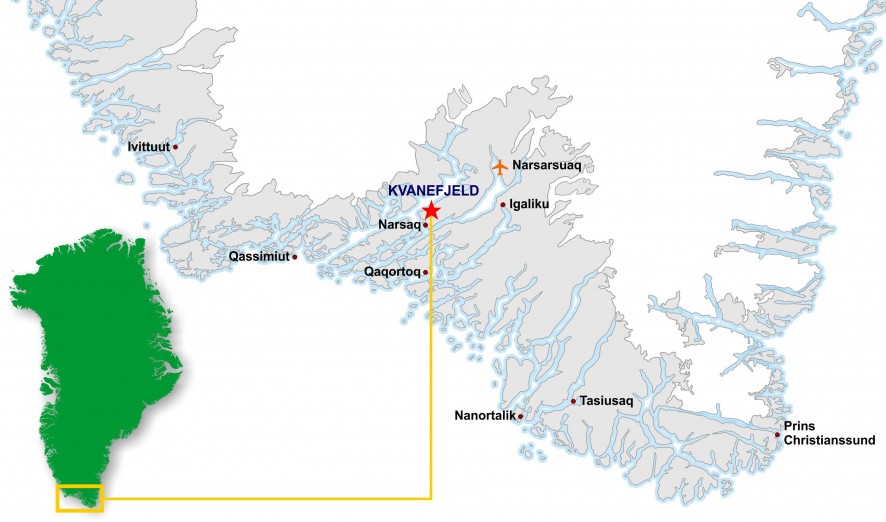
Greenland is part of Denmark but mostly autonomous. They have their own Parliament, for example. There are 57,000 people in Greenland which is just a little less than the population of Gilroy or Petaluma.

Greenland is really big. It’s the world’s largest island. At over 800,000 square miles it is bigger than Mexico but smaller than Argentina. Most of the people (primarily Inuit) live near the southwest coast.

https://ggg.gl/project/

Kvanefjeld is a region rich in rare earths and the worlds’ miners want to get their hands on the stuff. The rare earths, that is the lanthanides, aren’t all that rare. They are just hard to work with. The ores contain multiple elements with similar properties and so are difficult to separate.

There is an increasing international demand for these materials for both civilian and military uses. The US has designated them as critical minerals and is on the lookout for stable future supplies. Kvanefjeld appears to be a dream mining site—a rich deposit in a socially stable jurisdiction. Mining companies like to work in places that have law and order!

But the Greenlanders have other concerns. Kvanefjeld has uranium, too. Uranium is another critical international commodity. You can’t run nuclear power plants without the stuff. World demand is about 60,000 tonnes of uranium oxide (U308) annually. The Greenland Parliament just passed a bill that bans uranium mining, which will or course halt any further development of the Kvanefjeld resource.

Greenlanders don’t want to despoil their natural environment. They also want to grow economically and achieve more independence from their mother country, Denmark. It’s tough to do both.

People are naturally suspicious of mining companies. These outfits have a long track record of abusing the earth and ignoring the social fallout from their projects. The problem remains, however, that we need the materials they produce. We have to find a way to dig stuff out of the ground and process it into the stuff we need without destroying ourselves in the process.

I don’t know if Greenland (Kalaallit Nunaat) is making the right choices. I do know that all of us will be making the same choices, if we aren’t already, going forward. We are going to need (literally) mountains of minerals to make our world! That’s a fact, an unavoidable fact. And we need clean air and pure water and good soil and healthy fisheries and all that other stuff, too.

Can we pull it off?

Modern Retro

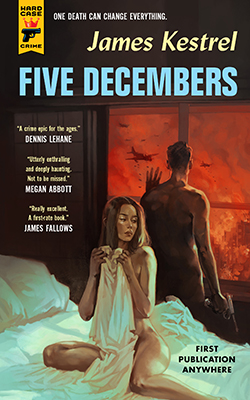
I’m a big fan of Hard Case Crime. Their latest is a novel by James Kestrel called Five Decembers. I think you should put it on your Christmas list.

The story is set in Hawaii just days before the attack on Pearl Harbor. A policeman—our hero—stumbles into a gunfight at a ghastly crime scene. He barely makes it out alive. The victims, naturally, have a powerful benefactor. The criminals, it turns out, are spies. Off our man goes to the Far East to track down a killer. The war interrupts his search for justice and he spends the bulk of it as a prisoner of the Japanese. His adventure resumes when the war ends and a gripping finish ensues.

We meet Joe McGrady at a bar over a glass of bourbon and we find out straight away that’s he’s cool and tough. He’s the classic American hard-boiled detective but his experience in the novel is unusual in its scope and suffering. It’s a unique plot and a different kind of war story. The writing made me think of John Toland, especially his novel Gods of War.

Five Decembers gets five stars. I know you need a new book to read so buy this one!