Third rock

My favorite website is Astronomy Picture of the Day. APOD to those in the know. APOD goes all the way back to 1995 and there’s a complete archive of all the images. Here’s today’s. You’ve seen it before. It never gets old. We are all just passengers on this third rock from the sun and it’s good to be reminded of that.
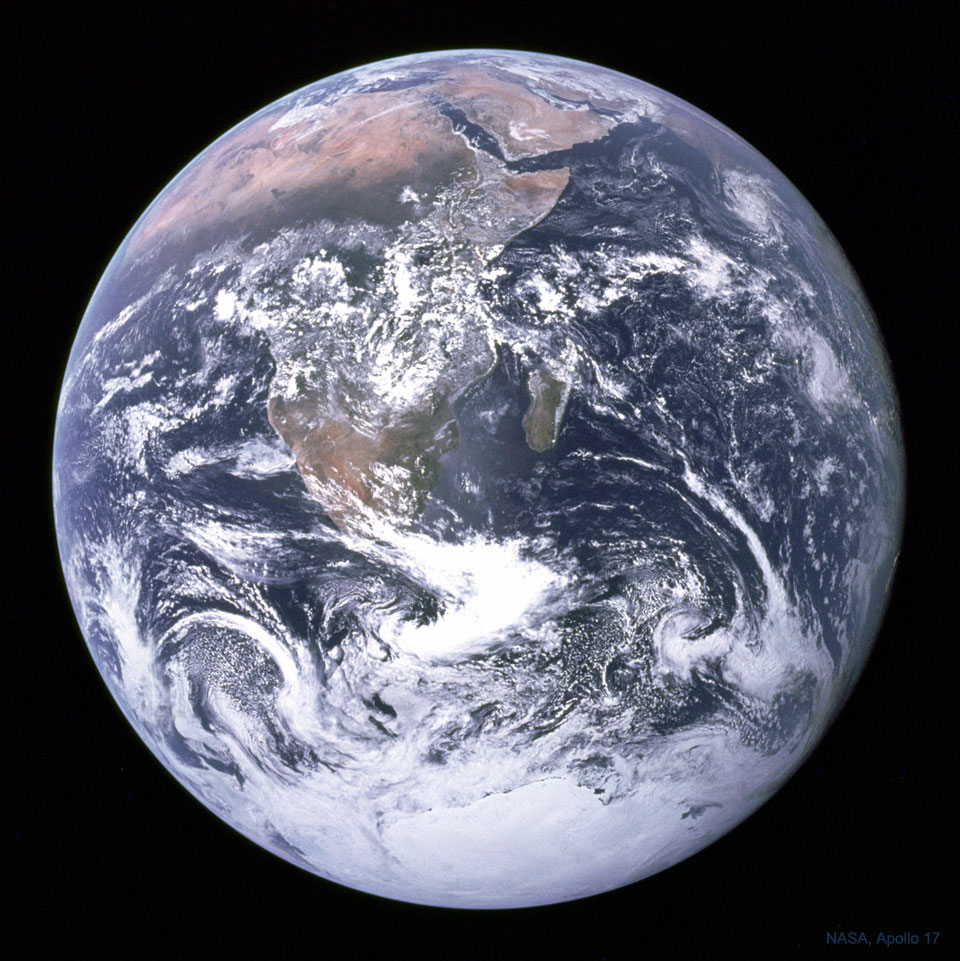
But I don’t want to talk about the blue marble. I want to talk about Africa, which is mostly what we see as far as the land area goes. Africa has by some estimates 30% of the world’s mineral resources. That’s reasonable considering its 30 million square kilometers of land, just a few million less than Asia, the largest of the continents. Africa produces over half of the world’s diamonds, about a fourth of the world’s gold, and is rich in cobalt, platinum, manganese, bauxite, uranium, and copper. It’s major producer of phosphate rocks used in fertilizers. It even has lots of fossil fuels!

Why should we care about Africa? Because we use all of those natural resources. If it isn’t farmed, it’s mined. (I should note that Africa has 65% of the world’s arable land.) The Congo (DRC) has most of the world’s cobalt and most of Africa’s copper. Chinese companies not only dominate Congo’s mining industry they built the toll roads to haul the materials from the mines to the export sites. And paid off the president and his family, too. China has the fastest-growing EV market in the world and they want to secure their supplies of critical minerals.

We here in North America need those same things. We want cleaner power sources like solar panels and wind turbines, and we want EVs, and we will likely have to invest in nuclear power again. All of that takes mining. Lots of mining. Mining is messy and the industry has a lousy track record. People and communities are suspicious of mining companies. In too many places in the world the miners have come, gotten rich, devastated the land, and left. The pollution and economic fallout weren’t part of the business plan.

Here at home we aren’t very enthusiastic about new mining projects. We tend to look elsewhere for our supplies. We are willing to trust much of our future to imports from other places. That’s certainly a viable strategy: develop solid trade relationships with stable jurisdictions. But it’s only one piece. A supply chain has to be more robust—if we’ve learned anything in this pandemic we’ve learned that our supply chains are vulnerable.

For starters, there aren’t enough stable jurisdictions in the world. Mining companies would rather work in countries with law and order. Political instability is not good for things like contracts. Secondly, mineral deposits are not scattered equally over the globe. They tend to be clustered in certain places.

So you have to have a domestic mining industry if you have those precious mineral deposits. The United States of America is a good place to mine because mining companies trust the legal system. Their assets will not be seized by outlaws. Their workers will not be attacked by paramilitaries. That’s an issue in some countries.

Wealthy countries have the luxury of exporting their environmental problems. We can let poorer nations assemble our electronics and make our clothes and not worry about the chemicals polluting their air and water. If those industries were here we’d have stricter regulations and things would cost more.

The challenge is to have domestic industries but to do them better. There’s no reason why we can’t pull stuff out of the ground intelligently. There’s no reason we can’t figure in the cost of protecting ourselves from pollution. We can reduce waste. In fact, we can eliminate the whole notion of waste and build a circular economy.

We have to view the minerals in the ground as precious resources to husband and develop for the good of humanity. In a capitalist economy, that’s hard. It’s more about dollars than citizenship. And it takes a lot of dollars to make a mine and keep it going so miners like to get some return on their investment. That makes for a difficult dynamic.

But it’s one we have to solve since, like I said earlier, we are all just passengers on this third rock from the sun.

FOMO

Do you suffer from FOMO?

If you don’t know the acronym it stands for “fear of missing out.”

Note this is not the same as actually “missing out” on something! This is the FEAR of missing out on something.

It’s a kind of anxiety that seems particularly suited to the modern world. Social media is a great breeding ground for FOMO. Just look at those pictures of your friends snorkeling in the Seychelles!! YOU ARE MISSING OUT! You’re a loser!

Our phones are another source of FOMO. We carry them with us all the time and constantly check for updates because OH MY GOD WE MIGHT MISS SOMETHING IMPORTANT!

TV is great for FOMO. We get bombarded by all the latest and coolest things and it makes you wonder if life has passed you by. All those other folks out there are richer, prettier, healthier, and hipper than you are.

I remember having FOMO when I was an adolescent. In high school the cool kids would be in a group laughing and carrying on and I knew they were having way more fun than I was, both in and out of school. FOMO is fundamental to teen angst.

Then I grew up. I learned that some people were smarter than me. Better looking. Wealthier. More privileged. I also learned that some people worked harder than me. Or were luckier. Or both. In short, I came to understand and accept a lesson that Mom taught me when I was a boy, namely “life’s not fair.”

It’s easy to get cured of FOMO. Just think about all the poor people in the world who don’t have a roof over their heads. Or who don’t know where their next meal is coming from. Or who live in some shit-hole like Yemen and have to run from Saudi-led bombing attacks. If you are reading this then you mostly have it made. You are one of the lucky ones.

FOMO is fuel for the financial industry. I’m invested in the stock market. I’ve got some retirement savings that I’d like to (1) grow and (2) keep safe. I do my research and try not to get greedy. I take the long view whenever possible. I try not to let volatility and market fluctuations disrupt my plans.

But it’s hard. There is an endless stream of new investment opportunities. And they all sound so compelling! I don’t want to miss out on a good thing. I don’t want to be that schmuck who failed to put his money into the next big wealth-generating possibility.

Then I remember that I’ve already been that guy! I missed out on Apple stock. Microsoft. Amazon. Google. Man, it would have been cool to be one of the early investors in those outfits. I did buy some gold coins at $300/oz. and sold them later for $1200/oz.! But my portfolio is mostly pretty boring stuff: ETFs, blue-chips, CDs, that sort of thing. Plus I’m a homeowner and like most middle-class homeowners the bulk of my wealth is tied up in my real estate!

These days there is an entirely new class of “investments.” I use quotes because I’m suspicious. I’m talking of course about cryptocurrency. And its underlying technology, the blockchain. And the stuff it has spawned, like DAOs and NFTs. Don’t know what a DAO is? You are missing out. It’s a “decentralized autonomous organization.” And NFTs are “non-fungible tokens.” (I love the word “fungible.”) Are you feeling the FOMO yet?

All the cool kids are into crypto, it seems. And lots of people are jumping into that “investment space” because they have a severe case of FOMO. I suspect a lot of the people dumping their money into this stuff could not give you a simple definition of “blockchain.” And even if they could, they don’t really understand the technology. And it’s not because they are dumb, it’s because it is hard stuff. (Go to this link and read this paper and then tell me if you understand the technology.)

I say this because I’ve spent the last several weeks researching all this. I had an attack of FOMO and needed to know if I should dump some money into crypto, blockchains, DAOs, and NFTs. I sure didn’t want to miss out on this fantastic wealth-making opportunity.

You needn’t worry. I’m over it. I don’t generally suffer from FOMO anyway, so my attack was mild and didn’t last.

Here’s what I learned. Blockchains are an intriguing technology. They are being tried out in lots of places. Right now the only real application is cryptocurrency, but I could see some other interesting uses. Unfortunately the hype about blockchains far exceeds their utility. Right now almost everything blockchain enthusiasts are excited about is being done by the same old boring technologies (like distributed databases) we’ve had for decades. All computer applications suffer from the simple rule of GIGO, or “garbage in, garbage out.” A blockchain filled with accurate and truthful information is useful. A blockchain filled with inaccurate and untruthful information is a waste of storage and computing power. It’s like putting banana peels in a safety deposit box. They’re secure, but they’re still just banana peels.

Cryptocurrency is great for criminals. That’s a fact. Even the most ardent crypto-bro will admit this. These things may, someday, have use as an actual currency for regular people. That is, you could substitute a crypto-coin for actual dollars or pounds or euros. But that’s still undetermined. Raley’s doesn’t take bitcoin. The credit union I make my car payments to doesn’t take bitcoin. Pacific Power doesn’t take bitcoin. The City of Yreka wants my dollars, not bitcoin. They’ll shut off my water if I don’t pay with legal tender.

Right now cryptocurrency is not really currency. It’s a highly speculative investment. A bunch of people have made a hell of a lot of money buying and selling bitcoin. Bully for them, I suppose. I don’t see a real investment here, I just see a giant bubble ready to burst. Right now, if I buy a cryto-asset, I have to hope that someone down the road will give me more money for it than I paid. That sounds like a pyramid scheme to me. Everyone who gets in on the ground floor of the pyramid makes a killing. The rest of the folks, not so much. If I buy stock in Chevron or Lockheed then I own actual shares in the company. They could drop in value of course, but I would still own something. And Chevron and Lockheed will keep making gasoline and airplanes, things that people actually use. That kind of investment works better for me.

I willing to accept that I could be dead wrong. I could be missing out on the next generation of wealth creation. I don’t think so, but I’m not certain, of course. Life is about managing uncertainty, and I can manage this one.

Regardless of your level of risk tolerance, FOMO is bad way to make decisions. Any decisions, not just ones about where to put your hard-earned greenbacks.