Blue corn

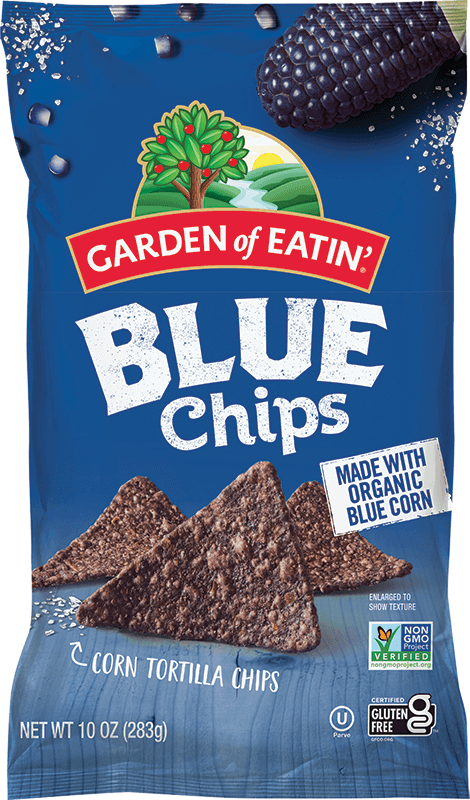
I love tortilla chips. Lately we’ve been eating these blue ones. Turns out that blue corn is a bit of niche product. Heirloom and open-pollinated varieties of grain cultivars are enjoying a renaissance of sorts. Small farmers and those targeting the organic market have to get creative to compete with the big boys.

And corn is Big Farming, Inc. America is the King of Corn. The rest of the world calls it maize but it is the same plant. Here in the States we grow corn (Zea mays) on over 90 million acres. That’s almost as big as the entire state of California!

American farms routinely harvest 150 bushels per acre and can approach yields of 200 or more, an astonishing level of productivity that has increased steadily over the last 100 years. Maize is an ancient grain, native to the Americas, and a staple of indigenous peoples’ nutrition for millennia.

These days corn is something else entirely. At least a third of America’s crop goes into the production of ethanol. Ethanol is mixed with gasoline to meet clean-fuel mandates. The industry is subsidized and enjoys strong political support. Biofuels seem appealing until you realize that we are taking FOOD and putting it in our cars. It would be far better to extract fuels from agricultural wastes, for example. Using prime arable land to grow industrial feedstock instead of actual food is not a sustainable practice.

Another one-third of America’s massive corn haul goes to feeding livestock. Meat-based diets require large grain footprints. It takes about 25 kg (55 lbs) of grain to make 1 kg (2.2 lbs) of beef. The ratio is 15:1 for lamb and just under 7:1 for pork. It is between 3:1 and 4:1 for poultry. Now you see why we have 20 billion chickens in the world. Clearly beef (25:1 ratio), other than from small-scale pasture-raised animals, is not sustainable as a global food source.

Of the remaining third about half is exported. Most of the rest goes into making high-fructose corn syrup and other stuff. We eat very little of our corn directly. Our enormous industrial corn production scheme does a pretty poor job of actually feeding people.

The blue corn chips come from Hain Celestial Group. They make a lot of products for the organic market. I could not find any specific information on their sources of blue corn. I’d be interested to know who grows the stuff and where they grow it. I found some links to blue corn farming in New Mexico and blue corn seeds in Arizona and blue corn milling in Montana but I have no idea how my chips get put together.

Guess what? You can buy blue corn seeds at Wal-Mart:

Germanium, #32

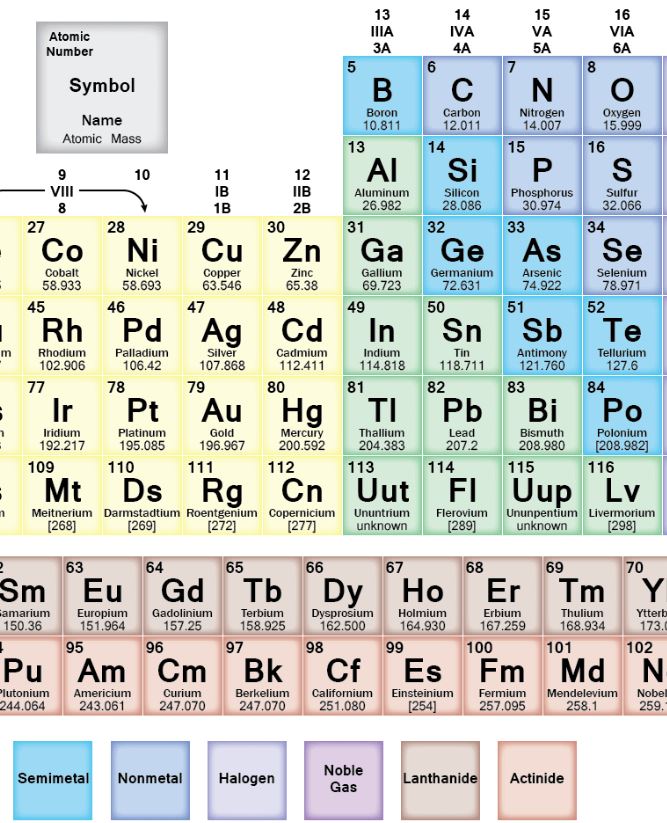
Germanium is a semiconductor and is used in a multitude of electronic devices. It is in the same column as Silicon (#14) which is the most well-known of these so-called semi-metals or metalloids.

A chemist would put germanium and silicon in the Carbon Group. That’s Group 14 on a modern chart but the old notation Group IV is still much in use. All the substances have four valence electrons hence Group IV.

Tin (Sn, #50) and Lead (Pb, #82) are familiar substances of course as they have been mined and used for centuries. Last on the list is the synthetic Flerovium (Fl, #114) which was hatched in and named for a Russian laboratory in 1999.

Carbon is the element most essential to life. All of our organic substances are built on carbon molecules. There is an entire section of chemistry called organic chemistry and they don’t mean “no pesticides.” Organic chemistry means the chemistry of carbon compounds. Petroleum and all its by-products are “organic.” Coal and natural gas are as well. Carbohydrates and hydrocarbons fuel our world. Gasoline and diesel are organic, man!

Anyway, I got distracted. I think it is interesting that silicon and germanium are grouped with carbon. One does not think of chips and circuits being alive and I consider most talk about Artificial Intelligence to be nonsense, but there is a tremendous desire out there to imbue our electronic machines with life. Science fiction has long speculated on the idea of computers gaining consciousness or at least hosting the minds of other beings.

I remember punching holes in cards in a basement late at night and then running those cards through a reader that executed a program and created a print-out. It was 1977 and it was called Computer Science 1 and the language was FORTRAN. That seems like using stone tools nowadays! Our computer “minds” will be able to do a lot of marvelous things and the technology can most certainly be used to do some vile and stupid things as well, but they will not be humans even if they can mimic humans. Nor will they be intelligent or conscious, at least not in the sense we mean when we apply those terms to ourselves.

What’s this have to do with germanium? Like I mentioned it is a semiconductor and used in computer chips. Its main use is in fiber optics and we all want to have our internet delivered to us via fiber, don’t we? The point is that the stuff is a crucial component of our high-tech world. Oddly only a few hundred tonnes of the stuff are mined each year, most of it as by-products of zinc ore. A little bit goes a long way. Next to germanium, in the same row (called a period), are Gallium (Ga, #31) and Arsenic (As, #33). Both of those are also used in chip manufacture. The compound gallium arsenide (GaAs) is found in LEDs, lasers, microwave circuits, and numerous other applications.

The Time Change

It always takes me a few days to adjust to the changing of the clocks. I suspect few people like the change itself even if they like the result.

Daylight Savings Time is one of those arguments that will never be settled. Oh, we might come up with a political settlement, like “everyone will use DST year-round” or somesuch, but the issues will remain.

People living in the more northerly latitudes in our country experience a greater variation in day length. As you move south— toward the tropics—the difference between summer and winter starts to fade. Places like Hawai’i don’t change the clocks as they gain no benefit from it.

We spent a week one summer in Galway, Ireland. It’s at 58º North latitude, the same as Juneau, Alaska. The sky was still bright from sunlight at ten in the evening! They use Summer Time in Ireland and the United Kingdom. It makes sense. Those really early summer sunrises become lingering sunsets instead. People like having “extra” daylight later in the day rather than at the crack of dawn. It’s no surprise there’s a movement in Alaska to make DST permanent.

In Southern California, the population center of the most populous state, summer days last about 14 hours and winter days about 10 hours. (LA is at 34ºN). The time change is a convenience, not a necessity.

I live near the Oregon border (42ºN) and I dislike DST because summers here are hot. I want it to get dark in the evening SOONER not later! And I don’t mind early sunrises. It’s cool in the mornings and that’s when it’s good to be up and doing things. When I lived in the Bay Area (38ºN) the local astronomy society dubbed DST “darkness squandering time.” They hated waiting an extra hour in the summertime for the sky to darken.

There are movements in many states, including places as far apart as Maine and Florida, to make DST permanent. People, it seems, hate the change more than anything.

For most of us, one time scheme isn’t much better than the other. Standard Time isn’t any more natural than Daylight Time. Both are artificial contrivances for social utility. And even though I dislike the change it is a small thing, really. There are much bigger things to fuss over.

These days we all carry accurate clocks in our handheld computers otherwise known as cell phones. My phone is a Wal-Mart cheapie but it automatically updates the clock when I go from one time zone to the next. It seems the cell towers know what time it is! We ought to be able to have as many time zones and time rules as we want. More people these days work from home or have flexible hours. There’s no reason the school day and the work day have to be locked in on a 19th-century 8-to-5 factory model. Local areas should be able to call the time whatever o’clock they want it to be. Instead of a monolithic, government-mandated time, we can make up our own. Maybe sundials will make a comeback.

Terbium, #65

There’s a quarry near the village of Ytterby in Sweden that is the first source of the lanthanoid (rare-earth) elements Ytterbium (Yb, #70), Erbium (Er, #68) and Terbium (#65).

It’s also the place where Yttrium (Y, #39) was discovered. Yttrium is often lumped with the above three even if it doesn’t fit in the lanthanoid f-block scheme. Its upper neighbor in column 3, Scandium (Sc, #21), was first isolated from the same quarry, as were the other rare-earths Holmium (Ho, #67), Thulium (Tm, #69), and Gadolinium (Gd, #64).

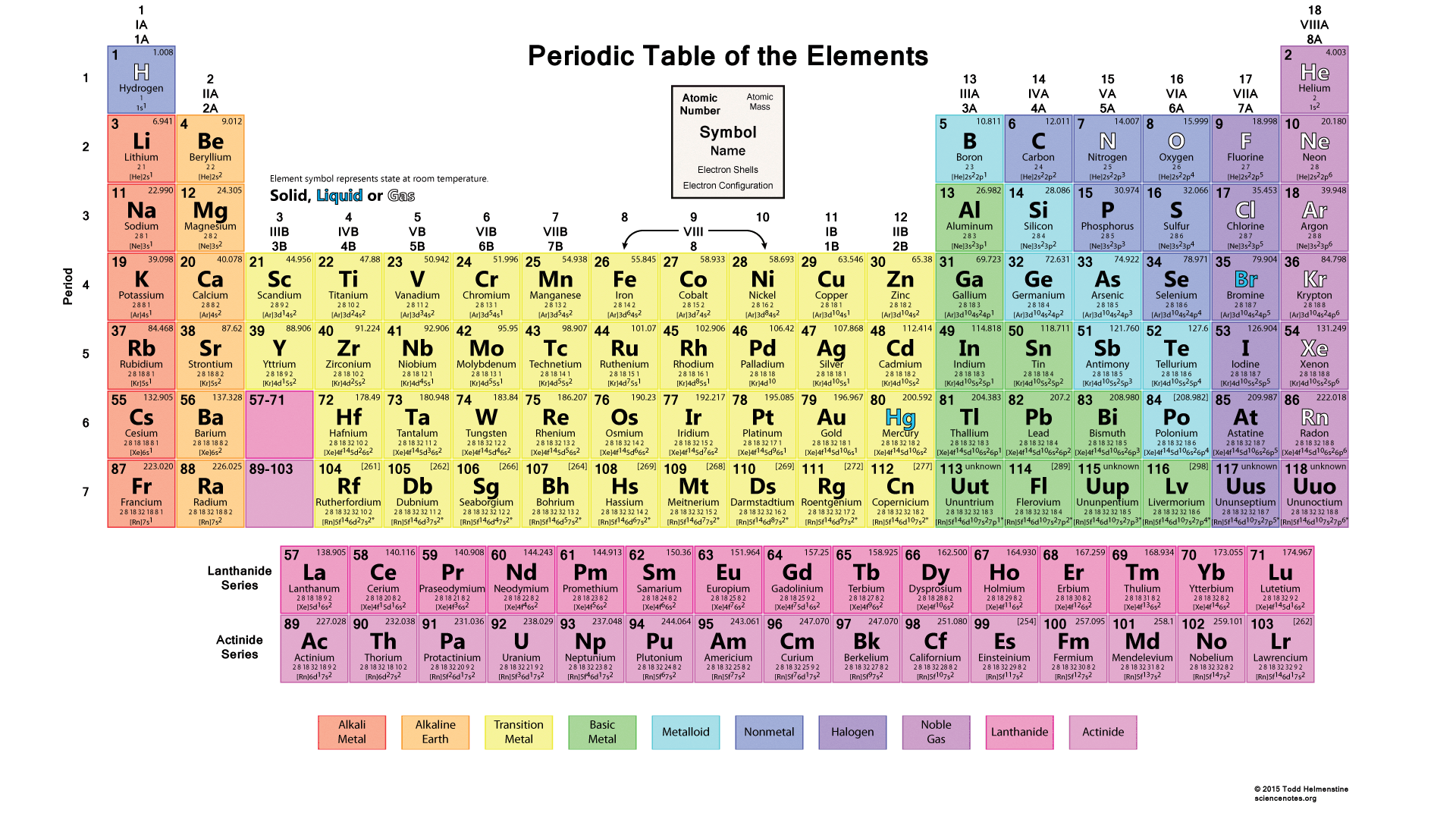
Here’s a periodic table:

If you click on the image it will get bigger.

Note that the lanthanide series (lanthanoid is more correct but not typically used) “emerges” from column 3 where Sc and Y reside. Ideally the table would “stretch” to include the two lower rows (pink in the figure) on the left-hand side of the metals (yellow).

Terbium, like its neighbors, has only become important in the modern, high-tech world. The rare-earths are in big demand these days. Terbium compounds are fluorescent and are used in green phosphors. They are also used as dopants in solid state devices and are alloyed with iron and other materials to make electronic devices.

World terbium production is perhaps “a couple hundred tons” per year. Most of this comes from China. The U.S. has a few sources of Dysprosium (Dy, #66) and terbium is a by-product of that process. Here in California MP Materials operates the Mountain Pass Rare Earth Mine and Processing Facility in the Mojave Desert near the Nevada border.

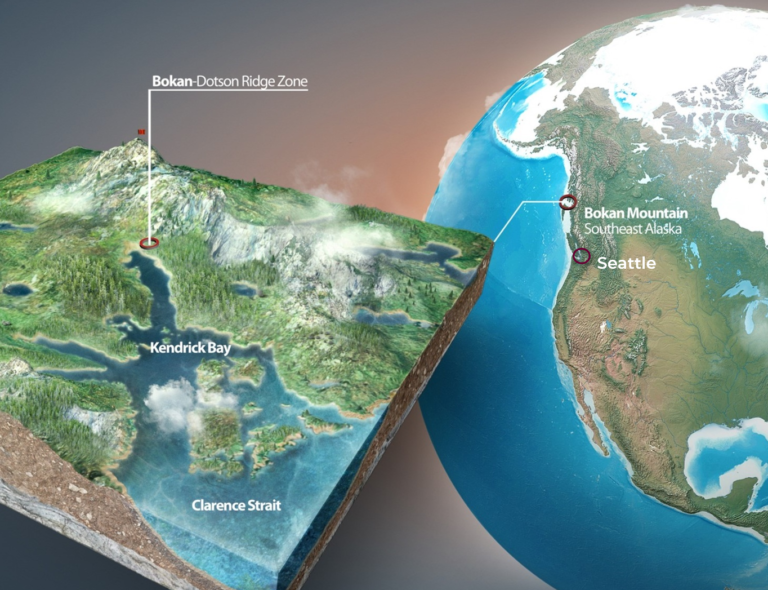
Canadian company Ucore plans to develop a rare-earths mine and processing plant at Bokan Mountain on Prince of Wales Island in Alaska. Here’s the setting (the nearest city is Ketchikan):

There’s been a lot of squawking from Washington, D.C. about China controlling the market for key materials like rare-earths. If that geopolitical concern is truly important then we’ll have to find more domestic supplies. Digging big holes in faraway places is the only way to do that. At least right now. Perhaps we’ll be motivated by the environmental disruption from mining to set up proper recycling. After all, tech devices die and get replaced at an alarming rate. All that “e-waste” should be re-processed! Or we’ll find new ways to do things and won’t need stuff like terbium. Better yet we’ll use fewer things overall and measure our wealth by quality instead of quantity!

Thacker Pass

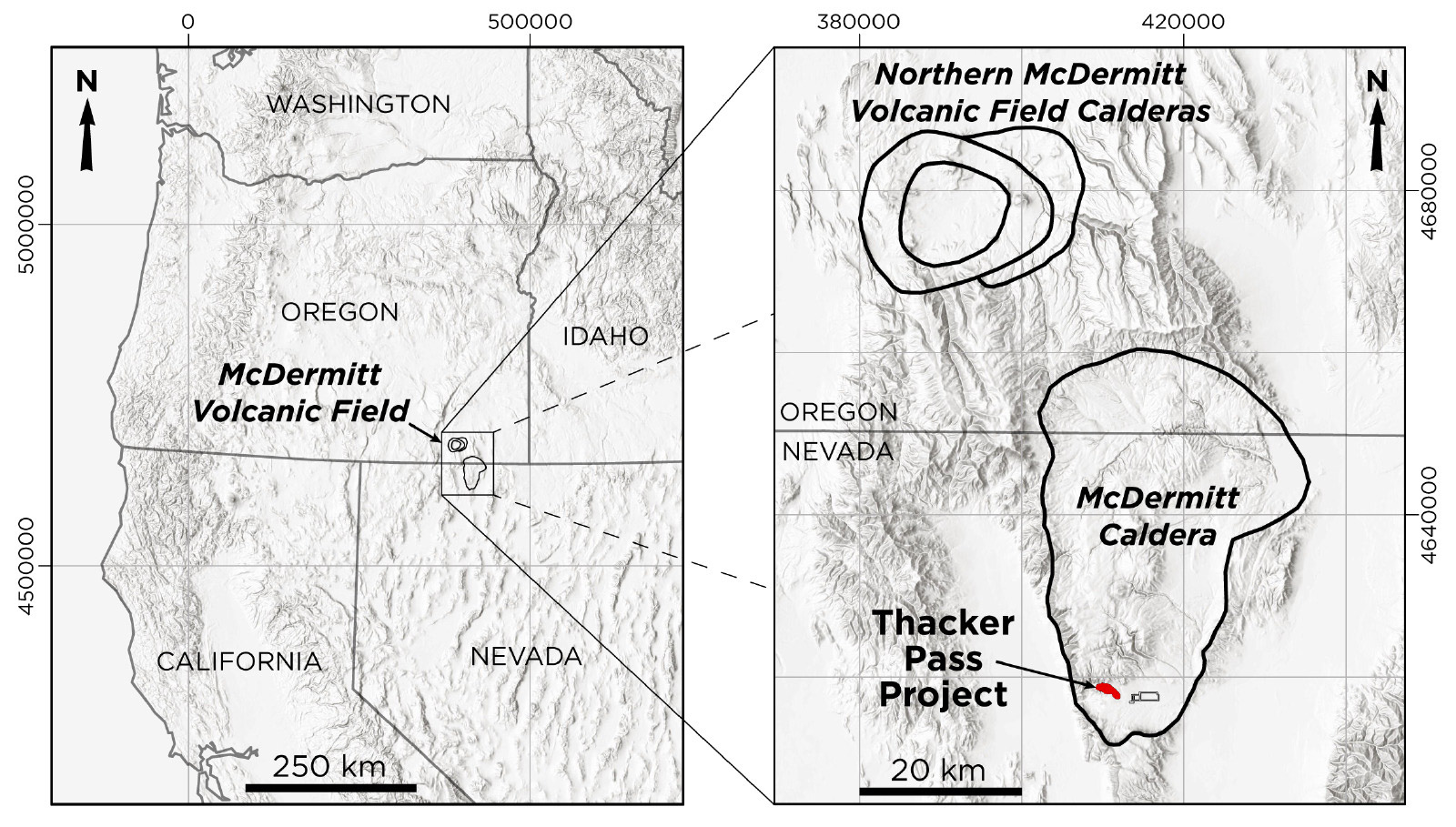
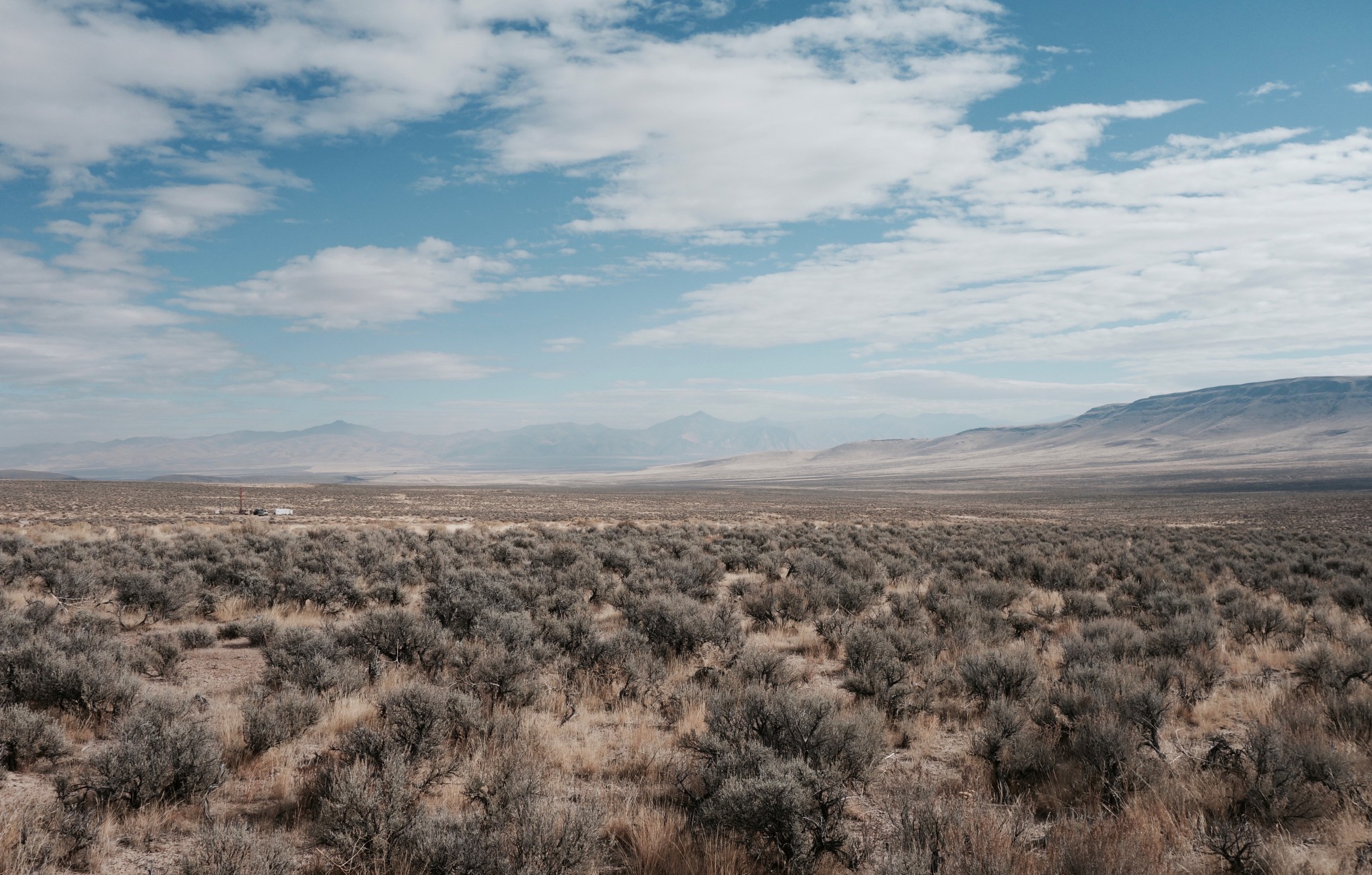
Construction has started on a new lithium mine in the United States. Lithium Americas says its property contains the largest lithium deposit in the country. Here’s the setting:

The nearest town of any real size is Winnemucca, Nevada, about 50 miles from the mine site. Otherwise Thacker Pass fits the description “the middle of nowhere.”

Here’s what it looks like:

Mines are big, messy things. This one will be an open pit a mile or two across and 400 feet deep. The lithium will be extracted from the ore by a process involving sulfuric acid. Tons of sulfur will be continuously trucked to the site to be burned and the waste gas used to make the acid. The reaction will also generate enough heat to power steam turbines that will supply electricity for the plant. The lithium compounds emerging from the facility will go mostly to battery makers. Electric vehicles need lots of batteries!

The “greening” of the economy is not a simple process. Demand for materials like lithium, cobalt, nickel, and especially copper is expected to surge. Things like wind turbines use a lot of steel and concrete, too. Reducing our reliance on fossil fuels will require not only massive capital outlays but enormous consumption of primary energy sources—which at this point are mostly fossil fuels!

There’s still a lot of opposition to the development at Thacker Pass. And there’s no doubt the mine will make a huge environmental impact. Here’s what interests me: it’s close by. I can keep an eye on it!