Mercury, #80

The Greeks called it “water-silver” or ΰδραργυρος which the Romans converted to hydrargyrum and thus the source of its symbol, Hg.

Mercury, or quicksilver, is weird stuff. It’s a liquid at room temperature, the only such metal with that property. The only other element that is a liquid at room temperature is the non-metal halogen Bromine (Br, #35) . Its lighter sister elements Fluorine (Fl, #9) and Chlorine (Cl, #17) are gases while the heavier Iodine (I, #53) is a solid.

Mercury was of course known to ancient peoples. The Almadén Mine in Spain is at least 2500 years old and mercury was part of Chinese medicine for at least a thousand years before that. There’s evidence of long-ago mercury and cinnabar (mercury sulfide, HgS, the chief ore) use in the New World as well. Here’s cinnabar:
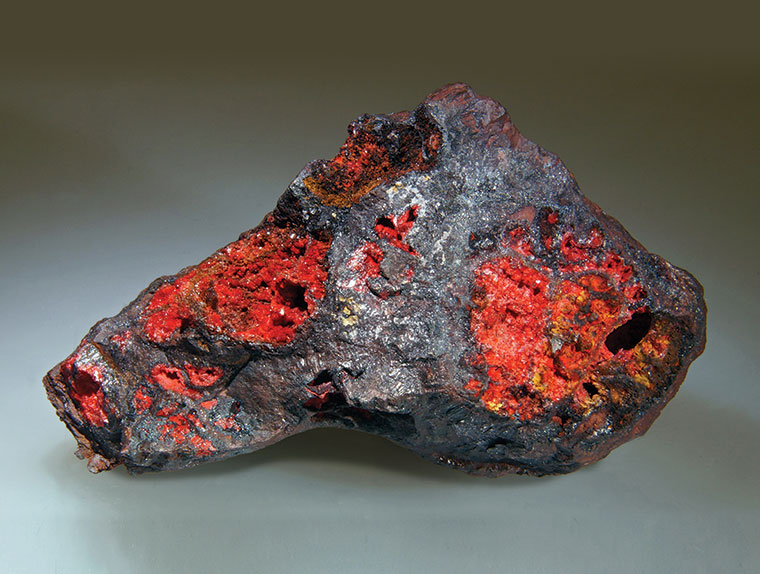
https://carnegiemuseums.org/carnegie-magazine/winter-2022/objects-of-our-affection-cinnabar/

Cinnabar was mined extensively in California. Gold and silver readily combine with mercury to form amalgams and so it is used to extract these metals from their ores. Mercury can be quite a significant toxin and you can imagine the exposures these early miners were subjected too. I had a chance to tour a modern, open-pit gold mine (McLaughline Mine in Lake County) many years ago. Mercury was a major by-product. Mercury does not react with iron and so it is stored in iron flasks. These are standardized to hold 76 pounds of the liquid and that is the international unit by which mercury is bought and sold.

In our day we’ve been warned about mercury contamination of seafood. Industrial waste dumped into our waterways ultimately finds its way to the ocean and into the fatty tissues of fish. This is a serious concern for people who depend on a fish and shellfish diet. The infamous Minamata Bay poisoning in the 1950s that decimated Japanese fishing communities was due to methlymercury, a particularly nasty organo-mercury compound. It wasn’t until several years had passed that the source of the contamination was pinned down—a nearby chemical plant run by Chisso Corporation.

It is possible for a metal to exist in different compounds that have entirely different metabolic effects! Tin is a good example. The metal and its oxides are non-toxic but the stannanes, organo-tin compounds, are quite poisonous.

Most mercury pollution is due to the burning of coal in power plants. In fact, we get more radioactive material dumped into our atmosphere from coal-burning than we do from all the nuclear plants and nuclear facilities in the world combined. Coal is a critical fuel for electricity generation but it comes with an enormous environmental cost.

Many of the uses of mercury compounds, like batteries and fluorescent lights, are being phased out. I still have a mercury thermometer but you don’t see them much any more. The main industrial use these days is as a catalyst for processes like making polyvinyl chlorides (PVCs). About 40 million tons of PVCs are made each year which is the third-most of any plastic polymer. Polyethylene (100 million tons) and polypropylene (80 million tons) are the leaders.

Mercury compounds have been used in various medicinal formulations for millenia. Some of those practices have been thankfully discontinued as they were of dubious value and most likely harmful. Preparations containing micro-doses of mercuric substances have a longer history, especially in Asia, and some of these treatments are still used and have garnered modern medical interest. As Paracelsus famously quipped “it’s the dose that makes the poison.” Funny thing, a mercury preservative (thimerosal) is used in many vaccines at a rate of about 0.003 to 0.01%. For the larger number, that’s 25 micrograms of mercury per 0.5 milliliter dose. Thimerosal is a big sticking point for the celebrity-fueled anti-vaxx crowd. I suppose it’s OK to chase after “traditional” and “holistic” Chinese cures that contain mercury but god forbid you put it in our vaccines!

Mercury is the god of commerce and financial gain. Partridge says that his name comes from mercor (-ari, -atus) the Latin verb meaning “to trade.” He is also the god of thieves and tricksters. Does anyone else find it interesting that merchants and liars are grouped together? Maybe the Romans were on to something.
truth

I used to tell my students that science was the search for truth, not Truth.

Truth, the one with a capital-T, is the bailiwick of philosophers, theologians, and mystics.

I think what I really meant by lower-case-t truth was things that are true. Things that are true are things that work regardless of your belief system. If we drop you on your head from a height there will be a poor outcome for you. That’s one of those true things. People could still argue the point of course. But when the time comes to test things out they won’t be found.

It’s really hard to sort out true things. Think about how hard it is to sort out medical claims. I know we’ve all done research on the internet about some health topic. Right away we find too many sites, too many papers, too many competing claims, and too many voices screaming for our attention.

So, what to do?

I found a bit of good advice from John Mandrola (via Andrew Gelman).

The most important priors when it comes to medical claims are simple: most things don’t work. Most simple answer answers are wrong. Humans are complex. Diseases are complex. Single causes of complex diseases like cancer should be approached with great skepticism.

In statistics a “prior” is a probability distribution that you assume to be true before collecting any evidence. That’s fine for scientists, but for the rest of us we can just say that a “prior” is stuff we already know.

Most things don’t work is an excellent rule-of-thumb. It’s tough to follow because we really really really want some things to be true. And it’s hard to let go of biases. Being a skeptic does not mean being a cynic, but it does mean, in Mandrola’s words, that you should “hold pessimistic priors.” He also says “know that stuff that really works is usually obvious.”

In the end, it’s all about accepting uncertainty. The big, important questions have fuzzy answers. Life is not a multiple choice test—it’s closer to an endless series of essays! Since there’s no one correcting your grammar or giving you a grade all we have to produce are rough drafts. Pencils and erasers are allowed and cross-outs are encouraged. And there’s plenty of fresh paper when you run out.

Quicksilver

We have a lifespan. That is, we are biological creatures and thus will eventually age and die. We only get so many years to live.

Apparently lots of folks don’t like that notion. This is America after all and we believe in more. We want bigger and better. Life, or lifespan, is just another commodity. It can be improved upon, just like a car or a computer. Lowe’s tells us to never stop improving and by golly that’s just what we are going to do!

I want to be healthy as I age. So I try to exercise, eat right, get a good night’s sleep, blah-blah-blah. I have no illusion that this will help me live LONGER. But I think I will live BETTER. It’s about the QUALITY of my remaining years, not the QUANTITY.

But this is America. We measure quantities. How much is your net worth? What is your IQ? How many miles did you run this week? These are easy questions with easy answers. Hard questions like “are you happy?” or “am I a good person?” require thought, and self-study. There are no easy answers when thinking about personal qualities, or character, or moral dilemmas. How do you measure a life?

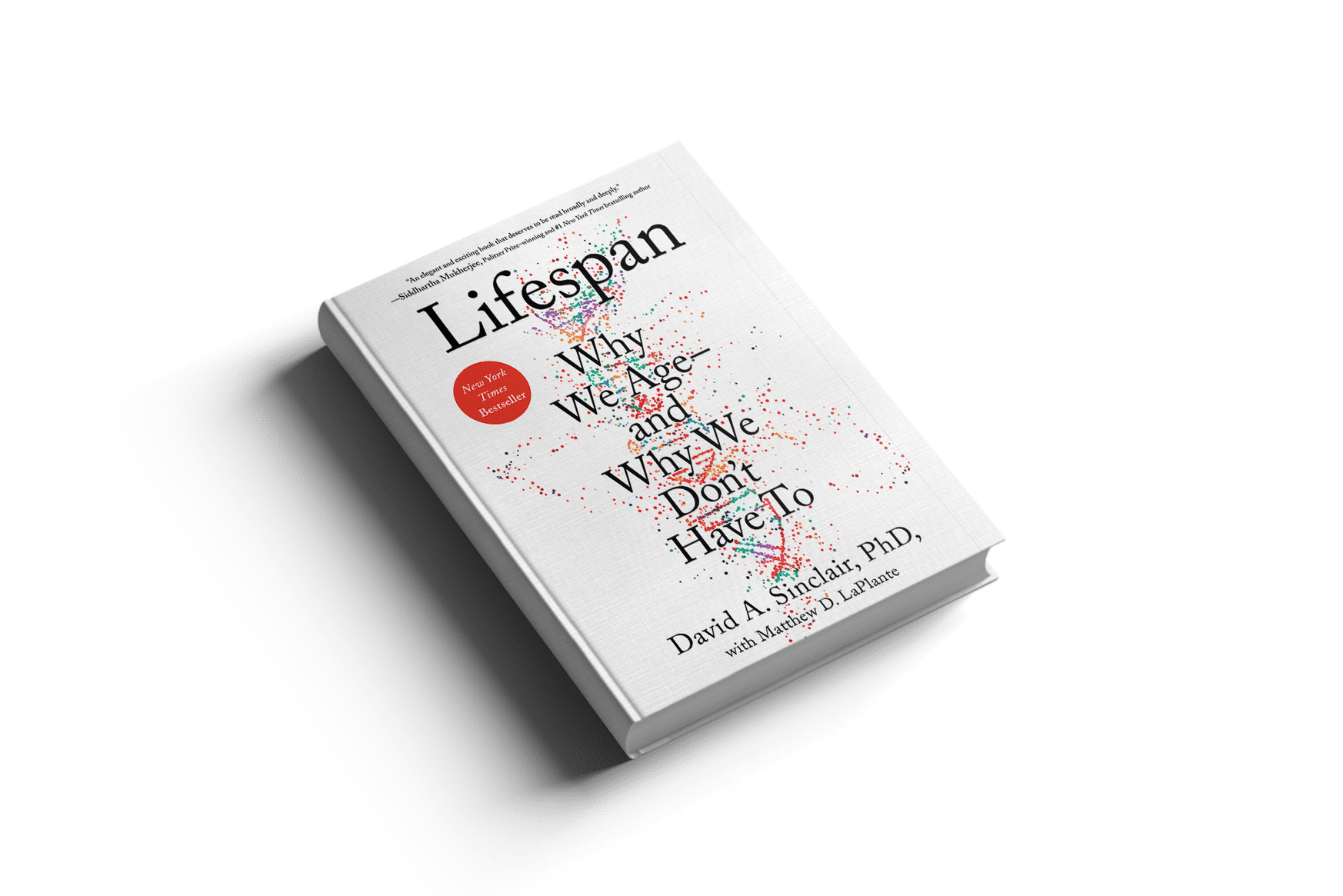
Some scientists these days are getting as bad as the celebrity jock/Hollywood star-types who want to help us with our fitness and our nutrition. These people promote all sorts of health-enhancing, anti-aging bullshit. At this point there’s not much difference between Gwyneth Paltrow and her Goop, or Tom Brady and his Method, or Harvard geneticist David Sinclair and his bestseller Lifespan.

All of them are preying on our fear of getting old.

It’s easy to dismiss Tom Brady and Gwyneth Paltrow because they are just famous rich folks and famous rich folks say and do a lot of stupid shit. But when a Harvard scientist jumps in things get more serious.

Unfortunately scientists can be just as full of it as anyone else! They are people, too. And science, as a career, does not generally lead to wealth and fame. That’s why TED talks and bestsellers are important to some scientists—it is usually their only shot at those two pillars of American Greatness (wealth and fame).

Go to any so-called “wellness” site and you’ll see a lot of pseudo-scientific babble surrounding the products. There’s a lot of hand-waving about “research-backed findings” and “new science” and other stuff trying to get you to believe that their stuff is “proven” to work. It’s all hokum. And when real scientists jump into the fray the gobbledygook gets even worse.

Check out Quicksilver Scientific. Their head guy (Dr. Shade!) looks like a legit chemist. He’s done work on mercury speciation (analysis of the different compounds of mercury and how they manifest themselves in the enviroment and in our bodies) and I’ve no doubt he knows quite a bit about metal toxicity.

But Quicksilver is not a health clinic or a research lab. It is a BUSINESS and they make money by selling chemical products. Longevity supplements are there, of course. My personal favorite—detox—is also well-represented. The whole detox thing is so silly. If you lack a liver and kidneys you ought to be concerned, but for those of us fortunate to have those working organs we can let our bodies do their natural detox thing and not waste money on nonsense treatments.

Now before some attorney sends this blog a Cease & Desist order, I’m not saying Quicksilver is quackery. But I will say it sure looks like quackery and sure sounds like quackery. (Your mileage may vary, of course.)

The supplement industry is big, reportedly worth $164 billion in 2022. That’s about the same amount of money we spent last year on credit card fees and interest.

Science has helped make our lives better and I suspect the scientific enterprise will continue to do so into the future. We will learn a lot more about health, nutrition, disease, aging, etc. etc. But people will continue to suffer from FOMO (Fear Of Missing Out). People will still get conned by slick salesmen. People will continue to search for the elusive Fountain of Youth.

There isn’t one. Take care of your body the best you can. But take care of the heart and soul as well. The things that matter in life can’t be put on a graph and they don’t come out of test tubes. If you want a detox, detox your mind! Stop listening to quacks. All they offer is quicksilver, something shiny but slippery, and ultimately poisonous. You aren’t missing out.

Manganese, #25

Manganese is a trace mineral and is essential to human nutrition. It is critical to steel-making and aluminum production, and found in both fertilizers and alkaline batteries. That’s just some of the many uses of element number 25. The economic importance of manganese nearly rivals its biological one.

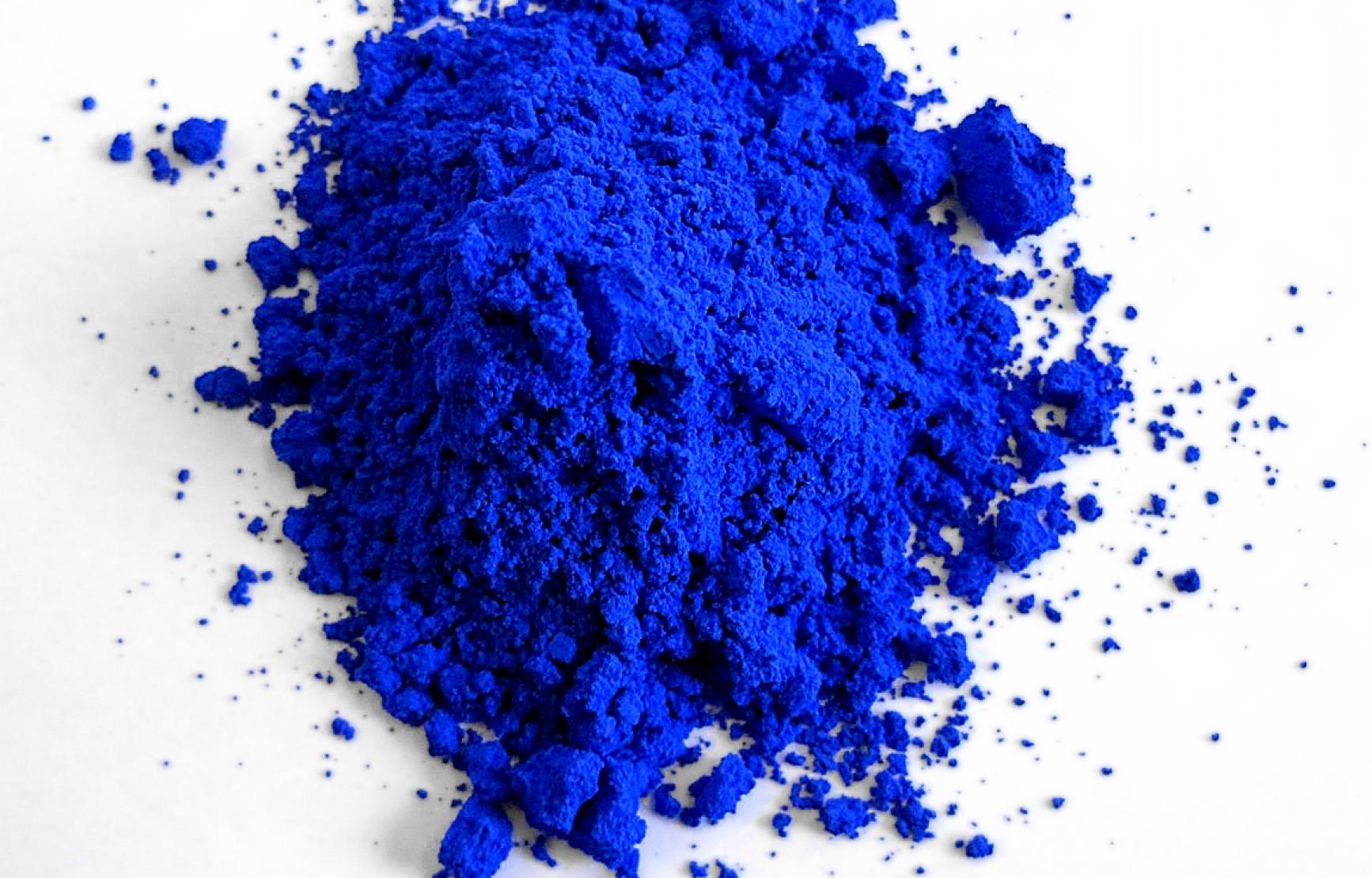
Manganese compounds are colorful. If you spent some time in a chemistry lab you may remember the deep ruby color of potassium permanganate (KMnO4) and its pinkish solutions. In 2009 a professor at Oregon State and his graduate students stumbled on a new manganese compound—YInMn (Yttrium, Indium, Manganese)—that was a spectacular blue color. “Oregon Blue” was the first new pigment discovered in decades. Check it out:

https://chemistry.oregonstate.edu/chemistry-news-events/yinmn-blue

Manganese is found in the so-called ferromanganese or polymetallic nodules that litter part of the ocean floor. The National Oceanic and Atmospheric Administration (NOAA) has found nodules in both the deep, abyssal plains as well as on seamounts. The resource potential from these nodules is enormous.

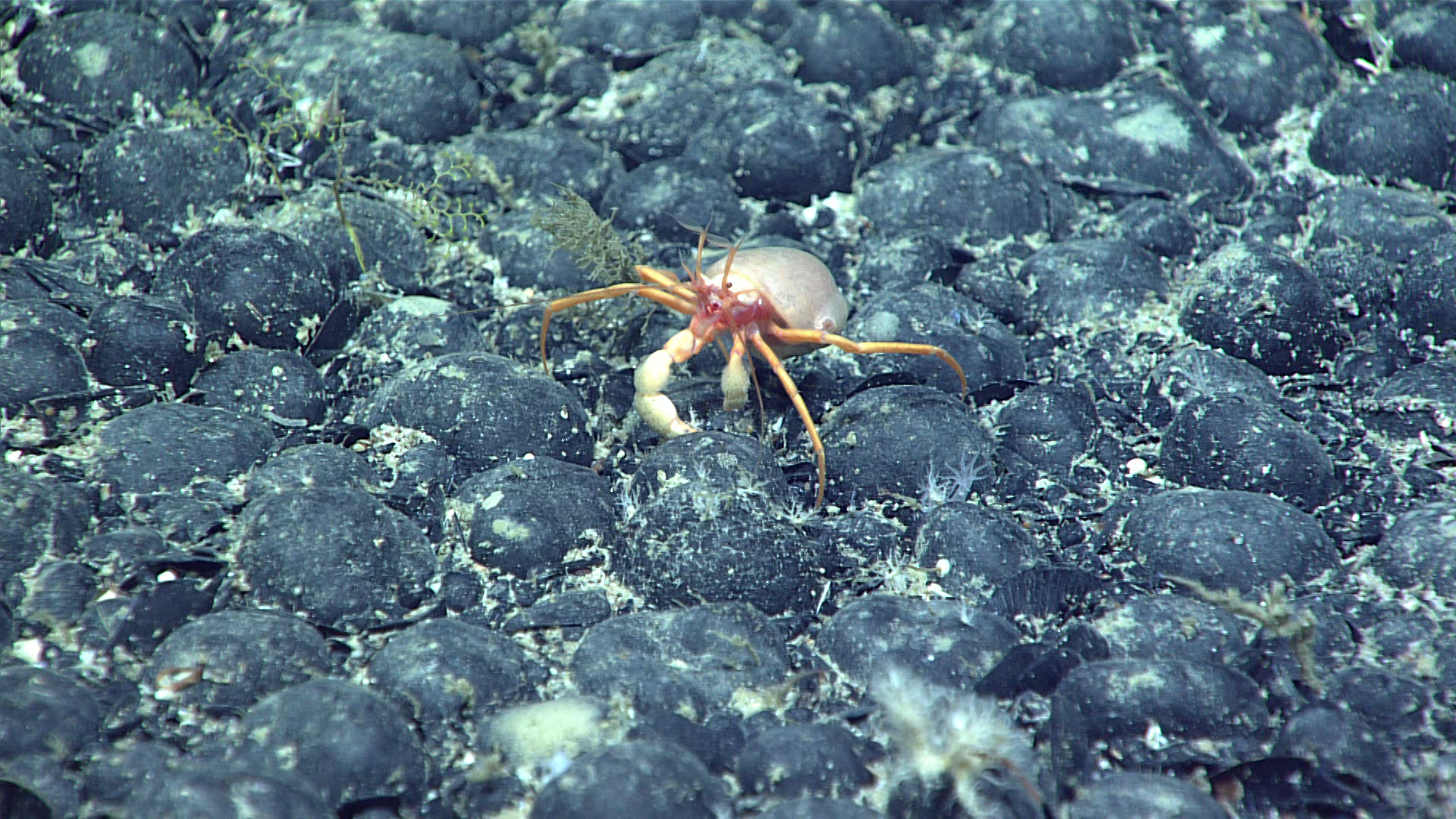
Here’s a crab on top of nodule field in the Gosnold Seamount, an extinct submarine volcano in the North Atlantic off the New England coast:

A Parapagurus sp. crab with a coral in the genus Epizoanthus on its back makes its way across a spectacular and unexpectedly densely packed field of ferromanganese nodules blanketing the seafloor of Gosnold Seamount, explored during Dive 16 of the 2021 North Atlantic Stepping Stones expedition.

These days we talk about mining the sea floor. The track record of terrestrial mining is pretty damn poor. Sure, we have a lot of cool stuff, but we made a hell of a lot of ugly messes in order to get it. I think we’ve got a lot to learn about the “final frontier” (no, it’s not space) before we go in and muck it all up.

Norway on my mind

I’ve been thinking a lot about Norway. I want to go there. It looks amazing. Here’s a photo from a travel site offering aurora cruises:

https://www.fjordtravel.no/tours-cruises-norway/aurora-borealis-cruises/

And then there’s fjords and glaciers and arctic fishing villages and all that. Sounds great—sign me up!

Norway has a lot of money in the bank. Their sovereign wealth fund is over 1.4 trillion dollars. That money comes from oil revenues. Norway is a global player in fossil fuels, exporting both oil and natural gas from their North Sea fields. Most of the country is run on hydro-power so local demand isn’t a problem. They have the most electric vehicles (per capita) of any nation. Also it’s a small country population-wise, only 5.5 million folks. The city of Saint Petersburg in Russia has about the same number of inhabitants.

Norway is now interested in another kind of resource and it’s found on the sea floor. Lumps of accreted minerals, rocks ranging in size from golf balls to bowling balls, are found on the continental shelf and deep ocean surrounding the country. A potentially vast new source of manganese, copper, cobalt, nickel, and other critical minerals, these polymetallic nodules are the mining industry’s hot new commodity. And that makes the ocean bottom the new frontier. Here’s the scope of Norway’s ambition:

https://news.mongabay.com/2023/04/norway-proposes-opening-germany-sized-area-of-its-continental-shelf-to-deep-sea-mining/

This is a completely new thing. It’s true that terrestrial mining is increasingly unpopular, but it is at least a well-understood thing. People know how to do it properly. Any failure by miners to contain their messes and clean up their act is a choice by them. They have the means and skill. Only the desire to cut corners, a consequence of profit-chasing, prevents them (or any business) from being a responsible corporate citizen.

We know nothing about the ocean. We know more about Mars, fer chrissakes. And we know enough about Mars to know it will never be home, that Elon’s grandiose adolescent fantasy is just that.

The ocean really is our home. It’s the source of life. It’s our planet’s heart and lungs. And our planet’s heater and air conditioner, too!

I think this decision to mine the ocean floor is a momentous one. We really need to learn a hell of a lot more about the ocean before we start sullying it with robots and mining waste. At least this stuff will be done remotely. People can’t go down that far and work. Machines (as we’ve learned with the Mars journeys) are much better in harsh environments than people.

There are no solutions, only trade-offs. (I first read that on John D. Cook’s blog but it’s attributed to Thomas Sowell.)

We want a green future but it will cost us. And I don’t mean just dollars. How much are we willing to pay? I don’t know the answer to that question. And I still want to go to Norway. Apparently a lot of other folks want to go there as well, it’s a very popular travel destination.

What I really want to do is travel by boat across the Atlantic. Halifax seems a good place to start. Or someplace on the St. Lawrence, like Montreal. A stop or two in Greenland or Iceland would be nice, as would the Shetlands, Orkneys, and Faroes, but the main goal would be the Norwegian coast, and northwards to the Arctic Circle.

I might just wind up staying home, of course. It would be better for the planet. I’m not going to bicycle to Halifax, for instance. There’s plenty of travel to do here, close by. Your mind can certainly take you on plenty of journeys. For most of human history people never ventured more than a few miles from where they were born. We live in an amazing time where we can actually contemplate round-the-world travel. Sailors, sea captains, and the merchant-princes who funded their vessels and journeys always had that option, but most of the world were land-lubbers. Now a remarkable portion of our population has flown in transcontinental airliners and on vessels that traverse vast seas safely and even luxuriously.

Check out this deal from Hurtigruten: only $1648 per person! Looks like a fabulous journey: