Manganese is a trace mineral and is essential to human nutrition. It is critical to steel-making and aluminum production, and found in both fertilizers and alkaline batteries. That’s just some of the many uses of element number 25. The economic importance of manganese nearly rivals its biological one.
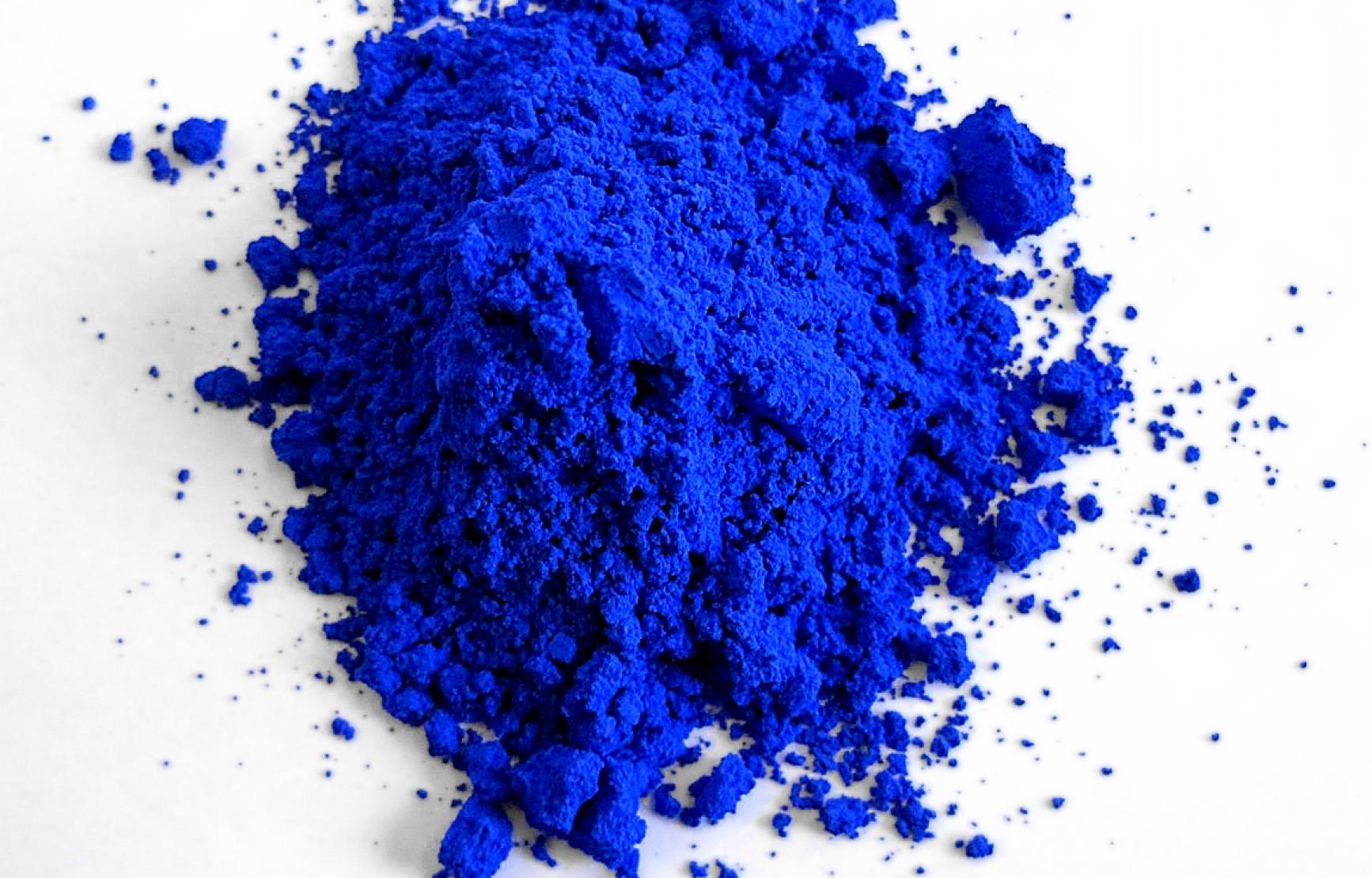
Manganese compounds are colorful. If you spent some time in a chemistry lab you may remember the deep ruby color of potassium permanganate (KMnO4) and its pinkish solutions. In 2009 a professor at Oregon State and his graduate students stumbled on a new manganese compound—YInMn (Yttrium, Indium, Manganese)—that was a spectacular blue color. “Oregon Blue” was the first new pigment discovered in decades. Check it out:
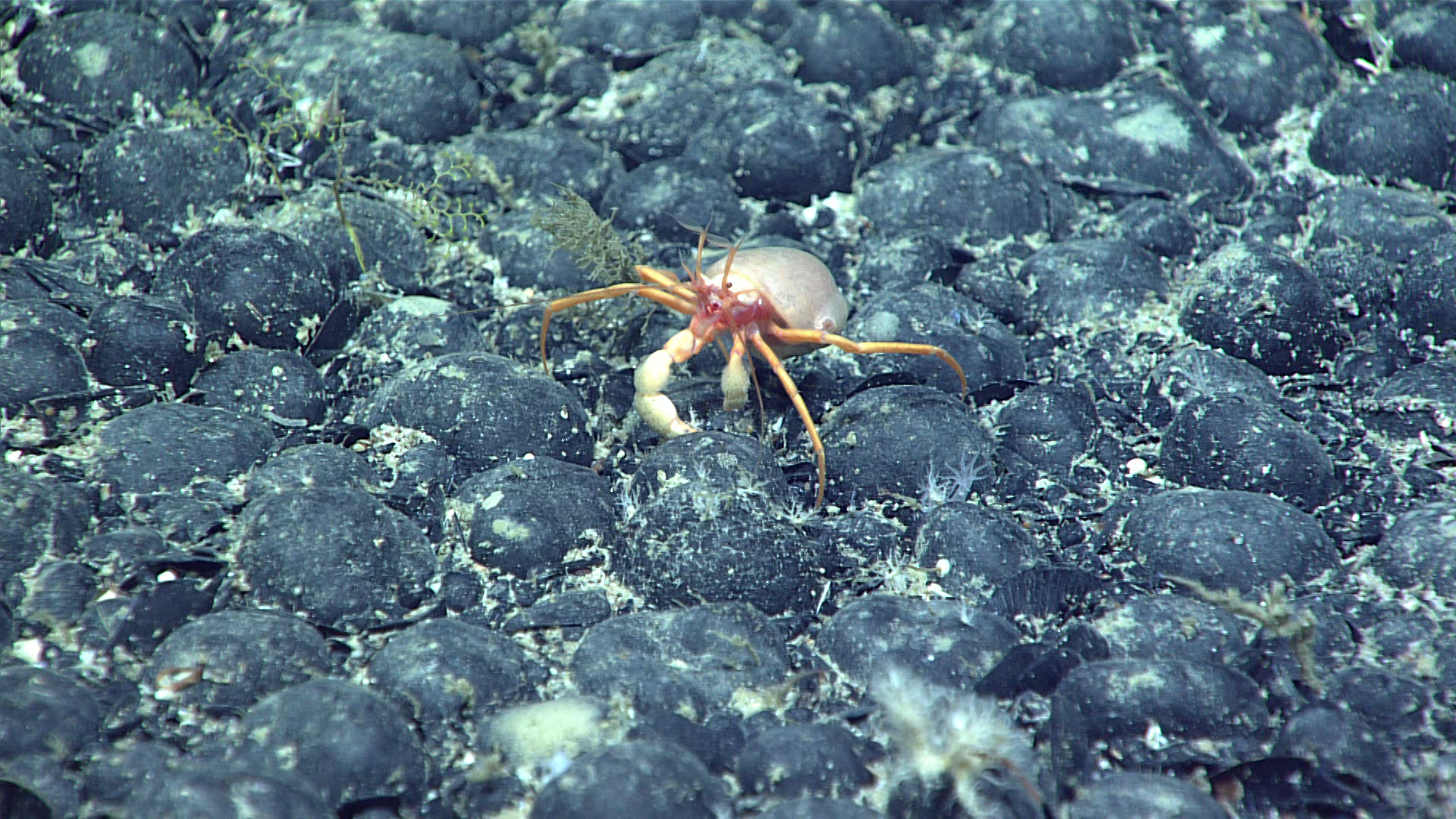
Manganese is found in the so-called ferromanganese or polymetallic nodules that litter part of the ocean floor. The National Oceanic and Atmospheric Administration (NOAA) has found nodules in both the deep, abyssal plains as well as on seamounts. The resource potential from these nodules is enormous.
Here’s a crab on top of nodule field in the Gosnold Seamount, an extinct submarine volcano in the North Atlantic off the New England coast:
These days we talk about mining the sea floor. The track record of terrestrial mining is pretty damn poor. Sure, we have a lot of cool stuff, but we made a hell of a lot of ugly messes in order to get it. I think we’ve got a lot to learn about the “final frontier” (no, it’s not space) before we go in and muck it all up.
 Mark C. O'Connor