Lutetium is more abundant than silver. Only two isotopes are known. One is the stable Lu-175 and the other is the radioactive Lu-176 which comprises about 2.5% of natural lutetium. The fact that Lu is #71 tells us it has 71 protons and thus (175-71) 104 neutrons. The radioactive Lu-176 has one extra neutron which must be the source of its instability.
The half-life of Lu-176 is about 38 billion years. A long half-life means a slow decay. Which means the stuff just isn’t that radioactive. Isotopes with short half-lives are more potent, that is, they put out particles at a faster rate. Lu-176 is used with its daughter product hafnium (#72) to date meteorites.
There’s a synthetic Lu-177 that is used in radiation therapy for brain tumors.
Lutetium is grouped with the lanthanoids (the rare earths) but it is also a d-block or transition metal. Its position on the long form of the periodic table shows it to be in column 3:
You usually see the short form of the periodic table which clips out the two rows of lanthanoids and actinoids (the mauve ones in the image) and sticks them down below. This is so the table can fit on an 8-1/2 by 11-inch notebook sheet!
Lutetium is difficult to separate from other similar metals. It is produced commercially only as a by-product as there are no known lutetium-dominant minerals. Like the rest of the lanthanoids it has no known biological role.
I’m working on a Windows 7 machine that I bought from Dell in 2010. Yes, my computer is more than a decade old. Google keeps reminding me that I need to upgrade or I will “lose” some features or something, I’m not really sure what I’m supposed to fear. Google’s parent company, Alphabet, just laid off 12,000 people, so I don’t think they really give a shit about my computing experience. What they give a shit about is harvesting my data, and I suppose I have to upgrade to their latest software versions or they won’t be able to do that nearly as well.
The endless obsolescence/upgrade cycle for the tech industry is nothing new. General Motors figured out back in the 1920s that they needed to make stylistic changes to their cars every year or people wouldn’t buy new ones. They would just hold on to their old cars. But that was bad for business. So the “model year” concept was born. Now we expect to see a new version of every car every year. I have a Honda CR-V that I bought new in 2019. The 2020 model features an entirely new engine, not to mention cosmetic changes like bumper styling.
But at least an “orphan” automobile is still functional. The fact that my Toyota pickup is 35 years old does not prevent it from being highway-ready. But try doing something useful with a 35-year old computer!
For questions like this I turn to Wolfram Alpha. Here’s what it spit out:
First of all, 60 million tonnes is 132,300,000,000 pounds! That’s 132.3 BILLION pounds. Yikes. There are seven billion people on the planet. 132.2 divided by seven is about 19. So that’s 19 pounds of e-waste created each year for EACH PERSON ON THE PLANET.
You can see the other comparisons. I like the “mass of terrestrial wild animals.” This of course excludes fish and sea creatures as well as livestock and pets. E-waste is about 6 E 10 kg per year and the animals are estimated to weigh 7 E 10 kg. That’s 86% (6/7 ≈ 0.86) of the mass of our world’s land critters. That seems like a hell of a lot to me.
The “estimated wet biomass of all humans alive” is a bit creepy but I suppose we can imagine all seven billion of us standing on a really big scale. The dial reads 385 Mt (mega-tonnes) or 385 million tonnes. Our e-waste is then (60/385) about 16% or 1/6 of that. We throw away, by weight, the equivalent of more than ONE BILLION PEOPLE every year!
People are biodegradable. And they are a renewable resource.
Neither can be said for e-waste. What are we going to do with the growing piles of desktops, laptops, gaming consoles, toaster ovens, TVs, cell phones, keyboards, monitors, microwaves, DVD players, fax machines, copiers, and such? Throw in big appliances like refrigerators and ranges, plus medical and industrial equipment, and add in schools, the military, prisons, and other large institutions like government agencies and you get a sense of the enormous scale of the problem. Everyone is upgrading and that means a whole bunch of stuff is getting thrown out.
E-waste is polluting. That’s a problem, especially since our poorest citizens typically live closest to waste disposal sites. Environmental poisons do not impact rich and poor alike. But what’s worse is this notion of waste. These devices should be manufactured so that they can be returned to the resource stream. There was too much energy, effort, and knowledge that went into creating these things. That’s getting thrown away along with the gold, copper, and other metals. We refine the silicon for chip-making to an astonishing degree of purity and simply dump it in the garbage after we are finished with it. And that means we have to tear up another beach somewhere to get the raw material, high-silica sand, to make new chips. It’s insanity.
Capitalism—or the free market, if you prefer—is supposed to be the best system for innovation and creativity. And that’s true. There are hundreds (probably thousands) of different kinds of television remotes, for example. But there is no incentive for our smart young engineers and business people to create a fully re-usable or recyclable remote. Imagine if THAT was the ethic behind new product development. Make something that can be part of a “closed-loop” such that there is little or no waste. That the concept of “waste” is what becomes obsolete instead of the things we make.
The metallic element Zirconium is twice as abundant in the earth’s crust as either copper or zinc. It it ten times more abundant than lead. Zirconium is not found in nature in its native state. It is always bound up in compounds, the most common of which is zircon, a neo-silicate, ZrSiO4.
Zircon is hard and dense and can be cut and polished as a semi-precious gemstone. It is also used directly in many commercial applications such as refractories, metal molds, and laboratory crucibles. About 60 million tonnes are mined annually. Of that quantity about one million tonnes of pure zirconium metal is extracted.
Zirconium metal is resistant to corrosion and thus used as an alloying agent. Pure zirconium is used as cladding for nuclear reactor fuels.
Cubic zirconia is the synthetic oxide form (ZrO2) of zirconium. It is used as a substitute for diamonds. The natural form of zirconia is too rare and thus it has to be made in the lab.
Zirconium is not a biologically active metal and humans consume a few milligrams of it every day in their food and water.
No, not the Hoagy Carmichael song. I mean literal stardust—the stellar debris that makes up the stuff of the universe. At least the universe we know about!
Astronomy Picture of the Day (or APOD to its aficionados) is the best site on the internet. Today they gave us a genesis story from the Book of Chemistry:
We are all stardust. Everything is. We only share our atoms with the earth and other living things. They don’t belong to us. We are like words on a Scrabble board. Assembled and displayed for oh-so-brief a time and then broken down and scrambled up again.
This fact alone should liberate humankind from prejudice. We are all just dust devils. We swirl into existence and swirl out again in the blink of an eye. We all have the same origin. We all have the same fate. And, to reiterate, we are all made of the same stuff, and none of that stuff is ours in any sense of the word. It’s just a temporary organization that results in something amazing.
The Book of Genesis has its own creation story, of course:
Then the Lord God formed a man from the dust of the ground and breathed into his nostrils the breath of life . . . (2:7 NIV)
There’s that dust again. Dust is an old Saxon word and similar words appear in Norse and German. It can mean “smoke” or “vapor” as well as “meal-dust” (the fine debris from grinding grain).
We’ve been re-watching Breaking Bad and we were treated to Mr. White asking his class “what is the subject of chemistry about?” One student suggested “it’s about chemicals.” But Mr. White said, “no, it’s about change.”
Next time you are dusting think about the stuff you are sweeping away as the foundation materials of a future world!
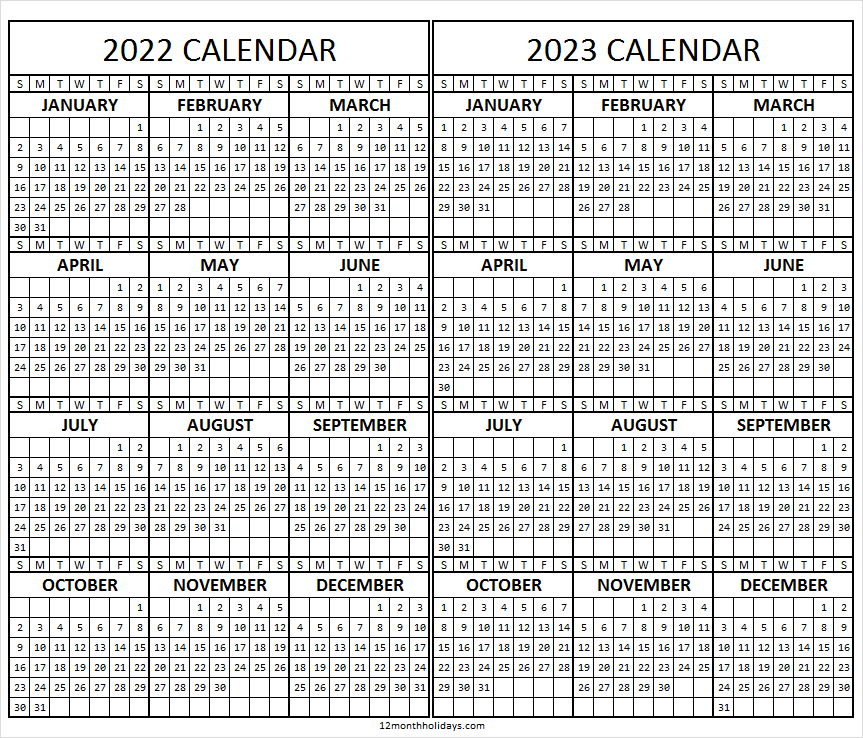
There are fourteen possible calendars. How so, you ask? Take this notion that we have 52 weeks in a year. 52 x 7 = 364. That means a year is really 52 weeks plus one day.
That one day could be any of seven possible days: Sunday, Monday, Tuesday, Wednesday, Thursday, Friday, Saturday, or Sunday. There’s no rule that says a year has to start on a particular day of the week!
If a year starts on a Sunday then the next year will start on a Monday, and the year after that on a Tuesday, then Wednesday, et cetera.
That’s where we get seven possible calendars. One for each day of the week. January 1st can fall on M, Tu, W, Th, F, Sa, or Su.
How do we get to fourteen? Easy: 7 x 2 = 14.
Not all years are 365 days. Some are 366 days. We call them Leap Years. The Leap Years add another wrinkle. We need a Leap Year version for each of our seven possible calendars. Thus there are fourteen.
You can re-use your calendars. Sounds weird, I know, but it’s true. Look up “Perpetual Calendar” in the almanac. Or go to this website.
2023 is classified as “Calendar 1.” This is arbitrary of course. But it makes sense as the year starts on Sunday and is not a Leap Year. Calendar 2 starts on Monday, Calendar 3 on Tuesday, you get the drift. Calendar 8 is, naturally, the Leap Year variant of Calendar 1.
Your old 2006 and 2017 calendars will work for 2023.
Your old 2022 calendar (Calendar 7) will work in 2033 and again in 2039.
The earth takes its own time traveling around the sun. It doesn’t care about our time-keeping schemes. We have to adjust to the physical reality. Plus there’s more than one way to measure a “year.” If you reckon a year by the stars, that is, you wait for the sun to return to the same place relative to its stellar background, that takes 365.2563 days give-or-take a few decimals. This is known as a sidereal year and is based on the idea of a fixed frame of reference, in this case the background constellations. The other way is to use geometry. If the sun moves 360 degrees—one complete revolution—relative to some starting point, that’s a tropical year. It’s about 356.2422 days from solstice to solstice. That’s 20 minutes shorter than the sidereal year. That extra 1/4 day (~0.25) or so is why they add a Leap Day every four years.
Myself, I count years from birthday to birthday. My year starts and ends on November 13th!


 Mark C. O'Connor