We know more about Mars than we do about our own oceans.
From phys.org*:
An international group of scientists, co-led by researcher Ariadna Mechó of the Barcelona Supercomputing Center—Centro Nacional de Supercomputación (BSC-CNS), observed 160 species on seamounts off the coast of Chile that had not yet been known to live in the region and suspect that at least 50 of these species are new to science.
This illustrates the folly of deep-sea resource extraction. We barely know what we are getting into. Terrestrial mining is a well-understood, long-practiced human endeavor. If we are going to mine for the things we need, we ought to do it in a way that we understand. The ocean is the source of all life on earth Recklessly digging it up is foolish. We have too much to learn first.
The seamounts are part of the Salas y Gómez Ridge which is an underwater mountain range extending from Chile to Rapa Nui (Easter Island). Here’s more:
This ridge hosts one of the most unique and biodiverse seascapes on Earth, with an extremely high rate of endemism, critical habitats for benthic organisms, essential migration corridors for highly mobile species, and the presence of over 80 threatened or endangered species.
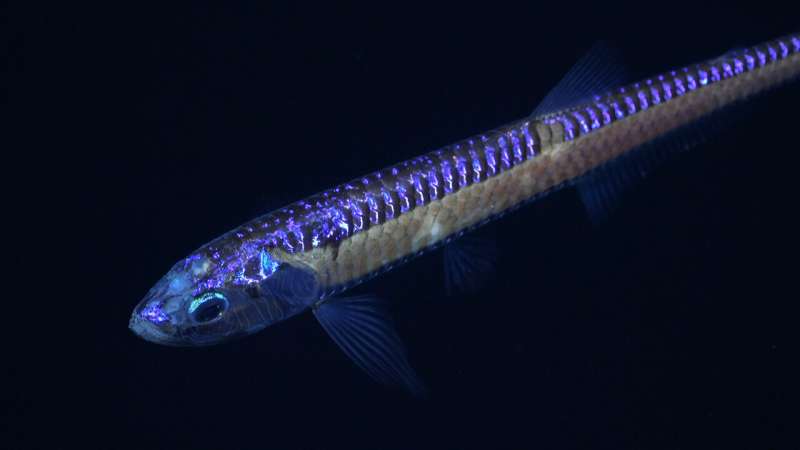
Here’s a dragon fish that lives there:
Instead of searching for aliens or extraterrestrial intelligence maybe we should learn more about the vast seas that nurture our lives. Unlike space, they are filled with life. We don’t have to go far to find amazing and exotic creatures and ecosystems that are far more interesting that we can imagine.
*”Research team discovers more than 50 potentially new deep-seas species in one of the most unexplored areas of the planet” (April 12, 2024 by Barcelona Supercomputing Center)
 Mark C. O'Connor