Eleutheria

I read a lot of books. Mostly novels, both contemporary and vintage. Sometimes a book really stands out. This novel, Eleutheria by Allegra Hyde, is one of the best I’ve read in a long time.

It’s science fiction, or more precisely “cli-fi” or climate fiction. This is a big topic these days as you can imagine. These novels are usually called “dystopian” and you could say that about Eleutheria but it is also hopeful, and surprisingly upbeat. You can also read it as a coming-of-age tale.

The ending might be the best part. It has many possibilities, but it’s also a resolution for our unique protagonist. Eleutheria checks in at a relatively economical 322 pages which is a relief from the flood of overlong modern books. I feel like I could chop 100 pages off of most of today’s novels (and half an hour off most of today’s movies!) without hurting them. Not so this book. Hyde doesn’t waste words and doesn’t waste your time with diversions and self-indulgent blather.

I think you should go out and get this book and give it a read and then tell your friends to do the same. By the way, “Eleutheria” is an island in the Bahamas and is pronounced “Eh-LOO-thuh-ruh.” It’s also the name of a play by Samuel Beckett. It’s a Greek word (ἐλευθερία) that means “liberty.”

Copper-colored glasses

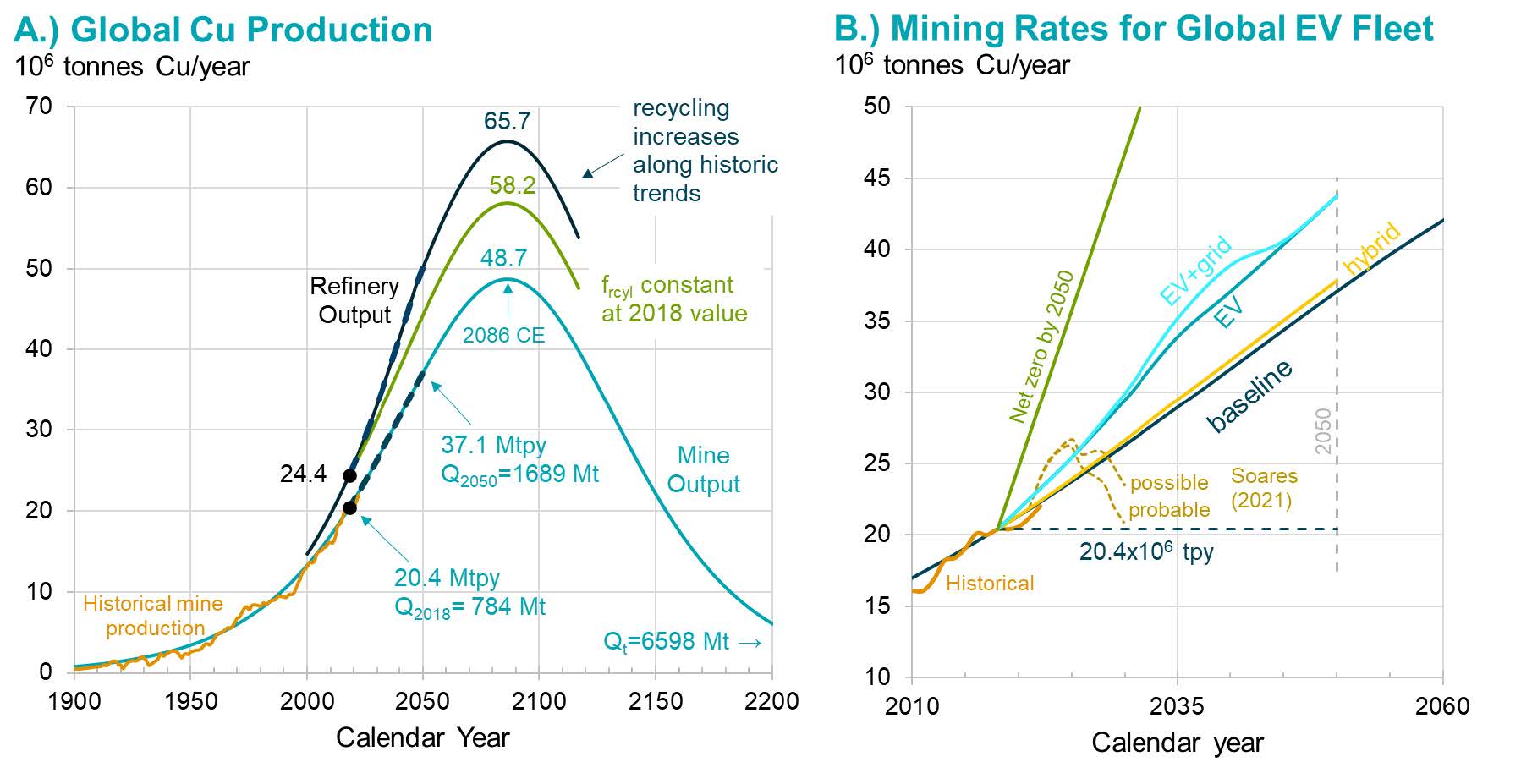
There’s a big push to electrify our vehicle fleet. That’s going to require a lot of copper. The folks over at the IEF (International Energy Forum) took a look at this problem. Here’s what they came up with:

The researchers found that between 2018 and 2050, the world will need to mine 115% more copper than has been mined in all human history until 2018 just to meet “business as usual.” This would meet our current copper needs and support the developing world without considering the green energy transition. (from mining.com)

The IEF report went on to say:

To meet the copper needs of electrifying the global vehicle fleet, as many as six new large copper mines must be brought online annually over the next several decades. (from mining.com)

“Annually” means every year. Six new copper mines PER YEAR! Right now it takes about twenty years to bring a copper mine on-line.

The study suggests that hybrid vehicles are a better policy choice than EVs. Copper is too important elswhere:

The researcher (Adam Simon, co-author*) also points out that copper will be needed for developing countries to build infrastructure, such as building an electric grid for the approximately 1 billion people who don’t yet have access to electricity; to provide clean water drinking facilities for the approximately 2 billion people who don’t have access to clean water; and wastewater treatment for the 4 billion people who don’t have access to sanitation facilities.

That’s a lot of people who have very basic needs that we take for granted. Here’s a couple of graphs that illustrate the point:

Every choice is a trade-off. Electrifying our vehicle fleet AND raising the standard of living for hundreds of millions of people probably isn’t possible. My next car is going to be a hybrid.

*https://lsa.umich.edu/earth/people/faculty/simonac.html

Helium, #2

The folks who study this stuff tell us that the element Helium makes up about one-fourth of the universe. Helium is produced in the sun and other stars as a product of nuclear fusion, hence its abundance. Funny thing, it’s scarce here on the home planet.

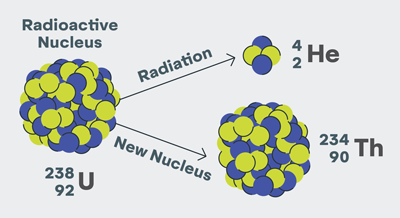
Terrestrial helium is a product of nuclear decay. Naturally-occurring uranium emits alpha particles which are helium nuclei (two protons and two neutrons).

The alpha particles pick up stray electrons from the environment and the stable helium atoms formed are trapped in rocks underground along with other naturally-occurring gases like hydrocarbons. Much of this helium, if it escapes to the atmosphere, is lost to space. Its heavier sister element, the noble gas Neon, is about three times more abundant (18.18 ppm to 5.24 ppm) in the atmosphere. The earth’s magnetic field is responsible for trapping our life-giving gases (nitrogen, oxygen, water vapor) at the surface.

Helium is very important commercially. Here’s a breakdown of its uses:

The federal government used to stockpile helium as a strategic material. They got out of that business. Helium is extracted from natural gas and thus its production is dependent on that industry. That’s put a dent in supply and raised prices. Laboratories have been hit the hardest. Most of us know something about inert-gas welding, but few of us think about medical applications like MRIs.

It might not be a bad idea for the government to think about stockpiling a strategic reserve again. It doesn’t seem smart to rely on the ups-and-down of a poorly-established and constrained market for such a rare but critical industrial material. A non-renewable resource, I should add. I suppose privatization is the politico-cultural zeitgeist, and I’m stuck in an out-dated interventionist mind-set, but here we are. Regardless, stop buying those stupid helium balloons.

The Three R’s

Tesla has shown off some interesting technology these last few years. It’s too bad the outfit is run by an adolescent. Putting aside the hype and the cult/fanboy crap—I know it’s hard to do—they actually create some good stuff there. I wouldn’t give ’em a nickel of my money but there’s no doubt Tesla has a lot of smart, accomplished folks working for them.

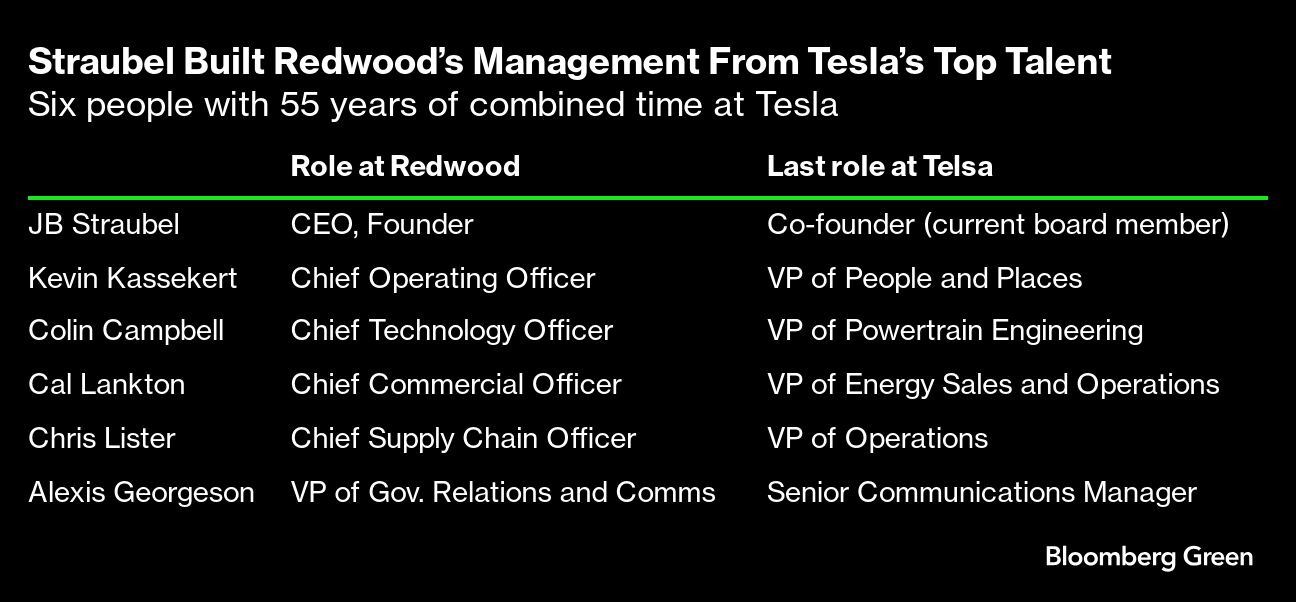
Some of them left to do other things. One notable is JB Straubel. Here’s the depth chart at Redwood Materials:

https://www.mining.com/web/tesla-co-founder-jb-straubel-has-built-an-ev-battery-colossus/

Redwood Materials is all-in on battery recycling. They see the future in scrap. They’ve developed some new schemes for converting e-wastes into e-resources that cut both the carbon footprint and the water bill. Water is an issue everywhere, but especially so in the West (Redwood is in Nevada).

Batteries are in big demand. And the demand is growing. All the materials needed to make batteries are imported. Here’s a note on China (from mining.com):

The world’s second-biggest economy controls 70% of the planet’s lithium refining capacity and as much as 95% of production for other crucial materials needed to make EVs, according to BloombergNEF. Redwood is attempting to break that stranglehold by creating a domestic loop using recycled critical metals.

We throw enough stuff away every day to supply a few emerging economies. The whole notion of waste is an archaic one. Goods and materials should be re-used, re-purposed, and re-cycled until the Laws of Thermodynamics make it impossible to continue. Capitalism is voracious—it continually needs fresh supplies. We can dig up the ground (or the seafloor) to get more, or we can look in our trash cans.

Or we can use less. The Three R’s are really REDUCE, re-use, and re-cycle! But that’s not the American Way. So we’d better get going on the re-cycling thing. I wish ’em luck over there at Redwood.