There’s a place in Arizona that’s filled with copper. It’s called Resolution. A joint venture between two of the largest mining outfits in the world wants to mine that copper.
Rio Tinto and BHP are the two mining companies. They are international firms but both have headquarters in Melbourne. Mining is a bigger part of the economy in Australia than in most developed nations.
Rio Tinto has a market cap of $100 billion or so and BHP rates about $130 B. Note that these are dwarfed by behemoths like Apple ($3.4 trillion) and Amazon ($1.8 T).
The two mining giants have sunk several billion into the potential mine while they navigate the regulatory and political landscape. The underground porphyry copper deposit that’s got everyone so fired up is massive. It could potentially supply 25% of US copper demand. The mine life is expected to be sixty years.
Naturally this is right in the middle of sacred land. A proposed land swap with the Forest Service and some promises to protect indigenous sites seemed to have pushed the process towards approval. But there’s still strong opposition. A few years back Rio Tinto destroyed 46,000-year-old Aboriginal caves in Western Australia. They don’t have much of a track record in other places, either. BHP has its own infamous case, the 2015 dam collapse in Brazil, and they have a similar history to their rival/partner.
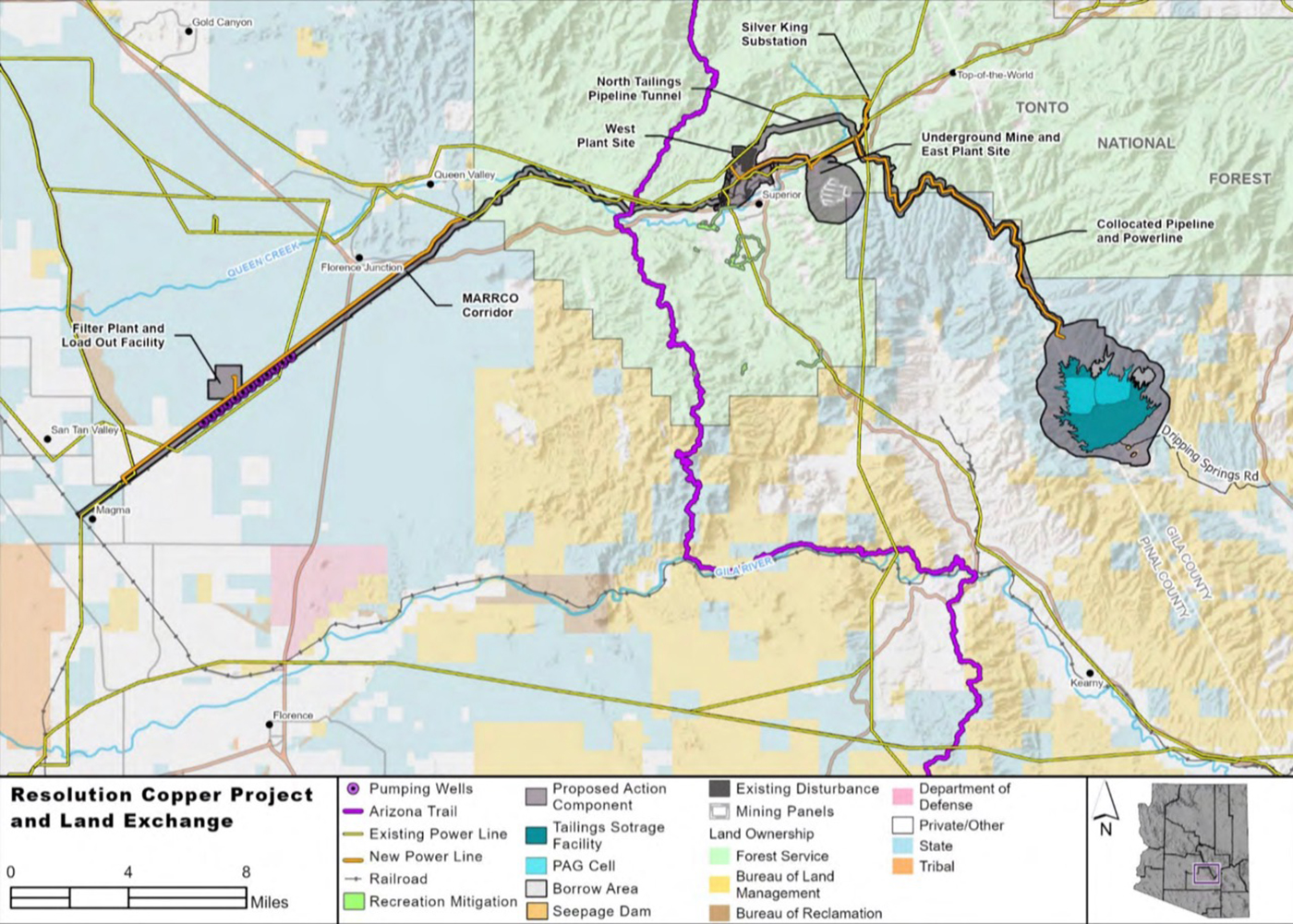
The most compelling argument seems to be about water. Mines need a hell of a lot of water. Even if both BHP and Rio Tinto suddenly decided to be the best companies in the world and run a neat, clean mine, they will still use mountains and mountains of water. And this in the middle of the Sonoran desert!
The San Carlos Apache Tribe is taking their opposition to Resolution to the US Supreme Court. If we want a clean energy future, we have to have copper. Lots of it. That’s not in question. How we get the stuff—that’s where the questions are.
 Mark C. O'Connor