Much is being made about “critical minerals” these days. The energy transition—electric vehicles, solar and wind power—will make enormous demands on our supply chains. Big Tech’s obsession with AI and data centers will all also fuel more demand, and this industry is already insatiable. Everyday Americans use more energy and buy more stuff every year.
The usual response to the demand for more minerals (like copper, cobalt, nickel, rare earths, etc.) is to build more mines. The United States is rich in natural resources but the mining industry has left a legacy of pollution and degradation and thus it has engendered mistrust from the public. It’s hard to build a new mine these days. The response by our autocratic regime is a predictable one: cut oversight and regulations and “fast-track” new projects. And throw some money around.
But what if there is another way?
A mine is a big hole in the ground. A lot of material gets moved and has to be dumped on site. The ore gets processed and the “waste” rock gets dumped on site. Some of this material is underwater in ponds. The dams holding back these ponds can break and cause catastrophes, like this one in Brazil (Brumadinho) in 2019 that killed nearly 300 people:
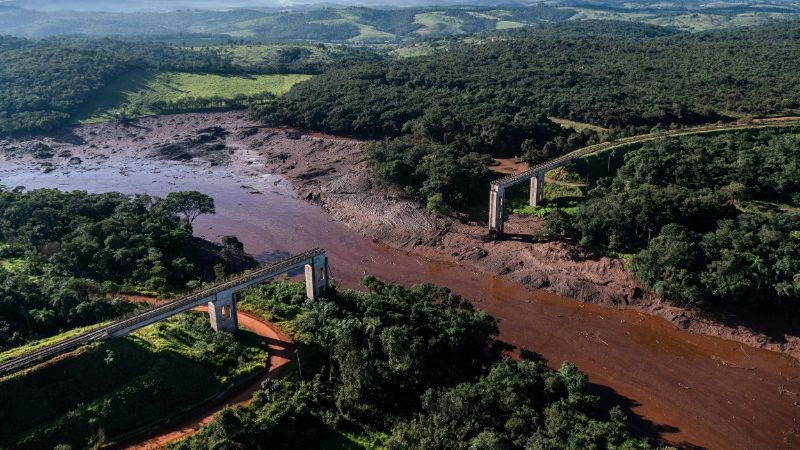
There are tailings ponds all over the world, many with dams just waiting to fail. There are piles and piles of waste rock and tailings all over the world. The thing is, this stuff isn’t waste. It’s processed rock. It contains, albeit in lower concentrations, the very minerals that were being mined in the first place.
A new study from the Colorado School of Mines suggests that 90% of our country’s “critical minerals” needs could be met by mining tailings piles. This would be easy mining. No new holes to dig. The material you want to work is already on the surface and has already gone through a preliminary sorting.
We have the world’s most valuable garbage. When we ship our garbage overseas, poor people there go through it for valuable stuff so they can eke out a living. At some point, we have to stop thinking about waste, garbage, refuse, and trash. These things don’t really exist! They are just resources that have yet to be returned to the system.
Miners should be required to process their tailings and waste rock before they are allowed to dig new mines. Old mines should be rehabilitated before building new ones. Public policy (i.e. government investment) should be directed toward “enhanced recovery” and the exploitation of what we used to think of as leftovers.
The modern metal industry, particularly steel, copper, and aluminum, depends on recycling. Scrap is critical to the production cycle. There are incentives in place to recover used metal. This kind of thing needs to be ubiquitous. It is especially necessary in the tech sector with its toxic obsolescence/upgrade cycle. We throw away functional tech just because it gets “old” and not because it doesn’t work anymore. Silicon Valley depends on voracious consumer demand for fancier, shinier, and prettier stuff every year.
The study I mentioned is in Science and is by Elizabeth A. Holley, et. al. Here’s the abstract:
The US has sufficient geological endowment in active metal mines to reduce the nation’s dependence on critical mineral imports. Demand is increasing for cobalt, nickel, rare earth elements, tellurium, germanium, and other materials used in energy production, semiconductors, and defense. This study uses a statistical evaluation of new geochemical datasets to quantify the critical minerals that are mined annually in US ores but go unrecovered. Ninety percent recovery of by-products from existing domestic metal mining operations could meet nearly all US critical mineral needs; one percent recovery would substantially reduce import reliance for most elements evaluated. Policies and technological advancements can enable by-product recovery, which is a resource-efficient approach to critical mineral supply that reduces waste, impact, and geopolitical risk.
 Mark C. O'Connor