Hafnium (Hf) is found with zirconium and that’s how most of it is obtained. The two elements are very similar although zirconium is about half as dense as hafnium.
The ores of titanium (rutile and ilmenite) are the source for zirconium and thus for hafnium. Zirconium is used as cladding for fuel rods in nuclear reactors. It has to be pure and any hafnium has to be separated out. The hafnium thus obtained is used for nuclear reactor control rods as it is a good neutron absorber.
A control rod speeds up or slows down a nuclear chain reaction due to its ability to regulate the flow of neutrons. Those neutrons are supplied by the fuel rods (uranium, usually). A nuclear reactor is a collection of fuel rods and control rods. Their movement in and out of the reactor core regulates the rate of fission. The heat energy from nuclear fission (atom-splitting) is sent to a boiler that makes steam. The steam runs a turbine which ultimately drives an electrical generator.
Hafnium is used in alloys and its oxides are used in integrated circuits.
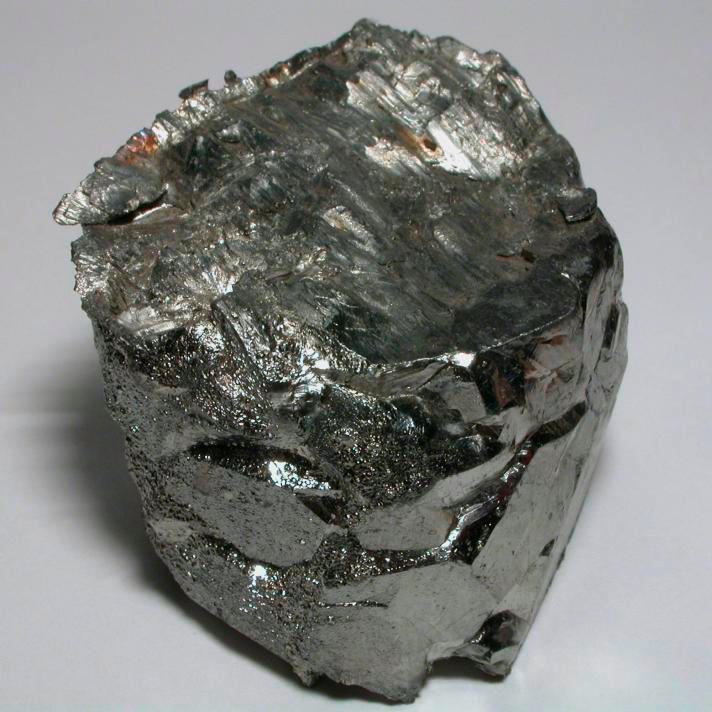
 Mark C. O'Connor