Platinum, #78

For about 2200 bucks you can get yourself some platinum. The US Mint has coins with a face value of 100 bucks containing one troy ounce of 0.9995 platinum. Like gold and silver, element no. 78 is a “precious” metal and is used for both bullion (non-coin applications like ingots and bars) and specie (coinage). Of course only an idiot would actually use platinum, gold, or silver as legal tender. We have paper for that! Here’s a platinum coin:
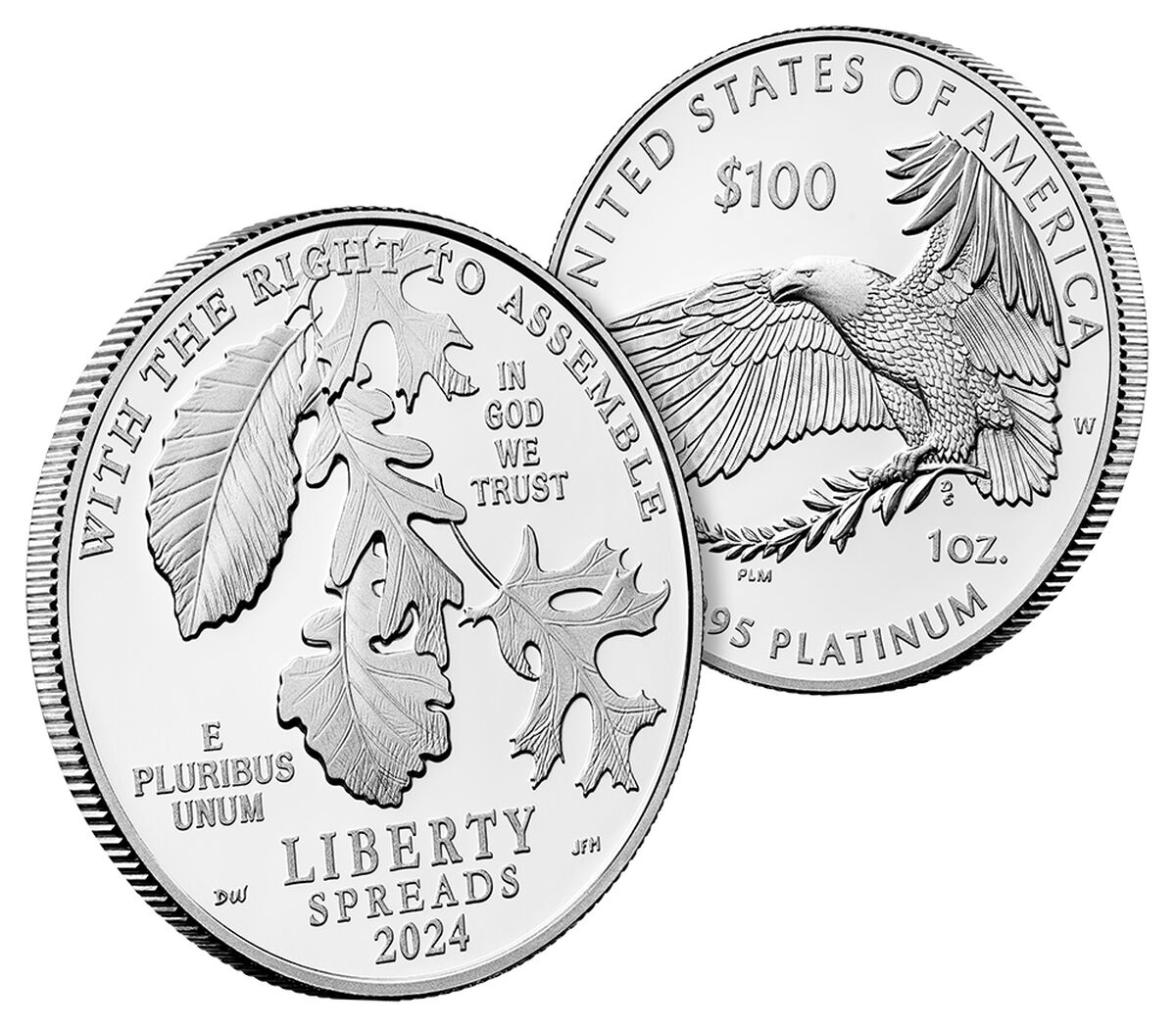
Platinum is rare, similar to gold in crustal abundance. Like gold, it doesn’t corrode. One of its uses is in catalytic converters so all of us are connected with this “noble” metal in some way.

Platinum has a variety of specialized industrial uses but only a tiny amount of the stuff (about 200 metric tons annually) is actually mined and sold on the world market. That’s a little over six million troy ounces. By comparison world gold production is nearly 100 million troy ounces per year.

Platinum is obtained as a by-product from copper and nickel mining.

Integrity

The first thing I learned in Computer Science 1 at UC Berkeley in the fall of 1977 was GIGO. That stands for “Garbage In, Garbage Out.”

If you write bad code, you will get bad output.

You don’t want the GO or “Garbage Out” part to happen. So, you make sure the GI or “Garbage In” part doesn’t happen!

Today’s AI (mostly Large Language Models) are trained on data. Data is just a fancy word for “all the junk in the world.” Since computers don’t “know” anything, that is, they have no morals, ethics, or values, they can’t “decide” what is good information or what is bad information.

AI engineers started with the assumption of controlled environments and trustworthy inputs. But those things exist only in labs. In the real world there is plenty of garbage. And when AIs can slurp from the entire internet, they can embed corrupt material. They can incorporate suspicious code and ingest poisoned documents. Even if the programming works the way it is supposed to, the outputs can be foolish and stupid because you can’t trust the inputs.

This is the part the AI industry doesn’t want to talk about. You see, the industry has prioritized efficiency over integrity. Doing things right takes time and thus costs money.

From Bruce Schneier, one of my go-to sources on all things tech (along with Molly White):

Integrity isn’t a feature you add; it’s an architecture you choose. So far, we have built AI systems where “fast” and “smart” preclude “secure.” We optimized for capability over verification, for accessing web-scale data over ensuring trust. AI agents will be even more powerful—and increasingly autonomous. And without integrity, they will also be dangerous.

What kind of architectures do you think the Titans of AI will choose for their systems? Which ones have they already chosen?

Rubidium, #37

The so-called “alkali metals” form column one—the first period—of the periodic table. Some of these are familiar, like lithium (#3), sodium (#11), and potassium (#19). We know these things from compounds like lithium carbonate, the medical “lithium” that is used to treat mood disorders. Of course we need sodium chloride (table salt) in our daily diet for its essential role in our physiology. And we eat bananas (or drink OJ) to get potassium salts, another life-sustaining nutrient.

But the actual metals are rare. Outside of chemistry class most folks will never see these things as pure metals. They are typically stored under oil as they oxidize rapidly in the presence of air. I used to toss a chunk of sodium into a bucket of water (outdoors, of course!) for the lovely explosion it made. Lithium, sodium, and potassium are less dense than water and will float. But they will react violently with the water, releasing hydrogen gas which the heat of the reaction will then ignite. Very cool! And the pH of the water surges up, making it alkaline, hence the name “alkali” metals.

Rubidium, #37, has all the same properties as the above except it is denser than water. And it has no known biological function. But it is capable of replacing potassium in organisms and thus can be used as a biomarker.

Rubidium has few industrial uses but has many technical applications in research laboratories. It is used as a laser target, for example, and in atomic clocks. It is named for the ruby color the compounds emit when ignited, and some of the salts are used in fireworks.