
One of the things you see all over San Miguel de Allende are stellated dodecahedra.
A dodecahedron is a 12-sided solid. The twelve faces of a regular dodecahedron are all regular pentagons (equal length sides, equal angles).
If you put a pentagonal pyramid on each of those faces, that is, use each pentagon as a base for a five-sided figure, you get a small (or “the first”) stellated dodecahedron.
According to Wolfram Alpha this figure first appeared in 1430 in a mosaic by Paolo Uccello. It’s on the floor of St. Mark’s in Venice:
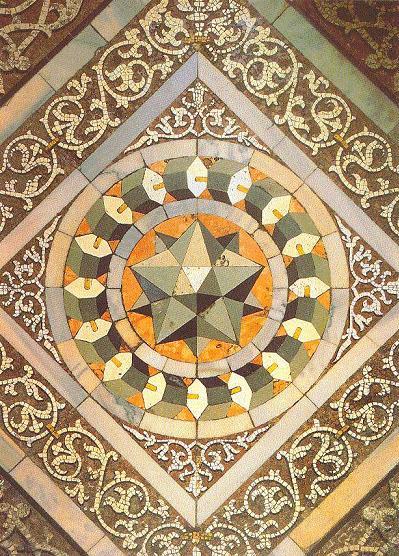
In San Miguel you see it in street art, like the above metal sculpture that was on a corner near where I was staying. It’s also featured in tourist trinkets and souvenirs. Here’s a shop with such items (you can see me in the mirror):
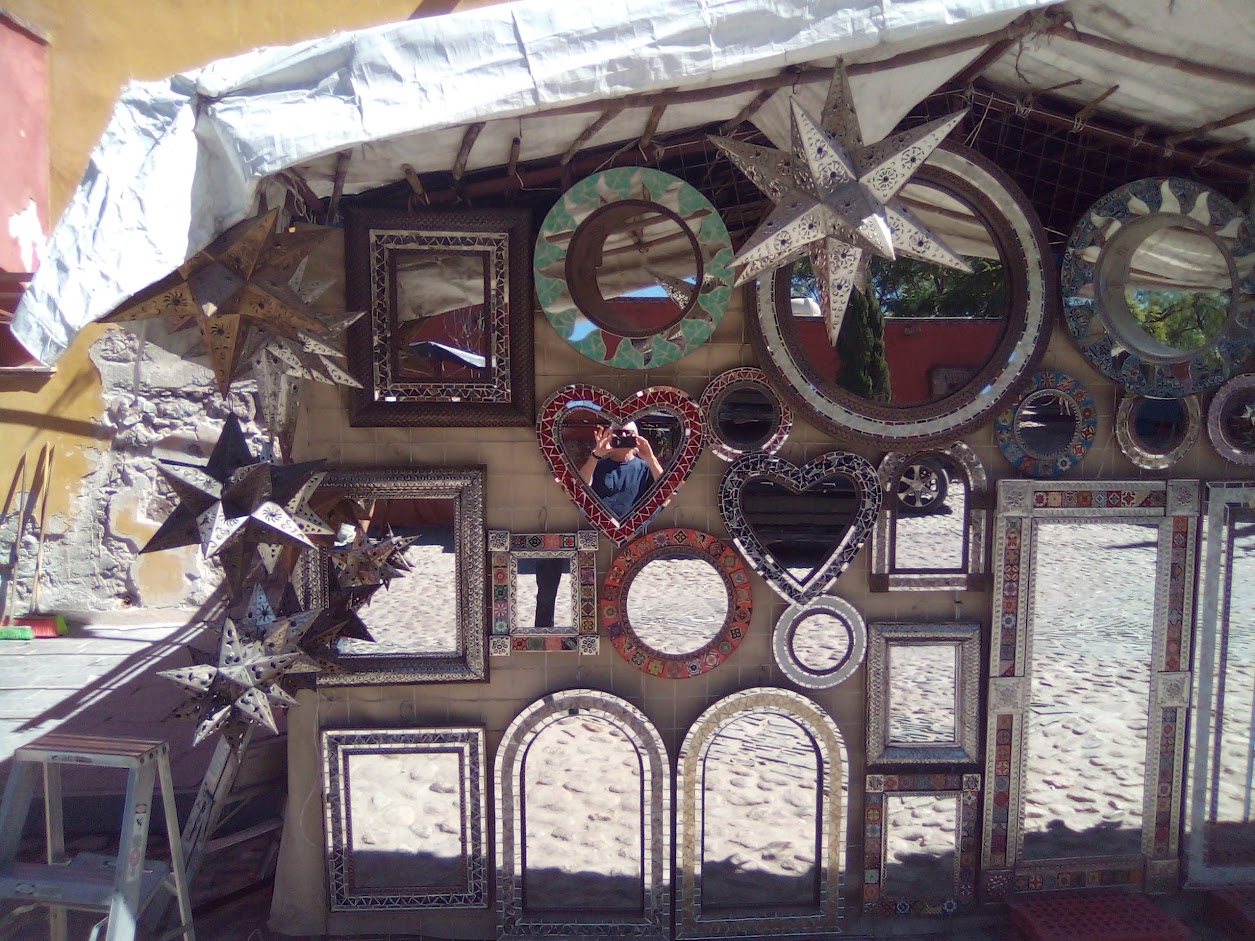
Note the cobblestone street reflected below me!
This picture is from just outside the church at Atotonilco. My contact on the ground in SMdA tells me the 12 points on the star represent the 12 months of the year, and the star is a symbol of peace and unity.
The stellated dodecahedron is featured in “sacred geometry.” This New Age stuff goes back to the Greeks as the dodecahedron was one of Plato’s fundamental figures (the so-called Platonic solids).
Whatever your religious bent, you’ll probably find compatriots in San Miguel. México is a Catholic country (I saw people routinely cross themselves when they walked in front of a church) but it’s also a 21st-century place. There are all kinds! San Miguel attracts a lot of outsiders and oddballs and the modern spiritualist would probably find the vibe to their liking.
I like how this particular design seems to cross the cultural barriers. It’s certainly got its Catholic bona fides, being featured in the Basilica Cattedrale Patriarcale di San Marco, after all. (That’s “St. Mark’s” in Italian.)
And yet the hippies, the tourists, the ex-pats, and the residents have all adopted it as a symbol of the city. It’s hard to argue with peace and unity.
 Mark C. O'Connor