Xmas Eve humor

Did you know that if your name is Jordan and you live in South Carolina that you are likely to be a robber or to commit a robbery in the future? It’s all true! If you don’t believe me, check out The Journal of Sociolinguistic Criminology:

I love how “statistical robustness” demands attention! Obviously it’s all jive. The fellow behind it is named Tyler Vigen and he has a website called Spurious Scholar devoted to this nonsense. There’s also a part called Spurious Correlations which has stuff like this:

Back in the ancient past when I was a science teacher I used to have Mr. O’Connor’s Three Laws of Science. I figured that if Newton had his Three Laws of Motion then I could have my three things, too. Anyway, Law #1 was all measurements are uncertain. Law #2 was correlation does not necessarily imply causality. And Law #3 was science is a description of nature and not an explanation.

I thought they were equally important. But I’ve found over the years that #2 is the most routinely violated. People love correlations! Who needs causal mechanisms when all you need is happenstance?

This Tyler Vigen chap is having fun with computer tools. He uses databases and a large language model. He “dredges” the data for correlations, and as he has tons of data, he gets lots of correlations. Then he has the LLM (a type of AI) write the paper. Hilarious! It all looks and sounds real until you actually read the stuff. Vigen does all the math, the statistical analysis, which gives the illusion of heft. It’s a spoof on researchers who rely too much on mathematical models and not enough on common sense. Note that the names of the researchers on the bogus papers spell out CHAT GPT with their first initials.

I’m reminded of a funny bit from another sorta-famous internet nerd (Randall Munroe of xkcd):

OK, I know it’s geek humor! But geeks like to laugh on Christmas Eve, too. Anyway, the comic is spot-on about the sports media landscape. Since it’s the holi-daze, you will be subjected to too much sports. Keep that mute button close by.

Happy Christmas and Merry Everything to all!
Hydrogen, #1

A chemist doesn’t count one, two, three, four, . . .

A chemist counts hydrogen, helium, lithium, beryllium, . . .

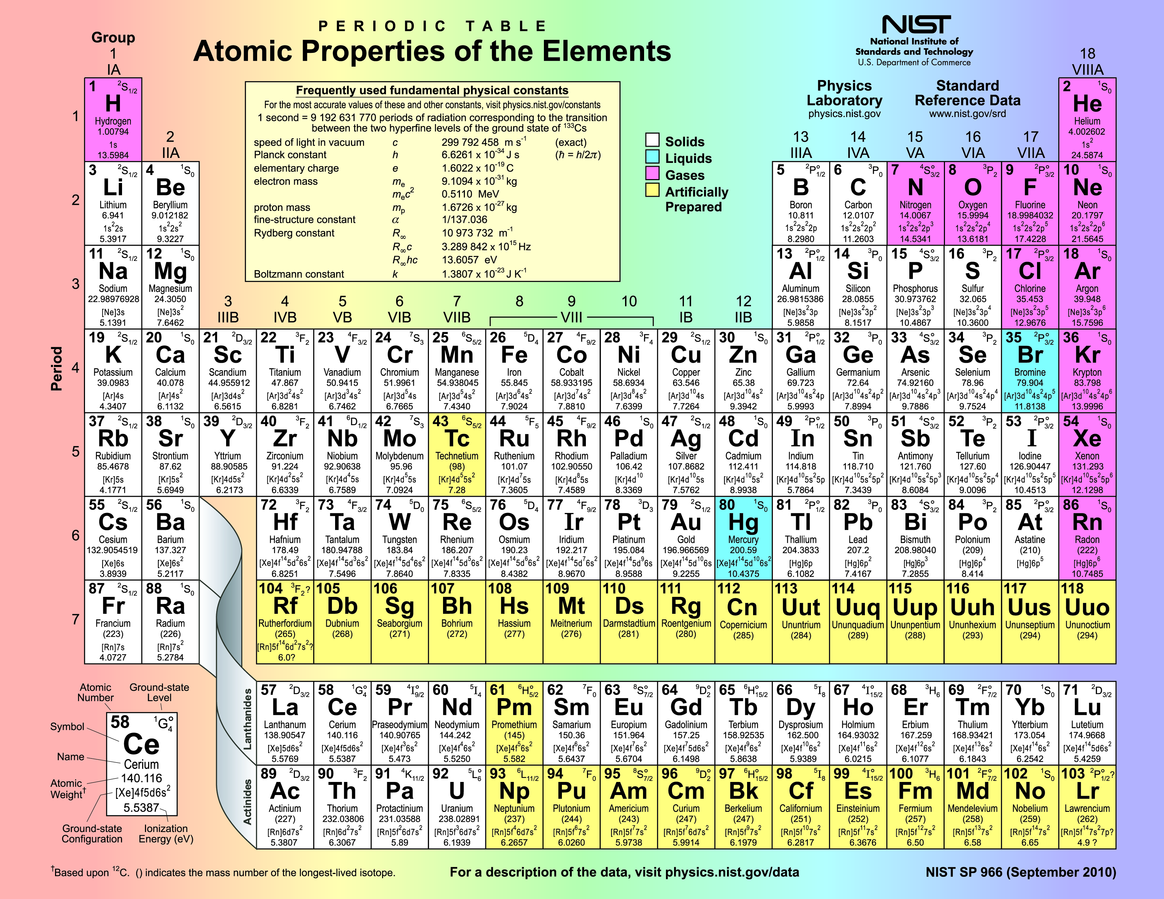
To see why, take a look at the periodic table:

Chemistry says the world is built one proton at a time.

Element number one has, you guessed it, ONE proton. That’s what makes it hydrogen. If there were two protons in the nucleus, it would be helium. If there were three—lithium.

And so on.

Hydrogen is the stuff of the universe. From what we (that is, our instruments) can see, hydrogen is the most abundant of all the elements. In stars, hydrogen nuclei fuse together to make helium. That process is called thermonuclear fusion because it releases energy. It’s the fuel that the sun burns to give us warmth and light and all the other radiant energy it puts out.

Not satisfied with fission bombs, the people who designed our Doomsday weapons came up with hydrogen or thermonuclear bombs. These are way bigger and way better. We’ve managed to harness fission energy for domestic purposes. Harnessing the power of the sun in a controlled fusion reaction remains elusive. It’s probably a pipe dream, anyway. They’ll get the reaction going but it will take so much energy to contain it that the costs will be prohibitive.

ITER in France is the biggest test of fusion power right now. And they do a lot of research at our own Lawrence Livermore Lab as well.

Hydrogen has an isotope called deuterium. Normally a hydrogen atom has only a single proton in the nucleus. Deuterium has a neutron (along with the one proton) in its nucleus. This makes it heavier and when it combines with oxygen to make water you get “heavy water.” Heavy water can act as a moderator in a fission reactor. The Nazis occupied Norway in WWII and wanted the heavy water produced from the Vemork hydroelectric plant for their atomic research. The facilities were the target of multiple Allied bombing and sabotage efforts. Norwegian commandos also sank the ships carrying the product back to Germany! Vemork is a museum today. The story was fictionalized in the 1965 film The Heroes of Telemark with Kirk Douglas and Richard Harris.

You can readily produce hydrogen in the lab by reacting dilute acids with metals. Zinc and hydrochloric acid (aka muriatic acid) work particularly well. Hydrogen is quite flammable, so be careful. The Hindenburg was filled with hydrogen (it exploded in 1937). It would have been better off with helium but the United States had outlawed the export of helium in 1925. It seems we’d cornered the market on helium, having developed a process for extracting it from hydrocarbons. That forced every other nation to use hydrogen for blimps and dirigibles and such.