Ruthenium is right smack dab in the middle of the periodic table. That makes it a “transition metal” which lumps it in with lots of familiar metals like iron, chromium, copper, silver, tungsten, and platinum.
On the far left of the periodic table are the highly-metallic elements like sodium, potassium, magnesium and calcium. On the far right of the table are the thoroughly non-metallic elements like helium, argon, chlorine, and iodine. Thus the middle of the table is a “transition” from metals to non-metals.
Ruthenium is very dense (~12 g/cm3). That’s more dense than lead (~11 g/cm3), and iron (~8 g/cm3), materials we are all familiar with. It has applications in electronics and high-tech. Here’s a more prosaic example (I got this from Autozone):
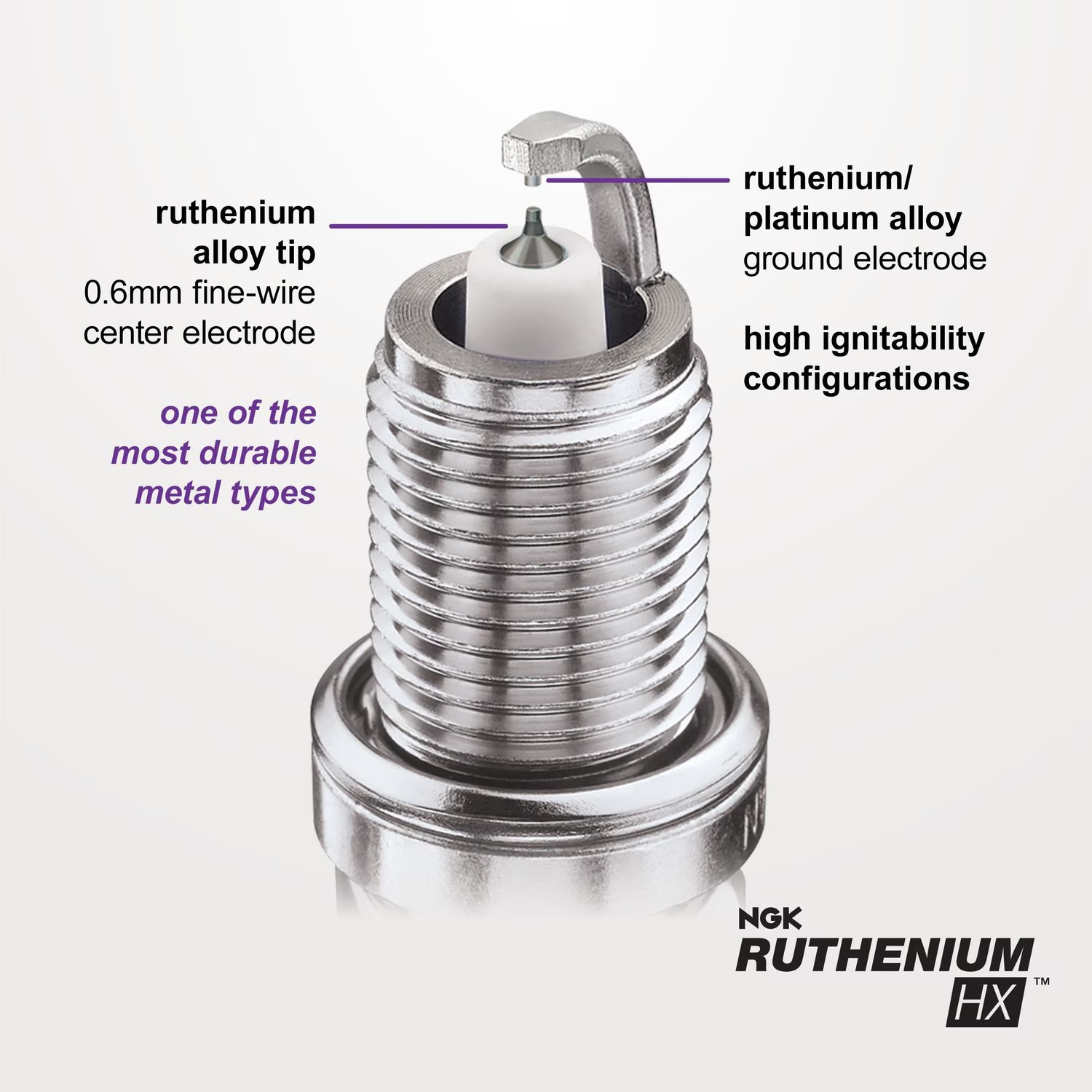
Apparently ruthenium makes for excellent electrical contacts. It’s also a valuable catalyst. The interesting thing is how little of the stuff is actually mined. Usually a by-product from platinum processing, the total world production is only about 30 tonnes. By comparison global iron production is over two billion tonnes.
How big is 30 tonnes? A “tonne” is a metric ton or 1000 kilograms. Ruthenium’s density (~12 g/cm3) translates nicely to 12000 kg per cubic meter (or 12 tonnes/m3) which makes it easy.
Divide 30 by 12 and you get 2.5 cubic meters. Wolfram Alpha tells me that’s 2500 Liters, 660 gallons, or 88 cubic feet. The cube root of 88 is about 4.5 so we have our measurement.
Imagine a cube about four-and-a-half feet long (54 inches) on each of its three sides. The world’s annual ruthenium harvest would fit inside. A guess a little bit of element no. 44 goes a long way! I’m going to assume there are stockpiles of the stuff, and that some of the applications involve recovering the metal. What’s mined isn’t all of what is used, I should think.
Then again, I don’t really know. It’s amazing how much stuff we can find out. It’s also amazing how little we know about how things work in our world.
 Mark C. O'Connor