Intoxication

My late friend Mr B was a pharmacist’s mate during WWII. Working at a stateside base he called his job “chancre mechanic.” Which means he supplied gonorrheal servicemen with penicillin. The rest of the time he was plying pilots with amphetamines. Hey, there was a war on. These guys were saving the world. What’s a few uppers in the grand scheme of things? Once we stopped being at war, amphetamines became just another street drug instead of a pharmaceutical solution to a vexing problem (long flights by worn-out flyers).

People seek out intoxication like they seek food or sex. At least they seek out altered states. Even the mystic, normally abstemious, is not content with everyday life and seeks a kind of meta-reality, that above-the-plane-of-existence sort of thing. In the 60s it became fashionable to eschew the lengthy discipline and self-abnegation of the searcher and simply eat acid. LSD is a great experience, I have to vouch for that, but I had no Saul-on-the-road-to-Damascus moments. Not that I was really looking for any. Seems like if you want to trip out on drugs, you should trip out on drugs. If you want to trip out on god, you should trip out on god. I hear the desert, prayer, and fasting work well for that.

Among other teetotalers and drug-free types are extreme athletes. They get high jumping off mountains or whatever. They tune their minds to achieve complete immersion in their activity. I get the same kind of buzz—much less intense, I suppose—when I’m skiing and conditions are perfect and I’m floating effortlessly in the snow and my only thoughts are the sensations of the turns and my breathing. I’m not really conscious of the rest of reality, just fully in the moment and enveloped in the experience. It’s a fleeting thing and I see why people chase it, it’s much like a drug high.

I think we ought to stop worrying about intoxication. In fact, I don’t like the word. What’s so toxic about it? There was a time when businessmen had three-martini lunches and then went back to work. (President Ford, a politically maladroit but otherwise intelligent man, once said “The three-martini lunch is the epitome of American efficiency. Where else can you get an earful, a bellyful and a snootful at the same time?” Pretty damn funny for a guy who often came across as clueless.) Sounds like a grand tradition that ought to be revived. Of course martinis are a hell of a lot fancier and more expensive today than they were then, what with all this small-batch micro-distilling going on. Everyone wants the coolest new spirit. No one in these high-dollar crowds worries about alcoholism. That’s strictly working-class woes. The mob can’t handle their Bud Light and Jack and they wreck their cars and beat their wives so we have to pass draconian laws to regulate the poor bastards. We retired civil servants can rest easy. Of course, I walk to my local watering hole so I don’t have to drive back. I learned that trick in Ireland where a town of Yreka’s size (7500 souls) would have 50 pubs.

Now that marijuana is on the brink of legalization in California we will see a whole new regulatory scheme. That ought to be fun. I remember the bleachers at Candlestick Park in the 70s where dope-smokers would be oohing and aahing over foul balls and getting booted for passing a joint while beer drinkers would be starting fights and the vendors would be racing over to sell them more Old Milwaukee. Hilarious! Seems like a weed section at sporting events might be a good idea. A pleasantly stoned crowd would not curse or throw things or run on the field. Hey, they might even cheer for the other team if they saw something cool. Imagine what FIFA could do with cannabis treats at some of these over-heated soccer matches where they have to police for hooliganism and keep the sections separated to avoid violence. (Sporting crowds in the States are milquetoasts compared to Europeans and South Americans.) Seems like there’s a pharmaceutical solution waiting to be tried.

Now there are many, the religiously scrupulous for example, who avoid poisoning their temples (er, bodies) because it’s seen as an affront to god. After all, we are made in the image of god. But all the intoxicants in the world were made by god, too. So that’s a weak argument by my reckoning. But to each his own, right? No doubt our pharmacopeia can be poisonous, but it’s important to remember the most important rule in medicine (teachers always double-down on ‘important’):

It’s the dose that makes the poison. (–Theophrastus von Hohenheim, aka Paracelsus)

Yup. A little of something may be grand. A lot may not be. But it’s also important to remember another important lesson from life:

Everything in moderation, including moderation. (–Oscar Wilde)

I suppose now that I’m retired the orderly and the business-like and the scheduled are giving way to the chaotic and the impractical and the spontaneous. (I just made adjectives into things. You can only lose points for grammar violations in school, in real life it is called ‘creativity.’) The relentless ticking of the 9-to-5 capitalist clock will beat us all into submission eventually so we might as well dull the pain with a few mood-enhancing substances. Like I said I don’t like these things being described as intoxicants and I think we need some new words. Nutrients? God’s gifts? Wellness-icants? Help me out here.

Nocturnal

In northern latitudes the summer solstice is seen as the mid-point of the summer season and not the beginning. Day lengths have been increasing since the winter solstice and from this point forward day lengths will start to decrease. Around the vernal equinox the sun is out for half the day and the daylight gobbles up more and more of the night until around this time when we reach our maximum day lengths. The weather typically lags the calendar. The hottest days here are usually in August. Although the amount of time the sun spends up and out each day is less and less it doesn’t feel like it. To me the summer solstice is the start of my nocturnal season.

I don’t do well in the heat. I try to get up early and get some things done in the morning hours and then hunker down to avoid the solar onslaught to come. Then when the sun moves far enough down to cast shadows I’m ready to venture out. By evening it is civilized again and I can live like a normal human. The trick is to stay up late and enjoy the hours up to midnight and still be ready to get up at the crack of dawn. If I can manage an afternoon nap then I can make it work. Once I’ve had lunch I retreat inside my turtle shell and don’t make an appearance until the cocktail hour. Each day I praise and thank the people who invented air-conditioning.

But this nocturnal thing is not so easy. People aren’t nocturnal. They work all day. They screw up the clocks in the summer in order to get more sunlight, not less. They sleep at night. I think we need to flip it around in these hot places and stay inside during the day and sleep and go out and play (or work) at night. I live in a hot, sunny place. Lots of places have pleasant summer climates. This place doesn’t. It’s a goddamn inferno. If you spend time in the desert you don’t see many critters out during the day. They are smarter than that. They use the early morning and the evening twilight or are completely nocturnal. They avoid the sun’s harsh rays and the eyeball-shriveling heat.

A nocturnal way of life has some drawbacks. Happy Hour, for one. Bars don’t have Happy Hour at 10 pm. Usually around 4 pm, plus or minus. That’s the time I need to be in my hidey-hole. But the lure of Happy Hour forces me out and I trudge wearily through the pavement-melting incandescence so I can get my discounted pints and check in with the other regulars.

I’m whining. I know it. Heat makes me a whiner. I’m usually not much of a complainer. I try have a good attitude. But summer does this to me, man. It’s not my fault!  I know this nocturnal notion of mine is mostly wishful thinking. I do change it up in the summer and try to avoid the heat and try to enjoy the beautiful nights and early mornings. But life gets in the way. The tyranny of 9-to-5 and that silly Darkness Squandering Time reign over all. If I went the way of the scorpions and barn owls I’d probably lose most of my friends. “Sure, I’d love to come over, how about 9 pm? . . . What? 2 pm? Are you crazy? It’ll be 100 degrees!” That sort of thing doesn’t work so well in this breakfast-at-8 and dinner-at-6 world of ours.

I was on the Sonoma coast last weekend, at Jenner-by-the-sea and Portuguese Beach. The onshore breeze was stiff and cold and the temperatures were in the 60s. It was divine. The big bad ocean out there was keeping me and the tiny sliver of coastline marvelously chilled. Inland there was a heat wave across the state and in the valleys the mercury hit triple digits. I enjoy that maritime climate, but I enjoy even more living in a remote part of the state that’s free of crowds and traffic and urban blight. And I do love to ski so being close to ski parks and snowy mountains is a worthwhile trade-off for the summer torture.

Stay cool out there. And stay hydrated, too.

Water

It’s estimated that 1 in 9 people worldwide don’t have access to a clean, safe source of water. That’s almost 800 million people or a little more than the population of Europe. I got to thinking about that because we had a mini-plumbing crisis yesterday. Our water line from the street sprouted a small leak. We were able to get it patched but we will probably have to replace the line sooner rather than later as it is old and corroded. Nonetheless I take it for granted that I will have a steady supply of fresh, clean water. We have superb municipal water, in fact many many many communities in the United States have superb municipal water. One could argue that Americans have, on the whole, the best water in the world.

It’s not just about the water. It’s about the distribution systems and the schemes for filtering and treating the water as well. Most Americans enjoy these things as part of ordinary everyday life. The recent troubles in Flint, Michigan over contaminated water bear this out: that was a national news story and a political scandal. We turn on our taps and our spigots and our hydrants and let the water flow freely. This is DRINKING water, mind you. We have so much of it that we pour drinking water on our lawns. We hose off our driveways. We wash our cars and our clothes with it. Hundreds of millions in the world have next to nothing and we splash our supplies around like they’ll last forever.

Think about bottled water for a minute. The stuff is an environmental catastrophe, of course. The plastic packaging is a nightmare, not only from the manufacturing side (the plastics are petroleum-based) but the obvious disposal problem. American consumers have so much water that they can be fussy about it and buy it by the case in the supermarket. Nestlé will sell you 12 Liters (24 0.5 L bottles) for about 12 bucks or roughly 3 cents an ounce. That’s about the cost of gasoline! ($4.00 gallon ÷ 128 oz/gal = $0.03125 or ≅ 3¢) How stupid is that? Do the world a favor and drink water from the tap! And if you don’t like that then drink draft beer, which is 95% water, and is packaged in re-usable kegs. Even bottled beer is good because glass is a much better product than polyethylene terephthalate (PET). Not that polyesters aren’t useful (I ferment my beer in PET carboys, for example), and many are recyclable, but I think we all know that glass is better.

But that’s just an aside. It really points out the absurdity of our marketing culture. Just watch TV and see those idiotic commercials about people drinking water out of plastic bottles with silly labels on them smiling and running and playing as if the stuff was magic. Water IS magic, but we don’t need Nestlé or other corporate fucks to tell us that. That’s why communities have built water supply systems for their residents. You can’t live more than three days or so without water so if you want to live someplace permanently you better take care of your water sources. Only the über-rich will be able to get Icelandic glacial meltwater or what-have-you in the near future so it behooves us to conserve our local watersheds.

Oh, water is water, just in case you were wondering. Water has stuff dissolved in it. They call water the ‘universal solvent’ in case you didn’t know. There is nothing inherently healthier about one kind of water over another. This is assuming that known poisons like lead or arsenic are not present, or micro-organisms that cause disease. But water in a plastic bottle is not superior to water from the tap, no matter what kind of propaganda the bottle-sellers throw at you. They want your money and they will tell you what you want to hear so that you will give it to them. Chemical and nutritional mis-information is their stock-in-trade.

I’m the ruminative type, not to be confused with ruminants. Those are critters (like cows) that can digest grass and turn it into protein. You can’t do that, nor can I. But we can ruminate, or think things over like cows re-chewing their cud. In psychology rumination has a negative connotation, it means to re-think things to the point of paralysis-by-analysis, or to re-visit upsetting events. But for me ruminating is normal, the mental motor hums along and I turn things over in my mind looking for new angles or insights. Sadly, those are rare.

The water line leak got me ruminating about those poor folks for whom water is the central problem of their existence. We don’t worry that we won’t get enough to drink. We worry about imaginary problems with our water. They worry they might not make it through the year. It’s a crazy world that some have so much and some don’t have much at all. And when I say much I mean basic shit like water and shelter and sanitation. How can we live in a world where there are more cell phones than toilets? Did you know that about a billion people still defecate in the open? Can you imagine that?

Life is filled with cruel things. The idea that millions of my fellow humans can’t even be sure of a proper drink of water for the day while I can stand in the shower for twenty minutes is a brutal, hard reality. And it’s mostly luck. Happenstance. The vagaries of existence. Some of us caught a break and were born into relative wealth, peace, and security. Some of us got a raw deal. I don’t mean to say that I don’t enjoy or appreciate my good fortune. Far from it. I know how lucky I am that my ancestors survived their many ordeals and that my parents did their best for me. But if I’d been born in South Sudan life would be very different.

There will always be a little sand in the vaseline for me. I don’t think that’s a bad thing. It’s just a way to stay grounded and to be reminded of how tenuous the links that hold together our civilization really are.

Dumb

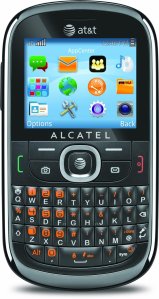
My phone’s battery is getting flaky. It won’t hold a charge for as long and it runs out quick in cold weather. So I’m on-line looking for a battery and then I think I ought to just junk the thing and upgrade. My phone is one of these:

phone

Yes, it’s a dumb phone. Or in the marketing jive they use these days, a “feature” phone. What the fuck does THAT mean? Problem is, I like my phone. I like my cheap plan. I make and receive a few calls. I make and receive a few texts. That’s it. That’s all I use it for. I don’t navigate. I don’t play games. I don’t take pictures (it has a camera). I don’t access the web. I don’t app.

I don’t have a problem with any of those things. I just don’t need ’em. When I’m out at the pub quaffing pints I don’t need to look anything up or follow any events. I just like to drink my beer, bullshit with the locals and the barmaids, and enjoy the general goofiness going on around me. Lots of other folks are tapping screens, talking to Siri, and doing other smartphone stuff. After all, the new phones are really portable computers. I like computers and I even have a laptop that I can travel with. But I like to sit in a comfortable chair and not have any distractions while I do my computing. That mostly consists of blogging, checking email and Facebook, and surfing around reading and doing research on things that interest me. I don’t have to do any of those things when I’m out socializing.

Sometimes I worry that my aversion to a fancy new phone is making me a neo-Luddite. Horrors! No self-respecting science nerd ought to be accused of Luddism. I’m not a techno-phobe. After all the miracle of the world wide web is making my virtual dialog with you possible. Think of the enormous technological infrastructure required to make that happen! I’m all for it. But a couple of things keep me from advancing from dumb to smart in the phone department.

One, cost. My phone is really cheap. I like that. I don’t use it much, so why should I spend a lot of money? My cars are all paid for and I don’t drive that much. Perfect match, don’t you think? Two, I use my computers quite a bit when I’m home. I need a break from them when I go out. Three, I like to be free of stuff when I’m out and about. I’m a guy. I don’t have a purse or a murse or a bag or anything except pockets. I try to keep it simple: wallet, money clip, keys, handkerchief. It’s bad enough dealing with reading glasses or sunglasses or a comb or lip balm or a jacket & hat or what-have-you. I don’t need any more shit to lug around. My current phone is pretty small, so if I do have to carry it I can fit it in a small pocket. I like that.

I got to thinking about this notion that the gigantic international computer network that we are a part of contains “all the knowledge of humanity” and that we can “access it at any time” with our mobile devices. Well, OK. It beats carrying around the Encyclopedia Britannica. But any collection of human information, achievement, and wisdom must also surely contain human misinformation, failure, and stupidity. Those are at least as abundant as the other. Why would I want to enhance those things? All human individuals already carry around with them the idiocy of the race. To be fair, individuals also possess the virtues of the species. The computer does not sort the good from the bad. Just the opposite: everything is equal is cyberspace. The human user has to impart judgement and separate the wheat from the chaff. The sublime from the shit.

A computer can’t help me do that. At least not right now. Right now we are in the Stone Age of the bio-cybernetic revolution. I don’t have any fear of trans-humanism, cyborgs, or artificial intelligence. We’ve got a long way to go before we understand the mind sufficiently to enhance it. Note I said “enhance” and not “improve”; one does not presume the other. Like I said even the iPhone is a Stone Age implement. It’s the first glimpse of a potential future, but it’s the equivalent still of flint-knapping in the grand scheme of things. The technological interface will someday be seamless and invisible and won’t require advertising carpet-bombing to convince anyone to participate.

The last thought that sticks with me is the ubiquity of the Google search. The word is now generic. You can google anything. And if you have your smartphone you can google anytime and anywhere. But googling just gives us answers to questions that are already known. It’s Jeopardy! stuff, usually. Don’t get me wrong. I google all the time. Beats flipping through the almanac. But we still google things that already exist and we just need to find them. We are riffling through the file cabinet. The greatest filing cabinet of all time, to be sure, but still just a filing cabinet.

Steven Chu, the eminent physicist (1997 Nobel Prize, former director of the Lawrence Berkeley Lab, former Secretary of Energy, on the faculty at Stanford) was once asked if he liked puzzles. No, he said, he didn’t like spending time on things in which the solution was already known. What a wonderful attitude! He liked thinking about things that NEEDED solutions.

That’s what I want to do. Think things that haven’t been thunk. Create. Invent. Imagine. I do that just fine right now. And it’s easy enough—later—to compare what I thunk up with stuff others have done and are doing. That’s what the web is for and it’s great for that. But I can wait until I get home to do it.

Maths

In Ireland and the UK they use ‘maths’ as short for ‘mathematics’ and not ‘math’ as we do here in the States. I like ‘maths’ as it more properly conveys the richness and dimensions of mathematics. It should be a plural word as it’s an enterprise of many facets.

I was thinking about maths yesterday when my friend told me of her ambition to be a high school math teacher. The first thing I told her was the people most responsible for everyone hating math are high school math teachers. I’m very encouraging, don’t you think? But it’s not really their fault. There’s only so much time and so many school days and you have to have calculus-ready youngsters for college so you teach to that cohort of kids and let the rest fall by the wayside. There are two consequences to this weed-out process. One, you find out which kids are good at math. Two, you convince a bunch of other kids they can’t do math.

The problem with high school algebra is that it is only good for one thing: learning more algebra. You have to get to a certain facility with algebra before any kind of larger understanding or appreciation emerges. It’s just grammar before then, the rules of the road for mathematical relationships. Imagine English class as being nothing but grammar. No poetry, no speeches, no drama, no creative writing, no literature. Just grammar. That’s basic algebra. It gets dull quick. If you are good at it, it can be fun, like a puzzle. Even if you aren’t, it is pretty clear-cut if you are the analytical sort, and you can get through it without much trouble.

But if you are put off by the abstraction, or have some skill weaknesses in things like fractions, it can be rough going. I remember discovering at a very young age that I was never going to be a baseball player. I did not possess the necessary natural grace, hand-eye-coordination, and fast reaction times to succeed at the sport. Like athletic talent, math talent varies from person to person. Some people have mathematical intuition, like some people have a good ear for music.

For those of us who aren’t athletes, discovering physical things that we can do for fun and fitness is very important. I found out I can downhill ski, ride a mountain bike, and play slo-pitch softball with sufficient competence that I make time to do all of them. Lots of people do this. Music is another thing I stink at. I’ve got no sense of rhythm. I can sing in a choir because I can listen and match my voice to the notes I hear, but I can’t start a song because I don’t hear the note in my head. But I listen to music, read and learn about music, and pester my musically talented friends to show me things I’m curious about. I even took Music Appreciation in college.

What’s this all to do with maths? Well, do you hear of anyone taking Math Appreciation? Do you talk to your friends about which new math you are going to try to learn? Do you go to the math club to tone your math muscles? No, of course not. Math, for most, is something to endure. Then forget. Which is a shame, as mathematics is not only one of the great accomplishments of civilization but it is fundamental to the natural sciences, engineering, and economics. You can’t do those things without math. Math is also powerful and beautiful for it’s own sake. People sometimes make music for no other reason than the joy it gives them. Believe it or not, math can be that way.

But we don’t have the time, inclination, or infrastructure to develop a larger pool of mathophiles. I do think we could reduce the pool of mathophobes, and that would be a good thing. People who aren’t good at sports don’t necessarily hate sports. They might even like sports. People who don’t make music don’t generally hate musicians, and most enjoy hearing other people make music. But people who find out they “aren’t good at math” run away from math and never come back.

How to fix that? And why? I contend that mathematical illiteracy, or innumeracy, is a bad thing. We are asked to look at quantities and rates all the time and make personal, financial, and political decisions based on these things. If we don’t have some mathematical competence then we are crippled in our ability to think clearly and we will make poorer choices. Some basic facility with maths is just as crucial to the big ideas of the modern world as being able to read critically. It’s also important to fight innumeracy because math phobia closes doors. Kids who are willing to get through advanced math classes have more choices later on.

I think we ought to figure out what kind of maths kids can learn even if they are lousy at math. That is, if they can’t stay on the algebra-to-advanced-algebra-to-calculus treadmill that doesn’t mean they can’t learn something. Lots of people learn a workable Spanish so they can travel around Central and South America. They may never read One Thousand Years of Solitude in the original but they can function in a foreign land. That’s quite a skill. Can’t people learn some useful, operational math like that? Just because you can’t do differential equations doesn’t mean you can’t do other stuff.

So I would say to prospective math teachers and to the next generation of schoolmasters not to neglect the rest of the people. Not just in math, but everywhere. Kids who get cut from the ball team still like to play. Find a way so they can. Kids who aren’t going to be chemists can still learn a lot of interesting chemistry. There are many mathematical skills and ideas that lots of students can learn, retain, and appreciate if given half a chance. The way things are set up now we’ve got plenty of scientific and/or technical people who learned enough math so they can do their thing. But it’s the non-scientists and the non-technical types who are increasingly being asked to grasp and act on scientific and technical, that is mathematical, notions. Wouldn’t it be a good idea to bring them along?

Summer

I hate the damn summer. I was a schoolteacher for thirty years, summer of course meant much more than a season. It was a two-and-a-half month holiday! I loved the notion of summer, that is, a long break from the daily grind. The reality though is that I hated the season. Too bloody hot for my taste. And despite the fact that summer means baseball I still hate it. I’m not good in the heat. I like it cool. Or cold. Or wet. Or grey, foggy, and overcast.

This little spring-like respite we’ve had from the impending onslaught of summer has been grand. I sure enjoy the milder temperatures. I also like it when you can be outside all day long. In full summer around here I scurry inside by ten or eleven. It’s too hot after that. My Irish ancestry did not equip me for high desert climate. More precisely it did not equip me for high desert summers. Spring here is the briefest of the seasons, but the most lovely. Autumn comes a close second, but it’s so baked dry from the long hot time beforehand that it can’t compare to spring’s lushness. Winter is recreation time for me as I like to ski; obviously I like lots of snowfall in the mountains. I figure if it is going to be cold it might as well snow because you can at least go out and play in the stuff. Otherwise the short days can wear you down. But we are lucky here, the winters are mild relative to places like the Dakotas or New England.

That’s another beef I have with summertime: Time. Yes, that Time, the Standard Time kind of time. I like Standard Time. Not Daylight Time. This Daylight Savings Time nonsense has gone on too long and has to stop. You are supposed to get up early in the summer as the morning is the best time. It’s cool, the sun’s warmth is welcome, the emerging light colors everything beautifully. When I was teaching, I hated the fact that I had to rise early in the summer. I’d spent all year getting up at the crack of dawn, I wanted to sleep in during vacation. But you can’t, you’ll waste the day.

At night when the sun drops below the mountains it cools off and you can be outside again. But it doesn’t get dark when it should, it gets dark an hour later. Bullshit, I say. That’s perfectly good dark time being wasted. I used to be in an astronomy club and the editor of the newsletter would call DST “Darkness Squandering Time” and I can’t do better. That’s it exactly. Other than the liberal use of air conditioning the only way I can tolerate the damn summer heat around here is to take advantage of the dark.

When the moon’s out on a summer evening and you can listen to a ballgame and sip some bourbon and see everything illuminated around you in that soft light you feel like life is pretty good. And the nights when the moon is down you can look up and see the stars and the planets and think about how big it all is and how small you are and that every moment is more beautiful than the next.

Then it’s 104ºF the next day and some of that joie de vivre wears off, but that’s why Mitsubishi invented Mr. Slim. Seriously, this is some bad-ass technology! Thank you, nameless engineers, for fashioning this device, it allows me to survive the long summer.

So, to sum up, I’m a heat and sun wimp. But I live in a hot and sunny place. This is my 29th summer in this spot, you’d think I’d have figured it all out by now. But no, still muddling along!

My neologism

A ‘neologism’ (Greek: ‘neo’ = new; ‘logos’ = word) is a newly-minted word. I like words so much I invented a new one. My neologism is a Greek-Latin hybrid: eumentics. The prefix ‘eu’ is the Greek part and means ‘good’ or ‘well.’ We see this in ‘eulogy,’ for example. The ‘ment’ is the Latin part and means ‘mind.’ Think of our English word ‘mental.’ So eumentics is ‘well-mind.’

In case any lexicographers are reading I’ve prepared a dictionary entry:

eu·ment·ics  (yoo·ment′ iks) n.   1. The art and practice of developing and maintaining a healthy mind.     2. A body of writing associated with and in support of behaviors that improve mental well-being.     [<Gk eu– well  <L mens, mentis– mind]     —eu·ment′ical  adj.  —eu·ment′ical·ly  adv.

Note that ‘television’ is a Greek-Latin hybrid as are ‘automobile’ and ‘biodiversity’ so I’ve some good precedents. There was a time that scholars and other pedants squawked like hell over such perceived violations of good order and sense in the language; if they had prevailed we’d be watching ‘telerama’ and driving ‘autokinetas’ or some such. English is a wonderfully forgiving language and an astonishingly acquisitive one as well. We make up new words all the time and steal them from other languages with impunity. We mash words together, shorten them, turn nouns into verbs, and all sort of other things to enrich our ability to communicate.

What I’m interested in is the modern world. Things are changing rapidly. In fact the pace of change itself is increasing. In physics that’s called ‘acceleration.’ If I’m going 55 mph and add 1 mph each minute I’ll be going 65 mph in ten minutes. I’m accelerating, but the pace is constant: 1 mph per minute. But our world is not changing at a constant rate. In my analogy it would be like adding an additional 1 mph for each minute elapsed. So we start at 55 mph, we’ll be at 56 mph (55+1) after one minute, 56+2 or 58 mph after two minutes, 58+3 or 61 mph after three minutes, 61+4 or 65 mph after four minutes, and so on. After ten minutes we’ll be racing along at 110 mph!

That’s the world we find ourselves in today. Human physiology hasn’t changed much in ten thousand years but our societies have undergone dramatic upheavals and our technology is racing ahead of our ability to understand it. I’m reminded of Arthur C. Clarke’s famous dictum that “any sufficiently advanced technology is indistinguishable from magic.” Our science generates new knowledge on the order of 2.5 million published articles annually and that is growing at 4-5% per year. This is a staggering amount of information! If we do indeed see a 4% increase every year that would mean we should expect to double the 2.5 million papers to 5 million per annum by 2035.

It’s overload, man. We are in a state of constant sensory bombardment from our media and our devices. Like I said, we aren’t much different from our ancestors. Same brains, same wiring, same plumbing. We have upgraded the software but not the hardware. I think perhaps we ought to work on those hardware upgrades, and by our hardware I mean the tissues and other structures that make up the brain. That organ is the seat of our mind and clearly our mind has new and rapidly changing demands being put on it by the modern world.

Thus, eumentics. There are things we can do to keep our minds strong and healthy. Go into any bookstore and you will find dozens of tomes on how to eat, work out, and stay fit. These are of course focused on things like our heart, our liver, our lungs, and our muscles. But what about the brain? It’s an organ, like I said, and ought to respond to similar approaches. There are, indeed, shelves upon shelves of self-help books designed to make us smarter or tougher or otherwise improve our personality. They are mostly psychology-based and have all sorts of schemes for unlocking our latent talents or breaking our bad habits or firming up our characters.

I’m not going there with eumentics. I like to think my approach is entirely empirical and does not rely on the assumptions of any discipline. I walk everyday and that is very healthy for me. It’s a big part of my physical fitness. What’s the mental equivalent? How about reading? I read everyday and I think that is an ideal eumentical starting point. What else can I do to keep my brain healthy? How about writing? Or another form of creative expression? That’s eumentically solid as well. So my goal is to talk about all the things we can do to improve our mental fitness. You have some idea already if you have been reading this blog. You know I like to emphasize looking for solutions instead of focusing on problems, for example. That I think we ought to embrace uncertainty and be suspicious of certainty. That humility is necessary for an open mind. That being wrong is a good thing. That opinions matter little; that perhaps listening to contrary ones rather than spouting our own would be of help. That sort of stuff.

I originally wanted to register a trademark for my neologism (you can’t copyright a word) and I had planned to call this post Eumentics™ (it becomes Eumentics® when the trademark is approved by the Patent Office) but decided that was bullshit. I invented a new word and you can (and should) use it as often as possible! Let’s get it in the OED before I die! Maybe someday some bored and lonely etymologist will stumble upon my website and credit me with this neologism and my name will be praised far and wide.

What do you think?

ROY G BIV

When I was a kid we learned about a boy named Roy. Roy G. Biv—or rather ROY G BIV—was a way to remember the colors of the spectrum: Red, Orange, Yellow, Green, Blue, Indigo, Violet. We see these in the rainbow. It’s been a good season for rainbows here in Siskiyou County as we’ve had a lot of days of mixed sun and rain. Summer’s onslaught is underway; the spring conditions favorable to rainbows will be gone soon.

The white light we perceive is a mixture of all these other colors of light. That’s not intuitive, our sense of color mixing usually comes from paint and pigments, and mixing that stuff all together just makes variations of turd brown. But that’s not why I’m thinking about a boy named Roy, that is, ROY G BIV. Red is something we perceive and we can measure electromagnetic phenomena of particular wavelengths and frequencies that we can assign to this experience we call ‘red.’ Same up the chart all the way to violet. Anything below a wavelength of 390 nanometers (10^−9 or one-billionth of a meter) or above a wavelength of 700 nm is not normally visible to the human eye. Red frequencies are on the low end, around 430 Terahertz (10^12 or one trillion cycles per second) and violet at the upper, around 770 THz. Thus we have the terms ultra-violet (UV) for frequencies above the violet range and infra-red (IR) for those below.

We know these kinds of light exist even though we can’t see them. Sunburns are a painful reminder of UV, and IR radiation keeps us from getting too close to the woodstove. Even a science-hostile person knows that these phenomena are ‘real.’ And once we’ve slipped past the boundary of ROY G BIV we get all the other electromagnetic waves that we can’t see, like AM/FM radio waves, TV signals, microwaves, X-rays, and whatnot. Our instruments can detect these things and we can ‘prove’ they exist, that is, demonstrate them to our intellectual satisfaction, but we don’t perceive them with our senses.

What’s interesting to me is that ROY G BIV is only a tiny part of this thing we call the electromagnetic spectrum. A very tiny part. So there is all this stuff out there that is part of the universe and we don’t directly experience it. That to me is a serious statement. People talk all the time about invisible things and argue passionately about them. God and ghosts come to mind. But here we have ACTUAL PHYSICAL EVIDENCE of fantastic invisible things! We don’t have to make up stories. We don’t have to speculate. We already have ‘proof’ of bizarre, amazing stuff like gamma rays and cosmic rays. And that’s stuff we know a lot about. There’s all kinds of crazy electromagnetic nonsense going on out there that we hardly know anything about and it warps my mind.

It warps my mind because it reminds me how limited my perceptual apparatus is. I can ‘tune in’ and get ROY G BIV but not the rest. Those require modern technology. The universe is a much bigger and a much stranger place than we realize. And I’m only talking about the stuff we can detect with our devices. People have conjured up all sorts of nutty notions over the millenia and to me IT ALL PALES IN COMPARISON to the nutty stuff we’ve come to discover with our new, enhanced sensory schemes. The biological equipment we started with plus our inventions allow us to perceive a world far more exciting and terrifying than anything we thought of before.

That’s pretty cool, don’t you think? But it’s not the groovy tech I’m stoked about. I think knowing how feeble our perceptions really are is the heart of things. I think we need daily reminders of what clumsy and ignorant beings we are. I think it will make us more humble, and thus open to learning. We say “I was there, I saw it with my own two eyes!” all the time and affirm our visual power. But it’s nonsense. We hardly see shit! If we remember how much of the universe that we know about is freaky and mysterious, maybe we’ll chill out about the stuff we think we are so certain about. Certainty, my friends, is boring. And the ones who are the most certain are the worst conversationalists!


Hot Water

I think about water a lot. I live in a place not much wetter than most deserts so I think about water a lot. I was thinking about the energy we use to heat water. I have to think that a hot shower is the only thing that gets most people out of bed and off to work. Coffee perhaps a second, and that takes hot water, too. It takes one BTU to raise a pound of water one degree on the Fahrenheit scale. That’s about a pint of water, and even at a mild two-gallons-per-minute a modest five-minute shower takes ten gallons which is 80 pints. If it comes out of the tap at 55 ºF and I want to shower at 105 ºF that’s an increase of 60 degrees. Eighty times sixty is 4800. That’s how many BTUs it takes for what for most of us would consider a “quick rinse.” My quick-and-dirty calculation actually undershoots* the value a bit, it’s closer to 5000 BTU, and that seems like an easy number to work with.

My dad was always simplifying things when it came to math. It seems he hated to calculate, all he wanted was “a rough figure” as he liked to put it. I remember assiduously figuring the exact number of yards of concrete for some project, a walk or a driveway or a patio or something, and excitedly announcing it. I was just a kid and I liked math. Anyway it was some fractional amount like 2.4, and my dad had already quickly estimated it to be “around two-and-a-half” which meant “we’ll have to get three” which I missed entirely in my zeal to be precise. Of course the concrete place only sold it in whole-yard units, which was the lesson. Dad knew how imprecise he could be in the problem, and always rounded off numbers to ones that were easy to work with. It’s a lovely skill, I picked it up quickly, and of all the math I learned it’s the one I use the most. And the one I found most difficult to teach. Trying to get kids to approach a math problem playfully, where there’s wiggle room to guess and estimate is so contrary to traditional practice as to be almost impossible. But that’s for another post.

My point today is this hot water luxury we first-worlders indulge in daily: it takes a lot of energy. I don’t want to get into the water itself, which is drinking-water pure, something hundreds of millions of our fellow humans have a hard time getting. That’s for another post. I’m thinking just of the natural gas or coal or nuclear power or solar energy or what-have-you that goes into heating the water. 5000 BTUs per shower, 300-plus million folks in the US of A or at least 100 million households, and I’m saying two showers per household per day. I think I’m underestimating here quite a bit, but that’s OK. Multiply 5000 times 2 times 100 million and you get ONE TRILLION BTUs.

That’s a lot of anything, one trillion. That’s 10^12 or ten-to-the-twelfth-power or ten times itself twelve times. So, can we get a sense of 5000 BTUs? That’s a five-minute hot shower. That’s as basic to our middle-class existence as breathing and eating. That shower takes 5000 BTUs and all of us showering requires at least a TRILLION of those things. Each day. So in a year (365 days) that’s about 365 trillion BTUs

Looking at the bigger picture, we here in the States used 97.4 QUADRILLION BTUs in 2016. A quadrillion BTUs is called a quad. Let’s divide: 365 trillion or 3.65 E14 by 97.4 quads or 9.74 E16 (I have to bust out the slide rule for this one) and I get 3.7 E−3 or 0.0037. The Jim O’Connor method would have made 365 into 400 and 97.4 into 100 and so the answer would be “4” of something. The decimals have to get moved, a quadrillion is a thousand times bigger than trillion, so you get 4÷1000 or 4/1000 or 0.004 which is close enough. So our showers need, conservatively, 0.004 quads of energy. That’s less than 1% of our total. A poor country like Chad uses about 0.005 quads of energy in a year. It has about 13 million people.

Any kind readers out there who’ll check my math? I’d be obliged; those skills fade with retirement!


*ten gallons of water is 83.45 pounds


Absolutely Free

Mothers Day always gets me thinking about The Mothers, or more properly The Mothers of Invention, that Frank Zappa-led ensemble from the 1960s LA music scene. There’s a song on the album We’re Only In It For The Money called “Absolutely Free” and the lyrics encourage us to ‘discorporate’ which means ‘to leave your body’. Throughout this short but remarkable* piece the lyrics satirize hippies, flower power, the counter-culture, and other popular American phenomena of the time (1967). This was regular grist for Zappa’s mill. At the same time, the song encourages personal freedom with a heartfelt and passionate plea to ‘escape from the weight of your corporate logo’ that resonates thematically with other songs on the same record like “Take Your Clothes Off When You Dance” and “What’s the Ugliest Part of Your Body?”. (FZ thinks it’s your mind.)

Like all great Zappa creations this song is both beautiful and obnoxious. He refuses to fulfill your expectations of what a pop song should be, both tantalizing you with exquisite music and annoying you with noise and interruptions. Zappa, no matter how serious the topic, could not stop being funny, and never let a matter get too weighty without inserting jokes or other goofiness. Personal freedom was probably the sum total of the man’s artistic manifesto, and meant more to him than most anything else, yet “Absolutely Free” is stuffed with snide remarks and silliness to go along with the rich aural landscape. With typical Zappa aplomb the song parodies psychedelic music while incorporating elements of that style. It’s a spacey, groovy piece about going your own way and doing your own thing. To Zappa that meant not conforming, and since it was hip to be a non-conformist then, he relished the irony.

But I want to go back to ‘discorporate’ as I’ve been thinking about the human/machine interface and other possible futures of the race. We’ve become accustomed to many advances that have replaced our body parts or functions and kept us alive. Things like insulin pumps and pacemakers and dialysis and titanium hips and whatnot. We have chemicals we can inject or ingest that help us live by regulating or improving our aging or diseased body systems. What we seem to worry about as a people is if there is a tipping point, where we become too much the cyborg and lose that indefinable humanity we find so precious.

If somehow we could indeed leave our bodies, that is discorporate, where would we go and would we still be us? Sci-fi shows are rife with disembodied consciousnesses stuck in some supercomputer somewhere hoping some unwitting humanoids stumble along and they can download themselves into fresh bodies as easy as changing clothes. Can you suck the essence of a person out of them and store them in a high-tech jar and then pump them back into flesh? And if so, does that mean our humanity is independent of our physical being?

I think that’s a lot of rot. Sure, you can give me a new heart or kidney or both, chop off and replace my limbs, and re-plumb my guts, that is, really make me over, but I’m still me. My consciousness, whatever that is, certainly has some sense of independence from my bodily self, my corpus. But can I exist outside of that? Can I dis- my corporeal realm? Seems like one of those believe-it-when-you-see-it notions to me. Whatever the mind is, at least some of it is physio-chemical and bio-physical, and those processes have to continue for me to have the sense of mental identity I have now. Some believe the mind is entirely a result of anatomy and physiology, some think it emerges from that complexity of tissues that make up the brain, others think the brain is merely a receptacle for mind, part of a larger consciousness that our organ has access to and participates in. Me, I don’t give a shit. Clearly my mind results from my brain being fed and watered; how much I’ll leave to the heavy thinkers.

As much as my mind is capable of sending me on journeys outside of my body, I can’t discorporate. Not literally. I like to think the song is not meant to be literal either. The admonishment to discorporate is about cutting loose. Our minds are products of our society and we are trained and conditioned to see reality in certain ways. Freedom is mostly mental. Sure, we all want to go wherever we want and do whatever we want but that’s only part of the idea of freedom. The key part is seeing and feeling freely and creating the world in your mind on your own without constraint. I believe that when we dream and then when we waken we are re-making the world in our heads. We do this each day and when the alarm rings or the sun streams through the window or the bladder screams for relief the real world intrudes on our creation. This feedback re-shapes our world view and we negotiate throughout the day with our vision of the world and the world’s response to it. Seems like the freer and more flexible our mind is, the better job we’ll do in this negotiation. We’ll compromise some of the time and admit defeat some of the time but the more robust our system then the more likely what we imagine will be concordant with our reality.

Does that seem like a working definition of mental health?

Anyway, I’m not sure absolutely free is attainable, and I’m suspicious of absolutes. Hey, there’s a place to start!


*You really have to listen to it if you don’t know it.