Starship, part 2

The latest big rocket from SpaceX (i.e., Starship) exploded shortly after its test launch last week. Leon Skum really wanted the blast-off to happen on 4/20, every stoner’s favorite day, and it seems maybe they weren’t quite ready for prime time. SpaceX is a private company so I doubt we will know for sure where the faults were in the system, but I expect the engineers and scientists will have learned quite a bit from this recent failure.

Blasting off rockets into space is difficult stuff. Failure is part of the process. That’s why we have “proving grounds” or big empty spaces out in the desert where rockets can blow up safely and people can learn how to make them better.

Starship, in my mind, is a failed concept. Not because the rocket blew up. That stuff is going to happen. If and/or when the next Starship is launched I suspect it will go a lot better. Eventually they will get a working rocket.

SpaceX created the Falcon series of rockets and they’ve been tremendously successful. The company has shown it can put things into orbit on a remarkably regular basis and for (apparently) a much lower cost per launch than anything else. I say “apparently” because, it bears repeating, SpaceX is a private company and we really don’t know how much they spend and how much they make.

But Leon Skum has a man-child’s vanity problem. He’s not content with a high-quality product. Falcon should be enough for anyone’s résumé but because of its routine successes it has disappeared from the headlines. Note that Starship dominated the news for a few days and there were a lot of gushing stories about how the fiasco was really a success. Certainly the data collected and the analysis to come will be valuable, but just as certainly the whole mess was NOT a success.

Let’s start with the name. Starship? Really? This rocket, like every other rocket, goes NOWHERE NEAR THE STARS. The nearest star is trillions of miles away. That’s right, TRILLIONS. No rocket will ever go a trillion miles. Ever.

Let’s examine the payload. Right now it is listed as 150 metric tons. They claim this will go up to 250 metric tons in a later configuration. Once again we have a claim, not a fact. So let’s stick with 150, and that number is for low-earth orbit (about 200 miles up). The Saturn V that powered the moon flights was built in the 1960s and it could put 140 metric tons into orbit. Sixty years later we have this massive new rocket and it can carry a mere 7% more cargo. I’d say the emperor is lacking some clothes.

Finally let’s think about the Starship’s mission. We are told by Leon Skum and his breathless fanboys that Starship will be used to colonize Mars. Can we please stop with this childish fantasy? We are not going to send colonists to Mars. We are not going to build human societies on Mars. Mars is on average 140 MILLION miles away. The distance between earth and Mars can vary from as low as 35 million miles to as high as 250 million miles. And Mars is a moving target! Rockets don’t take a straight-line path!

At best a flight to Mars would take nine months. Nine months! The best we can do with human spaceflight is a trip to the moon and back. The moon is 250,000 miles away. Saturn V and Apollo sent three guys to the moon and brought them home and it took about a week. Astronauts live in the Space Station for months at a time but they have to be re-supplied every three months. It took DOZENS of missions just to assemble the thing. Those folks are only a few hundred miles away. A “few hundred” is <<<<< (waaaaay less) than “140 million.”

I’ve said it before and I’ll say it again: robots make better astronauts. Space exploration will be done remotely. Think about the Hubble Space Telescope, for example. Every day that satellite tells us more about space than any human space explorer could possibly do. Human space explorers have to work hard every day just to stay alive. Breathe. Drink. Eat. And of course void themselves, and sleep. Hubble works 24/7. Space travel means earth orbit. Maybe a few folks will go to the moon (and back). But that’s about it.

Rockets are an old technology. The physics that Werner Von Braun worked out for the Nazis and NASA is the same physics for the SpaceX scientists. The technology is improved, certainly. But the physics is the same. Starship is not a breakthrough. It’s still a rocket, it can only go so far, and it can only carry so much.

Starship

The hype machine is back in full-time operation as tech-bro hero Leon Skum’s company (SpaceX) prepares a new launch of their very big rocket. The Starship is a big rocket. It weighs about 330 tons and can generate 16 million tons of thrust. The Apollo moon rocket, the Saturn V, was about 220 tons and could crank out 7.5 million tons of thrust. Starship can put about 150 tons of stuff into space (low-earth orbit). The Saturn V payload was about 150 tons.

Fifty years of advancements and we have the same capability as before! SpaceX says that Starship will eventually put 250 tons of payload into space, but that’s not happening yet. They still have to get the first model to work.

The big difference is re-usability. The claim is that they can reduce the cost of launches by an order of magnitude. Again, this is a claim, not a fact. It seems reasonable that a re-usable rocket would be better and cheaper than a throwaway rocket. But this has not actually been demonstrated. SpaceX is a private company. They can say whatever they want. We’ve seen how Uber can carry on for years without ever making a profit. We have no idea if SpaceX is a sustainable, profitable venture or just another gigantic vanity project for everyone’s favorite man-child.

One of the things that con men and carnival barkers do is continuously move the goalposts. It wasn’t long ago we were told that Falcon Heavy would usher in a new era of crewed space flight. Now SpaceX tells us that Falcon Heavy will NOT be used to lift their Dragon capsule into space. That will be later when they build their even bigger, better rocket. Now we have Starship. It’s bigger and better but still in the same league as the retired Saturn V. You know you are dealing with bullshitters when they push promises further and further into the future and never go back and acknowledge the string of lies behind them.

I would like to see Starship succeed. Satellites, those in low-earth orbit and especially the geostationary ones thousands of miles up, are essential to human welfare. We need the information (like weather data) and services (like communications) that these technologies provide. Human spaceflight is dramatic and inspirational, even if it is mostly just theater, and there is a continuing desire to see ourselves out there in the black. I can accept that. But we aren’t going to colonize the moon anytime soon, and Mars is a Heinlein-esque fantasy that would require advances far past our current knowledge base. No, we will not have Matt Damon out there in the red sand with a nuclear reactor. That stuff is movie material, not real life.

Rockets are big, wasteful things. It is hard to put something into space. It is exponentially harder to put human beings into space. The amazing successes of the un-crewed Mars missions (Sojourner, Spirit, Opportunity) are proof that robots are much better at being astronauts than people will ever be. As a boy who hero-worshiped Neil Armstrong I understand the emotional appeal of the explorer. But as far as “bang for the buck” goes we are better off sending our remote eyes and ears to these hostile places.

SpaceX obviously has talented and accomplished people or they wouldn’t have pulled off what they’ve done in the rocketry business. It is too bad they have a boor for a CEO. That puts a taint on the whole mess for me. That being said I want to see this re-usable rocket stuff work. The parts get pretty beat up going into space and it takes a lot to refurbish them. I suspect it will cost more (in dollars, energy, and resources) than the projections. Musk is good at painting rosy pictures and people love to give him money. He may be the best salesman in all of human history. Maybe he’s second to Jeff Bezos, but you get my drift.

Starship is supposed to launch within the next few days.

Thallium, #81

Prussian blue isn’t just a pigment. It is also a medicine of great importance.

Hokusai’s The Great Wave is famed for its use of Prussian blue:

You can make Prussian blue in the lab. I used to call it “ferric ferrocyanide” but the International Union of Pure and Applied Chemistry lists the stuff as iron (II, III) hexacyanoferrate (II, III).

Iron has two oxidation states, +2 and +3, and they used to be called “ferro-” and “ferric-” but the modern convention is to use Roman numerals as in Fe(II) and Fe(III). The above would be rendered to the formula: Fe4III[FeII(CN)6]3.

It is a very cool and very simple chemical reaction and the product is strikingly colored. I used to mix solutions of potassium ferrocyanide and ferric chloride in class. It’s a mess—the precipitate is super-fine and it sticks to everything. The individual crystals are so small they get suspended and form a colloid. You have to dry it out to get a usable powder. I once tried to make paint (mixing the stuff with linseed oil) but that was a mess of gigantic proportions. The blue stains were impervious to cleaning! Ferric ferrocyanide is not toxic as the cyanide is tightly bound to the iron.

What does this have to do with Thallium? I mentioned that Prussian blue was a medicine. It comes in 500 mg capsules. Thallium, it turns out, forms lots of compounds and all are toxic. Thallium also has radioactive isotopes. Prussian blue is used to treat heavy metal poisoning. It seems the iron in the compound will switch places with certain other metals. Prussian blue is also an antidote for poisoning by radioactive cesium.

We used to kill ants and rats with thallium sulfate. The US outlawed the practice in 1972. Although toxic, thallium is not a carcinogen. Thallium compounds have many uses in the electronics, pharmaceutical, and glass industries. World demand is about 10 million tonnes annually, and it is produced mostly as a by-product of copper and zinc mining.

Thallium sits between Mercury (Hg, #80) and Lead (Pb, #82) on the periodic table.

Blue corn

I love tortilla chips. Lately we’ve been eating these blue ones. Turns out that blue corn is a bit of niche product. Heirloom and open-pollinated varieties of grain cultivars are enjoying a renaissance of sorts. Small farmers and those targeting the organic market have to get creative to compete with the big boys.

And corn is Big Farming, Inc. America is the King of Corn. The rest of the world calls it maize but it is the same plant. Here in the States we grow corn (Zea mays) on over 90 million acres. That’s almost as big as the entire state of California!

American farms routinely harvest 150 bushels per acre and can approach yields of 200 or more, an astonishing level of productivity that has increased steadily over the last 100 years. Maize is an ancient grain, native to the Americas, and a staple of indigenous peoples’ nutrition for millennia.

These days corn is something else entirely. At least a third of America’s crop goes into the production of ethanol. Ethanol is mixed with gasoline to meet clean-fuel mandates. The industry is subsidized and enjoys strong political support. Biofuels seem appealing until you realize that we are taking FOOD and putting it in our cars. It would be far better to extract fuels from agricultural wastes, for example. Using prime arable land to grow industrial feedstock instead of actual food is not a sustainable practice.

Another one-third of America’s massive corn haul goes to feeding livestock. Meat-based diets require large grain footprints. It takes about 25 kg (55 lbs) of grain to make 1 kg (2.2 lbs) of beef. The ratio is 15:1 for lamb and just under 7:1 for pork. It is between 3:1 and 4:1 for poultry. Now you see why we have 20 billion chickens in the world. Clearly beef (25:1 ratio), other than from small-scale pasture-raised animals, is not sustainable as a global food source.

Of the remaining third about half is exported. Most of the rest goes into making high-fructose corn syrup and other stuff. We eat very little of our corn directly. Our enormous industrial corn production scheme does a pretty poor job of actually feeding people.

The blue corn chips come from Hain Celestial Group. They make a lot of products for the organic market. I could not find any specific information on their sources of blue corn. I’d be interested to know who grows the stuff and where they grow it. I found some links to blue corn farming in New Mexico and blue corn seeds in Arizona and blue corn milling in Montana but I have no idea how my chips get put together.

Guess what? You can buy blue corn seeds at Wal-Mart:

Germanium, #32

Germanium is a semiconductor and is used in a multitude of electronic devices. It is in the same column as Silicon (#14) which is the most well-known of these so-called semi-metals or metalloids.

A chemist would put germanium and silicon in the Carbon Group. That’s Group 14 on a modern chart but the old notation Group IV is still much in use. All the substances have four valence electrons hence Group IV.

Tin (Sn, #50) and Lead (Pb, #82) are familiar substances of course as they have been mined and used for centuries. Last on the list is the synthetic Flerovium (Fl, #114) which was hatched in and named for a Russian laboratory in 1999.

Carbon is the element most essential to life. All of our organic substances are built on carbon molecules. There is an entire section of chemistry called organic chemistry and they don’t mean “no pesticides.” Organic chemistry means the chemistry of carbon compounds. Petroleum and all its by-products are “organic.” Coal and natural gas are as well. Carbohydrates and hydrocarbons fuel our world. Gasoline and diesel are organic, man!

Anyway, I got distracted. I think it is interesting that silicon and germanium are grouped with carbon. One does not think of chips and circuits being alive and I consider most talk about Artificial Intelligence to be nonsense, but there is a tremendous desire out there to imbue our electronic machines with life. Science fiction has long speculated on the idea of computers gaining consciousness or at least hosting the minds of other beings.

I remember punching holes in cards in a basement late at night and then running those cards through a reader that executed a program and created a print-out. It was 1977 and it was called Computer Science 1 and the language was FORTRAN. That seems like using stone tools nowadays! Our computer “minds” will be able to do a lot of marvelous things and the technology can most certainly be used to do some vile and stupid things as well, but they will not be humans even if they can mimic humans. Nor will they be intelligent or conscious, at least not in the sense we mean when we apply those terms to ourselves.

What’s this have to do with germanium? Like I mentioned it is a semiconductor and used in computer chips. Its main use is in fiber optics and we all want to have our internet delivered to us via fiber, don’t we? The point is that the stuff is a crucial component of our high-tech world. Oddly only a few hundred tonnes of the stuff are mined each year, most of it as by-products of zinc ore. A little bit goes a long way. Next to germanium, in the same row (called a period), are Gallium (Ga, #31) and Arsenic (As, #33). Both of those are also used in chip manufacture. The compound gallium arsenide (GaAs) is found in LEDs, lasers, microwave circuits, and numerous other applications.

The Time Change

It always takes me a few days to adjust to the changing of the clocks. I suspect few people like the change itself even if they like the result.

Daylight Savings Time is one of those arguments that will never be settled. Oh, we might come up with a political settlement, like “everyone will use DST year-round” or somesuch, but the issues will remain.

People living in the more northerly latitudes in our country experience a greater variation in day length. As you move south— toward the tropics—the difference between summer and winter starts to fade. Places like Hawai’i don’t change the clocks as they gain no benefit from it.

We spent a week one summer in Galway, Ireland. It’s at 58º North latitude, the same as Juneau, Alaska. The sky was still bright from sunlight at ten in the evening! They use Summer Time in Ireland and the United Kingdom. It makes sense. Those really early summer sunrises become lingering sunsets instead. People like having “extra” daylight later in the day rather than at the crack of dawn. It’s no surprise there’s a movement in Alaska to make DST permanent.

In Southern California, the population center of the most populous state, summer days last about 14 hours and winter days about 10 hours. (LA is at 34ºN). The time change is a convenience, not a necessity.

I live near the Oregon border (42ºN) and I dislike DST because summers here are hot. I want it to get dark in the evening SOONER not later! And I don’t mind early sunrises. It’s cool in the mornings and that’s when it’s good to be up and doing things. When I lived in the Bay Area (38ºN) the local astronomy society dubbed DST “darkness squandering time.” They hated waiting an extra hour in the summertime for the sky to darken.

There are movements in many states, including places as far apart as Maine and Florida, to make DST permanent. People, it seems, hate the change more than anything.

For most of us, one time scheme isn’t much better than the other. Standard Time isn’t any more natural than Daylight Time. Both are artificial contrivances for social utility. And even though I dislike the change it is a small thing, really. There are much bigger things to fuss over.

These days we all carry accurate clocks in our handheld computers otherwise known as cell phones. My phone is a Wal-Mart cheapie but it automatically updates the clock when I go from one time zone to the next. It seems the cell towers know what time it is! We ought to be able to have as many time zones and time rules as we want. More people these days work from home or have flexible hours. There’s no reason the school day and the work day have to be locked in on a 19th-century 8-to-5 factory model. Local areas should be able to call the time whatever o’clock they want it to be. Instead of a monolithic, government-mandated time, we can make up our own. Maybe sundials will make a comeback.

Terbium, #65

There’s a quarry near the village of Ytterby in Sweden that is the first source of the lanthanoid (rare-earth) elements Ytterbium (Yb, #70), Erbium (Er, #68) and Terbium (#65).

It’s also the place where Yttrium (Y, #39) was discovered. Yttrium is often lumped with the above three even if it doesn’t fit in the lanthanoid f-block scheme. Its upper neighbor in column 3, Scandium (Sc, #21), was first isolated from the same quarry, as were the other rare-earths Holmium (Ho, #67), Thulium (Tm, #69), and Gadolinium (Gd, #64).

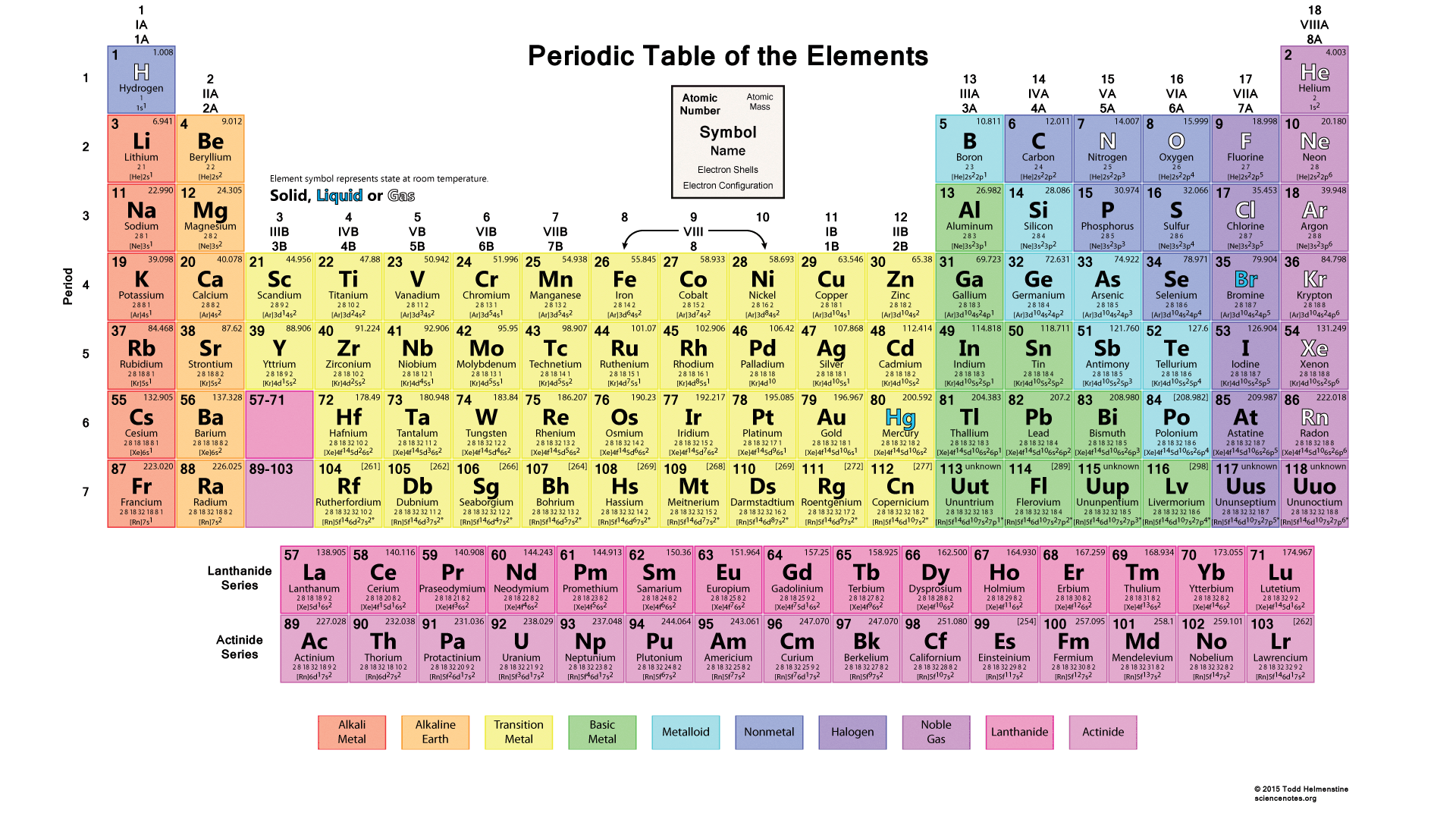
Here’s a periodic table:

If you click on the image it will get bigger.

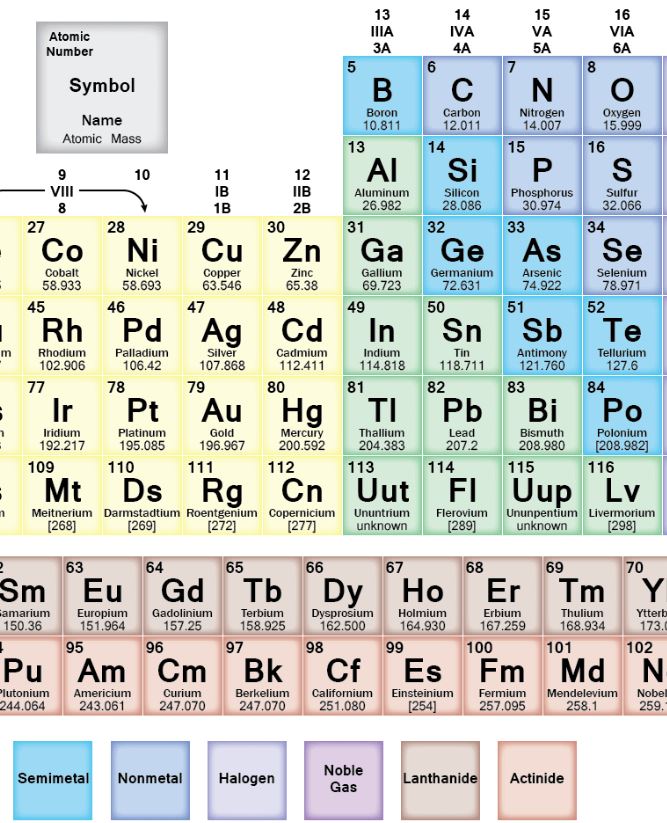
Note that the lanthanide series (lanthanoid is more correct but not typically used) “emerges” from column 3 where Sc and Y reside. Ideally the table would “stretch” to include the two lower rows (pink in the figure) on the left-hand side of the metals (yellow).

Terbium, like its neighbors, has only become important in the modern, high-tech world. The rare-earths are in big demand these days. Terbium compounds are fluorescent and are used in green phosphors. They are also used as dopants in solid state devices and are alloyed with iron and other materials to make electronic devices.

World terbium production is perhaps “a couple hundred tons” per year. Most of this comes from China. The U.S. has a few sources of Dysprosium (Dy, #66) and terbium is a by-product of that process. Here in California MP Materials operates the Mountain Pass Rare Earth Mine and Processing Facility in the Mojave Desert near the Nevada border.

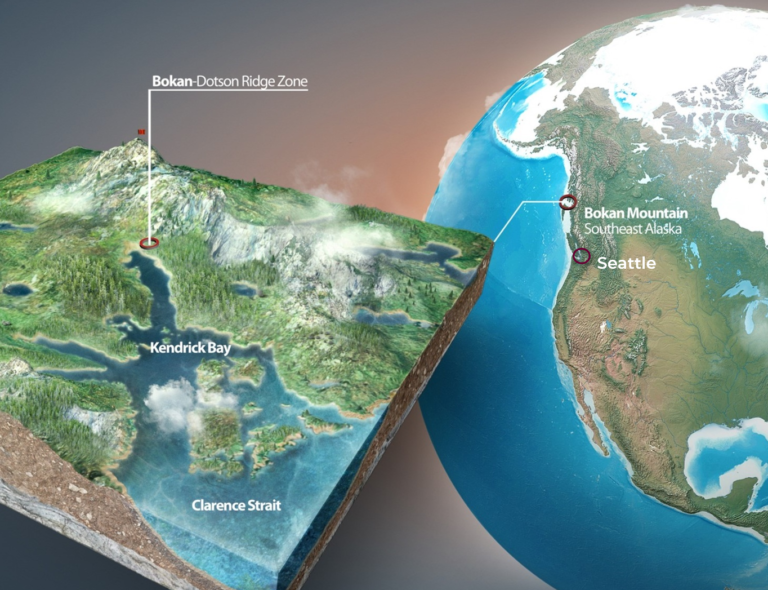
Canadian company Ucore plans to develop a rare-earths mine and processing plant at Bokan Mountain on Prince of Wales Island in Alaska. Here’s the setting (the nearest city is Ketchikan):

There’s been a lot of squawking from Washington, D.C. about China controlling the market for key materials like rare-earths. If that geopolitical concern is truly important then we’ll have to find more domestic supplies. Digging big holes in faraway places is the only way to do that. At least right now. Perhaps we’ll be motivated by the environmental disruption from mining to set up proper recycling. After all, tech devices die and get replaced at an alarming rate. All that “e-waste” should be re-processed! Or we’ll find new ways to do things and won’t need stuff like terbium. Better yet we’ll use fewer things overall and measure our wealth by quality instead of quantity!

Thacker Pass

Construction has started on a new lithium mine in the United States. Lithium Americas says its property contains the largest lithium deposit in the country. Here’s the setting:

The nearest town of any real size is Winnemucca, Nevada, about 50 miles from the mine site. Otherwise Thacker Pass fits the description “the middle of nowhere.”

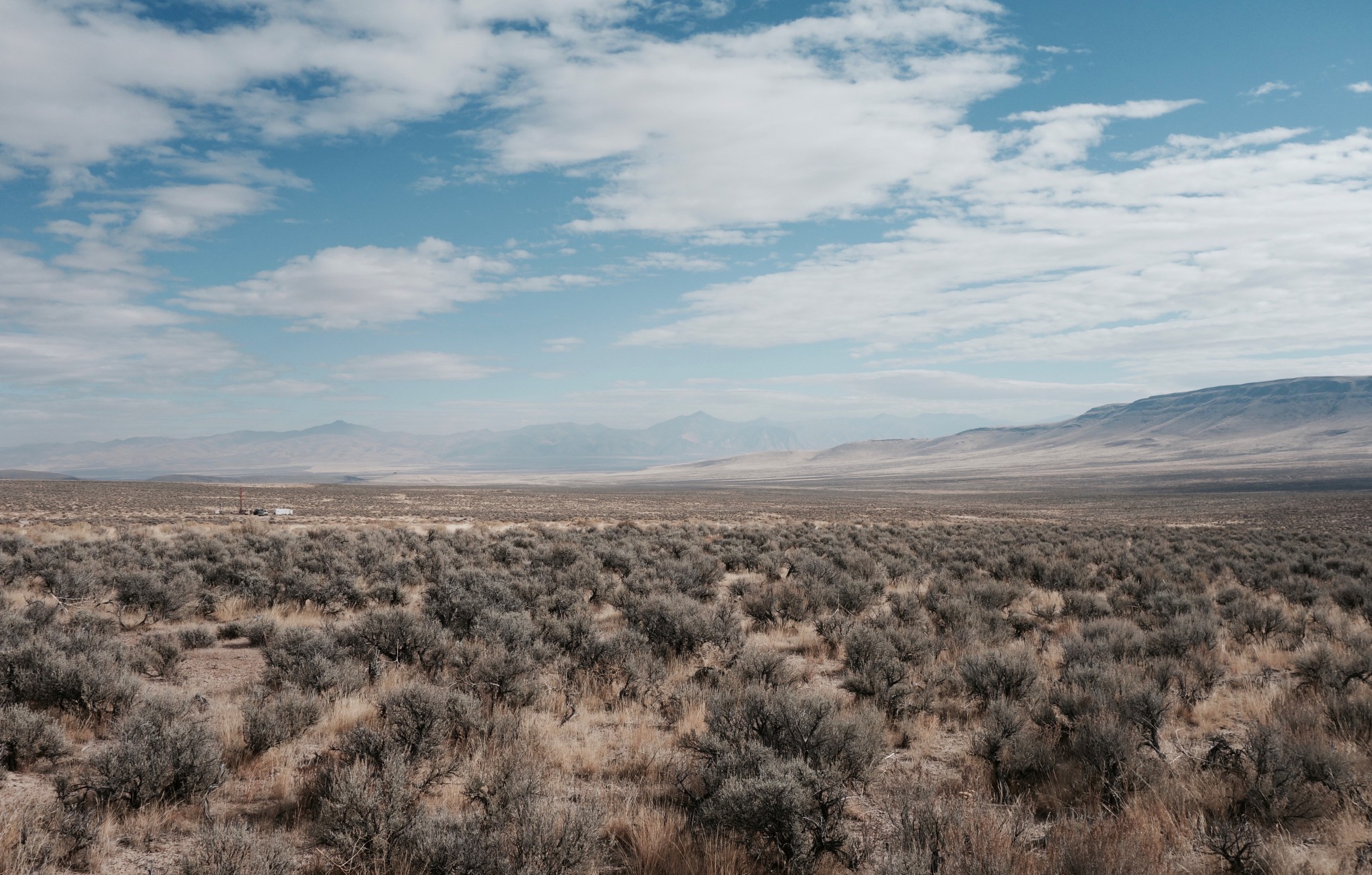
Here’s what it looks like:

Mines are big, messy things. This one will be an open pit a mile or two across and 400 feet deep. The lithium will be extracted from the ore by a process involving sulfuric acid. Tons of sulfur will be continuously trucked to the site to be burned and the waste gas used to make the acid. The reaction will also generate enough heat to power steam turbines that will supply electricity for the plant. The lithium compounds emerging from the facility will go mostly to battery makers. Electric vehicles need lots of batteries!

The “greening” of the economy is not a simple process. Demand for materials like lithium, cobalt, nickel, and especially copper is expected to surge. Things like wind turbines use a lot of steel and concrete, too. Reducing our reliance on fossil fuels will require not only massive capital outlays but enormous consumption of primary energy sources—which at this point are mostly fossil fuels!

There’s still a lot of opposition to the development at Thacker Pass. And there’s no doubt the mine will make a huge environmental impact. Here’s what interests me: it’s close by. I can keep an eye on it!

Polonium, #84

Maria Sklowdowska Curie was the daughter of schoolteachers. She and her husband Pierre studied the radioactivity of the uranium ore pitchblende and in the process discovered a new element. Madame Curie named the substance Polonium (from the Latin Polonia) after her homeland, a nation we call Poland. Such a country did not exist in 1898, having been carved up by conquerors. The Curies were awarded a Nobel Prize for their work on radium and polonium.

Marie and Pierre’s daughter Irene was also a Nobel-prize winner! She and her husband Fredric Joliot also studied radioactive isotopes. Both mother and daughter died of leukemia, most likely from too much exposure to radioactive materials.

Polonium was used as an initiator in two of the first atomic bombs. Both “The Gadget” (the one tested at Trinity) and “Fat Man” (the one dropped on Nagasaki) used a polonium-beryllium initiator. The device provided a neutron source that would start the chain reaction once the critical mass was achieved. The polonium for both bombs was isolated at Oak Ridge National Laboratory in Tennessee. My late father-in-law learned how to build nuclear power plants at Oak Ridge. He was a physicist at Corning, a lieutenant in the naval reserve, and a young father at the time (the mid-50s). Other companies like Union Carbide sent their scientists and engineers to the same school. It was part of the “peace dividend” of the Eisenhower administration—an attempt to turn more nuclear technology over to civilian uses.

Here’s what ORNL looks like now:

Banish the Snakes

Banish the Snakes is a new title from GMT Games. I used to play Avalon Hill wargames when I was younger. They were mostly historical simulations—like playing Wellington against Napoleon at Waterloo. These days I’m still interested in history but I’m drawn more toward those periods where we know a lot less about what went on.

Which brings me to Banish the Snakes. It’s a cooperative game for one to six players. So far I’ve only done the solitaire version but it works the same way because all players have the same goal. They aren’t competing for different ends. All players will either sink or swim together.

So, what’s the goal? The game simulates Ireland in the 5th century. Legend has it that St. Patrick sent the serpents away. The truth is that Ireland had no snakes after the glaciers retreated but it makes for a better story to give St. Pat credit!

Anyway a host of Christian missionaries descended on Ireland in the 5th century and before the calendar flipped to the 6th century the island’s residents were almost all converted to the new faith. The interesting thing about the change from pagan Ireland to Christian Ireland is that the transition was (apparently) smooth and (relatively) non-violent. It seems the Irish took readily to the new religion.

How did that happen? No one really knows. One idea is that the druids, who were not only priests but judges, physicians, bards, and advisers to the kings, in short the intelligentsia of Celtic societies, saw straight away the benefits of a written culture. They quickly adapted the Irish language to Latin characters and began a tradition of writing that outshone most of Europe for centuries.

Another idea is that the missionaries were Celts themselves, even if Romanized, and could speak the local dialects and not only understood the existing belief systems but were sympathetic to them. They didn’t preach for change so much as suggest improvements. The local theology was respected even if it was incomplete and thus Christian beliefs enlarged the native spirituality rather than replaced it.

Like I said, no one really knows. That’s what I find most appealing about Banish the Snakes. It’s a model of what could have happened. Players take on the role of saints and move about the provinces of 5th century Ireland converting the pagans. They have to encounter powerful druids and local chiefs and even a high king. So far I have found it difficult to meet the game’s victory conditions.

One side of the game board has a track for “paganism” in Britain. When the Romans told the British to fend for themselves in AD 411 the empire was already officially Christian. But the apparatus to maintain a Roman faith in a hostile colony would soon begin to crumble and the old ways re-emerged. In the game you turn over cards that advance paganism and once the entire region lapses back to the pre-Christian religion the game ends. Players have to hope they’ve converted enough of the Irish and established some churches and Christian leaders in all the provinces before that happens. If all the people “join the flock” before Britain goes pagan the game ends in victory for the players.

It’s hard. The model is tricky and seems to depend on a lot of things going right all at once. But I’ve only played a few solitaire games. It will be better with real players. The outcome—the conversion of the Irish—was not a sure thing. It could have failed. It could have taken longer. It happened a certain way but it was far from certain. Banish the Snakes, at least for this newbie, shows how tenuous the whole enterprise must have been.

I reckon a few of my friends would only play this game if they could take the side of the pagans. Pagans got a bad rap when I was a kid in Catholic school. It turns out that the Latin word paganus means “villager” which is just a cute way to say “hick.” Romans of the literate class looked down upon their rural brethren and called anyone who wasn’t a Roman barbarus which means “foreigner” but implies “uncivilized.”

Turns out the pagans were OK. They had a society, language, religion, culture, art, technology, roads, shipping, trade, in short all the stuff we call “civilization.” Conquerors, like the Romans, tend not to notice those things. Ireland was never a Roman province, and the Roman hold on Britain was not so clear-cut. It was more like a military occupation reliant on shifting alliances with local tribes and a healthy dose of mercenaries. Hey, that sounds familiar!

Banish the Snakes is a great way to learn about a time in history without reading a book or watching a TV show. It comes with very nice background materials on the major characters and events, both historic and legendary, and is beautifully illustrated. My only complaint is that you have to put stickers on the pieces which is a pain in the ass. Once that’s done it’s a not too hard to learn the basics of the game and get to playing.