Manganese

Manganese is an essential nutrient. You have to have it in your food in order for your body to function properly. That being said, instances of manganese deficiency are rare. This particular trace element is found in sufficient amounts in a wide variety of foodstuffs, everything from nuts to grains to vegetables and fruits. It would be hard not to get the 1-2 milligrams per day you need just from ordinary eating.

Manganese, like many metals, is toxic in larger quantities. People who are exposed to manganese in the workplace—mostly welders—have to take precautions. Manganese is a crucial ingredient in the production of stainless steel. In fact, there are few substitutes for manganese in its metallurgical applications.

So why should we care about manganese? Clearly it has enormous industrial importance. Without steel there is no modern world! The other reason we should care is that there is no domestic production of manganese in the United States.

We import ALL of the manganese we use in this country. It comes from places like South Africa, Brazil, Gabon, Ukraine, India, and China. There are probably billions of tons of manganese on the seafloor in the form of nodules, but no one has figured out how to mine that stuff. Known deposits here in the States are too low-grade and extraction costs too high to be an alternative.

That means we have to depend on other countries for a critical mineral.

It’s not the only one. Vanadium—another significant ingredient in steel—is entirely imported. So are tantalum, indium, gallium, cesium, fluorspar, asbestos, niobium, arsenic, rubidium, and several other important industrial materials.

We live on this great big rock. The spot we live has a lot of good stuff. But not all the stuff we need. That means we need other people.

There is no such thing as “self-sufficiency.” It is one of those nice notions that gets kicked around by romantics, back-to-the land types, politicos, and ill-informed pundits (are there other kinds?). Humans are a social species. We live in a web of inter-connections. Without each other, that is, without society, we cannot survive. Civilization may be a relatively recent thing in human history, but society is not. The first humans lived in groups and depended on each other, the last humans will as well.

It’s OK to re-watch Jeremiah Johnson and marvel at the independence and self-sufficiency of those old mountain men, but stop and think a little. All those guys had rifles and cartridges. It takes an industrial base to manufacture such things. All those guys had horses and pack animals. Those are the fruits of a well-developed agrarian economy. Jeremiah and his pals may have been tough and smart, but they couldn’t have done shit without steel and animal breeding. And those are just the first two things that come to mind.

If you want to “shop local” and “buy American” because you want to do right by your neighbors, I say good on you. I try to do that. Even if they are selling Japanese cars made in Mexico!

Numbers, continued

The last time I posted I worked up a rough estimate of the doubling time for corona virus cases in the US. The CDC reported 4226 cases on 3/16 and 85356 cases on 3/26 and that represented a doubling time of 2.31 days.

Again, my numbers should not be taken seriously. Like I said, this is just an old blackboard exercise on the natural logarithm and not a proper analysis of the data on COVID-19 infections.

The new number of US infections, according to the CDC, is 140904. This represents, now, 13 days of growth. So, like before, I take the natural logarithm of 140904 and that’s approximately 11.86. I subtract the natural log of our beginning number, 4226 (8.35), and get 3.51 for the 13-day period. Divide 3.51 by 13 and you get 0.27 per day. That’s 27% growth, and that’s a bit lower than the 30% we got last time.

Sure enough, if I divide the natural logarithm of two (ln 2 = 0.693) by 0.27, just like last time, I will get an estimate of the doubling time. This calculation results in 2.56 days.

So, the doubling time has increased from 2.31 to 2.56 days. That’s good. You want to see the rate of growth slow down. The number of infections is still growing rapidly, but not as fast as before. You’ve experienced this driving your car. You hit the freeway on-ramp at 35 mph and power up to 65 mph in a few seconds so you can merge with traffic. That’s acceleration—an increase in your rate of speed. Later you make a gradual increase from 65 mph to 75 mph in order to pass someone. That increase of 10 mph happens in about the same amount of time as your increase from 35 mph to 65 mph, which was a 30 mph increase. So you are still accelerating, but the change in your speed, over the same time period, is slower.

According to this site, the doubling time in the US is now 5 days.

I reported four days the last time, so my rough math reflects the same thing!

Of course, the number of infections may not be a particularly useful or even a robust number. You need widespread testing to get a handle on the true infection rate and we don’t have widespread testing in this country so we are still a bit in the dark. Compare Iceland, for example, which has tested 3.5% of their population. We’ve tested less than 0.2% of our people! That reflects very poorly on our political leadership, of course. But more than that it means we are making public policy decisions based on incomplete information. Perhaps after we get through this mess we will be better prepared for future disease outbreaks.

If we stick to the plan—social distancing, sheltering in place, etc.—we can get out of the dangerous growth phase and get a handle on this pandemic. We can see the doubling time continue to increase (which means the infection rate will be decreasing) and give our health care system a chance to cope.

So, do your part.

Numbers

According to the CDC there were 4,226 cases of illness in the USA due to COVID-19 on Monday, March 16th. Yesterday, the 26th, there were 85,356 cases. That’s a lot of growth in ten days!

I like to round things off and make estimates. It helps me get a handle on the size of the problem. For example I look at the above numbers and round them off to 4,000 and 80,000 because I can see right away that is a twenty-fold increase. There were twenty times more COVID-19 cases yesterday than there were last Monday. (4000 x 20 = 80000). That’s an easy idea to grasp: 20x. (If I do the actual math, subtracting 4226 from 85356 and dividing by 4226 I get approximately 19.2, so 20 is a good estimate.) But it doesn’t really tell us the growth rate, that is, how fast these cases are accumulating.

Growth is continuous, not discrete. Fortunately we have math for that. Don’t run away, I’ll keep it simple. You may remember from high school algebra—fondly, I’m sure—the lessons on logarithms. Many a math student has been crushed by logarithms. This is too bad because they are slick and have many applications.

We can estimate the continuous growth rate by taking the natural logarithm of both 85356 (approx. 11.35) and 4226 (approx. 8.35) and subtracting them. That’s an easy one. We get three (11.35 – 8.35 = 3.00).

For you mathy-types (non-mathies can skip this), the inverse of the natural logarithm, the base e, raised to the third power (e^3) is just about 20

We divide 3.00 by the ten-day period and get 0.3 and that tells us our continuous daily growth rate. Another way to say 0.3 is thirty percent (0.3 x 100 = 30). Percents are usually easier to grasp than decimals, and in this case they are a little more revealing. Imagine getting 30% on your investments! And we are talking continuous growth, like compound interest. I’d love to get 30% interest, wouldn’t you?

But the way to really grasp the speed of continuous growth is by calculating the doubling time. How long does it take for something to double? In this case, how quickly did the number of COVID-19 cases double in size? That is, how many days did it take?

If you take the natural logarithm of two (since we are doubling) and divide by the 0.3 we got earlier then you get that answer. The natural logarithm of two (written ln 2) is approx. 0.693 and that division yields 2.31, and that’s in days, so 2.31 days. My rough approximation of the rate of new corona virus cases is that they double every 2.31 days.

That’s fast. Now this trajectory is just a small snapshot of a big data set and there are far more sophisticated ways to analyze that stuff. I just wanted to play with simple math and see what it told me. I wouldn’t take my result too seriously. There are many smart professionals out there doing the real thing, and their numbers will be accurate. What I’ve got here is just an old blackboard lesson on logarithms, updated with some contemporary numbers.

According to the data on this site, the current USA doubling rate is FOUR days. Canada is currently experiencing a two-day doubling time, for example, and both New Zealand and South Africa are at three days. Other countries like Israel and Ireland are also at four days. According to the data* both China and South Korea have “flattened the curve” and pushed their doubling times to 46 and 25 days respectively. Japan is at 14 days.

That’s good news and I hope that we can do the same here at home.

Speaking of home, be sure to stay home! Be safe, my friends.


*The source for the data is called Our World in Data and the link is: https://ourworldindata.org/

I respect you . . . I don’t want to infect you

I was an HIV/AIDS educator for a time. I remember the phrase “it ain’t love without a glove” running around. It was a reference to condom use. Our trainers told us that if person A had unprotected sex with person B it would be like person A having sex with everyone person B ever had sex with! Unprotected sex was not just sex with someone but with someone’s entire sexual history.

It was a graphic depiction of the nature of disease transmission.

COVID-19 is of course quite a bit different than HIV. But what’s being asked of us is the same. With HIV education we asked young people to protect themselves but we also made it clear they needed to protect others! Taking precautions, communicating honestly, and abstaining from certain behaviors takes effort. But if you care about yourself and the other people in your life you will put forth the effort.

If we want to reduce the threat of this virus we have to stop interacting with people. It is the best and most effective thing we can do.

This is hard. We need each other. We need close contact with friends and family. We need a healthy society that we can work and play in. We need goods and services. But we have to delay gratification. We have to inhibit our natural spontaneity. We have to isolate ourselves, as best we can.

We used to tell our students that you had to assume your partner had a sexually transmitted disease, that way you’d certainly protect yourself. And we reminded them that they could be carrying a disease and unwittingly infect someone if they were unprotected. They didn’t want to be that person, did they?

If you assume you are infected with COVID-19 you will take precautions not to spread the virus, like proper social distancing and self-isolation. This protects other people. And guess what? It protects you, to.

Isolation and social distancing are acts of respect. You are saying to your neighbors “I want you to be safe.” And at the same time you are looking out for your own health and well-being. Who can argue with that?

Remember:

“It ain’t love without a glove.”


Xenobots

If you didn’t already think you were living in a sci-fi world now you have no choice but to succumb to its inevitability.

A research team from several East Coast institutions (University of Vermont, Tufts University, and Harvard University) recently demonstrated “living” robots made from biological materials.

Their paper has a rather modest title: A scalable pipeline for designing reconfigurable organisms.

These folks aren’t as excited about what they created so much as they are about the process and what it suggests for future creations.

Stem cells were harvested from Xenopus laevis (African clawed frogs) as well as progenitor cardiac cells which were then manipulated mechanically and shaped into designs, creating “creatures” of about 1 mm in size. (The heart tissues are contractile and provide a crude locomotion.) The designs were done in silico and subjected to an evolutionary algorithm that winnowed out un-workable architectures and provided models for assembling the living-tissue robots.

The computational requirements to model the designs and test them in virtual environments were immense and done on the so-called “DeepGreen” supercomputer at the University of Vermont. The actual biological assembly was the least complicated part of the process. The “surviving” designs were further analyzed and improved in succeeding trials. The goal was to create novel organisms capable of four things: locomotion, object manipulation, object transport, and collective behavior. From the study:

Here, we demonstrate a scalable approach for designing living
systems in silico using an evolutionary algorithm, and we show
how the evolved designs can be rapidly manufactured using a
cell-based construction toolkit. The approach is organized as a
linear pipeline that takes as input a description of the biological
building blocks to be used and the desired behavior the manufactured
system should exhibit (Fig. 1). The pipeline continuously
outputs performant living systems that embody that behavior in
different ways. The resulting living systems are novel aggregates of
cells that yield novel functions: above the cellular level, they bear
little resemblance to existing organs or organisms.

“They bear little resemblance to existing organs or organisms.”

This is not Jurassic Park! This is something else entirely and the focus is on reproducibility, that is, industrial-scale applications.

What might such things be good for? Again, from the authors:

Given their nontoxicity and selflimiting
lifespan, they could serve as a novel vehicle for intelligent
drug delivery (28) or internal surgery (29). If equipped to express
signaling circuits and proteins for enzymatic, sensory (receptor),
and mechanical deformation functions, they could seek out and
digest toxic or waste products, or identify molecules of interest in
environments physically inaccessible to robots. If equipped with
reproductive systems (by exploiting endogenous regenerative
mechanisms such as occurs in planarian fissioning), they may be
capable of doing so at scale. In biomedical settings, one could envision
such biobots (made from the patient’s own cells) removing
plaque from artery walls, identifying cancer, or settling down to
differentiate or control events in locations of disease. A beneficial
safety feature of such constructions is that in the absence of specific
metabolic engineering, they have a naturally limited lifespan.

In the future—which is closer all the time—medicines will be customized to the patient. Extraction of materials from the earth, whether for remediation (waste cleanup) or resource mining, will be done without risking human workers.

I’m surprised this story didn’t generate more interest. I think it is pretty damn amazing and I hope I live long enough to see such schemes become economically feasible.

The Year Zero

You know, the year that was before AD 1 and after 1 BC.

Well, there wasn’t one.

There is no Year Zero. Our modern calendar starts with Year One. Anno Domini means “in the Year of Our Lord” so it marks the birth of Jesus of Nazareth. Whether Christ was actually born in that year is irrelevant. A 6th-century scholar named Dionysius Exigenus created the Anno Domini system and most of the modern world uses that marking point. Nowadays we call it the Common Era as opposed to the Christian Era, so we say CE 1 and 1 BCE (Before the Common Era), but the starting place is the same. The Romans would have called that year 754 AUC. That stands for ab urbe condita or “from the founding of the city.”

So if Year One was the first, and there was no Year Zero, when did the first decade end? Year Ten, of course. 1, 2, 3, 4, 5, 6, 7, 8, 9, 10. That’s ten years, that’s a decade.

So that means the second decade started in Year Eleven. And went for ten years: 11, 12, 13, 14, 15, 16, 17, 18, 19, 20. It ended in Year Twenty.

I’m sure you see where I’m going. The first decade was AD/CE 1-10 and the second was AD/CE 11-20. Then 21-30, 31-40, 41-50, etc. There’s a rule: decades start on years with a “one” at the end and they stop with years with a “zero” on the end. That means this current decade started on 01 January 2011 and will end on 31 December 2020.

But people don’t like that scheme. We are much happier to start our counting at zero and end it at nine. Year 2010 starts the twenty-tens or the twenty-teens or whatever it’s called and Year 2019 ends it. Hence all the “Best of the Decade” lists coming out.

I’m not sure why people like that kind of counting better. Maybe it’s the digits. From 2010 to 2019 you only change the ones place. With 2020 you have to change the tens place as well. Perhaps it is more intuitive to visualize a decade that way, flipping over one number at a time until you run out.

There’s nothing wrong with starting at zero when counting. It’s the same number of leaps, the same number of things, you are just using a different numeral to represent the stopping point.

So if people want to count decades from 0-9 instead of 1-10 that’s OK. The only confusion is for those folks from the first decade (CE/AD 1-10). They have to be a nine-year decade, a nonade or novemade or something. Since there is no Year Zero they go 1, 2, 3, 4, 5, 6, 7, 8, 9 and call it good. In Year Nine they would publish their “Best of the Nonade” (the one-and-only nonade) lists. Then we could get on track and call Year Ten the start of the second decade (10-19) and it will all dovetail nicely with our 2019 end-of-the-decade stuff.

Whether you are a pedantic scholar and refuse to celebrate the End of the Decade until next year, or a party animal who loves those lists and can’t wait to ring in The New Decade, I hope you have a wonderful New Year in CE/AD 2020!

What it really means

I used to tell my students that a weather forecast was pretty simple. If it said “40% chance of rain tomorrow” that meant if ten of them went outside, four of them would get wet. They were usually skeptical of this interpretation, to which I give them a lot of credit. After all, they would hear stuff from teachers all day long, and of the stuff they actually listened to, much of it was bullshit. That’s just the nature of schooling: a lot of bullshit gets spread around. Humans are a bullshitting species—we can’t help ourselves.

But it always got me thinking about what such a weather forecast actually meant. Statements of probability are attractive because they are unambiguous. Or ought to be. “It might rain tomorrow” is not very useful. “There’s a really good chance it will rain tomorrow” is a little better.

People may prefer “it will” or “it will not” rain, but hardly anyone is ever that certain. Besides, life is unpredictable. We know this. Probabilities are the best we can do.

So what does a “40% chance of rain tomorrow” really mean? Does it mean 40% of the area will be rained upon? All forecasts are organized by areas, so that seems a reasonable take. Perhaps it means it will rain 40% of the time. So in a 24-hour day you’d get 9.6 hours of rain. I don’t like that one, and I’m not sure why, but I could see someone interpreting it that way.

I would always follow up my initial foray into probabilities with another version of “40% chance of rain tomorrow.” I told my students that if we could replay the day 10,000 times it would have rained in 4000 of them.

That’s a little whimsical, we get to play god and mess with time, but computer simulations allow us to think like that. You have to check your models against nature, so you better go back and see how well they did!

Turns out the National Weather Service has an official definition for this so we don’t have to fret (PoP is Probability of Precipitation):

Mathematically, PoP is defined as follows:

PoP = C x A where “C” = the confidence that precipitation will occur somewhere in the forecast area, and where “A” = the percent of the area that will receive measureable precipitation, if it occurs at all.

So… in the case of the forecast above, if the forecaster knows precipitation is sure to occur ( confidence is 100% ), he/she is expressing how much of the area will receive measurable rain. ( PoP = “C” x “A” or “1” times “.4” which equals .4 or 40%.)

But, most of the time, the forecaster is expressing a combination of degree of confidence and areal coverage. If the forecaster is only 50% sure that precipitation will occur, and expects that, if it does occur, it will produce measurable rain over about 80 percent of the area, the PoP (chance of rain) is 40%. ( PoP = .5 x .8 which equals .4 or 40%. )

In either event, the correct way to interpret the forecast is: there is a 40 percent chance that rain will occur at any given point in the area.

I suspect a lot of folks will find that unsatisfying, but this mathematical view is at least a precise definition. And it seems to cover both the “area” part and the “time” part.

So what does it all really mean? I think a bunch of meteorologists get together at lunch and look out the window and argue about whether or not it will rain tomorrow. Finally they agree to state it as a probability, and experience tells them how often they’ve been wrong. So “40% chance of rain tomorrow” really means “we get this right four out of ten times!”

Our Vehicular Future

Buying a new car introduced me to the next-generation safety systems. All cars have seat restraints, air bags, anti-lock brakes, and other such improvements from the early days. We take these upgrades for granted now, but I remember a time when disconnecting the seat belt buzzer was the first thing people did to a new car! Now we have computer-assisted driving that can protect us from inadvertent lane changes, alert us to cross traffic, and even take control of the brakes and steering in an emergency.

We opted not to pay for those upgrades in our vehicle choice, but that’s mostly due to the cost difference, and that fact that we don’t drive a lot. And we don’t typically drive on crowded freeways or in dense urban environments where the safety features would play better. Also, there was a certain annoyance factor that was part of the decision. There are a lot more distractions in today’s automobiles! Seems like we need the computers to protect us from our distractions. I will say that I really like backup cameras—seems like every car has those now.

With all the talk and hype about autonomous driving you don’t hear much about the successes. It is going to be a while before a robot can take you in your car on a nice, safe trip. Right now the cars just aren’t smart enough for prime time. But there’s one place where autonomous vehicles are not just the future, but the living present, and that is in mining.

Caterpillar has self-driving trucks, big massive ore-haulers, that work not only continuously but safely as well. They’ve recently reached a milestone at a mine in Western Australia: a billion tons of ore hauled successfully without an operator in the vehicles. They expect to have 175 autonomous trucks in operation at that site by next year. These are seriously big trucks:

cat 2

But it’s the software that makes them go, and Caterpillar designed theirs to work with other brands of vehicles, too. Smart move. Lots of companies make mining trucks.

Another place where robot drivers are establishing themselves is agriculture. Autonomous tractors can do much of the work on a modern farm. What was science fiction when I was a boy is actually happening in the real world today.

Of course no one wants the robot-computer system to take over completely. The Boeing 737-MAX tragedies were caused by a “glitch” in the software. That’s a geek word, and it fits, but it seems too cavalier. That problem in the programming sent hundreds of innocent people to their deaths.

But people died when only humans flew planes. Now they are such complex beasts the pilots have to have the tech to help them. Our cars, it seems, are becoming like that as well.

I want the computer-robots to take over. I want to go on long drives where I don’t have to drive at all, where I can just stretch out in the back, sip whiskey, smoke a fattie, and watch the scenery. I doubt I’ll be around when that becomes a reality, but it sure sounds good.

The people who are mining the minerals we need to build cars and roads and the folks growing the food we need to live are going autonomous. Why should they have all the fun?

FIVE Nobel Prizes in SCIENCE!

I read this newspaper called the Capital Press. It is one of the few West Coast independents left. It is based in Eugene, Oregon, comes out twice a week weekly, and reports on agriculture and such things. In yesterday’s mailing we got one of those advertising inserts that comes from another planet. I wrote about the “chemtrails” guy last year, and this new stuff is right up there. Here’s one of the best lines:

Highly-engineered and computer-driven, this immune-modulator has earned five Nobel prizes in science.

Dude! An immune-modulator! I gotta get me one!

The stuff they are selling on this professional-looking 8-1/2 x 11 two-sided glossy sheet is an aerosol supplement called Liquid Gold Rx. They list the 38 ingredients thusly:

alfalfa, wild celery, anise, lemon balm, basil, greater burdock, celery, dill, hyssop, rock weed, fennel, ginger, cola nitida, marjoram, great mullein, Abyssinian myrrh, parsley, dog-rose, rosemary, saffron crocus, sage, elder, tea plant, garden thyme, turmeric, verbena, white willow, black cherry, yarrow, garlic, artichoke, motherwort, hop, red raspberry, hawthorn, elecampane, fennel bulbs, juniper

They feed alfalfa to cattle.

Just sayin’.

I suppose we all want to be immunized from the dangers of living. And this aerosol supplement—yes you really do spray it in your mouth, 4x daily—will fight off the toxins and replace it with all the goodness from the “eleven herbs and spices.”

Here’s how it works:

Upon contact with your saliva, the body immediately recognizes LGRx as the perfect, uncontaminated superfood and opens the blood vessels. The liver responds by removing the toxins you’ve taken in from your blood . . .

You know, the usual stuff. But at least they’re honest:

Every individual varies, but within 30 to 60 days, everyone will have his or her own unique experience to share.

Yes. That is exactly what will happen. Every person will have a unique experience. Whether they want to share them is another matter, in fact several may want to when they discover they’ve been ripped off.

One side of the sheet is almost entirely devoted to glyphosate (the stuff in Round-up) and how this fabulous product neutralizes the negative effects of exposure to herbicides. Targeting their ag-oriented audience, I’m sure.

Snake oil is alive and well in the American West.

Let’s put the future behind us

What’s the best kind of prediction? The one you know will come true? Or the one you can’t lose on?

Here’s what I mean:

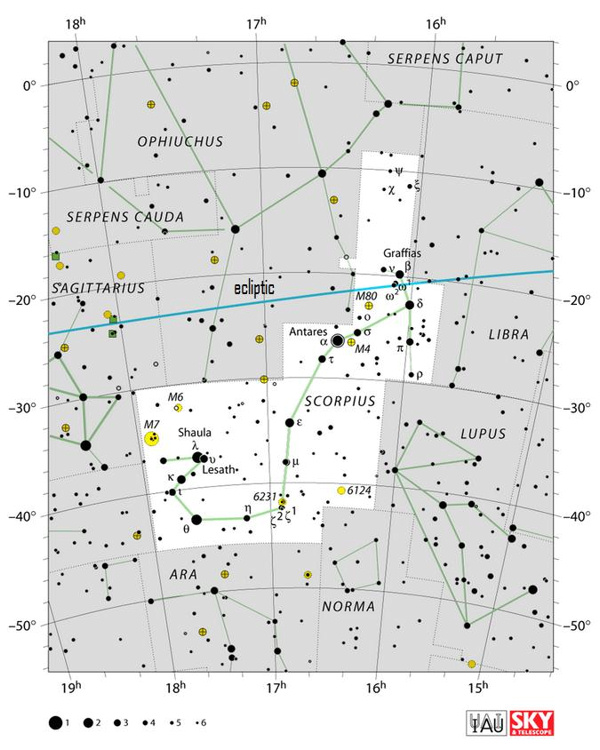
What do you want this year, Scorpio? What are you passionate about? Your dreams are the focus of 2019, and guess what? Some of them could come true in a big way!

That’s from horoscope.com and by the way I was born on the 13th of November so that makes me a Scorpio. I note that some sites now include Ophiuchus, the Physician or Serpent-bearer, in their list of zodiac signs. That makes thirteen instead of the usual twelve. Even the astrologers have to recognize physical reality once in a while! But that’s later in November, my sun is still in Scorpius.

scorpius_600

That’s the best kind of prediction. Some of my dreams “could” come true! They could! If they do, the prognosticators were right. If they don’t, the prognosticators were still right. That’s like flipping a two-headed coin, man. That’s the way to win in the business of astrological forecasting.

Did you know there is a new field called superforecasting? I’ll bet the astrologers could teach those guys a thing or two about hedging your bets. And if the horoscope-types adopted some superforecasting strategies I suspect they’d be right more frequently. Not that it matters, horoscopes are always right, that is, they work by self-fulfillment. You don’t want reality to intrude too far into the prediction racket.

Superforecasters are the type of people who treat everything as testable hypotheses. Certainty is their enemy, oddly enough. They have to be flexible and adaptable, and they adjust their outlook when they get new information. They don’t have biases, or if they do, they have workarounds. Astrology (and other rackets like Freudian analysis) are the opposite—they have an answer for everything. The logic is circular, and the solutions can always be found in a careful re-reading of the text.

The future is heady stuff. You have to be really smart, or a con artist, or both. More likely both.

I say stick to the present.