Burns

Actually we are in Hines, Oregon which is just a stone’s throw from Burns. In fact it is hard to tell where Hines ends and Burns begins. No matter, we had a good steak and some local brew at The Pine Room Restaurant and now we are kicking back in our motel room. On the way here (via US-97 and Klamath Falls) we had lunch in the mini-burg of Dairy on 140 on the way to Lakeview. The place was called O’Connor’s Bar & Grill! From Lakeview it is US-395 to Burns. Talk about wide-open country. Lots of sagebrush and juniper and some imposing volcanic buttes. Lake Abert is huge but singularly uninviting as it’s alkaline. Figures. You are out in the high desert and you get to a 60-square mile body of water and it is undrinkable and can’t be used for irrigation.

I kept thinking about the pioneers who came this way. “Well Jethro, I think this looks like a good place to graze us some cattle!” Seriously? Of all the places to pick, these characters decided the prime real estate was bone-dry and hot as hell. I suppose if you are the first people to settle a place it might look good. But my goodness it’s some seriously bleak country. And it’s huge. The distances are staggering. It’s one thing in the age of the automobile and the interstate system, it’s another in the age of the covered wagon. Those folks were either nuts or totally hard-core. Most likely both.

Tomorrow we head out to the forested regions to look for camping spots. We are scouting potential locations for our eclipse trip. It’s a month from the event and we need to get some boots on the ground so we’ll have a workable plan of attack for then. I have a feeling that this part of Oregon will not experience the crush of travelers that are expected for the more accessible areas like the coast and the I-5 corridor. Madras, just north of Bend, is sort of eclipse central, and we are far from there. I’m hoping the famously clear and dry summer weather that bakes the arid wastelands to a crispy golden brown will mean good viewing for those of us prepared to swelter for science.

So what’s the allure? Why drive hundreds of miles out to the middle of some godforsaken scab-land for a two-minute event? I don’t know. Maybe I’m the one that’s nuts. I have air-conditioning and hot showers. I’m choosing to forgo them. I suppose it’s the scale of the thing. After all we are talking about the sun and the moon. They are really big things and really far away. The moon is about ten earth-circumferences away from us. To travel a quarter of a million miles you’d have to circumnavigate the globe ten times. That’s a long way. It’s miniscule compared to the sun’s distance—over 90 million miles away. Forty trips around the equator will get you a million miles. To get to 90 million that’s 3600 trips!

Astronomical distances are of course on a much larger scale. The nearest star other than the sun is over four light-years away, that’s about two dozen trillion miles. So this solar system stuff is pretty damn small by comparison. But on a human scale it is pretty damn big. The deep space stuff is so massive (there are stars so large that if placed where our sun is they would fill the space all the way to Jupiter) and so distant that our feeble mammalian brains can barely grasp the numbers. So a solar eclipse is a local phenomenon. It’s happening in our own celestial neighborhood.

That makes it more dramatic. The moon will actually cast it’s shadow upon the earth and I intend to stand in the middle of it. I’ve looked through ‘scopes at deep-sky objects like galaxies and whatnot and it’s pretty cool shit. Now that we have the Hubble up there peeking into the void we get great pictures of amazing and bizarre structures, and with X-ray imaging and other magical technologies we can “see” things that we never knew existed. All of that is pretty damn groovy.

Maybe that’s it. Eclipses have been experienced by humans since they could look up. For many they were of great cosmic and cultural significance. Predicting—not just observing—eclipses goes back to antiquity. In fact eclipse data are still predictions. The measurements of the actual events are necessary to check and fine-tune the models used to describe these heavenly motions. It only seems like the NASA geniuses have this stuff all figured out. More like they are always figuring. Things are complicated out there and they are always tweaking the formulae. Eclipses, particularly total solar eclipses, are something humans have looked on with awe and reverence for a long time. In our fast-moving special-effects 24/7 info-tainment world an eclipse may no longer have that cachet. I know I’ll be missing a few baseball games and Law & Order re-runs. Guess I’ll just have to suck it up!

I’ll report back in a few days when we are on the return leg.


Us and Them

Science upends the world. That’s what makes it different. Philosophy and religion can stick with the old questions as they are unanswerable. Were the old sages wise? Do they still teach us? That’s enough material to keep anyone going. It’s good stuff, but it’s not new. Science alone does that—it finds out new things.

Here’s one:

There are more bacteria in your gut alone than cells in your entire body.

Our parents and grandparents didn’t know this. They might not have cared. But it would have upended their world. After all this is what that bit up there means: there is more of them than you.

If that doesn’t mess with your head consider a check-up. Seriously. There is more of them than you. What is our most sacred and treasured thing? Our autonomy. Our sense of self. Our individual identity. Our uniqueness. It should be said that unless you are a twin or somesuch you do indeed have a unique arrangement of alleles on your genes. This notion of apart-ness is powerful and important, especially in a capitalist society. But now we know that there are more of them (tiny critters) than there are of us (folks).

I think we ought to shout that from the rooftops. I have a lot of rooftops, and it’s hot. But think about all the foaming at the mouth we do over stuff like immigration. We as a body politic worry about whether there are more of them than there are of us. That’s nothing. We are already there. There’s more of them than us.

We aren’t who we think we are. Science has shown us that our idea of race is a fallacy. We all have the same genes. Some of us have different characteristics, but we are all united by common ancestry. We’ve all got the same DNA. Now we’ve found out that our very notion of individuality is a joke.

You’ve got a monkey on your back. Me, too. All of us. It’s inside, and microscopic, but it’s there and it’s as much you as you. More, in fact. Imagine the genetic possibilities, all the many, many non-human genes living within you. That blows my mind. Think about the diversity of creatures. It’s like your own wilderness area. A private ecosystem. Well, except for the stuff you excrete. Thanks for sharing, by the way. Nothing is truly private in nature, it all has to go somewhere. Closed systems are temporary things; the Second Law cannot be violated.

I’m not an “I” anymore I’m a “We.” Me and my flora. There’s more of my flora than there is of me. And before you get upset about these alien invaders it turns out they are the older ones. I’m the newcomer. These living things came first. It may be that they made me come about, that their role in the evolution of hominids was a crucial one. After all without them I can’t digest my food or void my wastes or fight infection or any of a host of things. We live within an intricate metabolic energy balance, whizzing and pasting and pooting through the day. We have to have air, fuel, and water to keep things pretty close to 98.6 Fahrenheit. We are constantly on, we have only a shutdown button and there’s no reset. Our very lives are flux as we live inside this permeable membrane that continually exchanges stuff, like air and other chemicals—the stuff of life—with the outside world. If it stops, we stop.

And now it turns out a whole bunch of other things are in there with the me I thought was just me. I’m in this bag of skin and bones with armies of them and only one of us. I mean me. Here’s some science-speak:

The gut harbors trillions of bacteria that modulates the host homeostasis within and outside the intestinal tract.

Good thing! I like homeostasis. You should, too. So these trillions of fellow travelers with me are keeping the me alive. I can’t kick ’em out. I’m stuck with them. They make it all go and I suppose I ought to take a more neighborly outlook. Hey, I eat live-culture yogurt! I drink homebrewed beer! I’m very pro-biotic, man. My bacteria ought to be happy with me. I’m thinking it’s smart to keep them that way.

Science is a human endeavor. It’s filled with all that’s good as well as all that’s bad about people, just like any other human endeavor. But this new stuff that pops up is truly new. People may have guessed some of the things about nature back in the day. The Greeks came up with the idea of atoms, for example. But those were just ideas then. They are tangible now. Not literally, you can’t touch them. But they are real. Ideas in science are all fine and dandy, but repeatable results matter more. And when the facts come, we have to be ready to see the world anew.

We are not what we think we are. Our social conditioning and mental outlook are holdovers from more ignorant times. We know more now than we did then when we constructed these schemes about individuals and societies. Science has out-stripped cultural norms. We aren’t autonomous beings. We are ecologies. That’s a very different thing. So different we don’t know what to make of it. We aren’t mentally evolved enough. I predict that will change, and sooner rather than later. The accumulation of such revelatory ideas will reach a crticial mass and we’ll be forced to adapt, as a species. Note the physical words, mass and force. See how hampered I am by the language of Newtonian mechanics? Surely these happenings will not be governed by Newton’s Laws. They aren’t billiard balls or rocket ships.

In the meantime I’ll try to be me and you try to be you and we’ll all be us together. But we better start thinking more about them. They aren’t going anywhere.

Umbral dreams

I’ve got this notion about going up to Oregon to see the eclipse next month. They say a million people will converge in the Beaver State for this event, that will increase the roughly four million population by twenty-five percent. All for two minutes of totality. The entire eclipse will be over two hours, but the shadow will be complete for only a fraction of that time. I’m chasing that shadow nonetheless. Looks like a scouting trip up to the eastern part of the state is the first order of business. I’d like to find some dispersed camping spots out in the woods somewhere near the centerline. If I can come back with a list of three or four likely places that will make the actual journey more relaxing. It’s only a day’s drive from here, but I plan to stay away from the key highway corridors, especially US-97 and I-5, and I want to be up there before the weekend as the eclipse is a Monday morning.

We took a trip to Mexico in 1991 to see a total eclipse predicted to nearly last seven minutes. We were on the beach at Mazatlan and as totality approached the temperature dropped dramatically. What happens when moist air gets cold? Bay Area people know all about marine fog. That’s what happened. A fog layer formed and obscured the eclipse from view! But I remembered something a colleague told me before I left, which was to ‘turn my back on the sun’ and watch what was happening to the earth. Sure enough we did and we saw the moon’s shadow racing across the Sea of Cortez. I did not expect that to be such a startling sight, but it was. Eclipses create two shadows, one while the sun is partially covered (called the penumbra) and one when the sun is totally covered (called the umbra). As you can imagine, the umbra is much darker, noticeably so, and to see a shadow on that scale was mind-bending. I’m a big fan of mind-bending. That particular eclipse cast a shadow about 150 miles wide! The path this summer in Oregon will less than half that.

Nocturnal fishes leapt from the waters as the umbra passed over us. Diurnal birds circled and settled to roost. Lights came on in town. Stars and planets came out in the dark sky overhead. It was noon, but there was twilight all around us, like a 360-degree sunset. Too soon the trailing edge of the great shadow raced onward across the globe and we entered the lighter penumbra. As the sun emerged from behind the moon in the partial phase of the eclipse the temperature rose again and the fog vanished. Although we missed the main event it was still a full fight card, and in life you often have to swallow the bitter with the sweet.

One of the things you can’t control in this world is the weather. They say the city of Madras will have the best chance of cloud-free viewing. But I figure a great swath across the arid west including large parts of Idaho and Wyoming will have clear skies. That’s just the way it is most August days in these places, hot and bone-dry. But we could get out there and camp for four nights and wake up to rain or overcast or some other unusual or unlikely weather event and get skunked. But that’s OK. I mean of course I’ll be disappointed (and have to start planning for 08 April 2024), but that it will still be an adventure. And that’s what these umbral dreams are about—the adventure. A true hunter embraces the hunt; the outcome may not be the desired one, but there will still be the hunt. I like to think that the journey is just as important as the destination.

It’s going to be hard to find the right spot. It would be nice to have some shade and a water source. We are equipped for dry camping, but five days is a lot of water to pack. It’s not hard to ration for drinking and cooking, and you can do cleanup with a lot less if you plan ahead. But we will be in the heat and dust for five days. I’m going to need a creek to bathe in or a little brook to fill the sun shower. Water levels are falling and streams are drying up all over. And even though we’ll likely be in one of the many National Forests this is eastern Oregon. This is part Blue Mountains and part Snake River and much like the nearby Columbia Plateau and Great Basin. Hot summers, very little rainfall, cold winters, and snow at high elevations. Grasslands interspersed with forested slopes, rocky drainages, mesas, buttes, and arid landscapes. I expect there will be many old buck-hunting spots and other hunters camps near the roads, primitive but well-used, with flat spaces for a few vehicles and tents. The developed recreation sites will be the first to go and I don’t want to compete for any of those.  I’ve camped all over the west in such spots, usually they are empty in the summertime and don’t get action until deer season.

When you stand in the shadow of the moon you feel like dancing. Or running amok, naked and howling like the poor creatures who think the day has suddenly become night. It’s like the hand of god passing over the sun, you feel like you’ve forgotten to sacrifice an ox to Zeus and he’s letting you know you’ve fucked up. That terrifying and wonderful sensation of tininess, of irrelevance in the vastness of the cosmos surges through you and instead of despair it gives you joy and you shout and cheer with life. At least that’s what I think right now. Maybe after all the sunburns, bug bites, and rocks in my shoes I’ll feel differently. It’s going to depend, I imagine, almost entirely on how much water will be nearby. Nothing like a good cold soak on a hot day to improve the spirits.

So that’s what’s on my August calendar. If I were you I’d stay home and watch it on TV. Not that you shouldn’t enjoy this amazing natural phenomenon, I just figure you’ll get a better view and there will be one less car on the road.

Stay tuned for updates—I’m sure there’ll be enterprising live bloggers and all that sort of thing on the big day. Not me: I’ll be unplugged. But fully connected, I hope, with my umbral dream coming to life.

Aphelion

The earth’s orbit around the sun is nearly circular. It’s actually elliptical, but a circle is just a special case of the ellipse; we say that a circle has an eccentricity of zero. The eccentricity of an ellipse is greater than zero but less than one. The orbital path of the earth has an eccentricity of about 0.0167 which is pretty small and means the path is damn close to a circle. Halley’s Comet has an eccentricity 0.9671, that’s highly elliptical.

Another way to think about it is that the mean or average distance between the earth and the sun is about 93 million miles (150 million km). At aphelion, the furthest point in the orbit, the distance is about 94.5 million miles (152 million km). At perihelion, the closest point, that distance is about 91.4 million miles (147 million km). Now a few million kilometers might seem like a lot, and it is, but it’s not a lot compared to the total distance, only about one-and-a-half percent.

Aphelion is today, July 3rd. Perihelion will be on January 3rd, 2018. So we are furthest from the sun during our (northern hemisphere) summer and closest in our winter. It’s just the opposite ‘down under’ as they are experiencing winter right now. The seasons are due to the earth’s axial tilt of 23.5 degrees. At this time of year the earth’s northern hemisphere is leaning towards the sun and so we have summer. At the opposite end of the orbit, the perihelion in January, the northern hemisphere will be leaning away from the sun and thus we’ll have winter.

Interestingly the earth is moving most slowly in its path at aphelion and so summer in the north is longer by about five days than winter in the south. Which means our winter is about five days shorter than winter in the south. I don’t like that. I think it should be flipped around. I like winter way better than summer and I don’t like having to endure five extra days of hellish heat. And I feel cheated out of five days of blissful cold. But since I’m not moving to Chile or New Zealand I’ll just have to put up with it.

The idea that celestial bodies had elliptical orbits is due to Kepler. Ancient peoples knew the sun’s movement along its path through the sky (called the ecliptic) was not uniform. Lots of schemes were created to explain why this was so but nothing stuck until Kepler. Newton confirmed this work later by showing elliptical orbits to be a consequence of his own law of gravitation.

Standing on the equator the movement of the earth’s surface relative to its center is about 1000 miles per hour. In its nearly-circular orbit around the sun the earth is racing along at about 30 kilometers per second or 67,000 miles per hour. That’s quite fast—humankind’s fastest spacecraft (Helios 2) hit 70 km/sec or 157,000 mph. Escape velocity for an earth-launched vehicle is about 11 km/sec or 25,000 mph.

The next time you think you aren’t going anywhere in life just sit back and enjoy the ride that comes for free. It’s a pretty good one.

Fake

According to Partridge the word is of underworld origin and perhaps related to the German verb fegen meaning to sweep clean or to polish. But it may just as easily trace its descent from the Latin facio meaning to do or to make. Regardless it emerged about two hundred years ago from a criminal argot where it was as versatile as another f-word, having multiple meanings and working as multiple parts of speech. One could use fake to say kill, wound, and rob, or to say lie, cheat, and steal. One could fake, that is make, a forgery, false document, or copy of a key. One could fake a wound to avoid work or service, could fake (effect) an escape, or be burdened by a fake, that is, a painful condition.

When I was teaching one of the insults a kid could hurl was being fake. Such a person was all surface, full of bluster but lacking stones. Or their success was due to luck and not effort. Insincerity is despised by teenagers, such a person was called a fake. These days fake is back in the news in a big way and we take it to mean make-believe, falsified, or lacking foundation in facts. But I like to think of fake in more positive terms. Here’s León Fuertes’ take on fake:

A careful fake is better than the truth.

León Fuertes is not real. He’s a character in a novel called The Dissertation which is set in the fictional Latin American country of Tinieblas. He and this world were created by the extraordinary and under-appreciated American writer R.M. Koster.

The_Dissertation

If you haven’t read Koster you are missing out. I strongly urge you to read the entire trilogy, of which The Dissertation is the middle book. But if all you have time for is one then by all means read just one. Each book (the first is The Prince and the last is Mandragon) stands on its own.

‘A careful fake is better than the truth’ is my half-assed artistic manifesto. Art, after all, is fakery, but I think art gives us more insight into people than anything else. In today’s world if you call an artist a faker that’s a serious swipe. And I don’t mean to mock the devotion and integrity of any creative person. But an art product, a painting or a poem or whatnot, is assembled from the bits of life. It’s meant to look and feel like reality, but it’s not. It’s re-arranged reality, an arrangement that suits the artist. It’s, in short, a fake.

If you want to understand another person, another culture, or another place you’ll get there via art. I love reading history, but history is an outsiders view. Not to mention that history is not science, but art, and the skill of the historian matters. You have to make the past relevant to the present, like Victorian aristocrats who loved Imperial Rome because the current empire’s glories resonated in the ancient stories. But art can be revisited and it can be viewed with less bias and get us closer to the truth about the people that created it. When I say truth I mean a clearer picture, and I think improved clarity is the best we can do in our search for this elusive stuff. We live in a world of swirling, constant motion, a dynamic and chaotic place that overloads our feeble senses, and reveals to us so little of its depth and complexity. Anytime we get a flake of gold appearing in the pan amidst the gravel we take notice and try to seize on to that and hope it reveals something to us.

That’s what art is all about. A good fake gets us seeing things anew. So I say we need to encourage fakery and leave behind the negative connotation of the word. After all the so-called fake news controversy is certainly not new or unique to our time. The fake news tells us as much about the purveyors and their supporters as anything else, perhaps more. What we want to believe in, our deepest sentiments and highest feelings, is what’s important to us.

I have a lot of respect for creative types. I was at our local art gallery last night for an opening and I went with, it seems now, an unusually open mind for the normally skeptical me. For some reason a few of the works really rung my aesthetic bell. One artist was a jeweler and she made incredible use of natural materials and used her pieces to highlight them. It was like looking at 3-D images or stereograms, suddenly seeing depth and richness that you hadn’t before. The other was a weaver, and I kept wanting to run my hands over the stuff—I didn’t—or pull it off the wall and wear it like a wrap. I thought one particular color/pattern combo would have made the world’s coolest sport coat.

Assembling all those bits o’nature into cool new assemblages is a pretty cool way to pass your time, I have to say. I’ve no idea whether these artists can make a go of it professionally, seems like such a hard thing to do in this world, but more power to ’em if they can. Wouldn’t it be something if you could create your own shit and turn that into a livelihood? Either way, I like it when people peddle their fakery. On Facebook I generally ignore everything except when people promote their creations. (Well, I appreciate it when friends and family post an update and everyone is smiling, so there’s that.) But mostly I like it when my friends show me what they write, build, sing, cook, sew, draw or otherwise fabricate that’s thoroughly theirs. I don’t care what it is or even if I like it or not, and I don’t give a fuck about their religion or their politics or their other habits.

Perhaps its just easy to fake me out. In rugby they call what we would call a fake a dummy. Maybe that’s me! But I keep coming back to Fuertes’ Dictum of careful fakes being better than the truth. At least, potentially better. There’s some upside. Real life is cruel and you can’t change that. Art doesn’t have to be. A good fake takes the edge off, like a glass of good whiskey.


Doubt and Belief

Doubt is most associated with science, and with good reason. Doubt is how the process works. No matter how slick your ideas are they have to be testable. Skepticism is a healthy thing. We live in a sea of audio-visual garbage and absorb it through the pores daily. Having a strong doubting sense helps. You have to sort out the knowledge from all the information, the signal from all the noise. Advertising and politics depend on gullibility. They know Barnum was right and they peddle their un-testable stuff shamelessly and they tell you what you want to hear. TV evangelists and mega-churches are the best at it. You relax your doubting muscle and they get you in an arm bar and you have to tap out. Next thing you know it you’re chanting Hare Krishna.

So you keep that doubting muscle firmed up and “play the doubting game” (as Peter Elbow would say). But science isn’t so simple and one-sided. You can’t have doubt without belief. When a new idea comes along, especially if it bears fruit right away, scientists can jump on the believe-train just as easily as anyone else. Think about the Big Bang Theory. Not a very satisfying notion from either a philosophical or common-sense point of view. If God made the universe, then who made God? When did it all start and how? If the Big Bang made the universe, then what came before? When did it all start and how? Neither idea gets you anywhere.

But believing in the Big Bang, or at least suspending doubt and dis-belief, is enormously useful. It’s a testable notion, this idea that there was a gigantic explosion. Because such a thing, applying the known laws of physics, would presumably have observable consequences. The so-called “cosmic microwave background” is such a thing. It’s real, measurable radio astronomy and it could be the remnants of this immense ancient event. The theory has value as an organizing idea, a way to tie together observations of unusual and difficult phenomena. At some future date, I sincerely hope, schoolkids will sit around giggling about the silly concepts that their ancestors used to describe the universe back in the day. But a model, no matter how crude, that accounts for things that are happening right now is too valuable to discard until something better comes along. What’s better? One that survives more experimental tests and describes a greater swath of the known universe.

I don’t mean to make it seem that belief is just a hat to put on when you are at work. Scientists are just like everybody else, they believe in all kinds of nutty stuff. They have well-developed doubting skills, just like ballplayers have well-developed hand-eye skills, but these are not unique to them. We can all activate the doubting schemes we have when we need to. In fact it’s so much more necessary today with our 24/7 saturation culture, but I said that already.

Scholarship and other intellectual endeavors suffer from too much doubt. It’s the nature of these things to probe and ask questions, to think critically, to analyze and to de-construct. These are essential academic skills. In the oneupmanship  culture of academic publishing you can go far by how cleverly you can skewer another’s work. Being a critic is easier than being an original. But that’s only part of thinking and learning. The other part is belief. Now no one likes a zealot, especially a reformed one. And the earnestness of true believers is wearisome. Skeptics need to furrow their brows and there’s nothing wrong with that. But they have to “play the believing game” too.

So how do you do that? How do you embrace something without losing your footing? For me I read less and write more. I talk less and listen more. Communication is all about belief. You believe in the meaning you ascribe to your scribbles and you also believe that I can find the same meaning in them. I’m here creating bits to send into cyberspace because I believe a consciousness is on the other end assigning meaning to them.

I’m a skeptic by nature. I’m the doubting-est of the doubters, man. Thomas the Apostle was my favorite of The Twelve because he had to see for himself. I’m like that. I don’t trust it unless it’s the source and even then I have my doubts. But that’s not enough to live on. You have to balance doubt with belief. They aren’t really contradictory, rather they are complementary. And why worry about a few contradictions? I used to think that consistency was an important thing. Salt-water taffy has consistency. That’s why we buy it and eat it. If I’m selling taffy, I’ll worry about consistency. Real life is nothing but confusion and contradiction, it’s only in art, music, and fiction that things can make sense.

Maybe that’s it. Creating things requires belief. So when in doubt, paint. Or sing. Or dance. Or carve wood. Or cook. Or build something. When I get up at the crack of dawn so I can be fit and fed and ready to ride my mountain bike up a steep goddamn hill I gotta believe. I can’t do it otherwise. It’s way nicer in bed. But once I get going and overcome my inertia I find it to be one of the best things I do. It makes me feel great.

You play the doubting game to survive, you play the believing game to thrive. Oh, is that clever, or what? I think I might have the stuff, finally, to fulfill one of my dreams: writing a self-help best-seller! With that and eumentics I’m on my way.

Intoxication

My late friend Mr B was a pharmacist’s mate during WWII. Working at a stateside base he called his job “chancre mechanic.” Which means he supplied gonorrheal servicemen with penicillin. The rest of the time he was plying pilots with amphetamines. Hey, there was a war on. These guys were saving the world. What’s a few uppers in the grand scheme of things? Once we stopped being at war, amphetamines became just another street drug instead of a pharmaceutical solution to a vexing problem (long flights by worn-out flyers).

People seek out intoxication like they seek food or sex. At least they seek out altered states. Even the mystic, normally abstemious, is not content with everyday life and seeks a kind of meta-reality, that above-the-plane-of-existence sort of thing. In the 60s it became fashionable to eschew the lengthy discipline and self-abnegation of the searcher and simply eat acid. LSD is a great experience, I have to vouch for that, but I had no Saul-on-the-road-to-Damascus moments. Not that I was really looking for any. Seems like if you want to trip out on drugs, you should trip out on drugs. If you want to trip out on god, you should trip out on god. I hear the desert, prayer, and fasting work well for that.

Among other teetotalers and drug-free types are extreme athletes. They get high jumping off mountains or whatever. They tune their minds to achieve complete immersion in their activity. I get the same kind of buzz—much less intense, I suppose—when I’m skiing and conditions are perfect and I’m floating effortlessly in the snow and my only thoughts are the sensations of the turns and my breathing. I’m not really conscious of the rest of reality, just fully in the moment and enveloped in the experience. It’s a fleeting thing and I see why people chase it, it’s much like a drug high.

I think we ought to stop worrying about intoxication. In fact, I don’t like the word. What’s so toxic about it? There was a time when businessmen had three-martini lunches and then went back to work. (President Ford, a politically maladroit but otherwise intelligent man, once said “The three-martini lunch is the epitome of American efficiency. Where else can you get an earful, a bellyful and a snootful at the same time?” Pretty damn funny for a guy who often came across as clueless.) Sounds like a grand tradition that ought to be revived. Of course martinis are a hell of a lot fancier and more expensive today than they were then, what with all this small-batch micro-distilling going on. Everyone wants the coolest new spirit. No one in these high-dollar crowds worries about alcoholism. That’s strictly working-class woes. The mob can’t handle their Bud Light and Jack and they wreck their cars and beat their wives so we have to pass draconian laws to regulate the poor bastards. We retired civil servants can rest easy. Of course, I walk to my local watering hole so I don’t have to drive back. I learned that trick in Ireland where a town of Yreka’s size (7500 souls) would have 50 pubs.

Now that marijuana is on the brink of legalization in California we will see a whole new regulatory scheme. That ought to be fun. I remember the bleachers at Candlestick Park in the 70s where dope-smokers would be oohing and aahing over foul balls and getting booted for passing a joint while beer drinkers would be starting fights and the vendors would be racing over to sell them more Old Milwaukee. Hilarious! Seems like a weed section at sporting events might be a good idea. A pleasantly stoned crowd would not curse or throw things or run on the field. Hey, they might even cheer for the other team if they saw something cool. Imagine what FIFA could do with cannabis treats at some of these over-heated soccer matches where they have to police for hooliganism and keep the sections separated to avoid violence. (Sporting crowds in the States are milquetoasts compared to Europeans and South Americans.) Seems like there’s a pharmaceutical solution waiting to be tried.

Now there are many, the religiously scrupulous for example, who avoid poisoning their temples (er, bodies) because it’s seen as an affront to god. After all, we are made in the image of god. But all the intoxicants in the world were made by god, too. So that’s a weak argument by my reckoning. But to each his own, right? No doubt our pharmacopeia can be poisonous, but it’s important to remember the most important rule in medicine (teachers always double-down on ‘important’):

It’s the dose that makes the poison. (–Theophrastus von Hohenheim, aka Paracelsus)

Yup. A little of something may be grand. A lot may not be. But it’s also important to remember another important lesson from life:

Everything in moderation, including moderation. (–Oscar Wilde)

I suppose now that I’m retired the orderly and the business-like and the scheduled are giving way to the chaotic and the impractical and the spontaneous. (I just made adjectives into things. You can only lose points for grammar violations in school, in real life it is called ‘creativity.’) The relentless ticking of the 9-to-5 capitalist clock will beat us all into submission eventually so we might as well dull the pain with a few mood-enhancing substances. Like I said I don’t like these things being described as intoxicants and I think we need some new words. Nutrients? God’s gifts? Wellness-icants? Help me out here.

Nocturnal

In northern latitudes the summer solstice is seen as the mid-point of the summer season and not the beginning. Day lengths have been increasing since the winter solstice and from this point forward day lengths will start to decrease. Around the vernal equinox the sun is out for half the day and the daylight gobbles up more and more of the night until around this time when we reach our maximum day lengths. The weather typically lags the calendar. The hottest days here are usually in August. Although the amount of time the sun spends up and out each day is less and less it doesn’t feel like it. To me the summer solstice is the start of my nocturnal season.

I don’t do well in the heat. I try to get up early and get some things done in the morning hours and then hunker down to avoid the solar onslaught to come. Then when the sun moves far enough down to cast shadows I’m ready to venture out. By evening it is civilized again and I can live like a normal human. The trick is to stay up late and enjoy the hours up to midnight and still be ready to get up at the crack of dawn. If I can manage an afternoon nap then I can make it work. Once I’ve had lunch I retreat inside my turtle shell and don’t make an appearance until the cocktail hour. Each day I praise and thank the people who invented air-conditioning.

But this nocturnal thing is not so easy. People aren’t nocturnal. They work all day. They screw up the clocks in the summer in order to get more sunlight, not less. They sleep at night. I think we need to flip it around in these hot places and stay inside during the day and sleep and go out and play (or work) at night. I live in a hot, sunny place. Lots of places have pleasant summer climates. This place doesn’t. It’s a goddamn inferno. If you spend time in the desert you don’t see many critters out during the day. They are smarter than that. They use the early morning and the evening twilight or are completely nocturnal. They avoid the sun’s harsh rays and the eyeball-shriveling heat.

A nocturnal way of life has some drawbacks. Happy Hour, for one. Bars don’t have Happy Hour at 10 pm. Usually around 4 pm, plus or minus. That’s the time I need to be in my hidey-hole. But the lure of Happy Hour forces me out and I trudge wearily through the pavement-melting incandescence so I can get my discounted pints and check in with the other regulars.

I’m whining. I know it. Heat makes me a whiner. I’m usually not much of a complainer. I try have a good attitude. But summer does this to me, man. It’s not my fault!  I know this nocturnal notion of mine is mostly wishful thinking. I do change it up in the summer and try to avoid the heat and try to enjoy the beautiful nights and early mornings. But life gets in the way. The tyranny of 9-to-5 and that silly Darkness Squandering Time reign over all. If I went the way of the scorpions and barn owls I’d probably lose most of my friends. “Sure, I’d love to come over, how about 9 pm? . . . What? 2 pm? Are you crazy? It’ll be 100 degrees!” That sort of thing doesn’t work so well in this breakfast-at-8 and dinner-at-6 world of ours.

I was on the Sonoma coast last weekend, at Jenner-by-the-sea and Portuguese Beach. The onshore breeze was stiff and cold and the temperatures were in the 60s. It was divine. The big bad ocean out there was keeping me and the tiny sliver of coastline marvelously chilled. Inland there was a heat wave across the state and in the valleys the mercury hit triple digits. I enjoy that maritime climate, but I enjoy even more living in a remote part of the state that’s free of crowds and traffic and urban blight. And I do love to ski so being close to ski parks and snowy mountains is a worthwhile trade-off for the summer torture.

Stay cool out there. And stay hydrated, too.

Water

It’s estimated that 1 in 9 people worldwide don’t have access to a clean, safe source of water. That’s almost 800 million people or a little more than the population of Europe. I got to thinking about that because we had a mini-plumbing crisis yesterday. Our water line from the street sprouted a small leak. We were able to get it patched but we will probably have to replace the line sooner rather than later as it is old and corroded. Nonetheless I take it for granted that I will have a steady supply of fresh, clean water. We have superb municipal water, in fact many many many communities in the United States have superb municipal water. One could argue that Americans have, on the whole, the best water in the world.

It’s not just about the water. It’s about the distribution systems and the schemes for filtering and treating the water as well. Most Americans enjoy these things as part of ordinary everyday life. The recent troubles in Flint, Michigan over contaminated water bear this out: that was a national news story and a political scandal. We turn on our taps and our spigots and our hydrants and let the water flow freely. This is DRINKING water, mind you. We have so much of it that we pour drinking water on our lawns. We hose off our driveways. We wash our cars and our clothes with it. Hundreds of millions in the world have next to nothing and we splash our supplies around like they’ll last forever.

Think about bottled water for a minute. The stuff is an environmental catastrophe, of course. The plastic packaging is a nightmare, not only from the manufacturing side (the plastics are petroleum-based) but the obvious disposal problem. American consumers have so much water that they can be fussy about it and buy it by the case in the supermarket. Nestlé will sell you 12 Liters (24 0.5 L bottles) for about 12 bucks or roughly 3 cents an ounce. That’s about the cost of gasoline! ($4.00 gallon ÷ 128 oz/gal = $0.03125 or ≅ 3¢) How stupid is that? Do the world a favor and drink water from the tap! And if you don’t like that then drink draft beer, which is 95% water, and is packaged in re-usable kegs. Even bottled beer is good because glass is a much better product than polyethylene terephthalate (PET). Not that polyesters aren’t useful (I ferment my beer in PET carboys, for example), and many are recyclable, but I think we all know that glass is better.

But that’s just an aside. It really points out the absurdity of our marketing culture. Just watch TV and see those idiotic commercials about people drinking water out of plastic bottles with silly labels on them smiling and running and playing as if the stuff was magic. Water IS magic, but we don’t need Nestlé or other corporate fucks to tell us that. That’s why communities have built water supply systems for their residents. You can’t live more than three days or so without water so if you want to live someplace permanently you better take care of your water sources. Only the über-rich will be able to get Icelandic glacial meltwater or what-have-you in the near future so it behooves us to conserve our local watersheds.

Oh, water is water, just in case you were wondering. Water has stuff dissolved in it. They call water the ‘universal solvent’ in case you didn’t know. There is nothing inherently healthier about one kind of water over another. This is assuming that known poisons like lead or arsenic are not present, or micro-organisms that cause disease. But water in a plastic bottle is not superior to water from the tap, no matter what kind of propaganda the bottle-sellers throw at you. They want your money and they will tell you what you want to hear so that you will give it to them. Chemical and nutritional mis-information is their stock-in-trade.

I’m the ruminative type, not to be confused with ruminants. Those are critters (like cows) that can digest grass and turn it into protein. You can’t do that, nor can I. But we can ruminate, or think things over like cows re-chewing their cud. In psychology rumination has a negative connotation, it means to re-think things to the point of paralysis-by-analysis, or to re-visit upsetting events. But for me ruminating is normal, the mental motor hums along and I turn things over in my mind looking for new angles or insights. Sadly, those are rare.

The water line leak got me ruminating about those poor folks for whom water is the central problem of their existence. We don’t worry that we won’t get enough to drink. We worry about imaginary problems with our water. They worry they might not make it through the year. It’s a crazy world that some have so much and some don’t have much at all. And when I say much I mean basic shit like water and shelter and sanitation. How can we live in a world where there are more cell phones than toilets? Did you know that about a billion people still defecate in the open? Can you imagine that?

Life is filled with cruel things. The idea that millions of my fellow humans can’t even be sure of a proper drink of water for the day while I can stand in the shower for twenty minutes is a brutal, hard reality. And it’s mostly luck. Happenstance. The vagaries of existence. Some of us caught a break and were born into relative wealth, peace, and security. Some of us got a raw deal. I don’t mean to say that I don’t enjoy or appreciate my good fortune. Far from it. I know how lucky I am that my ancestors survived their many ordeals and that my parents did their best for me. But if I’d been born in South Sudan life would be very different.

There will always be a little sand in the vaseline for me. I don’t think that’s a bad thing. It’s just a way to stay grounded and to be reminded of how tenuous the links that hold together our civilization really are.

Dumb

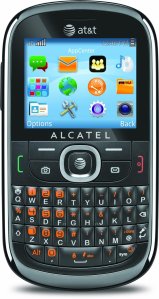
My phone’s battery is getting flaky. It won’t hold a charge for as long and it runs out quick in cold weather. So I’m on-line looking for a battery and then I think I ought to just junk the thing and upgrade. My phone is one of these:

phone

Yes, it’s a dumb phone. Or in the marketing jive they use these days, a “feature” phone. What the fuck does THAT mean? Problem is, I like my phone. I like my cheap plan. I make and receive a few calls. I make and receive a few texts. That’s it. That’s all I use it for. I don’t navigate. I don’t play games. I don’t take pictures (it has a camera). I don’t access the web. I don’t app.

I don’t have a problem with any of those things. I just don’t need ’em. When I’m out at the pub quaffing pints I don’t need to look anything up or follow any events. I just like to drink my beer, bullshit with the locals and the barmaids, and enjoy the general goofiness going on around me. Lots of other folks are tapping screens, talking to Siri, and doing other smartphone stuff. After all, the new phones are really portable computers. I like computers and I even have a laptop that I can travel with. But I like to sit in a comfortable chair and not have any distractions while I do my computing. That mostly consists of blogging, checking email and Facebook, and surfing around reading and doing research on things that interest me. I don’t have to do any of those things when I’m out socializing.

Sometimes I worry that my aversion to a fancy new phone is making me a neo-Luddite. Horrors! No self-respecting science nerd ought to be accused of Luddism. I’m not a techno-phobe. After all the miracle of the world wide web is making my virtual dialog with you possible. Think of the enormous technological infrastructure required to make that happen! I’m all for it. But a couple of things keep me from advancing from dumb to smart in the phone department.

One, cost. My phone is really cheap. I like that. I don’t use it much, so why should I spend a lot of money? My cars are all paid for and I don’t drive that much. Perfect match, don’t you think? Two, I use my computers quite a bit when I’m home. I need a break from them when I go out. Three, I like to be free of stuff when I’m out and about. I’m a guy. I don’t have a purse or a murse or a bag or anything except pockets. I try to keep it simple: wallet, money clip, keys, handkerchief. It’s bad enough dealing with reading glasses or sunglasses or a comb or lip balm or a jacket & hat or what-have-you. I don’t need any more shit to lug around. My current phone is pretty small, so if I do have to carry it I can fit it in a small pocket. I like that.

I got to thinking about this notion that the gigantic international computer network that we are a part of contains “all the knowledge of humanity” and that we can “access it at any time” with our mobile devices. Well, OK. It beats carrying around the Encyclopedia Britannica. But any collection of human information, achievement, and wisdom must also surely contain human misinformation, failure, and stupidity. Those are at least as abundant as the other. Why would I want to enhance those things? All human individuals already carry around with them the idiocy of the race. To be fair, individuals also possess the virtues of the species. The computer does not sort the good from the bad. Just the opposite: everything is equal is cyberspace. The human user has to impart judgement and separate the wheat from the chaff. The sublime from the shit.

A computer can’t help me do that. At least not right now. Right now we are in the Stone Age of the bio-cybernetic revolution. I don’t have any fear of trans-humanism, cyborgs, or artificial intelligence. We’ve got a long way to go before we understand the mind sufficiently to enhance it. Note I said “enhance” and not “improve”; one does not presume the other. Like I said even the iPhone is a Stone Age implement. It’s the first glimpse of a potential future, but it’s the equivalent still of flint-knapping in the grand scheme of things. The technological interface will someday be seamless and invisible and won’t require advertising carpet-bombing to convince anyone to participate.

The last thought that sticks with me is the ubiquity of the Google search. The word is now generic. You can google anything. And if you have your smartphone you can google anytime and anywhere. But googling just gives us answers to questions that are already known. It’s Jeopardy! stuff, usually. Don’t get me wrong. I google all the time. Beats flipping through the almanac. But we still google things that already exist and we just need to find them. We are riffling through the file cabinet. The greatest filing cabinet of all time, to be sure, but still just a filing cabinet.

Steven Chu, the eminent physicist (1997 Nobel Prize, former director of the Lawrence Berkeley Lab, former Secretary of Energy, on the faculty at Stanford) was once asked if he liked puzzles. No, he said, he didn’t like spending time on things in which the solution was already known. What a wonderful attitude! He liked thinking about things that NEEDED solutions.

That’s what I want to do. Think things that haven’t been thunk. Create. Invent. Imagine. I do that just fine right now. And it’s easy enough—later—to compare what I thunk up with stuff others have done and are doing. That’s what the web is for and it’s great for that. But I can wait until I get home to do it.