As we watch the demented fascist who calls himself our president become even more unhinged and desperate, it’s hard not to despair of our country’s future.
But then, good things happen.
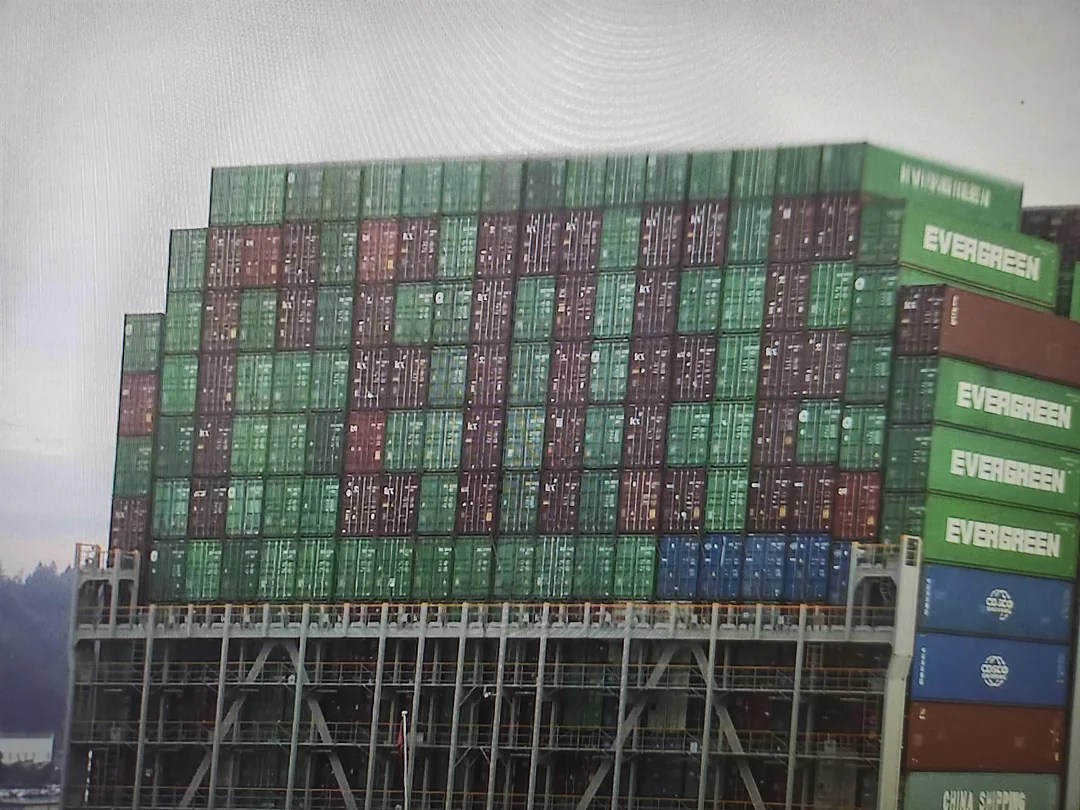
The workers from ILWU Local 34 (San Francisco) paid tribute to goon squad murder victim Renee Good with some clever stacking of containers:
We often forget that our wealth and comfort is built on the backs, sweat, and blood of ordinary workers. Without unions these people would be marginalized and forgotten. And even workers who are sometimes organized—like in the agriculture sector—the gains are small and the public interest negligible so the problems persist. We sing the praises of our capitalist system but without human bodies to exploit and abuse that system collapses. No one gets rich on their own, despite what our CEOs and techbros want you to believe. Workers of the world, unite! You’ve nothing left to lose.
Trump and the Republicans are OK with gunning down people in the streets. Thankfully lots of regular Americans feel differently.
Jeff Vandermeer’s trilogy (Area X) dealt with big themes like “what is real?” and “can their be more than one reality?” It also looked at human institutions like government agencies and research laboratories and how these things can morph from their original purposes.
Dan Chaon’s One of Us takes a more personal view. The story is set in a traveling carnival. This is a ripe area for fiction. On my bookshelf are Freakshow by Jacquin Sanders (1954), The Dreaming Jewels by Theodore Sturgeon (1950), and William Lindsay Gresham’s 1946 Nightmare Alley, made into two films (1947 and 2021) of the same name.
Stories about carnivals, circuses, and freakshows present us with outcasts—people on the margins of society. One of Us follows the misfortunes of a brother and sister who are orphaned young and then beset upon by a vicious relative. They are “rescued” by the carnival and their journey of self-discovery begins.
Chaon looks at the nature of relationships and their power dynamics. And he clearly has a soft spot for marginalized communities. What after all, makes us human? The characters in One of Us are too weird, too ugly, too bizarre, and too misshapen to have a chance in the regular world. And some of them have abilities that would terrify the “normies” and thus they have to be excluded from society.
The answer for them, of course, is to form their own society. Is this the answer for anyone who doesn’t “fit in?”
I certainly hope not. As nurturing as the carnival world is to its inhabitants, ultimately we all need to belong, and exclusion is not a recipe for a healthy civilization. Perhaps we outsiders, someday, will learn to see the beauty, uniqueness, and humanity of those in the closeted worlds we keep at arm’s length.
Minnesota is not a foreign country. It is not enemy soil. It is the United States of America. Our crazed, fascist president and his army of bloodthirsty sycophants are terrorizing and brutalizing citizens and residents. They have now executed two people for the crimes of disagreeing and speaking out.
Trump is a criminal. Stephen Miller, Kristi Noem, Greg Bovino, Kash Patel, and the rest are criminal co-conspirators. Our country is run by completely corrupt and thoroughly amoral assholes.
Enough is enough. Abolish ICE. Clean out the leadership and the goon squads in the CBP. This deadly assault on American freedoms is not “border patrol” or “immigration enforcement.” It is a racist crackdown on marginal communities and their supporters, and a deadly political reprisal against the president’s perceived enemies. And, in the end, a bloodletting. That’s what all these ICE/CBP actions are about. Trump and his lickspittles really, really, really want to crack heads. They want to cause pain and suffering. They get off on violence and, at this point, they don’t care who receives their rage.
People who support this shit should take a good look in the mirror.
These books walk the lines between horror, fantasy, and sci-fi. Sometimes people try the terms “speculative fiction” or “slipstream” for novels that aren’t genre-specific. Whatever. I think we should drop all those categories. Case in point: the Area X trilogy.
The books have a dystopian-SF surface layer. Beneath that is a Lovecraftian horror tale. Things get creepier as you go, and the sense of dread is palpable. Without giving things away, they get back to high-falutin’ SF with some stuff about time and dimensions and . . .
. . . a whole lotta other stuff. I found it mesmerizing.
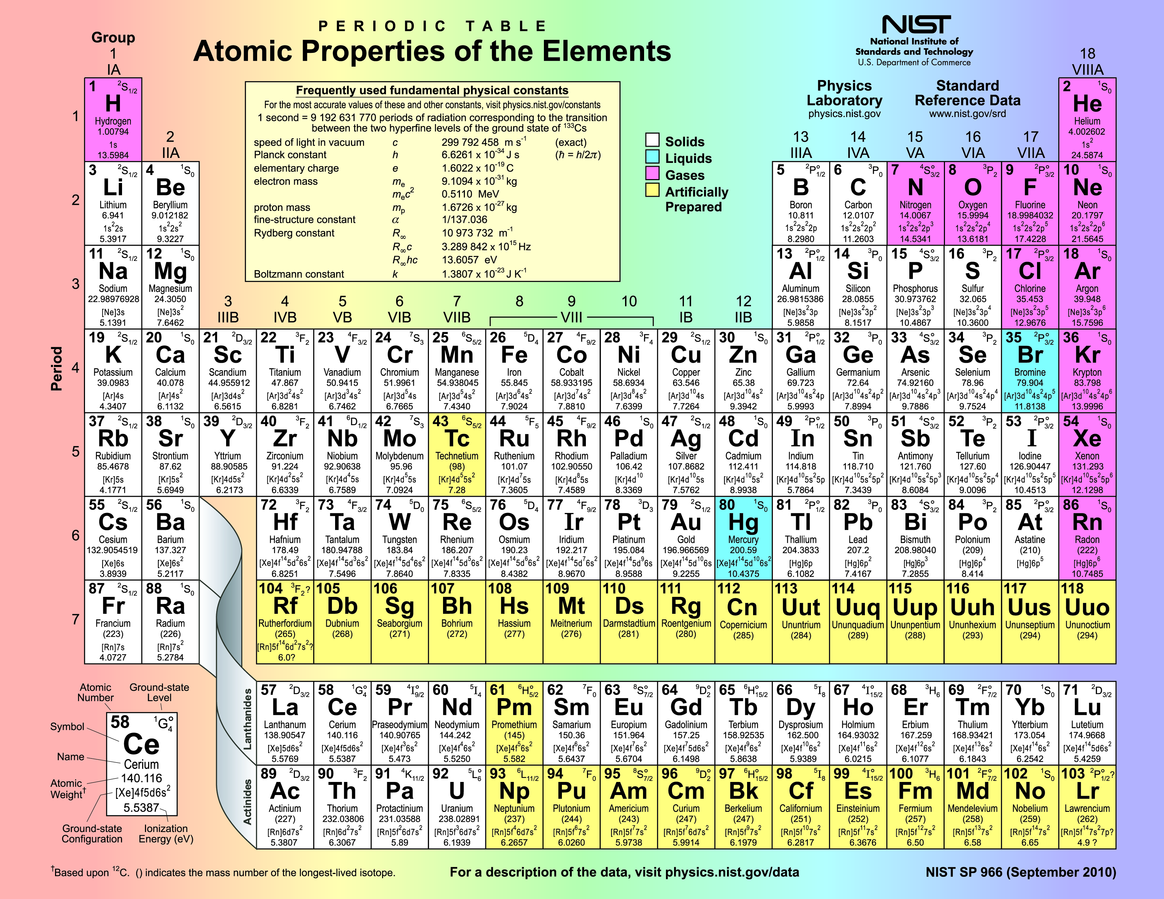
On the far left of the periodic table are the highly-metallic elements like sodium, potassium, magnesium and calcium. On the far right of the table are the thoroughly non-metallic elements like helium, argon, chlorine, and iodine. Thus the middle of the table is a “transition” from metals to non-metals.
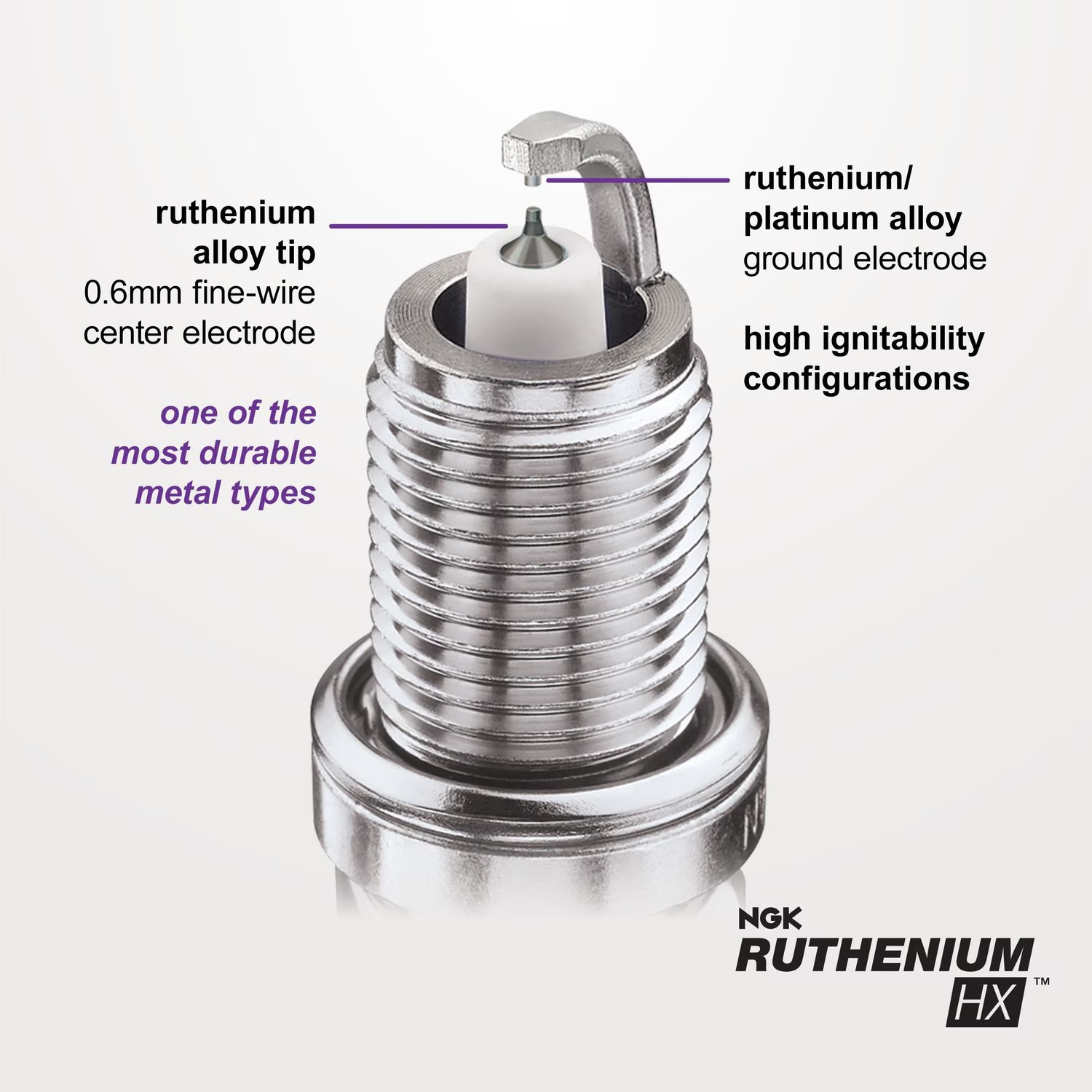
Ruthenium is very dense (~12 g/cm3). That’s more dense than lead (~11 g/cm3), and iron (~8 g/cm3), materials we are all familiar with. It has applications in electronics and high-tech. Here’s a more prosaic example (I got this from Autozone):
Apparently ruthenium makes for excellent electrical contacts. It’s also a valuable catalyst. The interesting thing is how little of the stuff is actually mined. Usually a by-product from platinum processing, the total world production is only about 30 tonnes. By comparison global iron production is over two billion tonnes.
How big is 30 tonnes? A “tonne” is a metric ton or 1000 kilograms. Ruthenium’s density (~12 g/cm3) translates nicely to 12000 kg per cubic meter (or 12 tonnes/m3) which makes it easy.
Divide 30 by 12 and you get 2.5 cubic meters. Wolfram Alpha tells me that’s 2500 Liters, 660 gallons, or 88 cubic feet. The cube root of 88 is about 4.5 so we have our measurement.
Imagine a cube about four-and-a-half feet long (54 inches) on each of its three sides. The world’s annual ruthenium harvest would fit inside. A guess a little bit of element no. 44 goes a long way! I’m going to assume there are stockpiles of the stuff, and that some of the applications involve recovering the metal. What’s mined isn’t all of what is used, I should think.
Then again, I don’t really know. It’s amazing how much stuff we can find out. It’s also amazing how little we know about how things work in our world.
“Waste” is just another way to say “haven’t found a use for it yet!”
According to Partridge, “waste” and “vast” have the same Latin root. We certainly have a vast amount of waste. I think the link is more like when you “devastate” a region you make a “wasteland” or something to that effect. Etymology is a lot of guesswork and opinions.
Regardless, we are a wasteful people. We live in a throw-away society. Capitalism depends on new things for us to buy, use up, and discard. And then we get new things. And this goes on ad infinitum and we all enjoy the benefits of a consumerist culture.
The consequence of all this is of course environmental degradation. The mining industry is particularly bad. They dig big holes in the ground, get what they want, and then dump all the stuff they don’t want some place and leave it there. They have fancy names like “tailings” or “gangue” but they all mean the same thing: “waste rock.”
It’s corporate littering. Worse, it’s the accepted and approved method of extracting resources.
We can do better. We have to do better. And, on an optimistic note, some folks are trying.
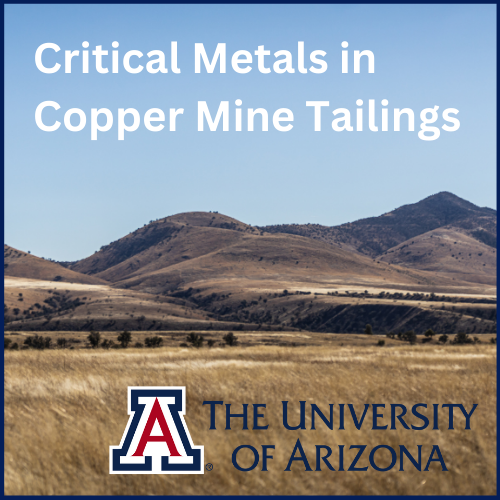
The University of Arizona Board of Regents has put together and financed a group of scholars and tasked them with studying the states’ vast copper tailings. Arizona is home to many copper mines and thus home to piles and piles of mine waste. It’s estimated there are 17.5 billion tons of copper tailings in Arizona alone, most of it ground as fine as sand. Imagine a swimming pool 1.5 miles long, 1.5 miles wide, and 1.5 miles deep. That’s about 17.5 billion tons of water. It’s a shitload no matter how you figure it.
When I was a kid the Christmas season began on Christmas Eve and ended on the Feast of the Epiphany. That would be January the 6th, or the nearest Sunday thereto. The Feast of the Epiphany celebrates the Coming of the Wise Men, aka The Magi. We put up our tree on Christmas Eve, and set out the Nativity Scene as well, and took everything down two weeks later on the Epiphany.
The Gospels don’t specify where or when the Magi visited the Holy Infant. Matthew’s account mentions Herod, and his desire to find “the newborn king.” The Magi, it seems, were wise enough to get out of town after their visit to Bethlehem, leaving bloodthirsty Herod in the dark. There’s a ton of legend and history wrapped up in the story of the mysterious visitors from The East who followed a wandering star.
But now it’s January the 7th so that means all is done and the Holidays are over. I assume the Three Fellows got back to the Orient in one piece. In our case, we took down our meager Xmas effort:
Yep, I found this box of stuff at Mom’s. It’s the original family Nativity Scene. Except of course for the three pieces that don’t belong (see if you can pick them out). We’ll be farming those out to the the thrift shop. But the original pieces, Mary and Joseph and the manger, the angels, the shepherds and their animals, and the three Wise Men, are battered but still intact. St. Joseph originally had a shepherd’s staff, which is weird considering he was a carpenter, but no matter. I substituted the hideous pipe cleaner last year and this year I replaced it with a nicer-looking piece of wire. His head had to be glued back on after years in the box, but he recovered nicely.
I mentioned the thrift shop. I’m a big fan of thrift shops. They are great places for books and CDs. Yes, I still use CDs. The so-called “secondary market” is a great place for bargains. I once found a 100% wool suit (dark navy, chalk stripe, double-breasted, peak lapel) for ten bucks! It fit perfectly. Of course I look like a character from a pulp novel, but that comes in handy some of the time.
The US holiday spending binge of the last two months will top one trillion dollars for the first time ever. That’s a lot of stuff! There was plenty of help, too. Good Housekeeping, Forbes, Country Living, ad nauseum, had stuff-buying guides for the perplexed. The Magi brought the young Holy Family gold, frankincense, and myrrh. Gold makes a great gift, if you can afford it. But I’m not so sure about frankincense (Boswellia tree resin) and myrrh (Commiphora tree resin) these days.
We were lucky this holiday season to get a couple of great visits from friends. That’s the best gift of all.
We all know chlorine (Cl) from swimming pools. The smell associated with such places is actually a chlorine compound called chloramine (NH2Cl) which is a result of chlorine reacting with amino acids (in human hair, skin, sweat, etc.).
Although in pure gaseous form chlorine is both corrosive and toxic, it is essential to life. Chlorine compounds and ions are part of numerous biological processes. The most obvious one is the role of salt (sodium chloride, NaCl) and its ions in physiology. The hydrochloric acid (HCl) in our gastric juices that helps us digest proteins is another example.
At home we all know about bleach which is also a chlorine compound (sodium hypochlorite, NaOCl). We all know not to mix bleach with other household chemicals as both acids (like vinegar) and ammonia products will react with it to release chlorine gas. At least I hope we know this!
Chlorine is obviously used to disinfect municipal water supplies. This has been a great boon to civilization. We take for granted in this country our access to nearly unlimited supplies of safe drinking water. It’s not that way in a lot of places!
Chlorine is essential to the production of plastics, particularly polyvinyl chlorides. These are everywhere. Finding substitutes for plastics is no easy task. But we’ll have to figure out ways to make renewable and/or recyclable plastics. We can’t keep piling up old plastics in our landfills. Or garbage-patching our oceans, polluting our rivers, or contaminating our aquifers, either. Chlorine is necessary for chlorofluorocarbons, chemicals of great utility but with huge environmental impacts (like ozone depletion). The regulating of such CFCs was a proof that good things can happen on a global scale. If only we could do more of that.
You can get a pretty good idea about the wealth and standard of living of a country by looking at its consumption of chlorine. A good proxy is hydrogen chloride (HCl)*, a gas used industrially to produce hydrochloric acid. Hydrochloric acid is used in countless syntheses of other compounds and is critical to any industrial economy.
*Although the same formula is used for the gas (HCl) as for the acid (HCl), the acid is actually a liquid solution. The gas is bubbled through water to produce the liquid acid. Chemists typically specify the concentration of an HCl solution,for example, 1.0M HCl (“one molar”) is a common laboratory reagent.
Did you know that if your name is Jordan and you live in South Carolina that you are likely to be a robber or to commit a robbery in the future? It’s all true! If you don’t believe me, check out The Journal of Sociolinguistic Criminology:
I love how “statistical robustness” demands attention! Obviously it’s all jive. The fellow behind it is named Tyler Vigen and he has a website called Spurious Scholar devoted to this nonsense. There’s also a part called Spurious Correlations which has stuff like this:
Back in the ancient past when I was a science teacher I used to have Mr. O’Connor’s Three Laws of Science. I figured that if Newton had his Three Laws of Motion then I could have my three things, too. Anyway, Law #1 was all measurements are uncertain. Law #2 was correlation does not necessarily imply causality. And Law #3 was science is a description of nature and not an explanation.
I thought they were equally important. But I’ve found over the years that #2 is the most routinely violated. People love correlations! Who needs causal mechanisms when all you need is happenstance?
This Tyler Vigen chap is having fun with computer tools. He uses databases and a large language model. He “dredges” the data for correlations, and as he has tons of data, he gets lots of correlations. Then he has the LLM (a type of AI) write the paper. Hilarious! It all looks and sounds real until you actually read the stuff. Vigen does all the math, the statistical analysis, which gives the illusion of heft. It’s a spoof on researchers who rely too much on mathematical models and not enough on common sense. Note that the names of the researchers on the bogus papers spell out CHAT GPT with their first initials.
OK, I know it’s geek humor! But geeks like to laugh on Christmas Eve, too. Anyway, the comic is spot-on about the sports media landscape. Since it’s the holi-daze, you will be subjected to too much sports. Keep that mute button close by.
A chemist counts hydrogen, helium, lithium, beryllium, . . .
To see why, take a look at the periodic table:
Chemistry says the world is built one proton at a time.
Element number one has, you guessed it, ONE proton. That’s what makes it hydrogen. If there were two protons in the nucleus, it would be helium. If there were three—lithium.
And so on.
Hydrogen is the stuff of the universe. From what we (that is, our instruments) can see, hydrogen is the most abundant of all the elements. In stars, hydrogen nuclei fuse together to make helium. That process is called thermonuclear fusion because it releases energy. It’s the fuel that the sun burns to give us warmth and light and all the other radiant energy it puts out.
Not satisfied with fission bombs, the people who designed our Doomsday weapons came up with hydrogen or thermonuclear bombs. These are way bigger and way better. We’ve managed to harness fission energy for domestic purposes. Harnessing the power of the sun in a controlled fusion reaction remains elusive. It’s probably a pipe dream, anyway. They’ll get the reaction going but it will take so much energy to contain it that the costs will be prohibitive.
ITER in France is the biggest test of fusion power right now. And they do a lot of research at our own Lawrence Livermore Lab as well.
Hydrogen has an isotope called deuterium. Normally a hydrogen atom has only a single proton in the nucleus. Deuterium has a neutron (along with the one proton) in its nucleus. This makes it heavier and when it combines with oxygen to make water you get “heavy water.” Heavy water can act as a moderator in a fission reactor. The Nazis occupied Norway in WWII and wanted the heavy water produced from the Vemork hydroelectric plant for their atomic research. The facilities were the target of multiple Allied bombing and sabotage efforts. Norwegian commandos also sank the ships carrying the product back to Germany! Vemork is a museum today. The story was fictionalized in the 1965 film The Heroes of Telemark with Kirk Douglas and Richard Harris.
You can readily produce hydrogen in the lab by reacting dilute acids with metals. Zinc and hydrochloric acid (aka muriatic acid) work particularly well. Hydrogen is quite flammable, so be careful. The Hindenburg was filled with hydrogen (it exploded in 1937). It would have been better off with helium but the United States had outlawed the export of helium in 1925. It seems we’d cornered the market on helium, having developed a process for extracting it from hydrocarbons. That forced every other nation to use hydrogen for blimps and dirigibles and such.








 Mark C. O'Connor
