The Buying of Lot 9

It came in the mail on Saturday:

Real property in the City of Yreka . . . Lot 9, according to the plat of “Souza Subdivision, Block 57” . . . all that portion beginning at a point on the Easterly line of said Lot 9 . . .

That is from Exhibit “A” attached to the Grant Deed that has been issued to us and recorded in the County of Siskiyou on the 29th of April. Officially we now own the house and property next door. No more dealing with banks! We gave them money and they went away. The deed has some great language on it, not just the surveyor’s argot (” . . . then South 17° 44′ East, 18.0 feet; thence South 72° 16′ West . . . “), but the legalese:

THE UNDERSIGNED GRANTOR(S) DECLARE(S) . . . FOR A VALUABLE CONSIDERATION, receipt of which is hereby acknowledged . . . hereby GRANT(s) to . . .

I’m assuming the “valuable consideration” is the heap o’cash we wired to them. The title insurance documents came on the same day as well. Those documents have errors in them, which I suppose I’ll have to deal with, but the deed looks correct and properly notarized. These things are rather underwhelming—just some typed pages, signatures, and stamps. I was hoping for parchment and lots of flourishes and maybe some crimped, embossed, or gilded portions. Alas, just routine bureaucratic stuff. I went back and looked at the deed to my current home and it is a little flashier but still pretty damn dull. I want a scroll with a wax seal in a calfskin pouch. Is that so much to ask?

I kept a log of the big events related to the sale, a chronology in case things got bizarre and we needed an attorney. We’ve coveted the property next door for years for a variety of reasons, mostly having to do with privacy and security. We had a chance to buy it twenty years ago but could not afford it and we have regretted that missed opportunity many times. The last set of tenants were petty criminals and drug dealers and the noise, traffic, and general disregard for civilized living they brought to the neighborhood was intolerable and caused us much grief. The best thing they did, in the end, was trash the place and then abandon it. It was empty in January of last year and has been empty since. A month after that I spoke to the landlady and she told me they no longer owned the house, that it belonged to the bank. I immediately engaged a realtor and was determined not to miss this second chance. In January of this year foreclosure notices were posted on the property and a month after that a trustee sale took place on the courthouse steps. We could have bought the note right there and then but my agent advised me to wait, saying it would be better if the bank cleared up all the title issues and put it on the market as they would likely sell it for the same price as it was being auctioned for. There were no takers that day and ultimately the place was listed the following month.

We were told the bank would consider one offer at a time and our agent made sure our offer was first. Naturally that wasn’t enough—another offer came in that same day and the bank decided to take a look at both. Their solution was not to negotiate but to demand “last and final” offers from both potential buyers. After some anguish and a heart-to-heart with our agent we jacked up our offer by forty percent and waived all requirements, taking the property “as-is” as well as covering all the closing fees. It turned out to be just enough better than the other offer and we signed a purchase agreement a week later (on St. Patrick’s Day!). It got a little goofy after that as we did not get the copies of the agreement or the receipt for our earnest money for about a month. It seems there was a breakdown in communication and one party thought another party had taken care of it. Meanwhile we were on tenterhooks, but it all worked out. At one point the City had a complaint come across their desk about the state of the front yard and a letter to that effect landed in my mailbox. Not knowing the status of things I finally contacted the bank’s agent and she not only told me we were “in escrow” but got me the missing paperwork. That was a relief! In the meantime people kept coming by to check the place out as it was still listed “for sale.” One guy even tried to open a window and crawl in and seemed miffed when I caught him and told him to call the real estate company if he wanted to look inside. The name and phone number were prominently displayed on the sign but most of the people I talked to who were looking at the property had not bothered to call first. Go figure.

A little over a week after that we were signing the final documents. Two days later we got the keys and two days after that the deed came in the mail. Naturally everyone we know is interested. We’ve gotten lots of advice and suggestions about what to do and who to call and how to go about things. We even have people ready to move in! We’ve been rehearsing lines to use so we can deal with the flood of inquiries. Interestingly enough we had to state in our purchase agreement that we intended to occupy the home. The property was covered by the FreddieMac First Look Initiative which gives an exclusive buying window to owner-occupiers and excludes investors. The idea is to stabilize neighborhoods by discouraging absentee landlords and house-flippers. We also had to agree not to sell for a year after taking ownership. But that’s not what we want anyway. We intend to fix the place up to live in it as an extension of our current home. Some people, I like to say, want to live in a two thousand square foot house. I want to live in a twelve hundred and an eight hundred square foot house put together! Seriously, buying the little house next door more than anything protects our current investment in our home of twenty-six years. The increased space is one thing, but the privacy and separation from our neighbors is even more important. Lots of my friends live in the country and have tons of empty space between themselves and their fellow citizens. I like to think this gives us a little taste of that. I like living in town and being able to walk everywhere, but it is a trade-off. Now I can look out my office window as I type this and see nothing but my property! It’s a great feeling to be your own neighbor.

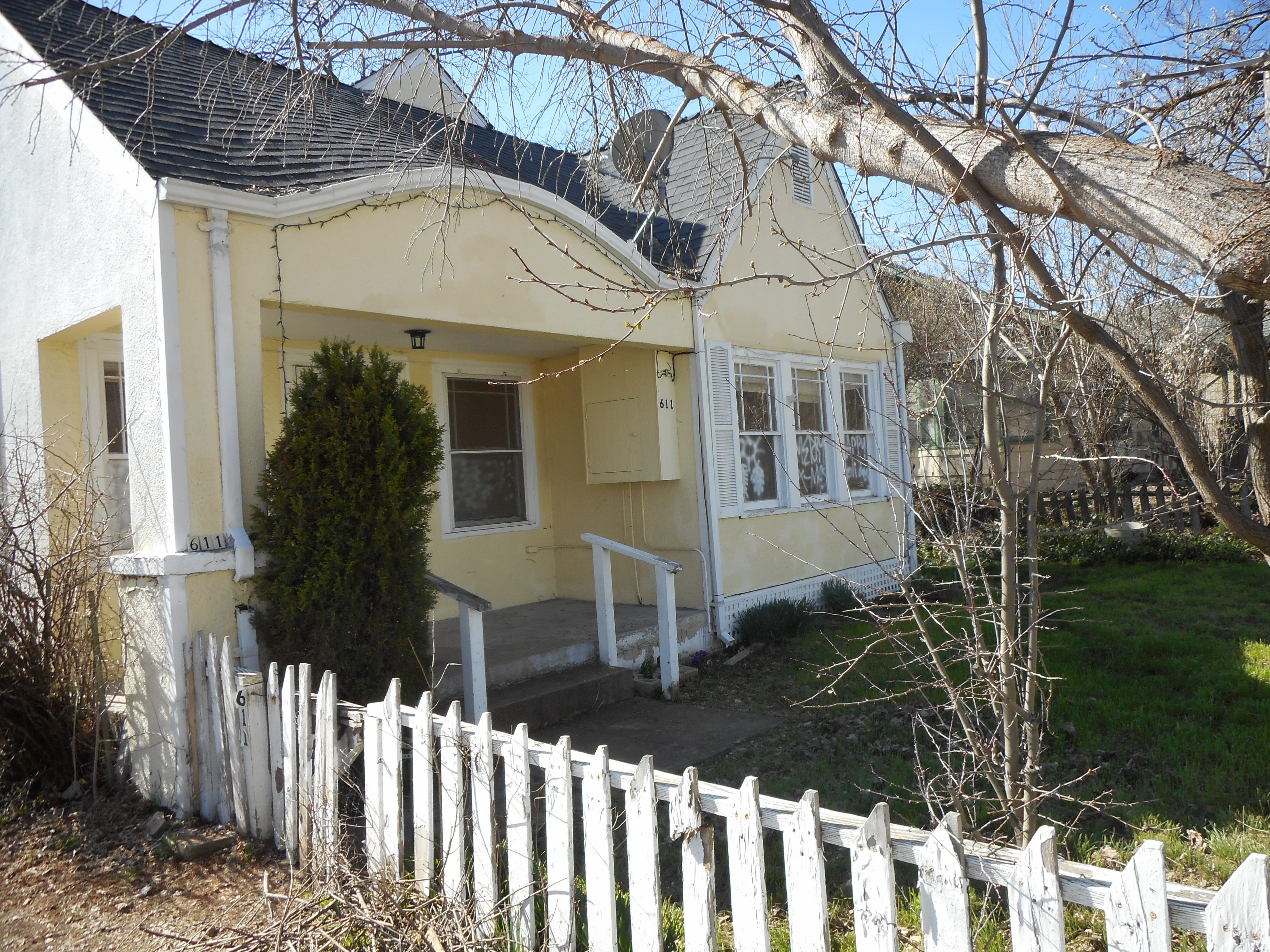
Eventually we will get the house fixed up and habitable. It is a real mess right now and needs a great deal of work. Time, money, and sweat are what’s needed, and it looks like we’ll have all three once the dust settles. I’m excited by the idea of having house guests who can stay in their own place and come and go as they please. I’m looking forward to converting the laundry room into a brewery. My wife has furniture and family materials from her parents home that will soon have a permanent place, not just a storage shed. The new place has a garage, something we’ve never had, which will be great for our lovingly restored twenty-seven year-old Toyota pickup. Nothing like starting up a vehicle on a winter morning and NOT having to scrape the windshield. We’ve even talked about making the new place our final spot when we get old and feeble and need a smaller living space (if the gods are willing and let us live that long). In short, there are many possibilities and we are in no hurry. Here’s a shot of the place from a few months ago:
house

We’ve cleaned up some of the mess, but you can see it has potential. It’s cute and has a little style. The roof is in good shape. Later this week we’ll get in the attic and the crawl space underneath and check out the bones. Whatever it is, whatever the condition, whatever the problems, we will deal with them. We’ve no timetable and no agenda. We are just happy that the waiting is over and we no longer have to worry about what’s next.
One Man’s Troubles

The Ghosts of Belfast is the American title of Northern Irish writer Stuart Neville‘s debut novel, The Twelve, which was first published in the UK in 2009. I picked up a copy when I attended NoirCon last fall. I got to meet Mr. Neville briefly and he signed my copy and posed for a picture. You can see my write-up of that here.

Northern Ireland is a peculiar place. Whether it is a province or a country is a matter of perspective. It lacks a national flag, for example. Its citizens are British, yet can claim an Irish passport. It is about the size of Connecticut and home to 1.8 million people, a third of whom live in the greater metropolitan area of its capital and largest city, Belfast. It has long been part of the British Empire and British citizens—primarily Scots—were transplanted to the Ulster province centuries ago in order to secure the land from its original Irish inhabitants. This of course sowed the seeds of future conflicts, the most recent being the decades-long reign of violence and terror known as The Troubles. The loyalists to the British crown, i.e. unionists, were pitted against Irish nationalists, i.e. republicans, in a split along both ethnic and religious lines. All conflicts have casualties and one of the biggest is Northern Irish identity. Some see themselves as British and subjects of the Queen. Others see themselves as displaced Irish, culturally if not actually part of the Republic of Ireland to the south. The Good Friday Agreement of 1998 put an end to most of the fighting and began the process of establishing a new government with hopes of ending the sectarian divide.

Like all places attempting unity after a long struggle, blanket pardons and amnesties were offered to many former combatants. Jails were emptied and past sins legally forgiven. Men who were once criminals and terrorists walk the streets. The Ghosts of Belfast begins with one such character, Gerry Fegan. Released from the infamous Maze prison as a result of the peace treaty, Fegan’s former republican bosses keep him on the payroll as a reward for his past devotion to the cause. They now serve in Stormont, the Northern Irish assembly, and know that the Gerry Fegans of the world are anachronisms. The fragile politics of the new order means the old warriors have to be shown the door. Fegan is well aware of his obsolescence and has no intention of returning to the fold or serving the cause ever again. In fact he is so wracked with guilt that he buries himself in the bottle and makes himself generally useless. His former colleagues no longer respect him but still fear him as his reputation as a stone-cold killer was well-earned. A chance encounter with the mother of one of his victims sends Fegan off on a dark and twisted path of vengeance and, he hopes, redemption.

The first thing we learn about Fegan is that he is never alone. The ghosts of his victims—twelve in number—haunt both his dreams and his waking hours. He realizes he will never be at peace until he exorcises those demons and the only solution he comes up with is to kill those who ordered him to kill in the first place. The Ghosts of Belfast, then, is a serial killer novel. Generally I hate serial killer stories but this one is different. For one thing all of Fegan’s intended victims are not innocents. They are hard men like himself. In their own eyes they were soldiers, fighting the good fight. They don’t have the empathy for their victims that is Fegan’s burden. It’s that empathy that makes Fegan sympathetic. He is genuinely remorseful about his part in the past violence. Second, The Ghosts of Belfast is really about victims, not killers. The ghosts are there to remind us that The Troubles bloodied swaths of the population. The dead left behind loved ones, families, and friends. They are gone forever but the echoes of their passing haunt the living every day.

Neville paints a rich picture of the machinations required to keep a fledgling state from collapsing. As Gerry Fegan drops more bodies the book reads like a spy thriller as the panic creeps further up the food chain. What we find out is that peace is hard. The deals that have to be made to keep the settlement from falling apart open old wounds. The conflict at least made friend and foe easier to identify. Fegan’s twisted quest for atonement lays bare all the bullshit that the politicos use to patch things together. In the end Stormont survives the crisis but the old men who once held sway over the population with their guns and bombs have to face new realities and learn to serve the needs of an emerging generation.

The Ghosts of Belfast is a gripping read. Fast-paced and suspenseful, its three hundred-plus pages fly by. It helps a bit to know a little of the history but it’s not necessary as the tension and atmosphere of the story are sufficient to keep you hooked. Gerry Fegan is a cast-off, a man without a place, but his struggle to save his soul is universal. The world is big, bad, and crazy and all of us stumble around in the darkness trying to make sense of it. Like Fegan, we seek to be whole, much as the reconciliation process in Northern Ireland seeks to bring unity to a divided people.

The Bret Pack

Bret Easton Ellis was just twenty-one when his debut novel Less Than Zero was published in 1985. I picked it up for a buck at a library book sale in 1998 and got my first taste of his particular brand of noir. Just last week I picked up another effort from Mr. Ellis—Imperial Bedrooms—for two bucks at a thrift shop. Imperial Bedrooms was published in 2010 and is the sequel to Less Than Zero. Both book titles are references to the music of Elvis Costello. Ellis was tagged early on as a founding member of the so-called literary “Brat Pack” which included Tama Janowitz and Jay McInerney. It seems we can’t just read books—they have to be properly packaged and marketed or we won’t know what to think about them.

In Less Than Zero the protagonist and narrator Clay is back in LA after a semester of college back east. He wants to be a writer but no one takes him seriously. His classmates and childhood friends, like him, are from very wealthy families. None have to work and they spend their time partying. Most have ambitions to be in the movie business or the music industry. Clay drinks a lot and snorts coke and smokes weed but none of the drugs seem to affect him. He sees a shrink that his family pays for but the doctor is too self-absorbed to help him. His best friend Julian gets in trouble with a drug dealer named Rip and Clay tries to help but is unable to and instead leaves LA and goes back to school. Imperial Bedrooms takes place decades later. Clay, middle-aged, is a successful screenwriter living in New York. He comes back to LA to help cast a movie and reconnects with his old crowd. Julian is now a recovering addict but Rip, more evil than ever, is still around and Clay once again gets caught up in their struggle. This time the consequences are far greater.

Less Than Zero has a peculiar diary-like style. The prose is lean and generally brisk but emotionally flat. Clay, it seems, has a hard time feeling anything. And when he does, it comes in violent waves of self-pity that seem to confuse him even more. The stream-of-consciousness technique is used a lot and has a disturbing toneless quality to it. Clay is not simply detached from things—there’s a deep emptiness at his core. Much was made of the nihilism that pervades the book on its release. Somehow it was assumed that Less Than Zero was autobiographical, and Ellis was painted as a callous, spoiled rich kid who slapped together his journal entries into a gossipy Hollywood tell-all. I found the book to be, instead, carefully constructed and a sensitive and insightful portrayal of a man trapped in his own alienation and amorality. It’s a coming-of-age story for existentialists. Instead of growing and learning from the crises he faces Clay simply retreats further into his angst and loneliness.

Imperial Bedrooms is even darker as Clay discovers that despite his feelings of helplessness he is entirely capable of creating any life he wants. The realization of that power, instead of liberating him, sends him down a darker path of self-loathing and betrayal. In the first book Clay is mostly passive and watches things happen. In the second he is active, but the activity is entirely self-centered and he mostly feeds his appetites for drugs, sex, and violence. The two stories are cleverly connected by the opening of Imperial Bedrooms where an unnamed “author” has written a book about Clay and his friends and they go to see the movie. The characters in the first book get to react to their own story as it is quickly summarized by the author and the film. Invisibly the story-teller, who is at first not-Clay, re-emerges as Clay, and then the new story unfolds. It’s a bit of slick misdirection that both links the two novels and allows the second to stand on its own.

It’s a bleak, insular, and repellent world that Ellis has created, but like a highway wreck we still crane our necks and stare at the carnage. Like Albert Camus in The Stranger and Jim Thompson in The Killer Inside Me, Ellis is interested in what makes us do bad things. And more to the point, why we persist in having a moral code in the face of the universe’s indifference. Ellis has received his share of criticism for seeming to glorify debauchery and violence, but I think that misses the mark. I think he looks at the world and sees the depravity and wonders how we can stand by without reacting to it. By making that the central focus of his art it forces us to see it better and thus respond to it. He strikes me as a writer deeply concerned with human values and, in particular, how we let them slip away so easily as we chase more temporal pleasures.

I can’t say that Less Than Zero and Imperial Bedrooms are fun books. Despite their brevity and the crisp, spare style they are not light reading. But they are both well-crafted and cut like a scalpel. You don’t feel the blade going in but the blood comes gushing out anyway. Ellis has kind of hypnotic power and you find yourself entranced by a bunch of people you hope you never have the misfortune to meet. I know I’m going to try a few more of his books.


Noir-omancer

Neuromancer by William Gibson is one of my favorite novels. It was published in 1984 but I didn’t get around to reading it until 1990. By then its companion novels in the “Sprawl Trilogy” (Count Zero and Mona Lisa Overdrive) were out and those I gobbled up straight away. While the book is best known for popularizing the term “cyberspace” and for its playful and inventive speculations on computer technology and artificial intelligence, it also, like the brilliant 1982 film “Blade Runner”, works as neo-noir. For one thing the plot is an elaborate crime caper not so different from a Donald E. Westlake heist story or a John le Carré espionage tale. For another, the protagonist Case is a dissolute drug addict with a criminal past. Molly, his eventual partner in the escapade, is a freelancer doing muscle work for a variety of shady underworld types. Both characters are fatalistic and world-weary, willing to take on a dangerous task for the chance of a big payoff. Noir, ultimately, is about outlook and atmosphere and is concerned more with motive and character than action or plot elements. Case and Molly are a classic noir duo—loners thrown together through no choice of their own, sexually but not romantically involved, secretive to the point of paranoia, and willing to sell out their employers if something better comes along. The dystopian near-future so beautifully rendered by Gibson’s dazzling prose (“Blade Runner” achieves the same thing visually) infuses the whole story with an atavistic longing for better times.

Re-reading the novel these last few weeks, twenty-five years later, I’m struck by its vividness, clarity, and penetrating insight into corporate branding, advertising, media saturation, and propaganda. Gibson’s vision of a vast world-wide interconnected computer network which he called “the matrix” and his description of cyberspace as a “consensual hallucination” are still surprisingly fresh despite the intervening decades. Much of the tools of Case’s trade—keyboards, data disks, electrodes, adapter plugs, etc.—are anachronisms but they don’t spoil the effect. The language is amazingly supple, particularly the imagined street slang (reminiscent of Anthony Burgess’s “Nadsat” in A Clockwork Orange) and the fanciful hacker or “data cowboy” argot. His vision of weakened governments kow-towing to an international corporate elite, shared by many post-modern writers, only gets closer to reality with each passing year.

Literature may be from a particular time and place, but if it’s good, it will still work years later. No one goes whale-hunting in sailboats any more, but Moby-Dick‘s foray into madness remains relevant. Armies don’t fight with swords, shields, and spears these days but the Iliad‘s probing of the nature of heroism still resonates. Gibson’s debut novel was the standard-bearer of the short-lived “cyberpunk” movement, but his themes of alienation and the loss of individual freedoms will never go out of style.

High Country Tour

The forecast said eight inches could come in a day or two and that was enough to get us out the door. We are snow-starved here in the State of Jefferson and my ski buddy and I could not take another day of hoping for a big storm. “If it snows, we goes” is our motto and it was time to put up or shut up. Between pal Miller and myself, that’s a tall order. We left Yreka Monday, a week ago today, about eleven in the morning and got to Elko in Nevada over eight hours later. It never fails to amaze me how vast the arid West is. We took CA 89 through the Cascade volcanic plains with their rich timberlands and US 395 to Reno in the dry country on the east slope of the Sierras. Then it was the seemingly endless trek across the basin-and-range topography that defines the Silver State. From Elko to Salt Lake City the next day was a more leisurely three-plus hour jaunt and we found cheap lodging in Midvale. Our motel was minutes away from Big and Little Cottonwood Canyons which are home to Brighton, Solitude, Alta, and Snowbird ski resorts. That night we ate and drank at the excellent Bohemian Brewery walking both ways in the surprisingly balmy weather. SLC had record highs the days we were there. Utah has goofy alcohol laws and you can only get “3.2 beer” on tap. For some reason Utah measures alcohol by weight, not volume, and thus you have 4% abv. In the end that was OK as I like quaffing multiple pints.

Alta was our primary destination and our over-anxiousness had us there an hour before opening the next morning. About six inches had fallen and we were ready for some fun. Explosions from the dynamiting of cornices and other avalanche hazards is pretty common at ski areas but the thundering booms coming down from above unnerved me anyway. The lifts loaded about 9:15 and we were off. I noticed the altitude right away as the top is over 10,000 feet. I had a hard time catching my breath and I also got a little vertigo from the steep pitches the lifts raced up. I’m just a small-town boy these days—I haven’t been to a big-time resort in decades. The size and scale at Alta were dazzling and I got a bit overwhelmed. It was tough going as the runs are challenging and my partner on the slopes is aggressive and adventurous. I only fell twice and one was in a narrow off-piste chute that I should have avoided. Falling was the safe thing to do! The other was just a little slip on some hardpack. In neither case was I hurt and my skis stayed on both times. It was warmer than I expected and I was over-dressed and sweated quite a bit. I was soon dehydrated from the exertion and took a long break but managed to get it back together and catch a few more runs. The snow was a little wet and heavy much like we are used to in California and Oregon but there were plenty of fun patches and the ever-elusive “freshies.” Much of my first day in the Cottonwoods is a blur, though. I worked hard and got worn out but it was all good as I was ready as ever the next morning.

We decided on Brighton as the climbing temperatures and lack of new snow in the forecasts meant we should avoid the steep stuff. I can only do the advanced/expert runs when there is a soft layer on top. Rather, they are easier then and thus I have more fun. On groomed slopes I stick to mostly intermediate and look for spots in the trees where there’s exploring to do. I don’t like the tight places and look for openings. I struggled with vertigo again and even a bit of acrophobia on the fast chairs and once again amazingly steep climbs but taught myself to overcome it by slow breathing and looking straight ahead. Eventually I could ride up and down without gripping the bar in fear! By the end of the trip it was a piece of cake and I had fully adapted. The third day we took a break and drove over to Park City for some sightseeing. The Wasatch Brewery was an obvious goal and we checked out the fancy and expensive galleries and shops. The snow cover is far lower than normal and locals told us over and over what a lousy ski season it was. We of course had nothing back home so it was great to be able to ski at all. It was obvious all over the mountains that the coverage was poor and the depths nowhere near where they should be. The Wasatch Range is amazing, especially from the west side as the relief is spectacular. From the flats of SLC it looks like the mountains jump straight up. Unfortunately the dun-colored hillsides are ugly and the city itself suffers, as do the other towns, looking drab and forlorn in the wide-open shrubby landscape. I’m biased, I know, but the barren highlands of California have prettier shades and more greens!

We skied Brighton again on the fourth day and found lots of fun spots in among the aspen groves. The groomed runs were smooth and fast and I got in lots of relaxed turns. Both days there were sunny and visibility was great. That first day at Alta was overcast and we struggled with the flat light which made it hard to read the slope and pick out a line. I worked on trying to ski the lines the mountain gave me rather than making my own way down. My goal was to use the terrain to control my speed and not just my turns. That worked well on the gentler slopes but was harder on the steeper stuff. Nonetheless I had a lot of fun and got to play around with different things. My new skis are more maneuverable and forgiving than my old ones but tend to chatter and run off-line on the straightaways so I had to stay upright and balanced all the time which is good practice for powder days. Another storm was brewing for Monday but it looked to be less of an event than the one that brought us out so we decided to pack it in and head home. Heavy rain pelted us on the second day as we returned to California and high winds earlier had littered 89 with shattered trees. Fortunately the crews had been out working hard and the road was clear but it was a long haul in the at times blinding downpour. My buddy did all the driving which made it easy on me but it is still hard to sit in a metal box for hours at a stretch. The journey was not completely satisfying as we got no taste of the famous Utah powder but it certainly was enjoyable to get in some real skiing. I expect we’ll give it another shot next month as the locals told us that March often has big storms. We scouted more lodging options and feel confident we can find a comfortable spot whenever we go. Of course while we were gone our local park got nearly two feet and re-opened! I hope to take a trip there as well real soon. Perhaps the snow gods are finally answering our prayers.

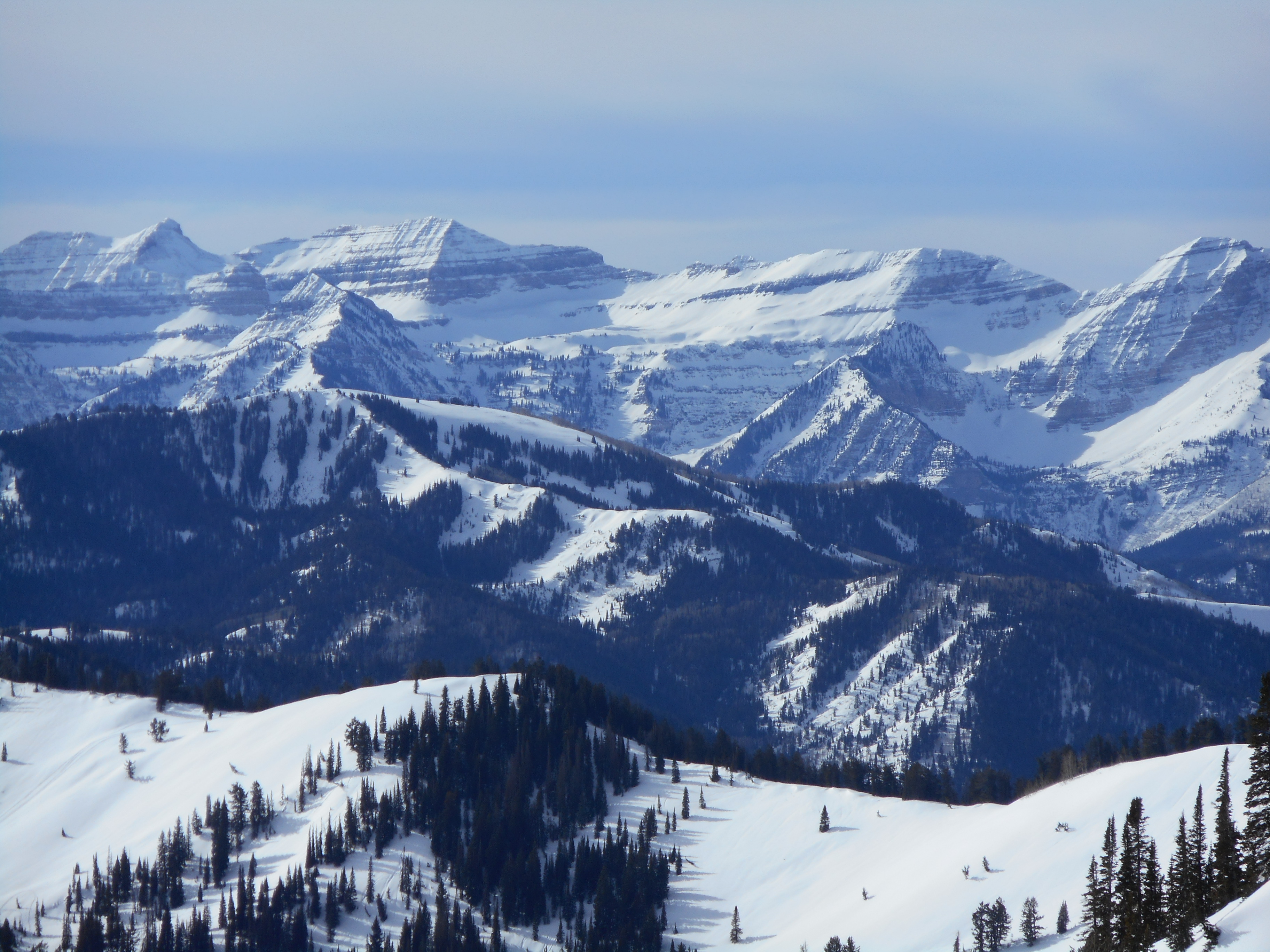
Here’s photo of part of the Wasatch from the top of Preston Peak at Brighton:

the view from the top

Not bad, eh?

Steelies!

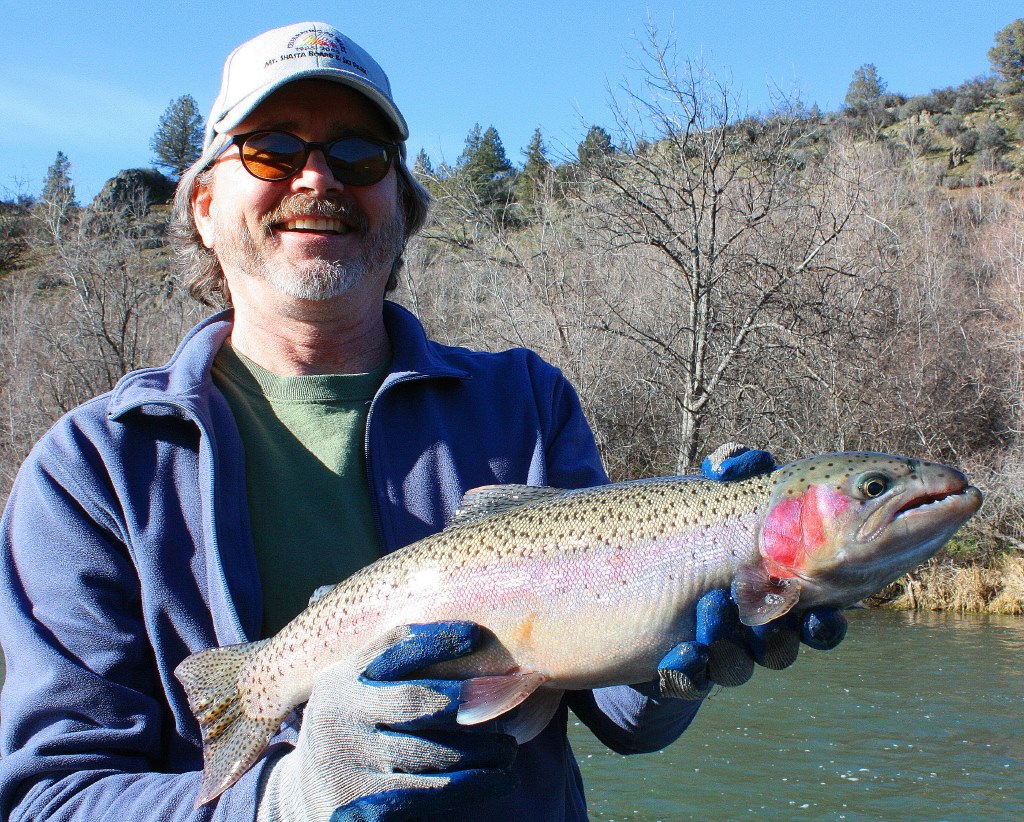
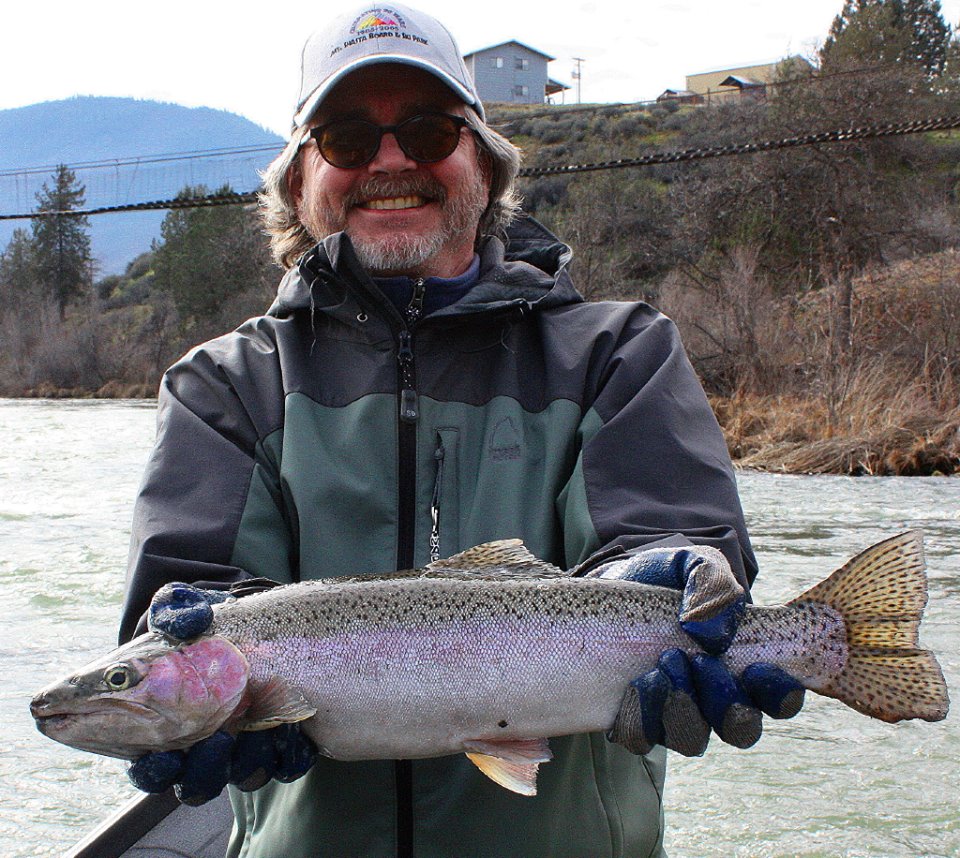
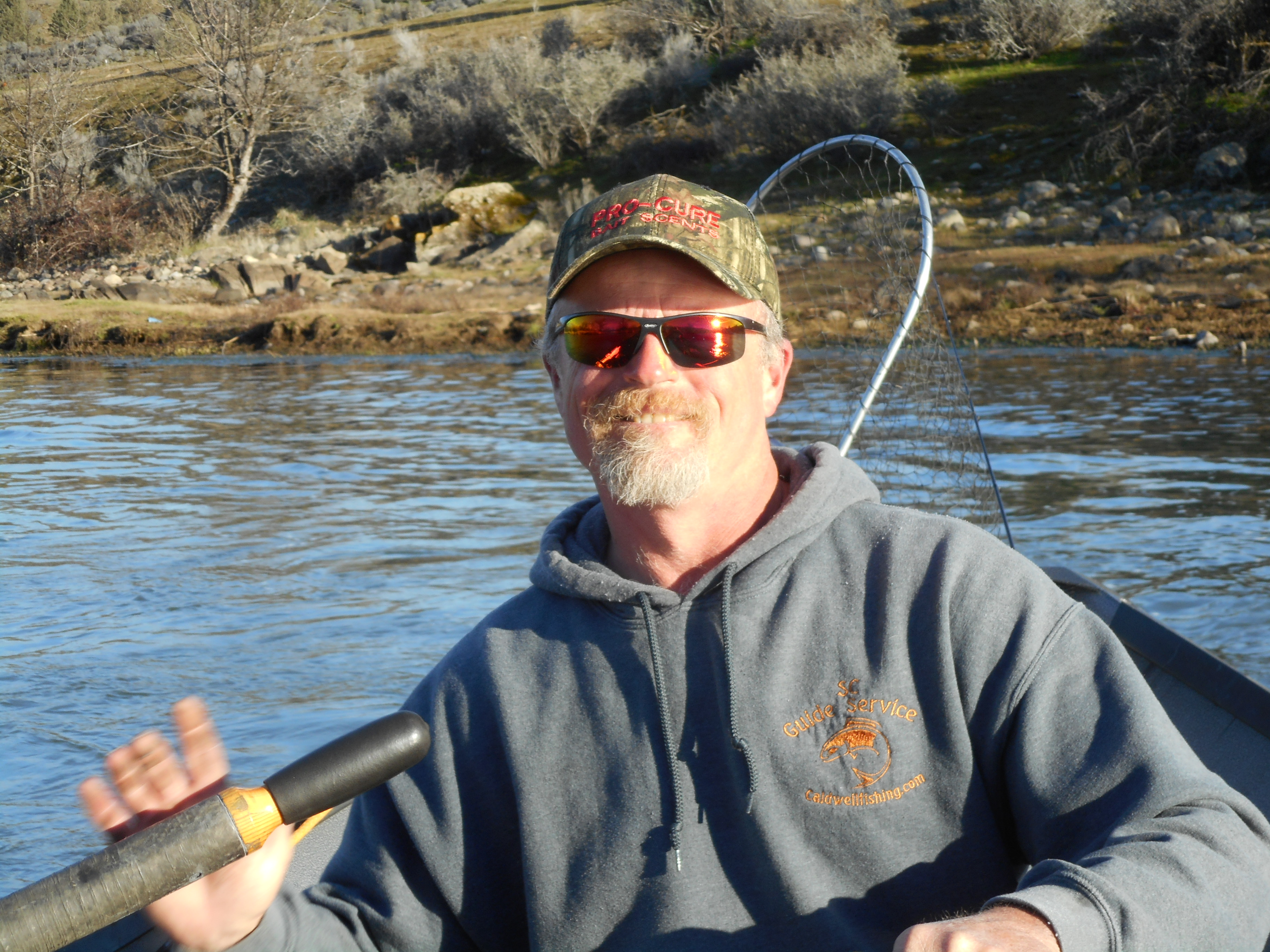
I’m the world’s worst fisherman. I catch my hook on logs or haul in weeds. The lures get stuck in bushes and the bait gets eaten without me knowing. My line always seems to get tangled and the reel makes funny noises half the time I’m working it. If I had to fish to eat I’d starve. Good thing there’s SC Guide Service. My pal Scott Caldwell, owner/operator of said service, promised me a fishing trip as a retirement present. I finally took him up on it and we fished the Upper Klamath yesterday for steelhead. Scott is one of those hook, line, and sinker wizards. He gets the fish to bite and then talks the damn thing into the boat. Here’s the inimitable Mr. C at the helm of his drift boat:

scott

It was a beautiful if somewhat unseasonable day. Too warm for January, that’s for sure. Regardless, I nailed a couple of really nice ones. Scott had me working one bank where there was a little eddy and I kept missing the spot with my casts, just coming up short of where I wanted to be. I finally launched a good one that arced around the spot and just downstream of it and all of a sudden I got that great WHAM! that steelies are famous for. Even I couldn’t miss that. When the fish jumped out of the water right after I hooked him I almost fell out of the boat I was so excited. He kept squirming around after we landed him while Scott was trying to take a picture but somehow we managed. Later, further downstream, I got number two who was hiding behind a big rock. He fought hard and Scott had to move the boat to get a good angle and finally he appeared in the riffle, flashing his colors while he struggled. He was a really hard one to get a handle on but we pulled it off. They sure are beautiful fish! You can only keep the hatchery-raised ones (the adipose fin is clipped so you know) and these were wild so we released them. I’ll have to catch some local lake trout if I want to make a meal!

Thanks again, Scott, for a great day on the river.

fishy 1

That’s numero uno.

fishy 2

And that’s numero dos.

Wasatch Watch

There’s no snow here. Mount Ashland is reporting nine inches at the base (6338′) and thirty-two at the top (7500′). Can’t ski that. This is my local spot as the parking lot is only thirty-eight road miles north of my house. Here’s what it looks like:

mt a

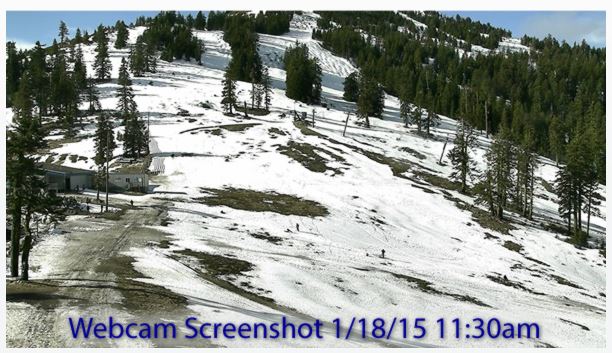
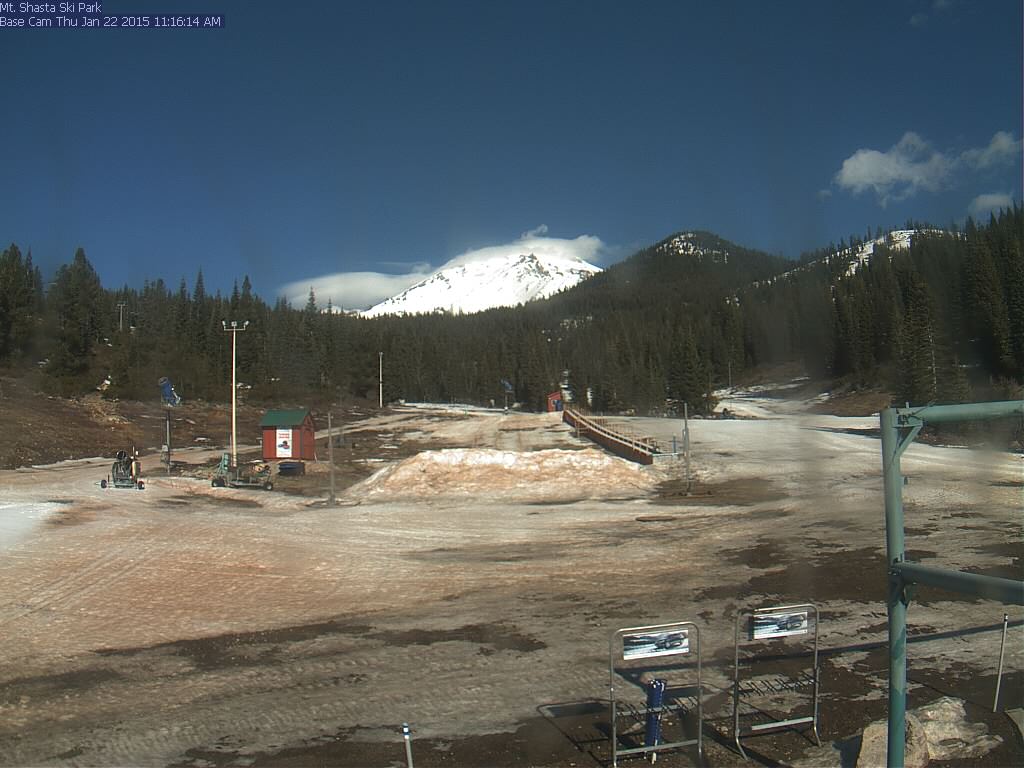
It’s going to take two good storms, a foot or more of snow apiece, to run the lifts. It’s depressing. I got to hit the slopes twice right at the end of December and that’s it. We’ve been cold and dry or warm and wet here since then. Here’s a look at Mount Shasta Ski Park (5500′ to 6890′), fifty miles south of me:

mtncam4

Lack of snow accumulation isn’t just bad for skiers, it’s bad for everyone. Mountain snowpack melts in the spring and summer and fills our streams, lakes, and reservoirs. It recharges our aquifers. It doesn’t rain much at all from May through October and the people, plants, and animals need more and more water as the weather warms. By the end of the dry season the region is parched. And a tinderbox, as we’ve learned these last few summers. Winter rains and snow make life in the arid West possible and these unusual conditions are disturbing. Is it the impact of climate change? Or just a fluky stretch of weird weather? We know global temperatures are going up, that’s not arguable at this point. We can’t causally link every local event to worldwide changes, but those of us who live in rural, mountainous areas sense things are trending the wrong way. Overall that’s true, and it is well-documented over the last decade.

What’s a powder-hound to do? I could join an advocacy group, and I just might, but right now my thoughts are more selfish. I want to ski, damn it! These days my focus is eastward—to Utah—where they say they have The Greatest Snow on Earth. That’s not bragging. It is a copyrighted trademark. My ski buddy likes Alta and we are planning a trip out there as it looks increasingly like there will nothing here or at best a truncated season. Alta lies in the Cottonwood Canyons area of the Wasatch Range, home to Snowbird, Brighton, and Solitude as well. Alta is a skier-only resort, gets five hundred inches of snow annually, and is only minutes from Salt Lake City and environs where there is plenty of reasonably priced lodging. Sounds good to me! We are waiting for the next big storm to move in so I am obsessively watching the forecasts and reading ultra-nerd weather blogs. If it snows, we goes.

After the Fall

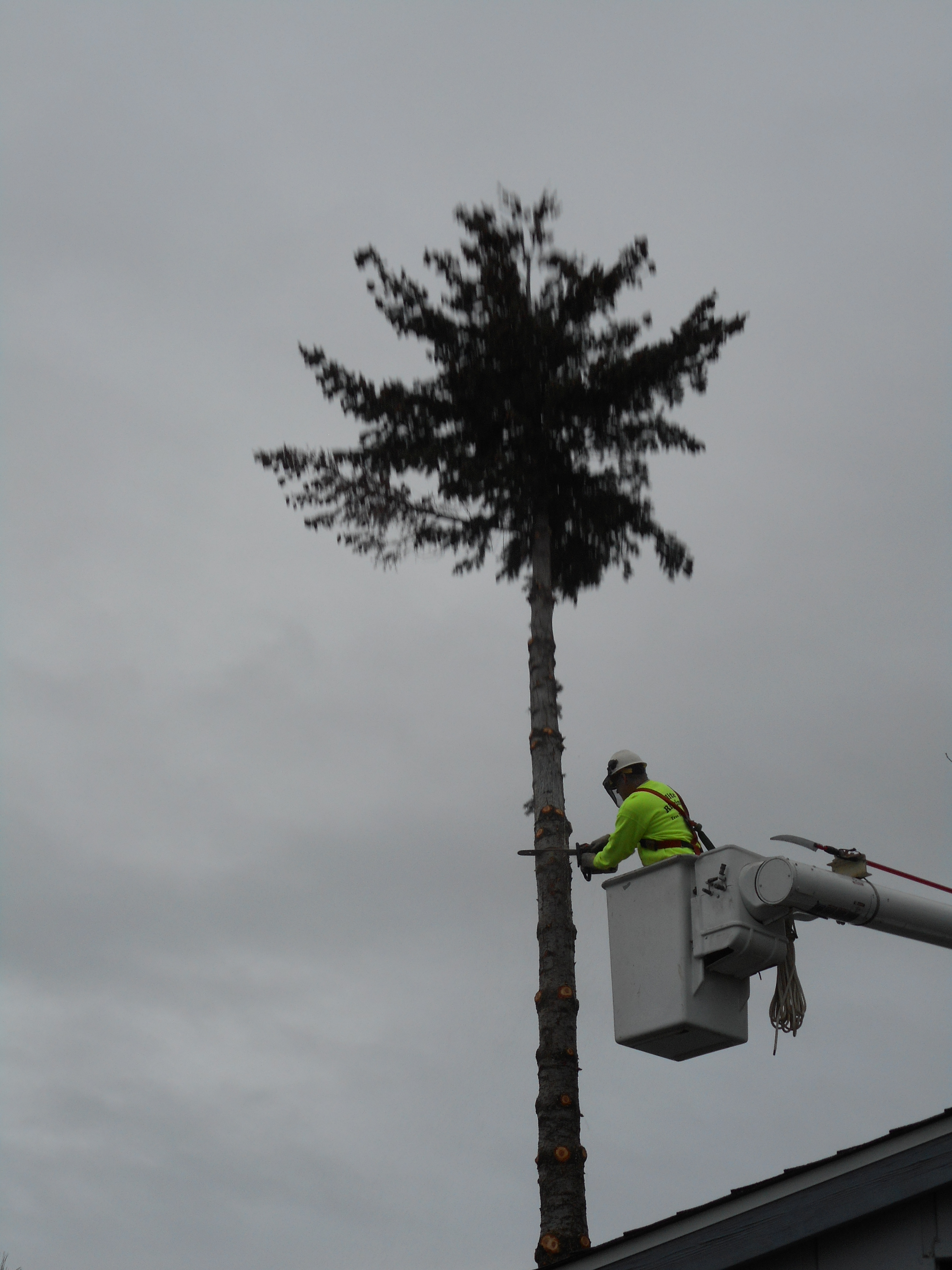
The crew came back early this morning to finish the job of removing our Douglas-fir. I got a nice sequence of the topping:

timber2

Just about to holler “timber!”

timber3

And there she goes! I love that these saw-meisters can fall a tree in a tight spot and land it where they want.

timber4

So that’s it. The tree was nearly forty years of age and was just too big for the site, not to mention the damage from the twig borers or whatever pest was attacking it. Here’s a shot of the growth rings on the stump:

rings

I really hated to take out the big fella but it had to go and I’m happy it is done. The guys from Elite Rigging did a great job—neat and efficient. Check out the lovely pile of firewood they left:

firewood

I suppose it is more accurate to say “potential” firewood as it will have to season for a while and then I’ll have to split it up. I actually enjoy the splitting part. Chainsaws are scary. I’ve bucked up a few logs in my time and even felled a few small trees and those two-cycle beasts can do some serious work seriously fast. I’d just as soon leave them to the professionals and not slice through one of my body parts (I wear kevlar chaps when I use my saw!) or drop a tree on someone or something important. I’ve always loved trees and forests and I have a real appreciation for the folks who work in the woods or are part of that industry. So, hat’s off to foresters and timber fallers and log truck drivers and cat skinners and millwrights and all the rest who keep us supplied with timber products. Wood is the ultimate renewable resource and the vast coniferous forests of the West are not only our playgrounds but the guardians of our air, water, and soil. I don’t mean to sound like a Forest Service brochure, but in this age of fossil fuel frenzy and climate change it is good to remember the importance of our trees! And I also appreciate the efforts of those who work to protect those trees and conserve our resources for the future. Environmentalism and extraction ought not to be antagonistic notions but partners in an on-going effort to husband our earthly bounty. Now I really am sounding like a damn brochure!

Today is the Winter Solstice (3:03 p.m. PST) so say goodbye to Fall.

Before the Fall

We are having Wes the tree guy (Elite Rigging) take out the big Douglas-fir in our backyard this weekend. Today he and his assistant Casey are limbing:

tree limbing

Tomorrow they will bring the bucket truck and finish the job. I hate to take down a tree but sometimes it has to be done. This one has dead branches near the crown, we figure it is tree borers. And the limbs touch the roof of the cottage and have to be cut back every year. The spot between the fence and the cottage is really too small for the tree and it is crowding the pear tree next to it. The shade it provides is not very useful in the hot summer due to its location—the box elder to the right is much better for that. The debris (cones and needles and small branches) clogs up the rain gutters and litters the yard. And Pseudotsuga menziesii is not exactly native to our location. It’s hot and dry and the hardpan soil makes it tough for anything but juniper. We’ve two ponderosa pines and an incense-cedar and even those guys need help in the summer. We planted a deodar cedar, Italian cypress, and a blue spruce over the years and they seem better adapted to the local climate. We’ve had to remove two black walnuts and two honey locust trees from the property as well. Just the usual on-going yard maintenance.

I’ll post an “After the Fall” tomorrow!

The Things You Learn in Bars

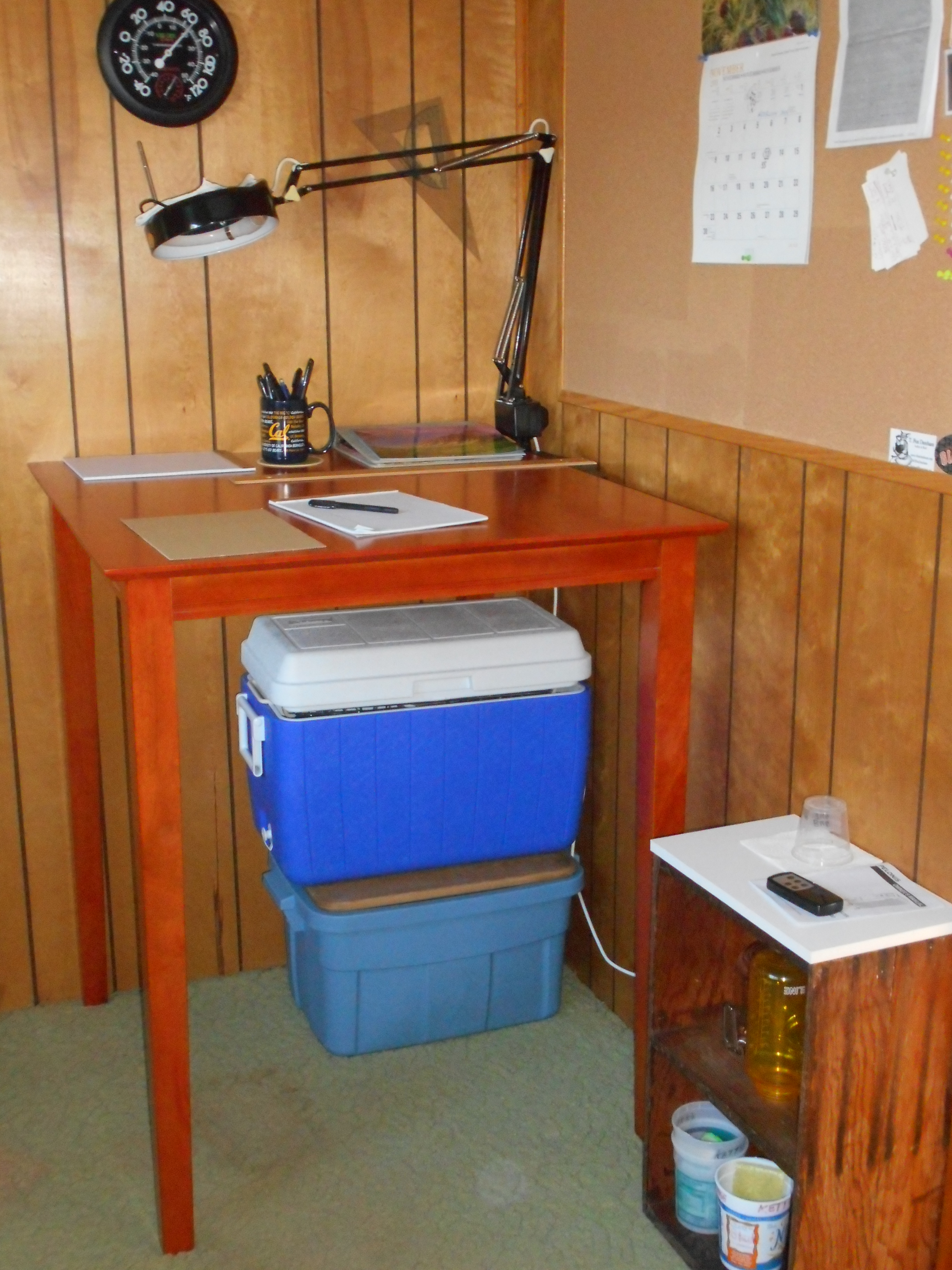
I’ve been looking for a standing desk. There are a lot of benefits to working while standing, mostly due to the fact that you are not sitting. I’m a pacer anyway and I have to get up and move around when writing or typing or net-surfing so a stand-up desk seemed like the thing for me. Unfortunately they can be expensive. I thought about taking an existing table and mounting it on some crates or cinder blocks, the classic college kid furniture solution, but couldn’t work up any enthusiasm for the idea. About a week ago I had a flash of insight, one of those moments when the problem is instantly clarified in your mind, and the answer becomes obvious. It’s funny how sometimes you just need to ask a better question to get the right result. Instead of “where can I get a reasonably priced standing desk?” I asked “where do people do a lot of standing around by high tables?”. In bars, of course. Lots of pubs, bars, and lounges have tall tables that you stand at or sit on stools or long-legged chairs next to while sipping drinks and quaffing pints. It’s standard fare for those places. I’m not sure why, maybe bar patrons get drunker and stupider if they sit restaurant-style at conventional dining tables. Maybe the weird geometry makes customers thirstier. I don’t know. I do know that I spend enough time at my local pub that the high table is part of my social DNA. Soon after my burst of brilliance I got on Amazon, that mega-corp shopping site with tentacles everywhere, and searched for bar tables. I found a 42-inch high wooden table with a 36-inch square top for $125 bucks. Here it is:

table 4

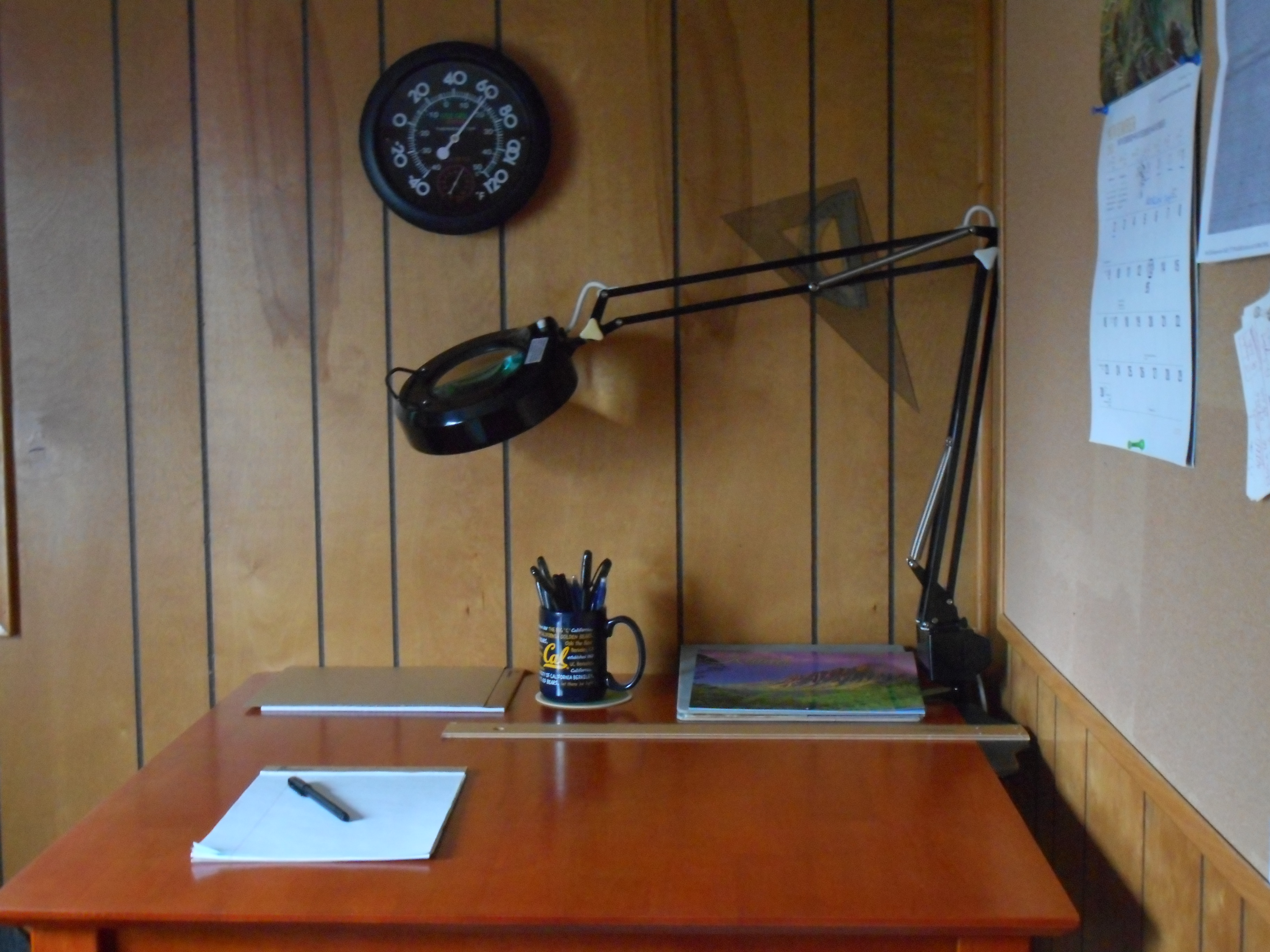
Those are my brewing supplies underneath and to the right. Storage space is always at a premium. I don’t think this is the final configuration but it’s good enough to get started. I can put my laptop on there as well when I need to process words. When I stand with my elbows bent at ninety degrees (forearms parallel to the floor) they are about 44 inches high. I can lean comfortably forward and put my weight on the table top, or better yet, relax in a tai chi horse stance in front of either open side and my arms are at the right height for writing or typing. The top being a full yard square gives me lots of room:

table 3

This is in the small back room in my cottage which I have converted into my writing den. It doubles as my brewery, of course, that’s not going to change. My library in the main house with my desktop computer and wireless router and everything is too close to the kitchen and too distracting of an environment for me to focus and get my projects finished. Plus my lovely bride is used to me being out of her hair during the work week and now that I’m retired and home all the time I need to give her back the space she is used to. The cottage, which I’ve dubbed The House of Mark (or sometimes La Casita), will be my getaway. I’ve got a large room in there where I can do my workouts and I also have a conventional office chair and and standard size table when I need to sit and work. It was funny—I assembled the table in the big room and Sue came in to look at it and said “you sure it will fit through the hallway into the back?” Sure enough, she nailed it. There was no way to get the thing through the narrow doorways and past the refrigerator in the tiny connecting room. So, I took the legs off and re-assembled it in the back! The legs and top shipped in separate boxes and they gave you eight bolts with washers and nuts to secure them together. The bolts needed a 4 mm Allen wrench, which was in the kit, but the cheap brass heads wore down quickly and I thought I’d never get the the damn thing back together. Fortunately I had two stout wrenches in my bicycle gear that gave me more leverage and I found that a T25 torx head on my electric screwdriver could do much of the work as well.

Thanksgiving, my favorite holiday, will soon be upon us. I hope all of you enjoy safe travels and good times!

HOM