Resolution

There’s a place in Arizona that’s filled with copper. It’s called Resolution. A joint venture between two of the largest mining outfits in the world wants to mine that copper.

Rio Tinto and BHP are the two mining companies. They are international firms but both have headquarters in Melbourne. Mining is a bigger part of the economy in Australia than in most developed nations.

Rio Tinto has a market cap of $100 billion or so and BHP rates about $130 B. Note that these are dwarfed by behemoths like Apple ($3.4 trillion) and Amazon ($1.8 T).

The two mining giants have sunk several billion into the potential mine while they navigate the regulatory and political landscape. The underground porphyry copper deposit that’s got everyone so fired up is massive. It could potentially supply 25% of US copper demand. The mine life is expected to be sixty years.

Naturally this is right in the middle of sacred land. A proposed land swap with the Forest Service and some promises to protect indigenous sites seemed to have pushed the process towards approval. But there’s still strong opposition. A few years back Rio Tinto destroyed 46,000-year-old Aboriginal caves in Western Australia. They don’t have much of a track record in other places, either. BHP has its own infamous case, the 2015 dam collapse in Brazil, and they have a similar history to their rival/partner.

https://desertreport.org/the-resolution-copper-mine/

The most compelling argument seems to be about water. Mines need a hell of a lot of water. Even if both BHP and Rio Tinto suddenly decided to be the best companies in the world and run a neat, clean mine, they will still use mountains and mountains of water. And this in the middle of the Sonoran desert!

The San Carlos Apache Tribe is taking their opposition to Resolution to the US Supreme Court. If we want a clean energy future, we have to have copper. Lots of it. That’s not in question. How we get the stuff—that’s where the questions are.

Tough

It’s a desert around here and things don’t grow well unless you water and fertilize the hell out of them. And protect them from the sun. We’ve lost several landscape plants this year because of the excessive solar radiation and summer heat.

But there’s one plant that the rules don’t apply to. The grand champion of desert hardiness: the trumpet vine or trumpet creeper, Campsis radicans.

https://worldoffloweringplants.com/wp-content/uploads/2017/11/Campsis-radicans-Trumpet-Vine1.jpg

We buried our original plant under concrete when we expanded our patio. No problem, the trumpet vine simply moved over a few feet and found some sun and re-appeared on the southwest corner of the house! It is thriving there, producing spectacular displays of tubular orange flowers. And we don’t water it. It survives on its own.

We like volunteers. This one is native to North America, but east of the Mississippi. It’s a weed in most places back there. Here in the West we have a lot of garden cultivars bred for hardiness. I have to say those plant nerds really pulled it off!

Another trumpet vine volunteered in another spot on the house and it is thriving as well. And speaking of volunteers the flowers attract Anna’s hummingbirds. We get to watch them fly and feed for free. They chatter and dive bomb each other. It’s quite a show.

Hummingbirds are tough, too. We were once chased out of a camping spot in the Mojave desert many years ago by a determined duo of what I think were Black-chinned hummers. They kept buzzing us until we moved a few yards away from a particular clump of shrubs. Then we all got along.

It’s hot and dry out there. Take care of yourselves.

Europium, #63

Color TV broadcasts started in this country in the 1950s but really didn’t take off until the mid-60s. In 1972 half of the television sets in the US were color. I remember our family getting a color TV (and cable!) right about then. Very few all black-and-white TV stations remained by the end of that decade.

One of the barriers to color reception was red. Color is displayed on screens by means of phosphors. These are materials that emit light when exposed to radiant energy. In a TV, an electron beam activates the luminescent substance. Different chemicals give off different colors.

In the case of red, the key breakthrough was the use of the lanthanoid or rare-earth element Europium. Yttrium orthovanadate (YVO4) is “doped” with a small amount of europium oxide (Eu2O3) to produce a bright red glow. TV sets contain about a half a gram to a gram of Eu2O3.

The European Union takes advantage of europium oxide’s luminescent property by embedding it in fibers in their banknotes. This is an anti-counterfeiting measure. You can see the red stripe that emerges under UV light in the 100-euro bill:

Europium has no known biological role and is not toxic. Europium is one of the rarest of the lanthanoids. In the Mountain Pass Mine in California, our only domestic source of REEs (rare earth elements), europium is a tiny fraction (0.2%) of the ore.

A material world

One of the reasons that energy costs go up over time is that it gets harder to extract a resource as it gets depleted. The oil that was close to the surface or in easily accessible sites was pumped out first. These days we need deeper wells. Or wells in crazy places like the Arctic or the open ocean. And we have to employ new methods like hydraulic fracturing (“fracking”).

The low-hanging fruit has been picked.

This is an issue for any resource. Minerals are no exception. Here’s a bit from an Allianz Research trade report (Metals and Mining: Do we live in a material world?):

“Furthermore, as accessible high-grade deposits become rare, mining companies are increasingly targeting deeper or lower-grade deposits, which require more sophisticated, hazardous and costly extraction techniques.”

If you can’t grow it, you have to mine it. But it is getting harder, and it takes longer. The “green energy” transition will require enormous investments in mines and minerals. That’s going to require planning ahead as the lead times are significant. Take a look at the chart below. Mines are big, messy, complex things with a lot of impacts. And the industry hasn’t done much to win the public’s trust so you can understand the pushback in the form of increased regulations.

Of course we could always just get our minerals from mines in the third world, or places where there is little or no oversight. But miners don’t like to invest in sketchy places. They like law and order. They want to keep their properties and their profits. Here at home we have the regulations in place so that we can mine intelligently. And we have courts and rules and banks and everything else for businesses to prosper.

So, let’s get those shovels in the ground already!

Tellurium, #52

Tellurides are minerals formed with the telluride anion (Te2-). Both gold and silver form tellurides, the most common being a mineral called sylvanite [(Au,Ag)Te4]. Gold and silver were mined extensively around the town of Telluride in Colorado, but interestingly no gold telluride minerals have been found there! Seems like the Chamber of Commerce needs to get on that one. The local mines were rich in lead, zinc, and copper as well.

Tellurium (Te, #74) is a metalloid in Group 16 of the periodic table. Groups (or “families”) are the columns in the table—the rows are called periods. Tellurium is in the same family as oxygen, sulfur, and selenium. There are fungi that can substitute tellurium for either selenium or sulfur in metabolic processes but it otherwise has no biological function.

Tellurium is usually obtained as a by-product of copper refining. Its primary use is in solar cells. Cadmium telluride (CdTe) panels are more efficient than the more common crystalline silicon types so expect demand for this rare element to increase.

But shareholders prefer AI

California is no stranger to fortune-seekers. The state was founded on the Gold Rush and built by the Oil Boom.

Silicon Valley is our latest El Dorado. Our tech overlords have a new hype wand. They call it AI. And no one wields the gilded baton better than Santa Clara’s NVIDIA.

The computer systems and computer programs that make up what we call AI need the best chips, and NVIDIA makes them. Of course these massive projects have an equally massive energy demand. We don’t see the carbon and environmental footprint of the tech industry and that gives them an unassailable clean image. The Gold Rush and the Oil Boom spawned a lot of environmental laws, by comparison. Big Tech off-shores all its dirty work, and their toxins seep quietly into the groundwater.

NVIDIA is now the most valuable company in the world. Or maybe not. These things change on a whim.

Frik Els over at mining.com put together a graphic comparing the market capitalization of the fifty biggest mining companies in the world to one tech company, NVIDIA. There’s no comparison. All fifty companies combined just tops a trillion dollars (~$1.4T). NVIDIA is worth more than twice that!

https://www.mining.com/mining-vs-ai-whats-wrong-with-this-picture/

You can’t have AI or Big Tech without copper and silicon and aluminum and gold and germanium and gallium and arsenic and so on. And so on and so on. Minerals are the basis of society. That is, all the non-food aspects of society. What can’t be grown must be mined. And without mining there’s no modern agriculture.

But AI is the stuff of dreams. And that beats digging holes in the ground any day.

8.1 billion

July 11 was World Population Day.

The current estimate of world population is 8.1 billion or 8100 million or 8,100,000,000,000 people. That’s 8.1 x 10¹² (8.1 E 12) for you math nerds. If you can’t do a superscript, exponents are commonly indicated with a caret (shift-6) as in 8.1 x 10^12.

That’s a lot of folks. Population growth mainly occurs in poor places. As people get wealthier and freer, they live longer and have fewer children. Wealthy countries have slow or stagnant population growth. Poor countries are growing fast. That’s why so many people emigrate—they are seeking better economic opportunities. Wealthy countries like ours benefit from immigration. We need a younger workforce.

We have the ability to feed the world. And to house the un-housed. We aren’t going to run out of space or resources. Economic growth, fueled by technological innovation, will ultimately bring people out of poverty and misery. Wherever the rule of law and the opportunity for economic growth exist people can be lifted to a higher station in life.

Our future does not have to be the dystopian nightmare our Silicon Valley overlords have imposed upon us. We don’t have to spend all our energy and resources upgrading our cell phones. We could focus on food, water, shelter, and civilization instead. We don’t need any more social media platforms. We need a society that cares about those less fortunate than ourselves.

Tungsten, #74

Tungsten is tough stuff. It’s as dense as gold or uranium and it is also the hardest metal to melt. And it has the highest tensile strength. A small amount of tungsten added to steel makes the steel stronger. Tungsten alloys are thus everywhere.

The symbol for Tungsten is W from the German word wolfram and the main ore of tungsten is wolframite.

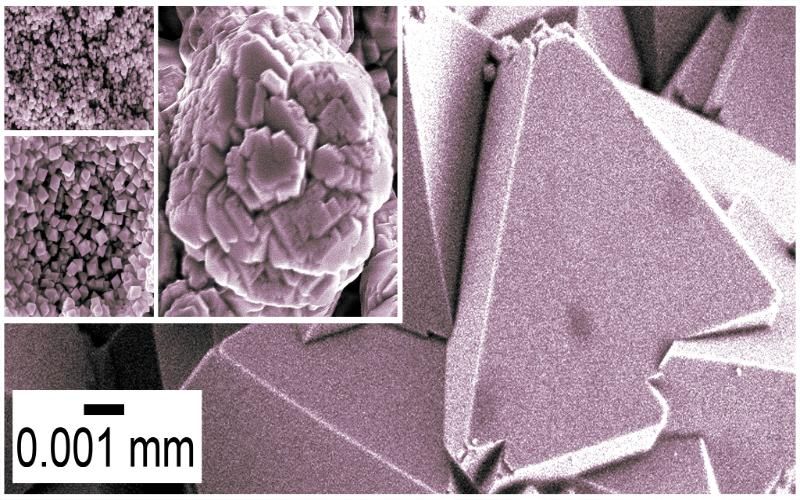
One of the interesting compounds made with tungsten is tungsten carbide or WC. It’s a powder and can be shaped into many forms. It’s as hard as corundum or sapphire, corrosion-resistant, and is many times stronger than steel.

When fine powders are compressed to a point just short of liquefaction they fuse together. The process is called sintering. Brass is commonly sintered, for example. Sintering is used with tungsten carbide because of the very high melting point of both elements. Sintered WC has many applications for machine tools, especially in extreme environments, and its hardness makes it a great abrasive. It has to be polished with diamonds but it holds its luster and doesn’t break or scratch. Sounds like good stuff to make jewelry from, and that is a major use for WC. Here’s an example:

NoirCon VIII

https://noircon.com/

We attended the fourth NoirCon in Philadelphia in the fall of 2014. That was a long journey—we took the train. This one is a little closer. A drive down the east side of the Sierras seems like the way to go.

The guy on the poster is the late American author David Goodis.

I turn 65 on the 13th of November. NoirCon will be a fine birthday present!

Bill Anders, RIP

Apollo astronauts were my heroes when I was a kid. I remember Apollo 8 vividly, and I did a report on Apollo 9 for school. And everyone of my age group remembers Apollo 11 and the moon landings. Bill Anders, one of the three-man crew of Apollo 8, died last week at age 90. He was still flying and was killed in his T-34 while attempting a stunt maneuver near his home in northwest Washington. I hope I’m still walking if I make it to 90!

Anders took a photograph of the earth in December of 1968 when Apollo 8 was rounding the far side of the moon. No humans had ever seen that view. The photo came to be called “Earthrise” and is one of the most famous images of our time.

By NASA/Bill Anders – http://www.hq.nasa.gov/office/pao/History/alsj/a410/AS8-14-2383HR.jpg

Speaking of the moment, Anders said: “We came all this way to explore the Moon, and the most important thing that we discovered was the Earth.” (https://www.bbc.com/news/articles/cw99wj5e5q8o)

The Apollo missions were powered by the largest rocket ever built, the Saturn V. It took 68 hours for Apollo 8 to reach the moon. And that was just three guys. Imagine outfitting a larger crew for a more extended stay. It’s easy to see that space travel is a pretty silly notion. Space exploration on the other hand, is pretty cool. Apollo 8 was 56 years ago. Humans haven’t traveled any further into space since then but they’ve certainly explored a lot more.

Robots are better for space than humans anyway. Humans need a blue planet. Robots can live and work in a vacuum. They can be irradiated. They can operate round-the-clock. They can travel further, see farther, collect more data, and best of all they don’t have to come home safely. They’re cheaper, too.

We know more about space than we do about our own blue planet, especially the blue part. The oceans are the source of all life. We should take better care of them.