The metallic element Cesium (Cs) is found in the first column (or group) of the periodic table. It sits under the other alkali metals like Lithium (Li, #3), Sodium (Na, #11), Potassium (K, #19), and Rubidium (Rb, #37). If you toss a chunk of a pure alkali metal into a pot of water you’ll get an explosion. The reaction releases hydrogen gas, which is flammable, and a lot of heat, which ignites the gas. If your container isn’t blown apart you can test the pH of the water left behind. You’ll discover it is quite basic (or alkaline), hence the name for the group. (When you rip hydrogen atoms off water molecules you get hydroxide ions which will turn pH paper blue.) I did this reaction every year in science class. We used sodium. Cesium would be much more reactive and thus that much more dangerous (and expensive).
Metallic cesium, like the other metals listed above, oxidizes immediately on contact with air. Thus none of these elements are found in nature except in compounds. Our laboratory sodium was stored under oil, for example.
I should note that much of the world spells the stuff “caesium” not “cesium.” Caesium is the official IUPAC form (International Union of Pure and Applied Chemistry).
Cesium has a number of radioactive isotopes of which Cs-137 is of interest. It is a by-product of uranium fission and thus present in the biosphere. Besides the bomb tests, nuclear power accidents (like Chernobyl) are the culprit. Cs-137 is used in radiation therapy as well as in a variety of gauges, meters, and measuring devices.
By far the most common use for cesium today is in the oil and gas industry. Cesium formate makes a very dense brine which is used as a drilling lubricant. Interestingly the fluids are mostly recovered and recycled, and cesium formate is particularly desirable because it is non-reactive and of low toxicity.
Cesium is obtained from the mineral pollucite. A large source is in Manitoba, on Lake Bernic, called the Tanco Mine (pictured below).
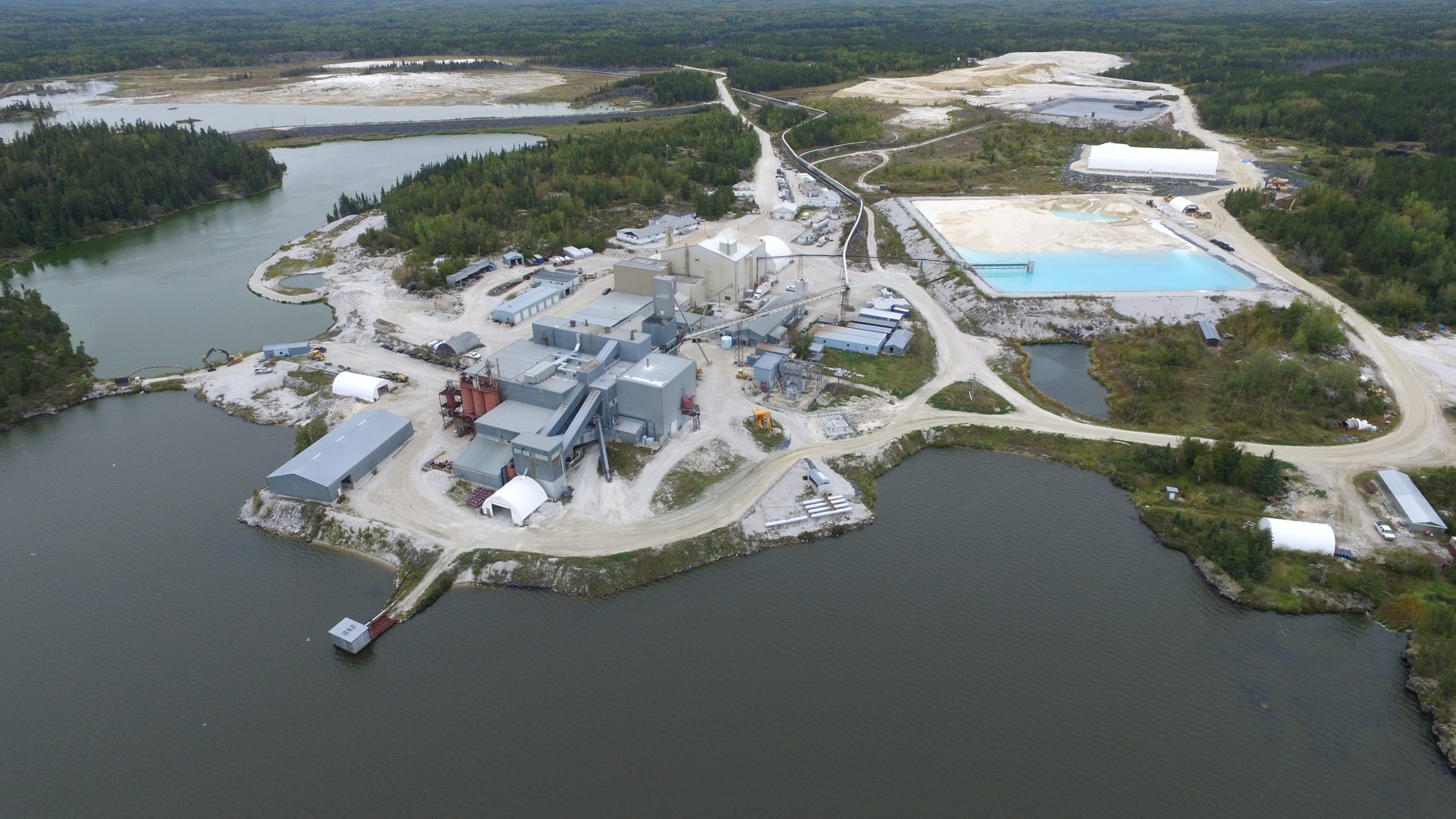
The mine is owned by a Chinese company called Sinomine Resources Group. They have suggested they might drain the lake to extract more cesium! They aren’t winning any friends with that idea.
 Mark C. O'Connor
Enjoyed this article. Would love to read about lithium mining.
LikeLiked by 1 person