I was a 70s kid so the version of Elvis that I remember is the pudgy guy in the white suit with the big collar and lots of rhinestones. It was like a comic book version of a performer—you couldn’t take him seriously.
Elvis, in reality, was a brilliant talent and a true original. Sadly, he’s the poster boy for how fame destroys a person. Getting rich and famous is every American’s dream. For Elvis it was a nightmare.
When you go back and listen to the early Elvis or watch his movies you see what the phenomenon was all about. He could sing anything. Blues and gospel were as natural to him as hillbilly and folk. He could rock up-tempo numbers, croon love ballads, re-interpret standards, you-name-it. You can see the joy he took in his signing and music-making. It’s sad to think what made him great was also what destroyed him.
And then there’s the dancing. The guy had moves. The raw sexuality of his wriggling and twisting shocked audiences in middle America. Juke joints and barrelhouses had, for decades, featured performers who did much more explicit things, but those were on the fringes of polite society. Elvis was on TV in the goddamn heartland!
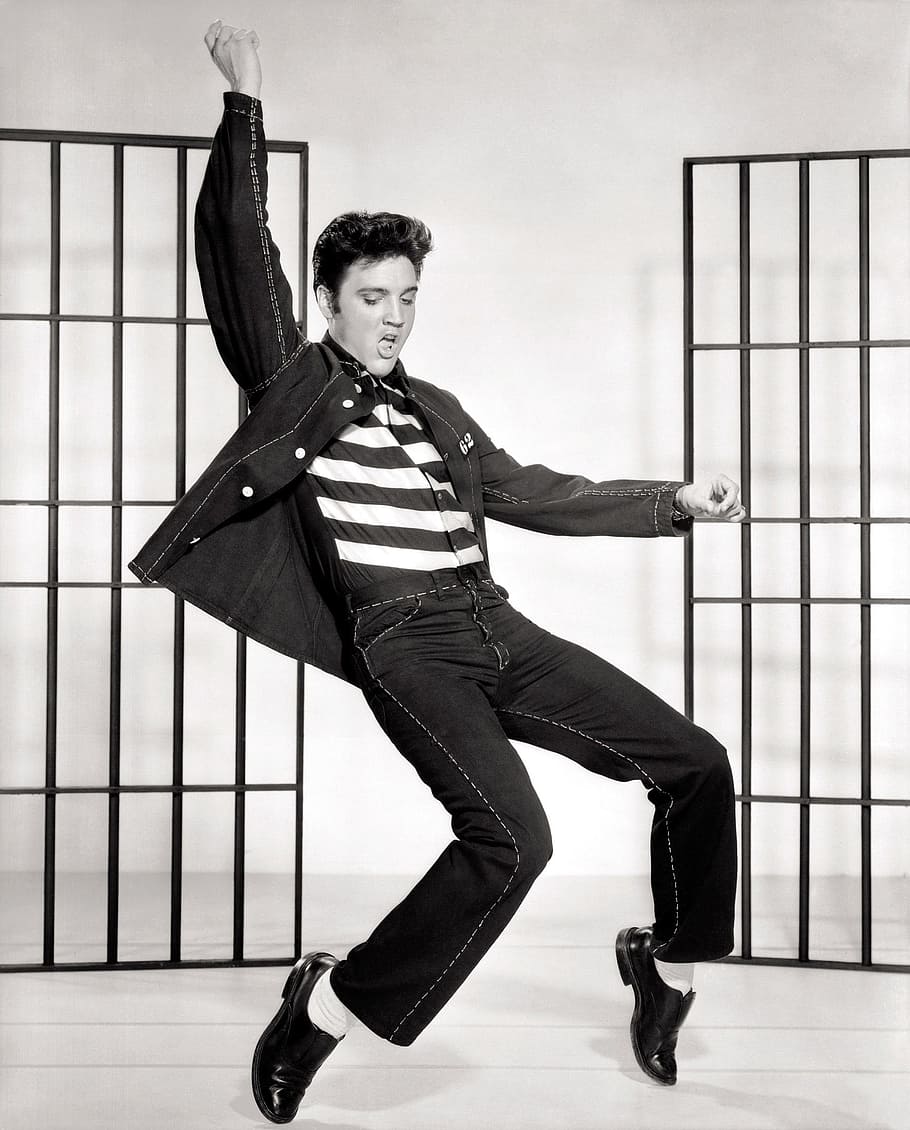
Eventually, like all outliers and oddballs, Elvis became mainstream. His dancing was no longer subversive, but cool and clever.
I’ve have no rhythm, can’t sing for shit, and am about as musical as hailstones on my car’s roof. But I love to dance. I think dancing is the most wonderful thing in the world and that everyone should dance as often as possible.
You know what? You don’t even need music. Just dance to the music in your head! That’s what Elvis did. He just moved to the feeling inside of him. It was so natural and pure and singular. The guy was already dancing in his head before anyone struck a note. The song just opened the floodgate and let it all flow.
One dangerous assumption we make about artists is that they don’t think about what they do. That it’s all intuitive and requires little or no intellectual effort. Well, that’s nonsense. Elvis could create dance moves on the spot, but there’s no doubt he worked on those moves and improved his technique. Like all performers he was self-conscious—he knew what he looked like and he honed that look. He sharpened the edges and smoothed the rough spots. Singers train their voices. They practice. They experiment. So do dancers, of course. That’s how an artist creates a signature style. It takes a lot of thought and effort.
But we aren’t professionals. We are just folks trying to get by. So we don’t have to worry about what we look like. We don’t have to rehearse and tighten up our act. We can just “let it all hang out.”
And that brings me back to EUMENTICS™, my revolutionary new system for mental health and well-being. There are only a handful of lessons in EUMENTICS™, and you don’t even have to remember them because I already wrote them down.
This is our penultimate EUMENTICS™ lesson. Only one more after this!
Lesson seven: dance to the music in your head.
 Mark C. O'Connor
[…] Lesson Eight: divest thyself of social media. […]
LikeLike