I remember when I was a boy my parents would treat a minor wound with tincture of iodine.

The stuff is still around. I also remember the mercury-based treatments like “mercurochrome merthiolate” and such. Yikes! Eventually Bactine and Neosporin and whatnot sent all the old antiseptics to the fringes.
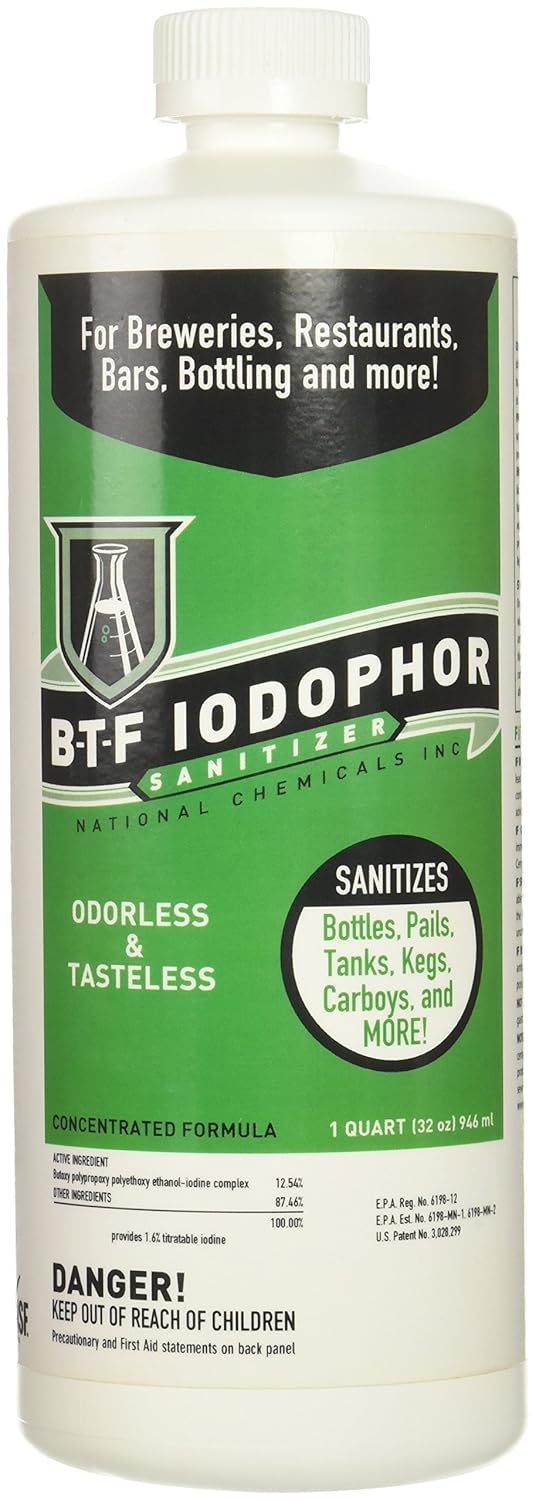
Iodine and iodine compounds are found in many disinfectants. One of the forms is called iodophor and it’s used in restaurants, kitchens, etc.
When I was a chemistry teacher I would get a wee chunk of solid iodine which looks a little like shiny charcoal. Heated in a flask it liquefies readily (273 ºF) and boils off (363 ºF) soon after. The liquid and vapor are both a striking violet color. I should note that I would do this under a fume hood! You don’t go around filling your classroom with noxious gas.
We also did an experiment where we mixed potassium iodide (KI) solution with lead nitrate (Pb(NO3)2) solution. The lead iodide (PbI2) product is a spectacular yellow precipitate. After we filtered out the solid and let it dry overnight we would heat a small portion in a test tube. The beautiful violet iodine gas would evolve and a shiny blob of lead would be left behind.
It was fun having my own lab and playing with chemicals and science gizmos! But that was another life.
Iodine is produced from brines. It is a rare element compared to its halogen neighbors. Iodine is an essential nutrient as it is necessary for the synthesis of thyroid hormones. Nutritional deficiency in iodine is a serious health issue. Table salt is iodized (minute amounts of iodine salts are added) in many countries (including the USA) in order to address that.
 Mark C. O'Connor
Enjoyed your article on iodine. I remember this being a staple in our medicine cabinet when I was a kid. I think we always had mercurochrome?
Lorraine
LikeLike