The global market for iron (in the form of refined iron oxide ore) is about 2.6 billion metric tons.
Iron is pretty important: we need it to make steel, one of the literal “pillars” of our modern world.
It turns out that scandium is important, too. The scale is different, though. A LOT different:
The US Geological Survey estimated global consumption of scandium oxide in 2025 at sixty metric tons, representing almost a 50 percent increase from the year earlier. Even after that jump, scandium remains an extraordinarily small market by global commodity standards. When added to aluminum in concentrations of less than one percent, scandium significantly improves strength, corrosion resistance, and weldability without imposing major weight penalties. For aerospace manufacturers that work to increased range, payload, fuel efficiency, and structural endurance to maximum degrees, those gains are essential.
Seems our fancy new F-35 fighters are built using these alloys.
Sixty tonnes (one metric ton or tonne is 1000 kg) of scandium is 60,000 kg. With a density of 3860 kg/m3 such stuff would occupy about 15.5 cubic meters. That’s a cube with about eight foot sides. All the world’s supply could be contained in one warehouse!
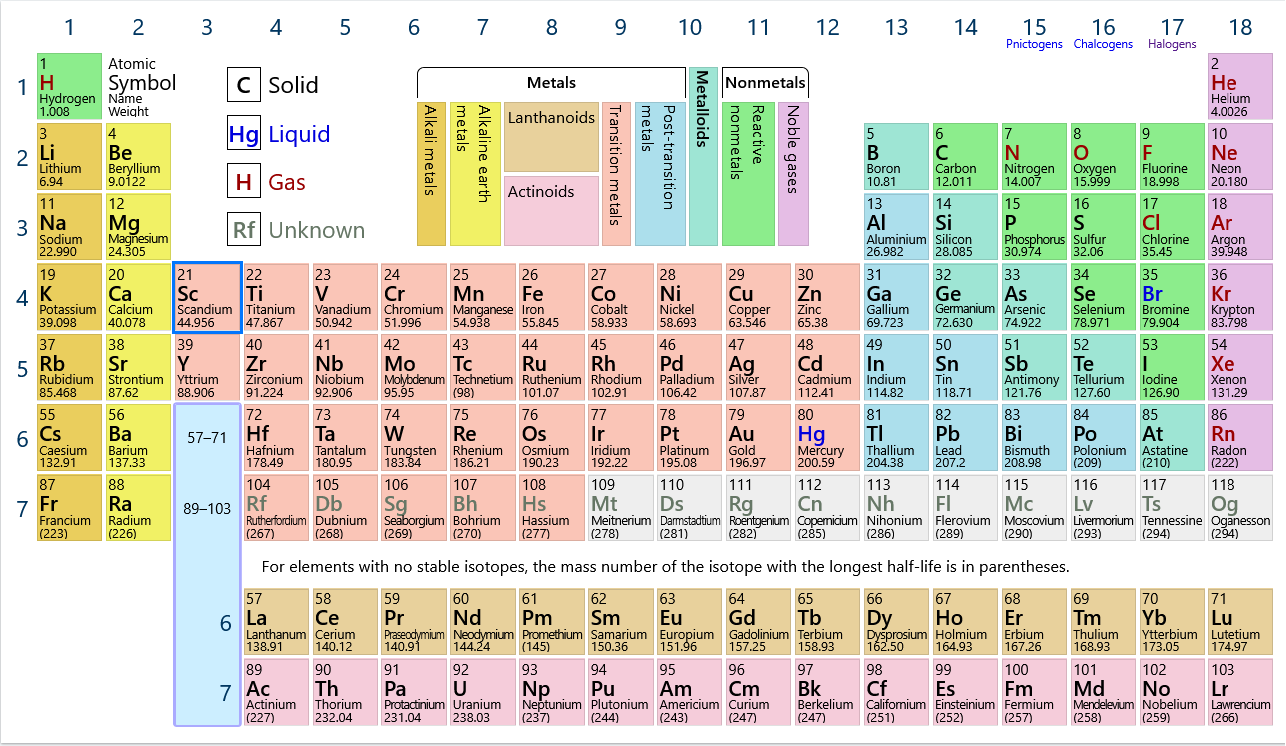
Scandium and yttrium (#39) are usually grouped with the f-block lanthanoids (rare earths, #57-71) despite being in the main group of d-block transition metals: