Big science, small results

In January of 1986 the Space Shuttle Challenger exploded seconds after liftoff, destroying the spacecraft and killing the crew.  Lots of finger-pointing followed but eventually the infamous O-rings became the focus of the investigation. Panel member Richard Feynman famously dropped the O-ring material into his ice water during the hearings. And he got a clear and unambiguous result—the goddamn stuff hardened!

Feynman was a “let’s see what happens” kind of guy, and that was one of those moments where a simple experiment could cut through the B.S.

But big science isn’t so simple. Things like clinical trials involve not only an awful lot of money and time but generate mountains of data. All that information is hard to handle. It requires quite a bit of analysis before any real conclusions can be arrived at, and even then the results can be interpreted in multiple ways.

This is frustrating for regular folks. We want clear and unambiguous evidence that acai berries will protect us from cancer or that meditation will lower our blood pressure.  Big science is particularly hard on journalists who want to write about “breakthroughs” and other dramatic things. Big science isn’t very dramatic. It is slow and incremental. Conclusions are couched in vague or conditional language (“the evidence seems to suggest . . .”). Scientists are like everyone else, they want fame, fortune, and glory, but as a general rule they are circumspect about grand, far-reaching statements.

Part of the problem is that scientists are not statisticians. Most experiments require significant statistical analysis. The data have to be examined and processed, and these mathematical skills are often outside the realm of the scientists’ expertise.

Designing experiments is hard. A scientist has to have the free-thinking, synthetic brain of the artist to explore all the necessary questions. And he or she has to have the constraint-driven, analytical mind of the engineer in order to turn those questions into proper experiments. You have to be imaginative and rigorous at the same time.

A lot of clinical trials use something called NHST—null hypothesis significance testing. Here’s how it goes: you create a hypothesis, something like “drug XYZ will shrink bladder tumors.” But you don’t really test that, at least not at first. You create the null hypothesis, which is just saying that your experimental hypothesis is invalid. “Drug XYZ will have no effect on bladder tumors.” Then you run your test.

This seems sort of backwards but it is just a way of cross-checking. You don’t want to get ahead of yourself. If the null hypothesis is not supported, that is, it is refuted by the results, you can go forward. It’s like the train conductor checking your ticket and saying it is OK and that you can continue your journey.

The problem is that you knew this already. You knew the null hypothesis was invalid. After all, you’d played around with drug XYZ beforehand and knew it had promise for shrinking tumors. That’s why you designed the trial! You aren’t going to waste valuable lab time on a fruitless endeavor.

The problem comes when you get the result you expected. That is, the null hypothesis is not supported. Now you have to see if the data back up the experimental hypothesis. And this is where you need the math geeks. There is a lot of noise out there. It is not always easy to get the signal, to pull it out of the background.

Researchers don’t go into these investigations blind. They have mathematical models of the phenomena they study and they use these to make projections. They know, in advance, what the data ought to look like. They make predictions with the models. And they test the “significance” of the data, that is, they see if the numbers they got are close to what they predicted. If they get the “statistical significance” they hoped for then they can conclude their experimental hypothesis is valid.

Maybe. Sometimes there are flaws in the experimental design. There are variables that were not accounted for. There are alternative explanations for the results. And it is easy to fall into the logical trap of “the null hypothesis is false so that must mean my hypothesis is true.” Which of course is nonsense as there could be many useful competing hypotheses.

So they learn two things from all this. One, they confirm what they knew from before. Two, that they have to run another experiment to see if the results were just noise or not!

That’s not very exciting. Demonstrating an unequivocal outcome in front of a bunch of bureaucrats and politicians is much cooler.

Big science does not live up to its name. Its results are usually pretty damn small!

It’s a secret!

Here’s a story that the US is engaged in “secret talks” with one of Nicolas Maduro’s cronies. The guy’s name is Diosdado Cabello and it is reported that he has had preliminary talks via intermediaries with a Trump Administration official. Here’s my favorite line from the article (italics mine):

It’s not clear if Maduro knows of and/or has endorsed such talks between Cabello and a contact linked to the U.S. administration, the AP says.

Hmm. I found out about these “secret” talks on the internet! All I was doing was perusing my normal news sites (this time oilprice.com).

Gee, how big of a secret can these things be? I mean, they are on the internet! Nothing is a secret on the internet! Doesn’t Maduro have guys who can read? Can’t they find out about the “secret talks” the same way I did?

I can only conclude that this is really bad journalism. If you are reporting it, it is hardly a secret. Or it was never a secret at all! The writer is calling them “secret talks” because that’s more dramatic than just “talks.” Either way, it’s hella stupid.

The Caryatids

The_Caryatids_Bruce_Sterling

I don’t know how I missed this ten-year old Bruce Sterling novel as I am usually tuned in to his latest stuff. It turns out to be the best book I’ve read in a while! Sterling has one of those overly-fertile minds and stuff spills out of him so fast it can hardly be contained on the page. Sometimes his novels are so energetic and enthusiastic he forgets to finish them and they peter out disappointingly. The ride is usually worth it though, even if the structure of the book is sometimes a little lacking.

In The Caryatids he solved his plot problem with an ‘afterword’ and an ‘epilogue’ which tie together the different threads of the narrative rather neatly and give the story a satisfying conclusion.

The story, as usual, is set in a dystopian near-future and involves clones, orbital colonies, surveillance technology, and a host of other typically Sterlingesque notions. My favorite thing was his description of a state-of-the-art LA freeway system that is robust enough to withstand major earthquakes. It’s not just a bunch of roads but an intelligent, adaptive network. Residents are encouraged to head for the freeways in a natural disaster as they will be the safest spots!

Sterling’s world is dominated by corporations and other private entities as most nation-states have collapsed from the climate crisis. What’s interesting about The Caryatids is its hopeful, encouraging tone. Despite all the disasters people demonstrate remarkable resiliency and continue to be creative in the face of new problems.

The best SF isn’t so much about the future as it is about the times right now. Sterling is tuned in to contemporary trends and twists them around and amplifies them so that we get a better look at them. He’s always stimulating and illuminating and The Caryatids has some of his best stuff and reminded me of his early Shaper/Mechanist works like The Schismatrix.

By the way “caryatids” are female figures in architecture that serve as pillars. They are Greek in origin.

caryatid


Chandrayaan

rocket

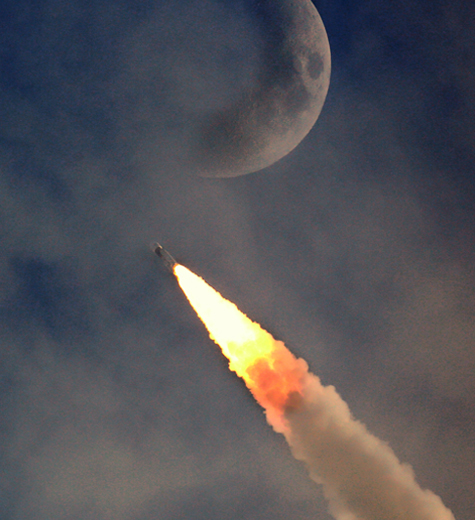
It means moon-craft in Sanskrit. India just launched Chandrayaan2 into space. Fifty years after America’s Apollo triumph the world’s second-most populous country is on a mission to the moon. Their plan is to put a lander—Vikram—near the lunar south pole.

There are no astronauts. This is the smart way to explore space. Humans need too much air, water, and food. And they have to deal with hygiene, waste disposal, and safety while performing high-level tasks in zero-g. Astronauts are a lot more dramatic. Those missions make for better stories, but they come with considerable risk. The US Shuttle program lost two entire crews, not to mention the orbiters themselves, in the Challenger and Columbia disasters. One was during a launch, the other during re-entry.

No, humans in space is mostly for propaganda value. The Cold War gave the US a powerful incentive to flash our astronautical muscles. That’s not to say that one day humans won’t be living in space. I do think the sci-fi trope of orbital colonies will come true. Getting a rocket up to a low-earth orbit is a well-established, robust technology. Payload is the limiting factor. The Saturn V that Apollo needed is still the biggest launcher ever. All that survival gear is heavy, and the moon landing was the ultimate wilderness backpacking adventure.

Orbital habitats would require regular cargo runs to sustain them but could mostly operate on solar panels. The ISS proved that. You’d have to be rich, though. It’s no coincidence that space travel is now the purview of billionaires. Richard Branson, Jeff Bezos, and Elon Musk can afford to have expensive hobbies. It’s hard to tell whether the spaceflight companies these guys own make money, so I’m not sure whether they are businesses or not!

I’m a big fan of spaceflight so I have no beef with these goofy celebrities chasing their dreams. Hey, that’s capitalism. But I think publicly-funded space exploration should rely primarily on computers and robots. It’s just too damn expensive. Hell, it’s expensive—in fuel as well as funds—just to maintain earth-orbiting satellites, and we are completely dependent on those.

India already has a human spaceflight program going, it is called Gaganyaan (sky-vehicle) and the plan is to have three people in orbit by December 2021.

I wish ’em luck.

Hellfire!

extensions

The brewery gets an upgrade: a new stainless steel propane-powered burner from Blichmann Engineering. I always covet new things for my hobby but this time I really needed an upgrade. My old Camp Chef served me well for many years but was on its last legs.

Speaking of legs, the burner pictured sits on the floor and you have to purchase separately the leg extensions. So I did. They shipped the burner in one box and the extensions in another, but only two legs arrived. You need four. Fortunately the good folks at William’s Brewing took care of it, like they always do, and I got my package of four legs today. I now have two extra leg extensions and four little legs! I’m sure I’ll find some use for them—they are stainless steel, after all.

My first impressions of Hellfire are favorable. It looks great. Bright and shiny and sleek. Manly, too. Very manly. Pumps out 140,000 BTUs! I doubt I’ll ever set it to full blast, probably never get past half-power, but I dig it. And the name! Who can resist HELLFIRE?

I suppose this will lead me down some dark path where I brew satanic beer that comes with its own Cannibal Corpse soundtrack. Blood will be the signature ingredient and virgins will have to be sacrificed.

Or, I can just continue to make the usual stuff but brag about my fabulous new burner.

Say it with me now:

“HELL-FIRE!”

“HELL-FIRE!”

“YEAAAHHHH!”

Bio-technology

One of the objections to creating genetically engineered organisms is that material from one species gets incorporated into another, entirely different species. This is seen, somehow, as unnatural. But humans aren’t the only ones that do this:

“Horizontal gene transfer, the movement of genetic material from one organism into the genome of another species, is very common in microbes and is a major way that bacteria can acquire antibiotic resistance,” said Claude dePamphilis, professor of biology at Penn State and senior author of the study. “We don’t see many examples of horizontal gene transfer in complex organisms like plants, and when we do see it, the transferred genetic material isn’t generally used. In this study, we present the most dramatic case known of functional horizontal gene transfer ever found in complex organisms.”

A study from Penn State and Virginia Tech shows the parasitic plant dodder has “stolen” over 100 genes from its host plants, and moreover, many of the foreign genes are functional. The new genes improve dodder’s ability to extract nutrients from host plants. They also send genetic material back to those hosts that cripple their defenses.

Another study, this one from Rutgers, shows that red algae that live in hot springs steal genes from bacteria in order to cope with their extreme environment.

“The role of stolen genes in eukaryotes, which include most living things such as , has been hotly debated and many think it is unimportant and plays little to no role in their biology,” said co-author Debashish Bhattacharya, a Distinguished Professor in the Department of Biochemistry and Microbiology at Rutgers University-New Brunswick. “Our robust genome data provide the first major evidence that this is a false narrative and that adaptation to a challenging environment can be directly facilitated by stolen genes.”

So it is perfectly “natural” for genetic material in one organism to wind up in another organism!

That’s some real bio-technology, man. Nature is way ahead of us.

“Eat your vegetables.”

various-kind-vegetables

Take a look at all the supplements available to the American consumer.

Some of them are recognizable: calcium, flax oil, glucosamine, omega-3, selenium, turmeric, vitamin C, that sort of thing.

Others are bewildering: pycnogenol, rhodiola, indole-3-carbinol, quercetin, sytrinol, and the like. You need a background in both botany and biochemistry to make sense of it.

That site reports over 900 supplements!

Most of us don’t have the time or the wherewithal to understand a lot of what these things are and what they might do. Fortunately we have the internet, and you can read dozens of articles about what to eat and what supplements to take! And we have dozens of sites offering free medical advice! It’s a consumer’s dream!

Not.

Recently Johns Hopkins researchers did a big study which included studies of other studies and came to a simple conclusion: skip the supplements.

“The panacea or magic bullet that people keep searching for in dietary supplements isn’t there,” says senior author of the study Erin D. Michos, M.D., M.H.S., associate director of preventive cardiology at the Ciccarone Center for the Prevention of Cardiovascular Disease and associate professor of medicine at the Johns Hopkins University School of Medicine. “People should focus on getting their nutrients from a heart-healthy diet, because the data increasingly show that the majority of healthy adults don’t need to take supplements.”

Hmm. I don’t think the supplements industry—valued at about $30 billion—is going to like that.

Here’s more:

“Our analysis carries a simple message that although there may be some evidence that a few interventions have an impact on death and cardiovascular health, the vast majority of multivitamins, minerals and different types of diets had no measurable effect on survival or cardiovascular disease risk reduction,” says lead author Safi U. Khan, M.D., an assistant professor of Medicine at West Virginia University.

When life gets confusing, think about all the things Mom told you to do. Or not to do. Like don’t drink or smoke. Watch the sweets and the fried foods. Be nice. Play fair. Wash your hands. And finally, it seems, the one thing we never wanted to hear when we were kids but turns out to be the one right thing:

“Eat your vegetables.”

Fifty years ago

I was just a kid—9-1/2 years old—when Apollo 11 went to the moon. I remember watching the landing with my family (and a billion other people) that summer and also following closely all the Apollo missions before and after. I was quite the space travel buff and I’m sure that era had a lot to do with my lifelong love of science.

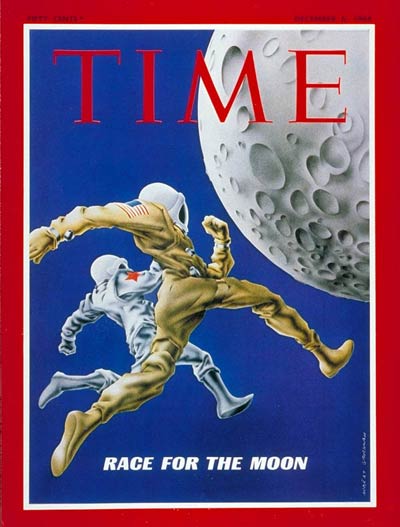
What I remember was that they weren’t just moon flights. It was a Space Race and we had to beat the Soviets. It was the Cold War and astronauts weren’t just rocket jockeys they were Cold Warriors. Here’s a 1968 TIME magazine cover that captures the feeling:

space race

Odd how the Russian cosmonaut seems to be ahead and the American astronaut is wearing a goofy gold-colored space suit. But we’ll allow for artistic license.

The USSR, it turned out, had no real lunar program and were not a threat to win the so-called race. But we didn’t know that at the time. The war in Vietnam was still in full swing with over half a million US troops still in country. Civil rights and other domestic political issues, not to mention opposition to the war, dominated the headlines. It is amazing that NASA continued to get the funding and support it needed to pull off the moon landings.

NASA probably had to frame the whole thing as a projection of American Power in order to keep it moving forward. People lose interest in technology for its own sake, it has to have some other benefit. We got sold on the “beat the Russians” angle and that kept the money flowing. If you remember the Olympics from those years, beating the Soviets head-to-head and in the medal count was the dominant narrative.

Regardless, it was a hell of a thing for men to walk on the moon. The outpouring of joy from across the globe when the mission was a success was an amazing thing. Sometimes a thing starts out one way and ends as another.

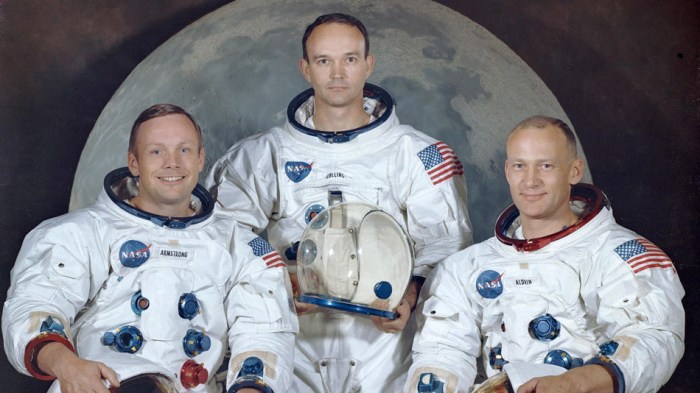
Neil died in 2012. Mike and Buzz are in their late 80s. What is remarkable to me is what great celebrities they all made. Despite their accomplishments they remained mostly the same dignified, serious, and humble men they had been before their moon flight made them heroes.

apollo11-crew

A billion people

There are nearly 40 million people in California. They are part of the 330 million that make up the US of A. In all the Americas—North, Central, and South—there are about one billion people.

That’s just to give you some perspective on one billion. It’s a big number and it’s hard to grasp. California’s 40 million represent only four percent of the one billion in the Western Hemisphere. (Greenland is not listed as part of the Americas, but it is in the West, however its population—55,000—is insignificant.)

So I’m alarmed when I see this:

“To be honest, my goal is to reach at least a billion people for personal and social transformation,”

The emphasis is mine. And it disturbs me when people start a sentence with “to be honest.” Does that mean they’ve been dishonest up to that point?

Here’s the rest:

said Chopra, “so we can collectively move in the direction of a more peaceful, just, sustainable, healthier and joyful world.”

Good lord. It’s that guy, Deepak. At least he’s honest:

Deepak Chopra believes in the power of podcasting.

“As you probably know, I’ve written over 85 books. But a lot of people don’t read books, they listen to podcasts. It’s much more convenient for them, they can put it on while they’re driving or on the train,” said Chopra, the renowned doctor and Chopra Foundation founder.

85 books? Really? That’s not enough? God Bless American Capitalism! Chopra has written, by his own admission, 85 books, and has over three million Twitter followers, two million Facebook followers, and one million Instagram followers. I don’t know what “personal and social transformation” is, but it sounds like the usual crap. I’m a child of the 70s and we covered that pretty well back then, I thought. Then we went back to living, which is sufficiently challenging and “transform-ative” all on its own.

You know who else is shooting for a billion? Apple, that’s who. Their installed iPhone user base has just topped 900 million. Since the smartphone can do all of the above: podcasts, Twitter, Facebook, and Instagram; it would seem Deepak and Tim Cook ought to get together. That’s some real business synergy right there.

Apple makes technology. They market it in such a way that you feel privileged to join their iClub. And we hear all this endless blah-blah about how technology “transforms lives.” Deepak goes in the other direction. He starts with “transformation” and markets that. The technology is just the crack pipe, not the crack itself. Books were the first medium, “but a lot of people don’t read books.” And like all good salesmen, Chopra makes you feel special for joining his growing fan base.

An iPhone is not much different than any other smartphone. A MacBook is not much different than any other laptop. People who have those things aren’t any happier or more fulfilled than people who don’t. And one guru sounds a hell of a lot like every other guru.

Imagine if a billion people figure that out!

Pluribus

poker

No-Limit Texas Hold’em is the latest machine victim. A team at Carnegie-Mellon created an artificial intelligence called Pluribus that defeated top human players in games involving thousands of hands. We’ve already seen the downfall of the chess grandmasters, then the kings of Go, and now it’s the poker whizzes. I really liked what one of the players said afterwards:

Michael “Gags” Gagliano, who has earned nearly $2 million in career earnings, also competed against Pluribus.

“It was incredibly fascinating getting to play against the poker bot and seeing some of the strategies it chose” Gagliano said. “There were several plays that humans simply are not making at all, especially relating to its bet sizing. Bots/AI are an important part in the evolution of poker, and it was amazing to have first-hand experience in this large step toward the future.”

This is the way to look at these things. It is not surprising that AIs can brute force their way through board games. All the information and all the possibilities are available to see and analyze. Poker adds the problem of incomplete information (you don’t know what the other guy has) to the psychological aspects (is he bluffing?) which should be harder for a machine to deal with.

Apparently not.

Noam Brown, one of the researchers, had this to say:

“This is one of the interesting things about this AI, it’s not adapting to its opponent,” Brown said. “It has its strategy. It’s fixed, it doesn’t change what it’s playing based on how the humans are playing. This whole idea that there could be such a strategy in the game, I found really fascinating and that’s what really drew me to studying it more. It was kind of mystical, in a sense, there’s this strategy that we know exists, but we can’t find it.”

I’m not afraid of computers replacing humans because there are plenty of places where computers will do a better job. Autonomous driving will be a marvelous thing, for example. Air and space craft are mostly too complex to fly and they rely on machines to do the heavy work. Traffic control, whether it is trucks, ships, or satellites, will require AI.

There are a lot of complex processes in our lives. We’ll need help. AIs can find novel, original strategies that may be out of reach for humans. We know we can’t solve some problems, so we invented stuff that would solve them for us.

I can live with that.