Metropolitan Midwest Adventures

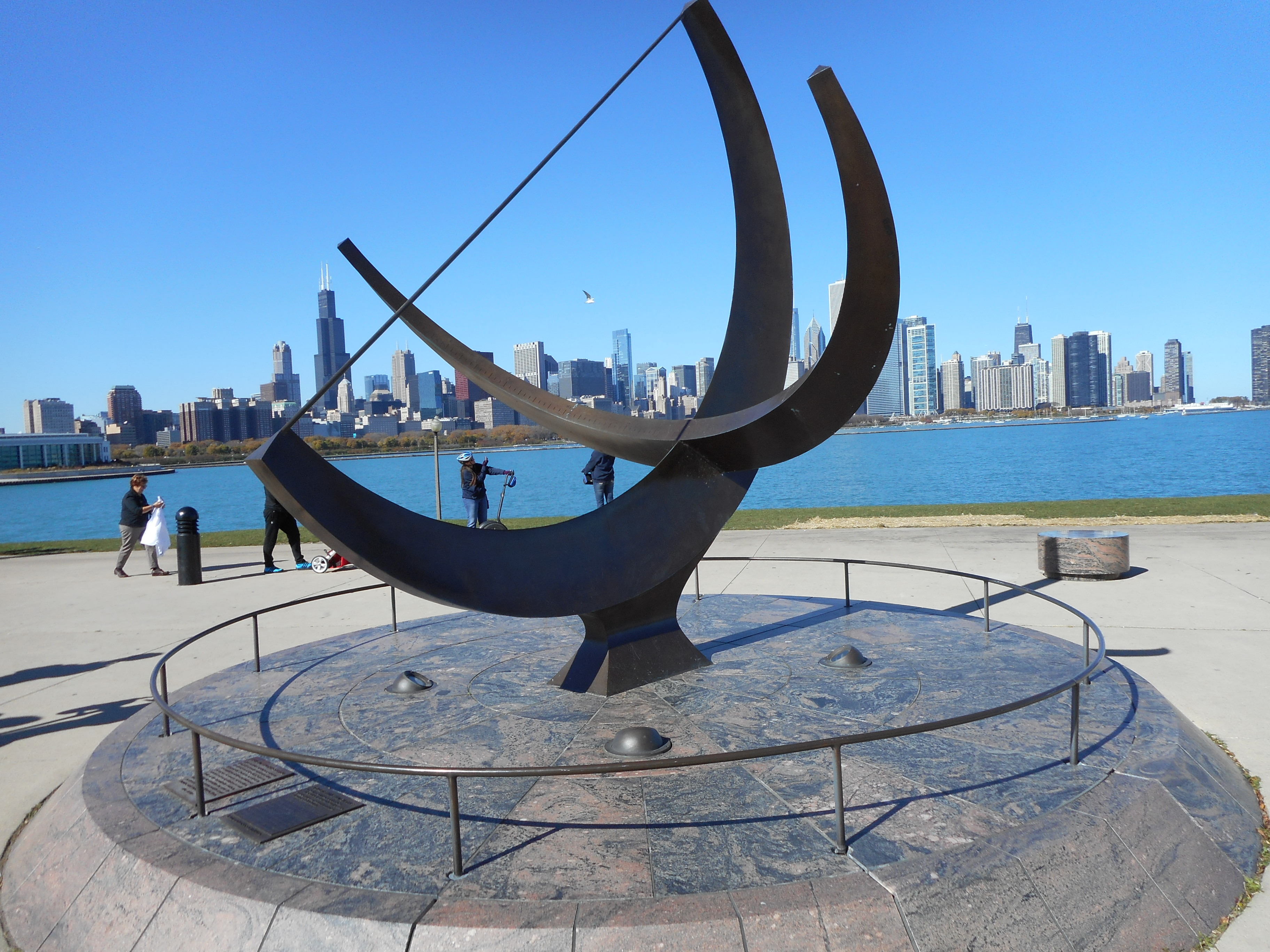
You can tell a great city by how easy it is to get a taxi. We spent yesterday morning walking around Grant Park and along the shore of Lake Michigan. I’d say we hoofed an easy five miles. It was cool and breezy at the start but soon warmed up and we had to shed our jackets. We’d partied hardy the night before at Kitty O’Shea’s watching the Giants kick ass so we had a simple breakfast of coffee and pastry at Peet’s (where else?) just around the corner. There was lots of public art in the park and I’ve got a few pics for you:

Sundial Chicago

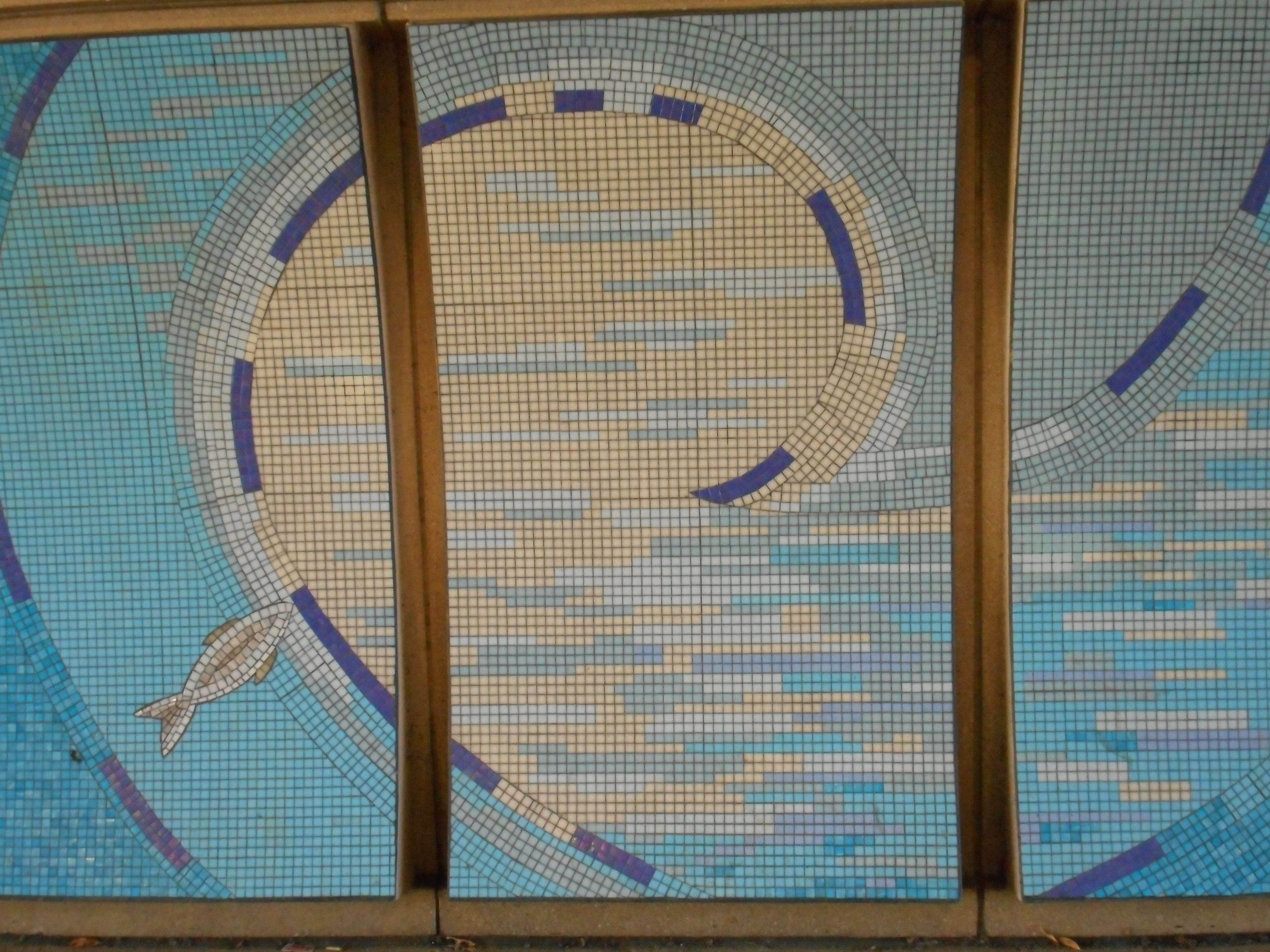
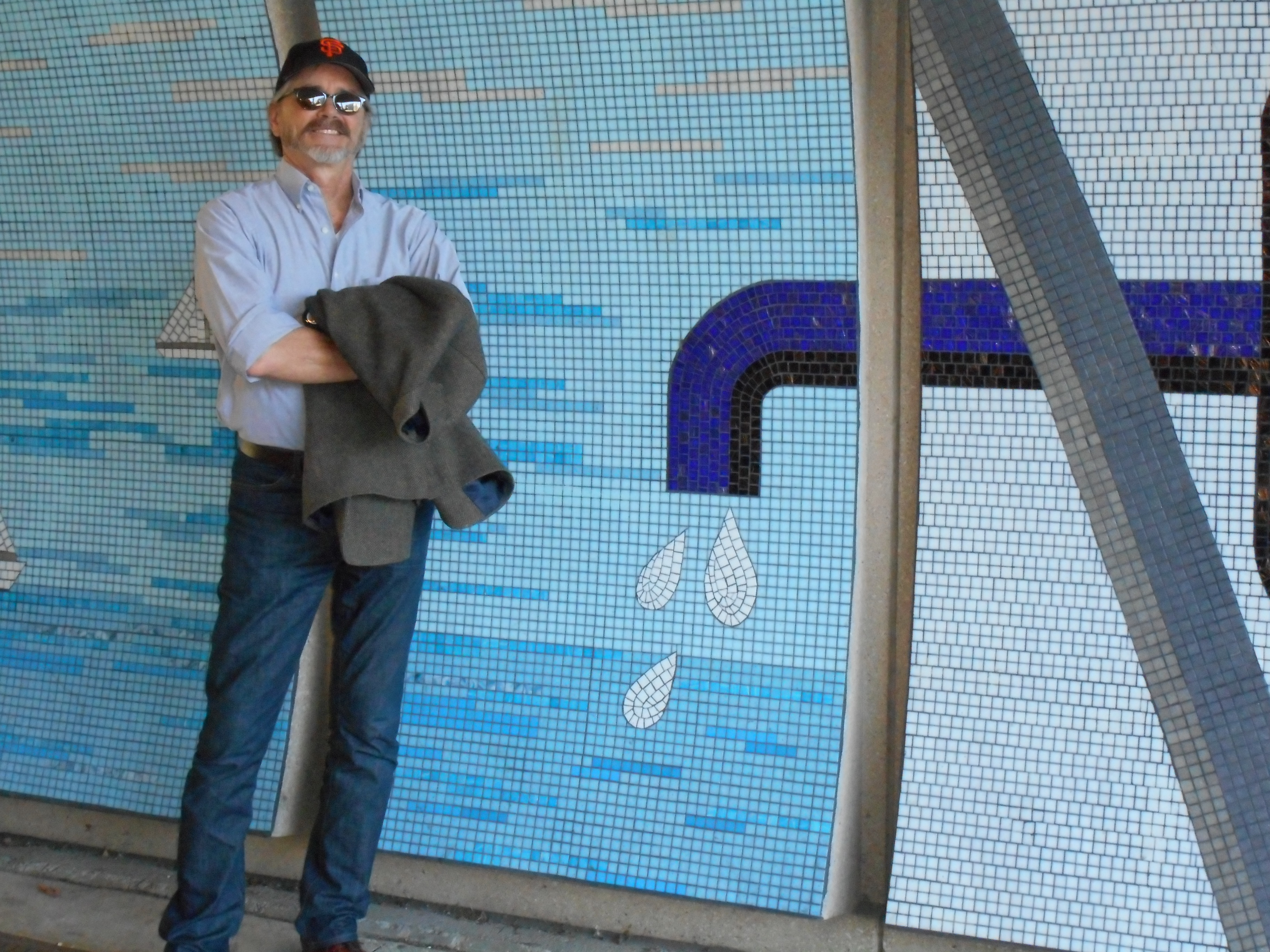
The sundial was really cool and they had the equation of time on it to adjust for the seasons. Sure enough, it was right on if you subtracted for Daylight Savings. This was by the planetarium. The pedestrian tunnel under Michigan Avenue was covered with tile mosaics all with water themes:

Mark Water Art Chicago

My dad was a plumber and pipefitter so I liked those panels. One last one:

Fish Mosaic

We were thirsty and starving after our sojourn so we decided to find a local brewpub. Surprised? We hiked another 2-1/2 miles to the Haymarket District (we are in an area called The Loop) and got settled in at the Haymarket Brewery. We gorged ourselves on beer, sausages, steamed clams, and pizza.When I asked the hostess if she could call us a cab she said “just step outside you’ll find one.” Sure enough,we crossed the street and I hardly raised my right hand when we were safely tucked in and speeding our way back. Other than New York City, I’ve never seen so may taxicabs on the streets. Even London doesn’t compare. The Haymarket area is famous for its labor battles and Chicago is still a strong union town. We take for granted things like safe working conditions, the 40-hour week, health benefits, and pensions, but a lot of blood was shed for those things to come into being. We had just enough energy left to watch Madison Bumgarner shut out the Royals on our hotel room TV!

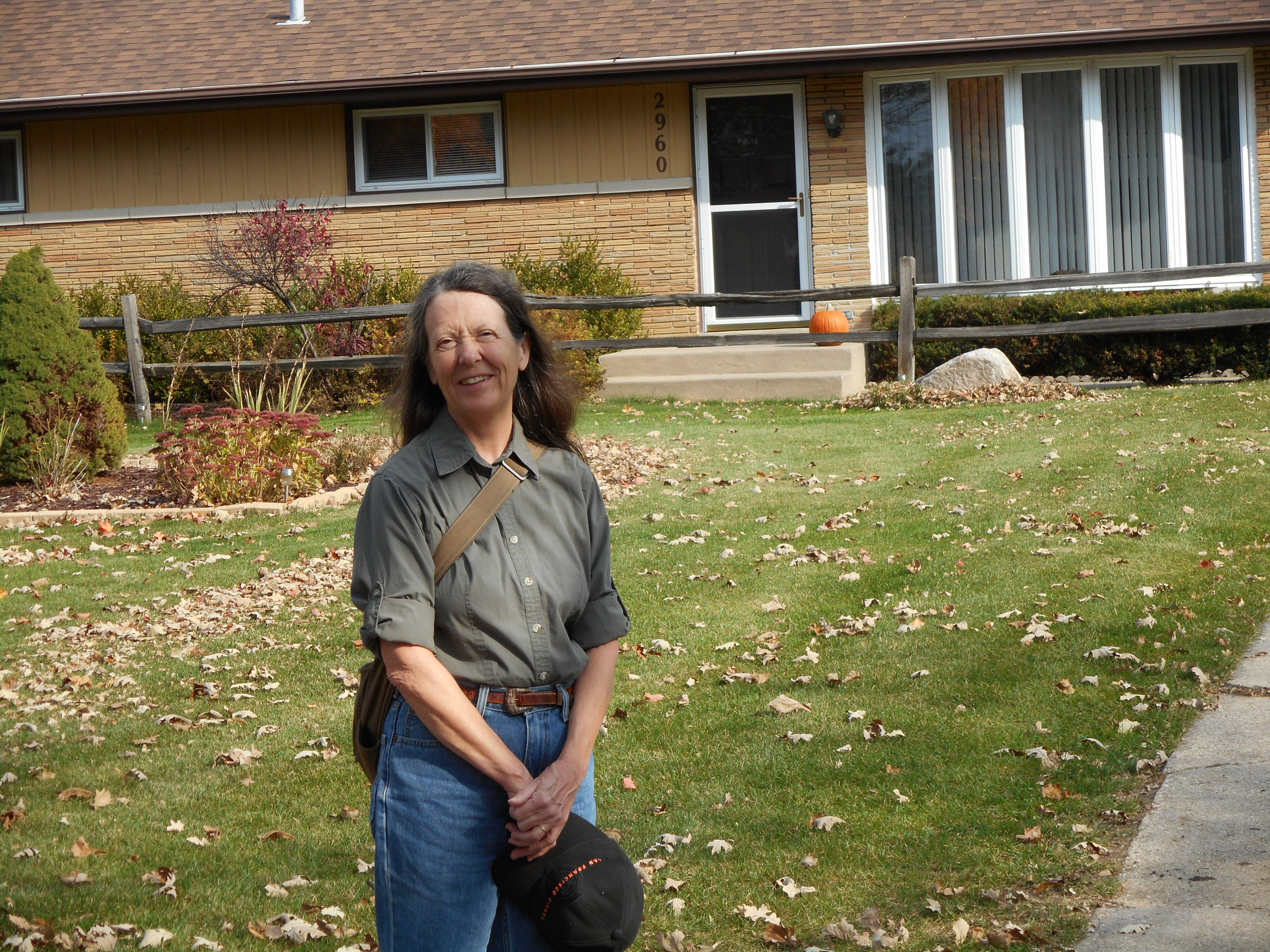
Today we rented a car and drove about 100 miles north to Brookfield, Wisconsin where Sue spent part of her childhood. The family home is still there but it’s on a big, busy street now. We had a bit of a hellish time fighting the big city traffic on the way home and at one point I had to play chicken with a cabbie for a left-hand turn. It’s vacation man, I don’t need that stress! We are heading out to Buddy Guy’s for dinner and live music as soon as I post this. Here’s Suzy at 2960 Lilly Road:

Suzy at 2960

On the Southwest Chief to Chicago

N.B. I was off the grid for much of the last few days as there was no wi-fi on the train and long stretches where my cell phone had no coverage. I apologize for the lengthy post.
Ready to Board

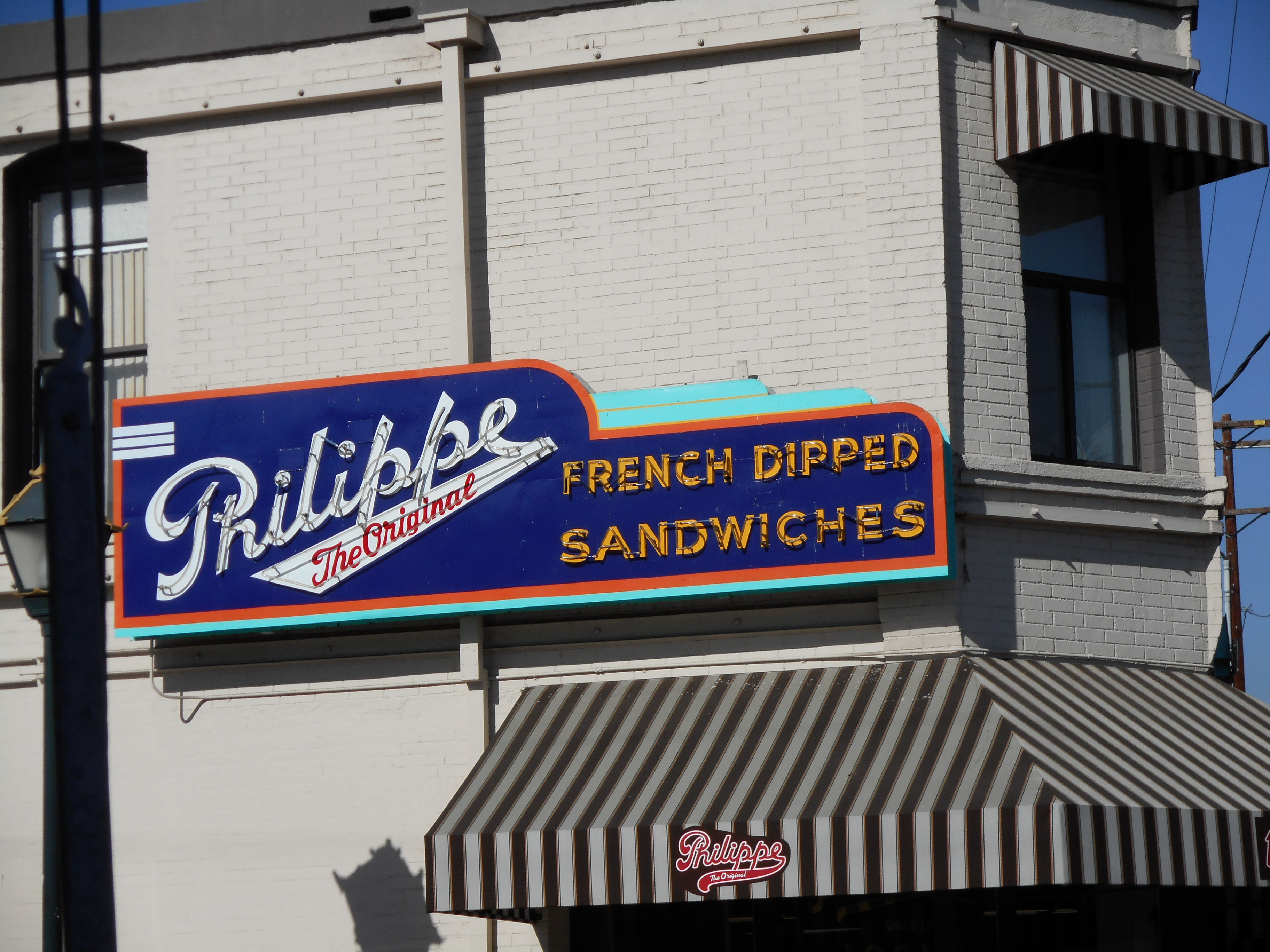
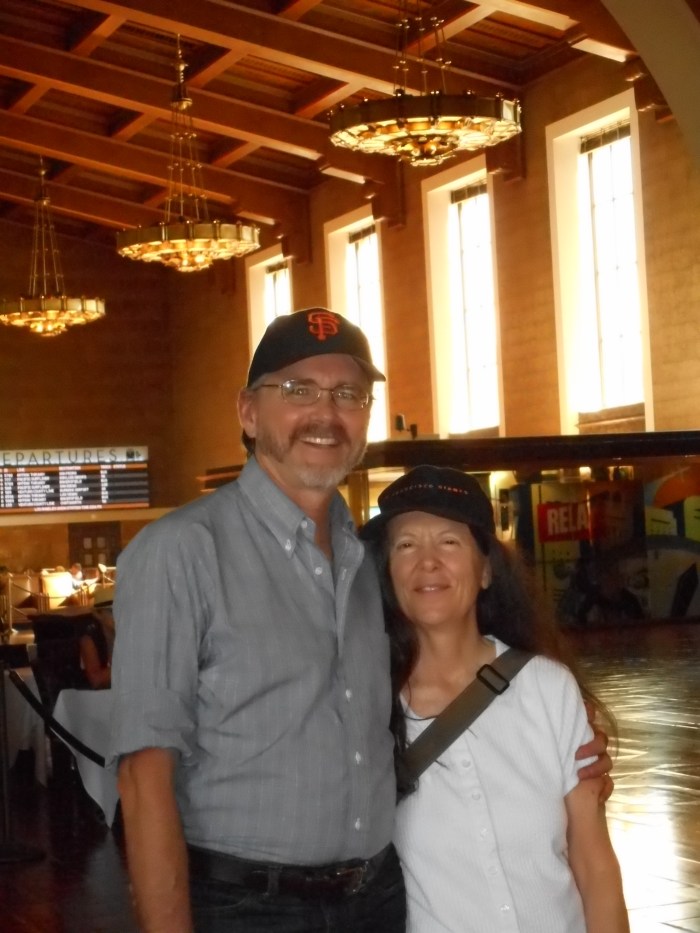
We spent the afternoon of Thursday the 23d of October in downtown Los Angeles with our good pal Betty Rosen Ziff. The site of the original El Pueblo de Nuestra Señora la Reina de los Ángeles is across the boulevard from Union Station. We sauntered around the plaza and the Mexican market on Olvera Street and had French dip sandwiches at Phillipe’s, an old school eatery that reminded us of Brennan’s in Berkeley. It was warm and a little humid in the Basin, and the Santa Monicas were collared in smog. The station itself is an art deco monument, beautifully restored for its 75th anniversary. We had drinks in Traxx’s bar before heading upstairs to the boarding lounge. The No.4 train departed on time at 1815 Pacific, and we enjoyed the slow roll through the underbelly of the city. We slept through the nighttime traverse across the state.

Classic LA Eatery

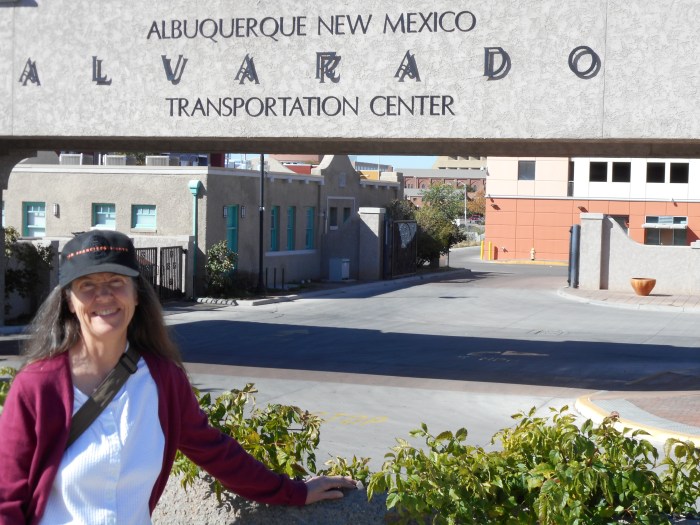
The first real stop was Albuquerque where we had about an hour and we got off to stretch our legs in the pleasantly warm desert air. It was clear skies in all directions. The sun had come up when we were still in Arizona and we had breakfast just after the earlier brief stop in Gallup. It was hard sleeping that first night, the train making a panoply of creaks and groans, but we were comfortable in our surprisingly spacious cabin. It’s a unique experience on the upper deck and I could watch the scenery all day without being bored. It’s not like being a passenger in a car where you feel like you are part of the road and the blacktop is never out of sight. The train glides along the rails but you are detached from that contact with solid ground and feel a bit like you are floating. It’s not much faster than highway speed (I could see cars on Interstate-40) and the landscape moves by at a steady but relaxed pace. And what a landscape! Mesas, buttes, arroyos, and washes, dotted with hardy shrubs and interspersed with some tough-looking trees. I saw juniper and what I think were mountain mahogany. The bunch grasses were a scruffy yellow-brown and seemed to be just hanging on in the sere, rocky layer that I was hard-pressed to call soil. Jagged peaks rose up in little groups here and there, like shark fins out of a waterless ocean. Occasionally deciduous trees appeared, sporting their autumnal colors and marking the watercourses, the bright colors contrasting with the earth tones and pastel hues that dominated. It was beautiful in its stark, forbidding way, a great place to visit and appreciate but I can’t imagine living in it.
Suzy in Albuquerque

Later that afternoon we climbed steadily through canyon country and stands of Ponderosa pine were scattered along the north-facing slopes. We passed through Lamy with its connections to Santa Fe and chugged through the long tunnel at Raton Pass. We got a brief respite in the town of Raton and I stepped off the train to see the sun set behind the high ridge to the west. Southeastern Colorado was high and flat and we spent time in the observation car watching the twilight colors over the mountains we were leaving behind. My buddy JC Parsons was sending me text updates of Game Three of the World Series, but unfortunately we disappeared off the cell phone grid for much of the action. Alas, the lads lost the contest. We slept through the run across Kansas, this time with our ear plugs which worked wonders. We had breakfast after the stop in Kansas City, Missouri. I wore my Giants gear but I didn’t see any Royals fans. The city and environs were smothered in tule fog, similar to what we get in the Central Valley back home in California. As the train moved north towards Iowa we got a look at the Missouri River basin farm country. Lots of corn, as you might expect, and the opposite of what we saw in the Southwest, namely wet and green. The riparian trees were unfamiliar and they were all in the midst of the fall changes. The Midwest we got a look at had that Norman Rockwell feel, neat homes in villages tucked in between the big farms. As we headed east the land became more undulating, not exactly hills but rolling waves of topographic relief. It sure ain’t the Pacific Northwest but I enjoyed the unique pastoral beauty.
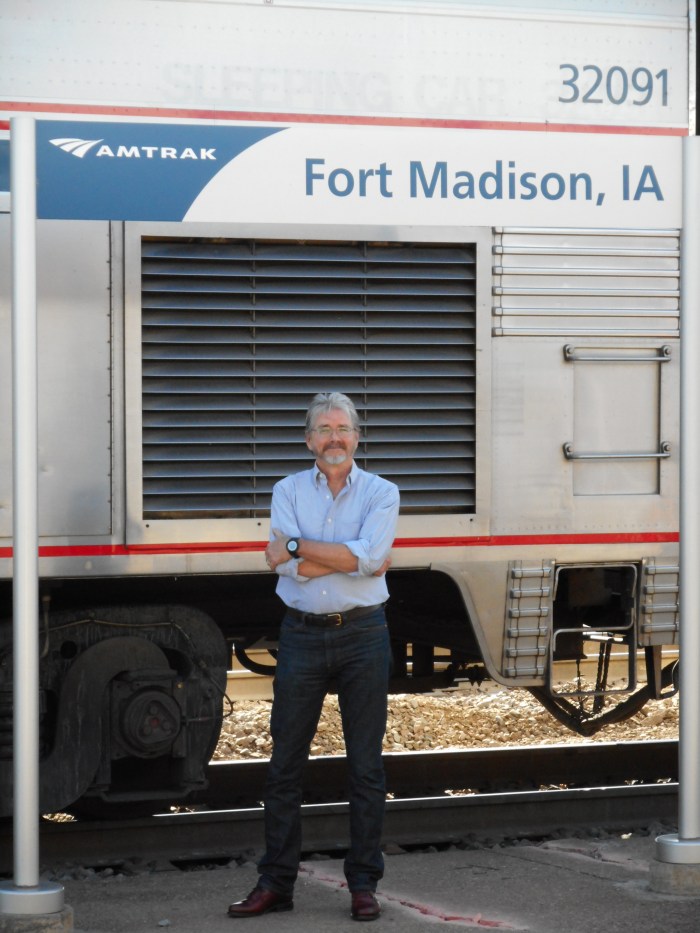
Mark in Iowa

Our Amtrak experience was like living in our VW camper. Comfortable, but requiring patience and strategic planning to co-exist in the small space. We had a full bedroom with a lavatory which meant we could hang out in our own little corner and relax completely. Dining is shared, of course, although sleeper car passengers can get their food delivered to the room. Part of the experience is meeting new folks, and we appreciated our lively meal companions. Jessie, a thirtyish blonde who looked like she just graduated high school, was headed for a wedding in KC. She was an electrical engineer and software developer who also made short films. Smart, engaging, and creative, we covered a spectrum of topics and she struck me as wise beyond her years. The meals were good and filling. Not exactly fine cuisine, but certainly palatable and satisfying, wholly superior to airplane food. We also conversed with a retired teacher who I think was named Myrna. She made my day when she starting talking about the influence of psychology on post-war Hollywood movie-making and how it was fully realized in film noir! Most of my friends look at me and say “huh?” when I tell them I’m heading for NoirCon. This lady wanted to go with us. We spent another meal with Al and Sue, he was a retired power company lineman and she was a retired teacher. Former educators must like to travel. Sue was a chatterbox but not the annoying kind as she was also a sharp and perceptive listener and could respond quickly to the twists and turns in the conversation. We shared some classroom war stories and soft-spoken Al dazzled us with high voltage tales of terror. She was a native Angeleno and he was from Illinois. They were veteran Amtrakers and had a multi-city pass to visit relations all over the heartland. Both were outspoken liberals. I usually avoid politics when I meet new people but somehow they knew we were kindred spirits. Perhaps it was our story of how we met at UC Berkeley. The train also had several Mennonite traveling parties. It was interesting to see the women in their homemade dresses and white cloth caps, and the men with their long beards and bowl haircuts. I could overhear them switching easily between English and their native “Pennsylvania Dutch” dialect of German.

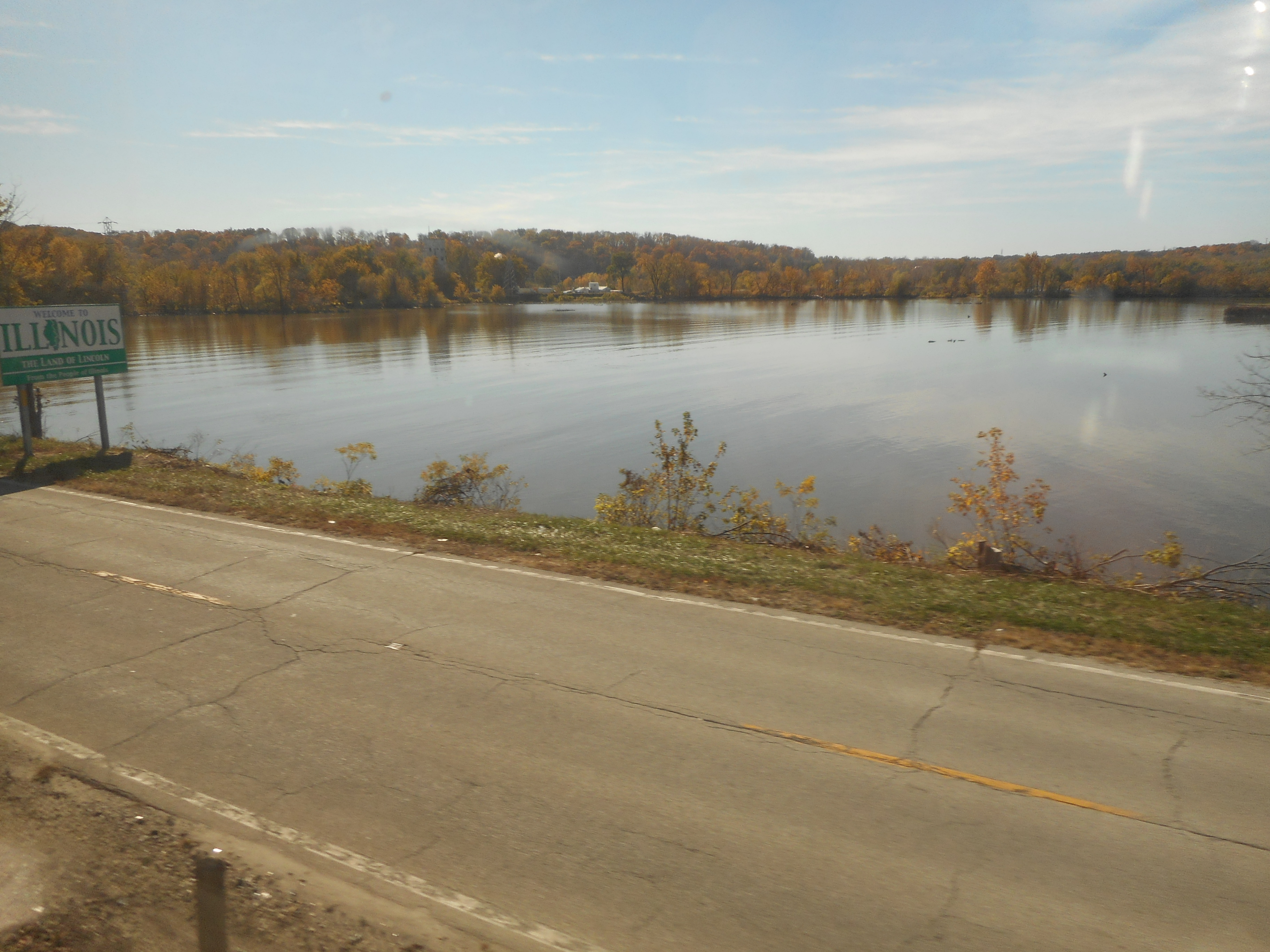
The afternoon brought us across both the Des Moines and Mississippi Rivers as we continued northeast through Iowa and into Illinois. We had a brief stop in Ft. Madison just before the border and I was surprised by the warm weather. I expected late October to be cooler and I packed extra layers and a raincoat just in case. We were nearly eighty minutes behind schedule which counts as “on-time” for Amtrak. The national rail line has an unfortunate reputation for tardiness. They don’t own any of the rails and have to yield to freight traffic. Americans don’t seem to have an appreciation for passenger railroads. Short-distance commuter rail is one thing, but long-distance travel is the province of airlines and interstate freeways. That’s too bad as I think this is a terrific way to go. One gets a sense that Amtrak is like a faded movie star—still capable of a great performance but slowly losing luster, vitality, and box-office appeal. I like old movies better than new ones so I’m not surprised that I prefer the leisurely pace of yesteryear to the go-go-go of the 21st century. After all the journey matters too, not just the destination.

Crossing the Mississippi

Just outside of Galesburg there were wind turbines amongst the acres of corn. The rest of the world refers to our native plant as maize. Corn is an old English word that just means grain. Botanically it is Zea mays and it is the most important agricultural product in the nation. We’ve managed to stuff it into everything, particularly in the form of high-fructose corn syrup, a virtual toxin masquerading as a sweetener. Much of the maize grown in the Midwest goes to livestock as feed. Corn oil is also a major commodity and vast amounts of the remaining harvest are converted to ethanol fuel, another sadly misguided public policy that serves mostly to prop up the price of a bushel. Corn, in many ways, is America. We did our part for the economy, buying a couple of HFCS-laced candy bars from the snack service. A coal train passed us on the adjacent line, heading south. Earlier, while still in Missouri, we had seen a coal-fired electricity-generating station next to the tracks. If anything else can said to be America, it would have to be that four-letter word. Just under half of our nation’s electric power comes from burning coal. Besides the obvious enormous environmental consequences of extracting and consuming this abundant fossil fuel, most people don’t realize that the combustion of coal dumps far more radioactive material into the atmosphere than all the country’s nuclear power plants combined. Radioactivity my friends is natural, just like the apples on the trees and the fishes in the seas.

Naperville is the penultimate stop in the Land of Lincoln. Chicago is thirty minutes away! It’s 1535 Central as I type this so we are a little under an hour behind schedule. Looks like we’ll have plenty of time to get to our lodgings and get settled before the ball game. GO GIANTS!
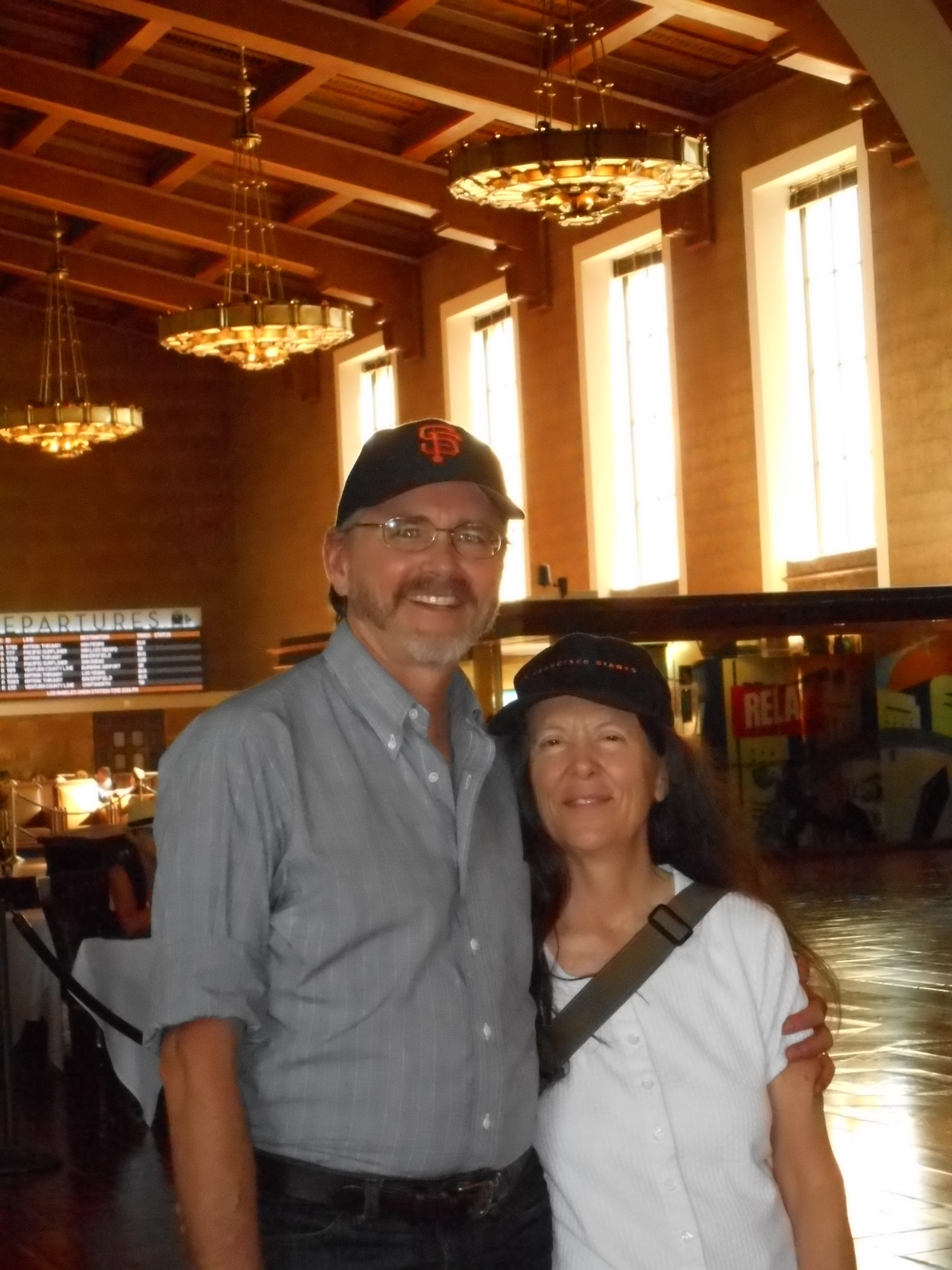
Sporting the Colors

The Giants are in the World Series! Looks like I’ll have to “represent” on our travels across the country. We’ll be in Los Angeles for the first two games. I imagine most of those poor, sad folks will be following the Lakers or something. Is it time for that yet? Wait—it’s football. Guess they’ll be watching the Rams. Who play in St. Louis, right? What do Dodgers fans do this time of year? Beach volleyball? I’m not one for schadenfreude, really, just had to get in a little dig. I appreciate good baseball fans even if they root for teams I dislike. I figure being a baseball fan is a mark of quality and who you root for is mostly an accident of geography or upbringing. Speaking of geography, our train will cross Kansas in the wee hours and actually stop in Kansas City, Missouri at sunrise on Saturday morning, the 25th. Game Three in San Francisco is Friday night and we’ll be heading into hostile country! Should be fun. We’ll be in Chicago for Games Four and Five—I reckon there’ll be lots of sports bars. Anybody know a good one? If the Series goes to Game Six we’ll once again be on a train, this time crossing Pennsylvania, and if there’s a Game Seven it will be the night we arrive in Philadelphia. Tell me a good spot to watch the game!

I’ve traveled a lot in the summer and followed the Giants while on the road, but I’ve never been out of town for October baseball. It’s going to be a little strange. I’ll be posting to my baseball blog (http://raisingmattcain.blogspot.com/) as well so you can follow along if you’re a fan. I’ll be sporting my orange-and-black on the journey, of course. Looking forward to talking baseball with strangers on a train and watching games in exciting new places!

Gearing Up

We take off on our trip in less than a week. This Sunday we will head south to Auburn and spend some time there. The following Tuesday we will drive to Los Angeles and on Thursday we will be on the train headed for points east. The ultimate destination is NoirCon 2014 in Philadelphia. Right now I’m typing this post on my laptop, a serviceable Toshiba Satellite running Windows 7. I have a hard time with the cramped keypad and have always found laptops difficult for this reason. I’m not much of a typist—years of practice have improved my skills somewhat—and I need space for my “search and destroy” technique. I’ll have to get used to it as I’m bringing the damn thing along for the journey. I hope to post regularly to this site and hope you’ll follow along. I’ve always kept a journal when journeying but they’ve always been the pencil-and-paper kind. This is the first time I will be using the computer and all the modern things like WordPress and Facebook that come along with it. Should be fun. Except for the numerous typing mistakes.

I’m also bringing a camera. Since I still have a “dumb” phone (and the cheesy 2 megapixel camera that comes with it) I decided to buy one for the trip. Off to Wal-Mart I went, it’s the only place in Yreka that you can get decent electronics. I found  a compact little Nikon (the Coolpix S3600) for a hundred bucks. It fits easily in a pocket and has a 20 megapixel resolution. My 8GB SD card fits it perfectly and the Satellite has a card slot as well so it’s all good. My big Canon PowerShot SLR is much too bulky, and being a few years old it “only” has a 10 megapixel capability. The Canon is a real camera for serious photography, something I don’t really do. I’m about as good with cameras as I am with keyboards. My main criteria for this purchase was size. This Nikon fits in the palm of my hand. It seems pretty easy to operate and should be just fine. I’ll post up lots of my amateurish snaps for y’all and try to make the bog posts reasonably interesting, OK?

The next item on the checklist is packing. I don’t like to carry a lot but with the fall weather coming I’m not sure exactly what to prep for. Raincoat, hat, and compact umbrella for sure as I expect we’ll get some rain. I understand that places other than California have rain. I’ve no idea how chilly these places (like Chicago, our first stop) will be this time of year. Sure, I can check the forecasts, but temperature doesn’t tell you much. A 50ºF day here in Yreka is not as cold as one in the Bay Area as the climate here is mostly sunny and dry and there is much more relative humidity down there. At least we’ll be in civilization so if we need something we can pick it up without much trouble.

Be seeing you!

A man, a plan, a brew

Today was a good day to brew. The smoky skies and swirling ash fall were at a minimum and the weather, while warm, was pleasant enough in the shade. I had a kit from MoreBeer! courtesy of my pal Janet and I decided it was time to make the eponymous Janet’s Brown Ale. It’s a “big” beer in my book, that is, a high original gravity (1.065-1.070 or 16-17 ºP). I lean toward the “session beer” style as I like quaffing pints and neither my waistline nor my personality improves with more caloric or higher alcohol brews. Nonetheless I expect this one will be pretty tasty—lots of crystal malt and multiple hop additions!

That’s me below, obviously. My phone cam is kind of cheesy and I couldn’t quite get the angle right, hence the cockeyed frame. You can see the psychedelic thingamabob that my pal Stephani gave us hanging from the beam over the kettle. That’s my custom made maple brew paddle on my left shoulder. (Another gift from an old pal.) You can see the dark wort a-bubblin’ nicely. I love the aroma of fresh wort. I love the aroma of hops. Hell, I love beer and everything that goes into making it.

The breeze came up around 2:00 p.m. and dumped a lot of crap into my work area but I was able to keep the kettle covered during the cooling phase and kept the brew from being spoiled. I suppose I could just let all the seeds, dead leaves, wildfire debris and whatnot add its own unique flavors. After all the Belgians open the roofs of their brewhouses and allow their beers to ferment with wild yeasts and bacteria. Of course, some of their beers taste like old socks. I suppose I’ll just have to enlarge my palate and start thinking about some new flavor profiles.

1509-133442

Double, double, toil and trouble;
Fire burn and cauldron bubble.

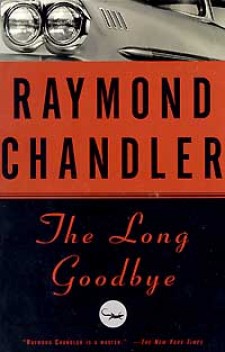
The Long Goodbye

My uncle sent me Raymond Chandler’s The Long Goodbye as a retirement present. I’ve read a fair bit of Chandler but not that one and I devoured it over the last three days. It’s a terrific book, maybe not as tightly plotted as The Big Sleep or Farewell, My Lovely but it’s not the story or the mystery that makes a Chandler novel rock. Seeing the world through the eyes of Philip Marlowe is what makes Chandler worth your time and you get his remarkable prose as well. Chandler must have thought in metaphors as his books are loaded with original and savagely funny analogies describing people and places. Speaking of places, he captured both the beauty and ugliness of post-WWII Los Angeles with his crisp and detailed descriptions of everything from architecture to weather. More than anything, though, Chandler wrote about money and power. Corruption, whether civic or moral, flows through his stories like an ocean breeze. Marlowe’s struggle to keep his hands clean and do what he thinks is the honorable thing for his clients is Chandler’s way of exposing all the venal and tawdry things he detested about Hollywood and big business. Marlowe is a celebration of American individualism and his unyielding nature—a virtue, to Chandler—serves only to get him into deeper and deeper shit.

The Long Goodbye takes a looks at the nature of friendship as well. Marlowe is a loner and too prickly for most people but has an old-fashioned sense of loyalty. The book is littered with dysfunctional and ephemeral relationships and Marlowe’s attempt to befriend the pathetic Terry Lennox causes him both physical and emotional pain. In the end he has to say goodbye to him and to all the other people Terry brought into his life including the beautiful Linda Loring, the only woman the virile but normally celibate Marlowe finally beds. She proposes to him after their one-night stand and he rejects her offer, believing that she is too shallow to make a marriage last. In the coda of that scene is the line that sums up the theme: “To say goodbye is to die a little.”

While The Long Goodbye, like all the private eye novels of that time, is formulaic and clichéd, Chandler writes so well and invests Marlowe with enough empathy and humanity to keep you interested in what happens to him. The genre boundaries don’t confine Chandler, rather they seem to liberate him to say whatever he wants. It’s like Miles Davis playing a pop tune—he finds all the places to go in and around the melody no matter how insipid it might be and thus creates something unique and original. Much of Chandler’s work (and Dashiell Hammett’s as well) is full of casual racism that is sometimes shocking to the modern ear. These men—the writers and their character mouthpieces—were surely products of their time and their language reflects that. Marlowe is too cynical and at the same time too honorable to be genuinely racist. That is, he judges everyone by the same standards regardless of their skin color. Nonetheless he refers to Candy—the butler, who is from Chile—as a “Mex” throughout the book even after he is corrected. He and Candy actually part amicably however, having earned each other’s respect, while all the rich whites turn out to be horrible people! It’s a funny world Marlowe inhabits. And speaking of funny, Chandler manages to infuse his sordid story with quite a bit of humor, especially in the dialogue:

“Who’s your buddy? ” I asked him.

“Big Willie Magoon,” he said thickly. “A vice squad bimbo. He thinks he’s tough.”

“You mean he isn’t sure?” I asked him politely.

I’ve been experiencing my own long goodbye this summer. I retired from a thirty-year career in teaching in June and have spent the last few months doing mostly nothing. School is back in session and I must say I miss the fun parts. At least I knew what I had to do Monday through Friday! I’m looking forward to building a new life, one that doesn’t revolve around a job, but it has been surprisingly difficult to shed Mr. O’Connor. It’s like trying to take the “corned” out of “corned beef.” You have to keep changing the water in the pot before all the brine is leached out. I’m getting there, and doing my best to enjoy the journey. Reading my new book was like a batch of fresh water—the salt is almost gone. And I think I’ve stretched the simile to its breaking point.

Thanks for the present, Uncle John. You knew just what I needed. It figures—you’re a retired teacher, too!

TLGRC