Victims of their own B.S.

Normally I am one to get excited about new technologies. But with AI the story is different. I am hostile to the entire field. I get sick to my stomach every time I hear or see “AI.”

Why?

I think Stephen Diehl has summed it up perfectly:

. . . the backlash against artificial intelligence, especially within circles sensitive to economic inequality and corporate overreach, is not a random or irrational phenomenon. It is an entirely predictable consequence of a decade scarred by tech disappointments and malfeasance, amplified by the unsettling ideologies and political stances of AI’s leading figures. The industry’s penchant for reality-bending hyperbole, coupled with legitimate concerns about intellectual property, data privacy, and job security, has created an environment where distrust is and should be the default position.

Diehl is a computer scientist who writes a lot about public policy.

The sad part about all this is that large language models and neural networks are really cool tools with some very interesting and important applications. But they are kind of like table saws—only useful to a small number of people. The “average joe” is not going to benefit from most of this stuff.

Diehl adds:

. . . the core reasons for the backlash are deeply rooted in the industry’s own presentation and practices. By cultivating an image characterized by unlikeable leaders, bizarre eschatological pronouncements, anti-democratic leanings, and ethically questionable methods, the AI industry has largely engineered its own public relations problem. It should not wonder why it faces skepticism and hostility; it is, in many ways, a backlash of its own making.

I’m old enough to have lived through many boom-and-bust cycles and seen lots of hype and failure. Right now, our Tech Bro Overlords are still living on the spectacular success of the iPhone. That wave has crested, but everyone is still riding it. There is no new killer app or killer piece of tech that will have the impact of the iPhone. Silicon Valley peaked out with that one. They desperately want to get back to that place of cultural and economic hegemony that the smartphone market produced.

But it ain’t happening. These guys are high on their own supply and clinging to their mythology about the transformative nature of their products. But there is no there, there, and no amount of hype is going to change that.

mRNA and MADness

Make America Dumb has succeeded. In another act of ideological madness the head of the HHS (I can hardly bring myself to type his name) has cancelled funding for mRNA vaccine research. This is MADness: another act of impossible stupidity and cruelty, founded entirely on deliberate ignorance, fear-mongering, and a callous dismissal of years of hard work by thousands of dedicated people.

The anti-vaccine crowd has never been known for any kind of consistency or coherence in their world-view. This is an unfortunate consequence of the pseudo-spiritual woo-woo that became mainstream in the 70s and soon replaced any sort of intellectual rigor when it came to health and disease, nutrition, and fitness.

Criticism of the medical establishment and Big Pharma is certainly warranted. Things could be a lot better. But substituting hippy bullshit for actual research is just plain stupid.

mRNA vaccines are part of the movement toward more targeted, more personalized medical interventions called immunotherapy. Even the crystal-gazers want a better immune system! Well, this is how you get there. Cutting off funding for life-saving science because you are pandering to the dumbest bloc of voters in the country is morally reprehensible. That man is scum, and his boss is the Scumbag-in-Chief.

Thank you, anti-vaxxers! Your mentally bankrupt “philosophy” is going to bite you (and the rest of us) in the ass! Once you start down the road of trashing legitimate intellectual endeavors—like cancer studies—and the places where they are done—like universities—you will find it hard to recover. The people who do this work will go somewhere else. The companies that partner with these institutions will lose intellectual capital and their businesses will suffer. And the people like us who might benefit someday from quality scientific work will never see those fruits because the trees will have been ripped out by the roots.

This is how you Make America Dumb. This is MADness.

Palladium, #46

When people invented the internal combustion engine they really didn’t consider the consequences. Turns out that these remarkable, revolutionary devices were noisy, smelly, and smoky.

And the smoke turned out to be not only poisonous to people but a serious global pollutant.

I live in a small town in a rural area. We don’t get urban (that is, automotive) air pollution. We are too few and too dispersed. So we don’t notice the issue. Most of the world lives in urban regions and air pollution is a serious thing. I haven’t included non-automotive (i.e. industrial) sources, but those are of course significant. In my home town, our biggest source of air pollution is home-heating wood stoves. Funny thing most residents here don’t view that (visible) smoke and those (invisible) particulates as pollution!

Those of us who remember the brown skies that covered the LA Basin the 1970s have reason to be thankful for the invention of the catalytic converter. By the 1980s the catalytic converter was in almost every car. It’s a standard item now. The country phased out leaded gas and phased in pollution control in those two decades. It’s been so long now that people have forgotten how well these schemes work. Just check out the air in LA. Fifty years later: more people, more cars, but cleaner air.

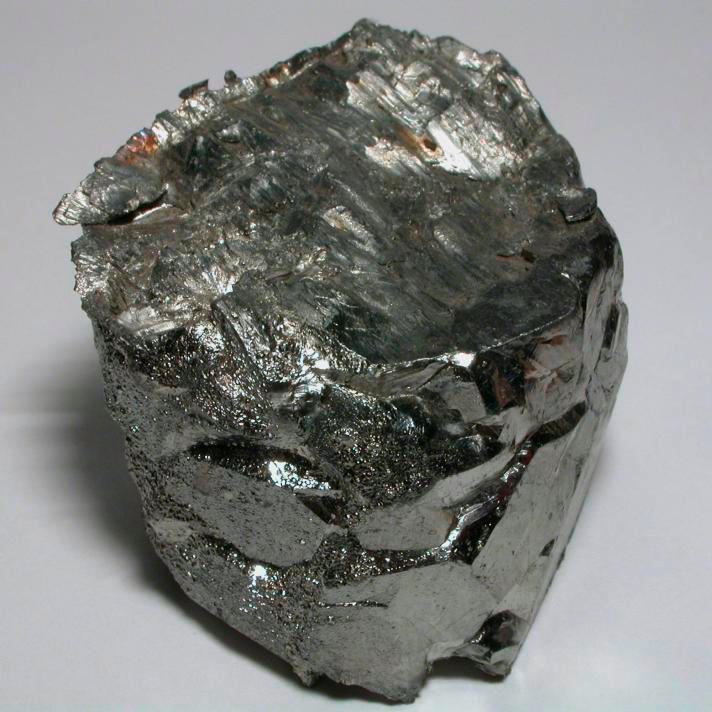
Catalytic converters, as the name implies, use a catalyst. The precious metals platinum, rhodium, and palladium (Pd, #46) are the most common. Your car probably has 3-7 grams of palladium in its converter. A US nickel weighs 5.00 grams for comparison.

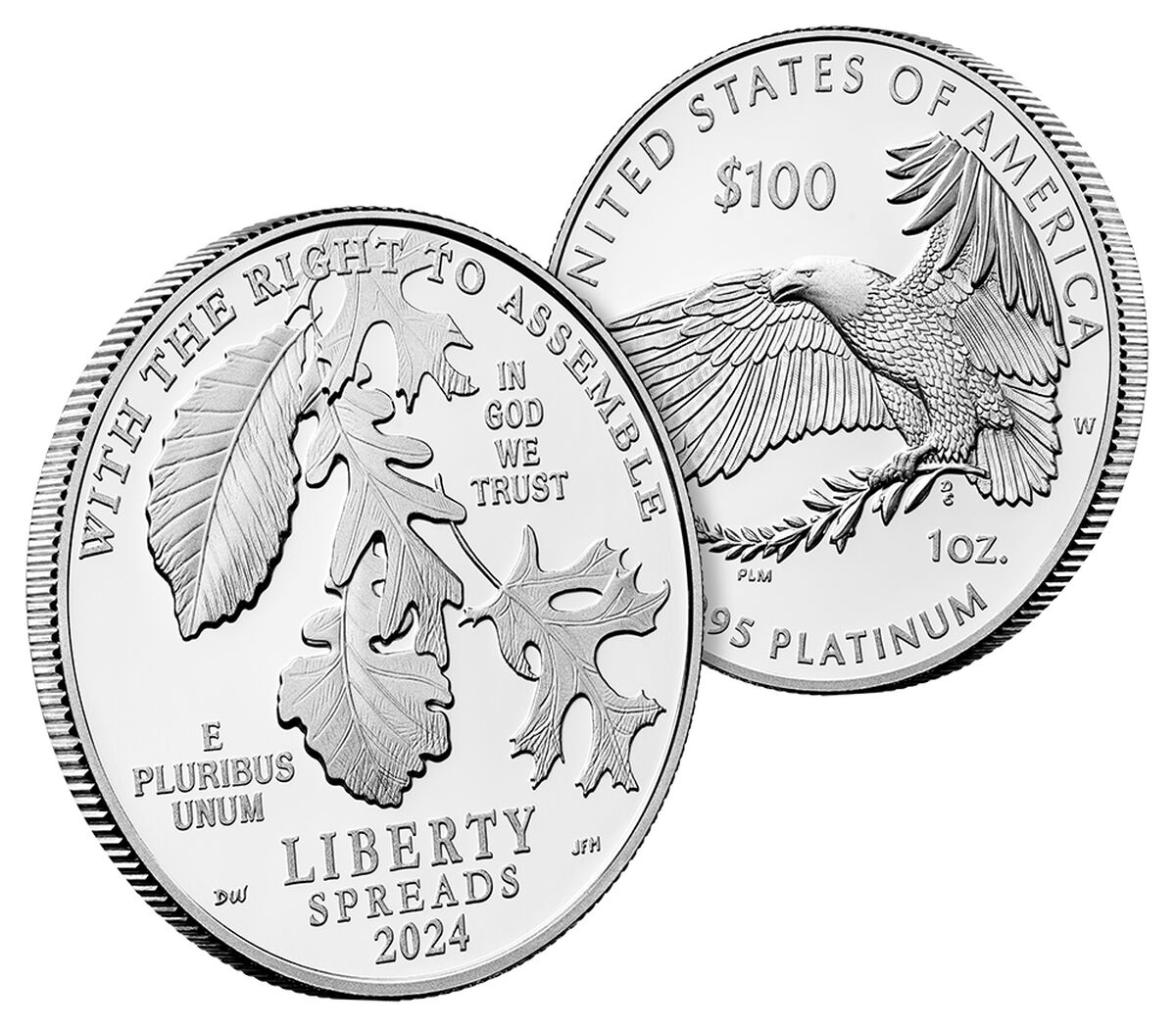
Speaking of the US Mint, that’s another use for palladium—coinage. You can invest in palladium for a mere $1845 per troy ounce. The palladium coin below (it uses the same design as the old “Mercury” dime) has a face value of $25.

Hailstorm

Yesterday afternoon about five o’clock the sky opened up and battered us with hailstones. Some were as big as marbles. The big ones sounded like gunshots on the patio overhang.

The rain followed, with swirling winds and thunder. Everything was drenched in half an hour. Our gutters overflowed. Sheets of water ran down the street.. Eddies formed in my driveway.

The storm ebbed and flowed in intensity for a couple of hours. By eight o’clock it was over. The sky still looked menacing, but that was it. I didn’t see a lot of lightning flashes despite hearing thunder throughout the event.

We are in a good location for summer thundershowers. This one was particularly ferocious. This morning, there’s plenty of evidence of a storm—leaves, twigs, and cones scattered about, plus mud, silt, and roof debris. But the ground is mostly dry and only small puddles are left.

In the desert, the rain comes all at once, and then it disappears. Maybe there’s more on the way this weekend:

Fire safe

My neighbor was dropped by her insurance company. No more homeowner’s coverage. Now, we live in the middle of town! It’s mostly sidewalks and roads. It’s not wildland. We are mere blocks from the Sheriff’s Office, the Courthouse, City Hall, etc. The hospital is a half mile away. The schools are so close I can hear the P.A. system do the Pledge of Allegiance.

Of course she had to cut some trees in obeisance to the insurance inspector’s directives. One of the trees was our big Deodara that had large branches overhanging the fence.

It was too big of a job for me so we got our regular guy to come out and trim the tree. He has a bucket truck and all that, totally professional. It costs more but the outcomes are waaaaay better. Plus he’s a fine fellow and does outstanding work. Over the years I’ve come to appreciate the skilled craftsmen who are also neat. That is, they clean up afterwards. You’d be amazed how many workers leave huge messes behind without a second thought about them. One thing I learned from my wife (a very neat person)—you plan your cleanup just like you plan your job. And you keep things clean “as you go” instead of waiting until the end to do everything.

So we got the Deodara cleaned up and the offending branches away from my neighbor’s structures. I hope that makes a difference! It is worth it for us to get the pruning done of course. We have to keep our trees tidy. The insurance companies are all in a panic. They’ve gotten killed on all the wildfire claims. They are cutting people off left and right. It’s outrageous that they would do it in our neighborhood which is just about the most fire-safe part of this town! Now that she’s cleaned up all the stuff they demanded I sure hope she gets her coverage back.

I find it interesting that insurance companies employ armies of actuaries and mathematical modelers who try to predict the future. You know, which folks will die soonest, which houses will burn down first, that sort of thing. But they apparently really suck at the job. None of them were prepared for the fires here in the West. They’re the smart guys, the money guys, the technical elite, and they couldn’t see that they were over-extended. That the risks they said were low were actually high. And when the shit hit the fan their house of cards collapsed.

Naturally it’s the citizens who pay the price. Not our corporate overlords.

But I was intending to write about the Deodara. It’s a beautiful tree, a Himalayan Cedar (Cedrus deodara), native to parts of Afghanistan, Nepal, Tibet, India, and Pakistan. They are known for their hardiness. They also produce a variety of essential oils. It’s a so-called “true” cedar like the Cedars of Lebanon (Cedrus libani) and the Atlas Cedar (Cedrus atlantica). Here in the West we have a “false” cedar known by the common name incense-cedar (Calocedrus decurrens). There’s also a relative, the western redcedar (Thuja plicata). Both of those trees are in the cypress family alongside junipers and redwoods.

Cedars, that is those of the genus Cedrus, are members of the pine family.

Here’s a picture of a Deodara with the characteristic “weeping” branches:

Gold in them thar hills

We all know there’s gold in the rocks around here. But there aren’t any large-scale gold projects. The McLaughlin Mine near Lake Berryessa straddled three counties in California (Lake, Yolo, and Napa) and produced 17 million ounces of gold from 1985-2002. It’s a reclamation project now.

There’s a big mine in Southern California—Mesquite—that produces gold. And there is still plenty of gold in the Mother Lode. An Australian company expects the famous Lincoln Mine to start producing again.

Mesquite and McLaughlin are open pit mines. The Lincoln is underground. Most miners would prefer an open pit, with the resource close to the surface. But sometimes you have to dig. There’s a spot in Oregon that they are drilling again these days. It is called Quartz Mountain.

https://qgoldresources.com/project/quartz-mountain

That’s about a three-hour drive from here.

The company (Q-Gold) is based in Toronto and they have a bunch of claims and an ambitious drilling program.

Lots of things are converging to make gold mining popular again. The price, currently over three thousand dollars per troy ounce, is very attractive! Second, gold demand always goes up in times of economic uncertainty. With the Great Orange Loon Job & His Criminal Cabal in charge most folks think that their finances are on shakier ground than they were before. Finally, there is increasing industrial use for gold and thus it has taken on the status of a strategic material.

Plus people are just wacky for gold.

By gold mining standards Q-Gold is a pretty podunk outfit. They have a market cap of $12M and a share price (on the Canadian exchange) of ten cents. For comparison, Colorado-based Newmont Corporation has a market cap of $65B and a share price (on the NYSE) of fifty-eight bucks. Newmont is the biggest gold miner in the world.

But the world is full of so-called “junior” miners and Canada is a real hotbed of mining investment. They depend on their mining sector for a big chunk of their economy.

So perhaps we’ll see a new Gold Rush here in the West. It won’t look like the 1850s, that’s for sure. But it could happen “just around the corner” from where I live. I think I might throw a few bucks their way. One thousand shares of Q-Gold will cost me about a hundred bucks.

I think I can spare it. Maybe I’ll get rich!

Or maybe this outfit will fold in a few years and the property will get absorbed by some other outfit and some other schmuck will be throwing a few bucks at them for a few shares twenty years from now. Maybe they’ll get rich!

Blue Moon

They don’t do a lot of mining in California any more. The Golden State was founded on gold and built on oil. Neither hold the place in the California economy that they once did.

There’s a mine in the desert called Mountain Pass that’s been in the news lately. The company that owns the mine just got a gob of money from the Defense Department and another gob from Apple to supply rare earths for magnets. Rare earths are hot these days and Mountain Pass is the only rare earth mine in the USA.

And there’s a mine I just learned about called Blue Moon. It’s outside of Madera in the Mariposa County foothills. They pulled out a lot of zinc and copper from the mine during WWII but it’s been inactive since. A new company (Blue Moon Metals) is re-starting the mine and hoping to produce zinc and copper.

Blue Moon Mine is what they call a “brownfield” project. It uses existing infrastructure on a previously-worked site that may have pollution and contamination issues. A “greenfield” project is one that starts from scratch.

Mines are good for the economy but bad for the environment. It doesn’t have to be that way. We have the skills and knowledge today to mine in a responsible way. And if we mine at home right here in California maybe we’ll be able to provide the proper oversight.

A/C

One of the things that weather forecasts do is help people plan ahead. Farmers, for example, really rely on forecasts. Emergency response planning depends on good forecasts. And warnings. Just ask those poor people in Texas. A better early warning system might have saved lives. We’ll never know and our Mob Boss president and his Clot of Gangsters will never tell. But slashing and burning your way through the federal budget—a crass bit of political theater—actually harms people. Important services disappear on the cutting floor and real-life, honest-to-god, American citizens get hurt.

It’s that time of year. The HOT time of year. By ten o’clock in the morning it is too hot to be outside. And it barely cools off by ten o’clock at night.

It’s a good thing we have A/C. We used to have a “swamp” cooler, that is an evaporative unit with a fan. That kind of cooling is simple and cheap and works great in a dry climate. But it was bulky and inconvenient, not too mention useless in humid weather, and hazardous in smoky weather. It pulled in outside air and the house would smell like a wet barbecue.

Air conditioning takes a lot of electricity. And specialized refrigerant chemicals. Our units are pretty sophisticated and required professional installation. (Anyone can install a swamp cooler!). But they work great.

Demand for A/C is only going to increase. That means a lot more electric motors which means a lot more copper and so on and so on. We are going to make the world a lot warmer by burning the energy we need to mine the stuff to make the stuff we need to cool down our homes and buildings!

Vanadium

Element number 23 (symbol V) is a hard, silver-gray transition metal. Its primary use is in steel. Adding a small percentage of vanadium improves tensile strength and reduces weight. Steelmakers have been using vanadium in ferro-alloys for over 100 years.

Vanadium has multiple oxidation states and its compounds have a variety of colors. Unfortunately they are all toxic! The metal does not occur free in nature but once isolated it is very stable as it forms an oxide layer, much like aluminum.

The world produces about 100,000 tons of vanadium per year. It’s obtained as a by-product from steel-making slag and from uranium mining.

There is only one primary producer of vanadium in the United States. That company, Energy Fuels, also produces the bulk of U.S. uranium! They don’t just dig the stuff up, they also mill and process it into marketable form. Their White Mesa Mill in San Juan County, Utah is also the only place in the country that handles uranium ore. The mill looks like this and employs 150 people:

What it will take

This story grabbed my attention:

Researchers at the University of Strathclyde are joining partners in Canada to develop new methods for cleaning up contaminated water from mines.

The project is aimed at removing harmful dissolved metals from the water and recovering them for reuse.

This is the sort of thing that should be happening everywhere there are mines. And there are mines everywhere, so it should be happening all over. I like that this is a partnership between the UK and Canada. Canada’s economy depends on mining.

Mining is essential but it is wasteful and polluting. Not to mention having a history—a long, storied infamy—of exploiting and brutalizing workers.

If you dig a hole in the ground and process the stuff, none of it should be wasted. It should all be used in some manner. Mining uses a very large amount of water. It’s something mining companies don’t talk about because mining’s thirst is enormous and that demand makes huge impacts on local environments.

So it’s cool that these folks are doing this stuff. Both universities receive funding from their respective governments to do the work. That’s how the system works! Government funding of science and other research is a public good. It benefits society. And it keeps our growing knowledge base intact so other people can learn from it and the human race can improve.

This is why the Orange Asshole and His Fascist Minions are terribly stupid for attacking universities. And for slashing the budgets for research and for science facilities. You don’t get smarter by crippling the very institutions that do the work of helping the human race get smarter! But Emperor Don the First isn’t interested in intellectual advancement. And that’s unfortunate.

If we want a clean energy future and clean air and water we have to do a better job mining the earth. And farming, too. And manufacturing, and building, and everything else. And that takes a lot of brainpower and a lot of places to do brain-powering. From the story:

Professor Alejandro Adem, President of NSERC, said: “International partnerships like this one are essential to tackling global challenges such as critical mineral security. By combining Canada’s expertise with the UK’s, we can accelerate innovation and advance sustainable solutions to drive economic growth, resilience, and environmental responsibility.”

NSERC stands for Natural Sciences and Engineering Research Council of Canada.